
Schwinn Floor Pump: Get Yours Now!

Do you love riding your bike? Flat tires can stop the fun. What if you had a way to pump your tires quickly? A schwinn floor pump can help. It makes filling tires easy.
A schwinn floor pump is a great tool. It can keep your bike tires ready. You will always be ready to ride. Let’s learn more about it.
Key Takeaways
- The Schwinn floor pump makes inflating bike tires quick and simple.
- Floor pumps are more stable and easier to use than hand pumps.
- Using the correct pressure keeps your tires in good condition.
- Many pumps have a gauge to show you the tire pressure.
- Properly inflated tires make your bike rides smoother and safer.
Why Choose a Schwinn Floor Pump?

Choosing a good bike pump is important. A schwinn floor pump can be a great choice. It is easy to use and very helpful. Floor pumps are better than small hand pumps. They stand on the ground. You use your body weight to pump. This makes it easier to fill your tires. A schwinn floor pump usually has a gauge. The gauge shows how much air is in your tire. This helps you put the right amount of air in. Overfilling can damage the tire. Underfilling makes it hard to pedal. Having a good pump means your tires will always be ready. This keeps your rides fun and safe. Plus, a schwinn floor pump is made by a trusted company. Schwinn has been making bikes and bike stuff for a long time.
- Floor pumps are easier to use than hand pumps.
- A gauge helps you fill tires correctly.
- Schwinn is a trusted brand.
- Floor pumps are more stable.
- They make pumping faster.
Think about how often you ride your bike. Do you want to spend a lot of time pumping tires? A good floor pump saves time. It also saves energy. You can pump more air with less effort. The gauge helps you avoid mistakes. It is important to keep your tires at the right pressure. Too little air can cause flats. Too much air can make the ride bumpy. A schwinn floor pump helps you find the perfect balance. This keeps your bike in good shape. It also makes riding more fun. Choosing the right pump is a smart move for any bike rider.
What Makes Schwinn Pumps Special?
Ever wonder what makes some bike pumps better than others? The Schwinn floor pump often stands out because of its design. It’s made to be sturdy and last a long time. The base is wide, so it won’t tip over easily when you’re pumping. The handle is designed to be comfortable. This helps you get a good grip. Schwinn also uses strong materials. This means the pump can handle a lot of use. Plus, many Schwinn pumps have extra features. Some have different nozzles for different types of tires. Others have a built-in storage for small tools. All these things make a Schwinn pump a great choice for keeping your tires in top shape.
How Does a Floor Pump Work?
Have you ever wondered how a floor pump actually works? It’s pretty simple! When you push down on the handle, it forces air into a chamber. This chamber is connected to a hose. The hose has a special end that fits onto your tire valve. When you push down, the air goes through the hose and into your tire. The gauge on the pump shows how much air is going in. When you pull the handle back up, the pump sucks in more air. This gets ready for the next push. It’s like a little engine for your tires! The schwinn floor pump uses this simple idea to make inflating your tires quick and easy.
Why Is Tire Pressure Important?
Do you know why tire pressure matters so much? It’s all about how your bike rides. When your tires have the right amount of air, your ride is smoother. You can pedal easier and go faster. If your tires are low on air, it’s like trying to run in sand. It’s much harder! Low tire pressure can also damage your tires. They can get flat spots or wear out faster. Too much air isn’t good either. Overinflated tires can make the ride bumpy. They can even pop! That’s why using a schwinn floor pump with a gauge is so important. It helps you get the perfect tire pressure for a comfortable and safe ride.
Fun Fact or Stat: Did you know that properly inflated tires can improve your cycling speed by up to 10%?
Understanding Tire Pressure Gauges

A tire pressure gauge is very important. It helps you know how much air is in your tires. Without a gauge, it’s hard to tell if your tires are full enough. A schwinn floor pump usually has a gauge. The gauge shows the pressure in PSI. PSI means pounds per square inch. This is how we measure air pressure in tires. The gauge has numbers on it. These numbers tell you the PSI. Most bike tires have a recommended PSI range. This range tells you how much air to put in. You can find this on the side of your tire. The gauge helps you stay within this range. This keeps your tires safe and makes your ride better. Using a gauge is a simple way to take care of your bike.
- A gauge shows the air pressure in PSI.
- PSI means pounds per square inch.
- Tires have a recommended PSI range.
- The gauge helps you stay in that range.
- This keeps your tires safe.
- It also makes your ride better.
Imagine trying to guess how much air is in your tires. You might think they feel full. But they could be too low or too high. A gauge takes away the guesswork. It gives you an exact number. This number helps you make the right choice. You can add air if it’s too low. You can let some air out if it’s too high. The gauge on a schwinn floor pump is easy to read. It makes it simple to get the right pressure. This is important for all types of bikes. Whether you have a mountain bike or a road bike, the right pressure matters. A gauge helps you keep your tires in top condition.
Why Are Gauges Important for Safety?
Have you ever thought about how a small gauge can keep you safe? It’s true! When your tires have the right pressure, they grip the road better. This means you can stop faster and turn more easily. If your tires are underinflated, they can be harder to control. They might slip or wobble. Overinflated tires can also be dangerous. They can pop if they hit a bump too hard. A gauge on your schwinn floor pump helps you avoid these problems. It lets you check your tire pressure before every ride. This simple step can help you stay safe and have more fun.
How to Read a Tire Pressure Gauge?
Reading a tire pressure gauge might seem tricky, but it’s actually quite simple. Most gauges have a needle that points to a number. This number tells you the PSI. Look for the recommended PSI range on your tire. Then, pump air into your tire until the needle points to a number within that range. Some gauges have different colors. Green might mean the pressure is good. Red might mean it’s too low or too high. Just remember to check the gauge often while you’re pumping. This will help you get the perfect tire pressure every time with your schwinn floor pump.
What If My Gauge Is Broken?
What should you do if your tire pressure gauge breaks? Don’t worry, there are still ways to check your tire pressure. You can buy a separate gauge at most bike shops. These gauges are small and easy to use. You simply attach them to your tire valve to get a reading. Another option is to take your bike to a bike shop. They can check your tire pressure for you. It’s important to have a working gauge. This helps you keep your tires properly inflated. If your schwinn floor pump gauge is broken, replace it or use a separate one to stay safe.
Fun Fact or Stat: The ideal tire pressure for most bikes is between 40 and 70 PSI.
Using the Schwinn Pump on Different Valves

Bike tires have different types of valves. The two main types are Schrader and Presta. A schwinn floor pump often works with both. Schrader valves are like the ones on car tires. They are wider and have a pin in the middle. Presta valves are thinner and have a small nut on the end. To use a floor pump on a Presta valve, you need to unscrew the nut. Then, you push it in a little to loosen it. Most floor pumps have a head that can switch between Schrader and Presta. You might need to flip a lever or unscrew a part. Make sure the pump head is firmly on the valve. This will give you a good seal. Then, you can start pumping.
| Valve Type | Appearance | How to Use with Schwinn Pump | Common On |
|---|---|---|---|
| Schrader | Wider, with a pin | Attach pump head directly | Car tires, some bikes |
| Presta | Thinner, with a nut | Unscrew nut, then attach pump | Road bikes, some mountain bikes |
| Dunlop | Similar to Presta, common in Europe | May require special adapter | Older bikes, European bikes |
| Woods | Another name for Dunlop | May require special adapter | Older bikes, European bikes |
Using the right pump head is very important. If the head is not on tight, air will leak out. This makes it hard to fill the tire. It also wastes your energy. Some pumps come with different adapters. These adapters can help you use the pump on other types of valves. Always check your valve type before pumping. This will save you time and frustration. A schwinn floor pump is designed to be easy to use. But knowing about different valves will make it even easier. With a little practice, you can pump up any tire.
What Is a Schrader Valve?
Have you ever noticed the valve on your car tire? That’s a Schrader valve! It’s a common type of valve used on many bikes too. Schrader valves are wider than Presta valves. They have a small pin in the center. When you press the pump onto the valve, it pushes the pin down. This lets air flow into the tire. The schwinn floor pump is designed to work easily with Schrader valves. You just attach the pump head and start pumping. Schrader valves are strong and reliable. They’re a great choice for everyday bikes.
What Is a Presta Valve?
Presta valves are different from Schrader valves. They are thinner and usually found on road bikes. To use a Presta valve, you need to unscrew the small nut at the end. Then, push the valve in a little to loosen it. This lets air flow in. The schwinn floor pump can handle Presta valves. Just make sure to adjust the pump head correctly. Presta valves can hold higher pressures. This makes them good for racing bikes.
How to Switch Between Valve Types?
Switching between Schrader and Presta valves on a schwinn floor pump is usually easy. Most pumps have a dual head. This means it has two openings. One is for Schrader, and one is for Presta. To switch, you might need to flip a lever or twist the pump head. The pump should have instructions on how to do this. Make sure the pump head is securely attached to the valve. This will prevent air leaks. With a little practice, you can switch between valve types quickly and easily.
Fun Fact or Stat: Presta valves are also known as “French valves” because they were first invented in France.
Maintaining Your Schwinn Floor Pump

Taking care of your schwinn floor pump is important. This will help it last longer. Keep your pump clean. Wipe it down with a damp cloth. This removes dirt and dust. Check the hose for cracks or damage. If you see any, replace the hose. Make sure the pump head is tight. A loose head can cause air leaks. Oil the moving parts of the pump. This keeps them working smoothly. Store your pump in a dry place. This prevents rust. With a little care, your pump will last for many years. This will keep your tires ready for any ride.
- Keep the pump clean and dry.
- Check the hose for damage.
- Make sure the pump head is tight.
- Oil the moving parts.
- Store the pump in a dry place.
- Regular care extends pump life.
Think about how often you use your pump. The more you use it, the more care it needs. A little maintenance goes a long way. It can save you money in the long run. Replacing a pump can be expensive. But taking care of your schwinn floor pump is easy. It only takes a few minutes. Regular maintenance will keep your pump working like new. This means you can always count on it to fill your tires. A well-maintained pump is a reliable tool. It helps you enjoy your bike rides more.
How Often Should You Clean It?
How often should you clean your schwinn floor pump? It depends on how often you use it. If you use it every day, clean it once a month. If you use it less often, clean it every few months. Cleaning the pump is easy. Just wipe it down with a damp cloth. Remove any dirt or dust. Pay special attention to the pump head. This is where dirt can build up. Keeping your pump clean will help it work better and last longer.
How to Check for Air Leaks?
Air leaks can make pumping tires difficult. How do you check for them? First, listen for a hissing sound. This can indicate a leak. Next, check the hose and pump head. Look for cracks or loose connections. You can also use soapy water. Brush it on the connections. If you see bubbles, there’s a leak. Tighten the connections or replace the damaged parts. A schwinn floor pump should have a tight seal. This ensures efficient pumping.
What to Do If the Pump Won’t Pump?
What if your schwinn floor pump won’t pump air? First, check the pump head. Make sure it’s securely attached to the tire valve. Next, check the hose for kinks or clogs. Straighten the hose or remove any blockages. Also, make sure the pump is clean and oiled. If these steps don’t work, the pump may need repair. Take it to a bike shop for help. A properly working pump is essential for keeping your tires inflated.
Fun Fact or Stat: A well-maintained floor pump can last for over 10 years!
Troubleshooting Common Pump Problems
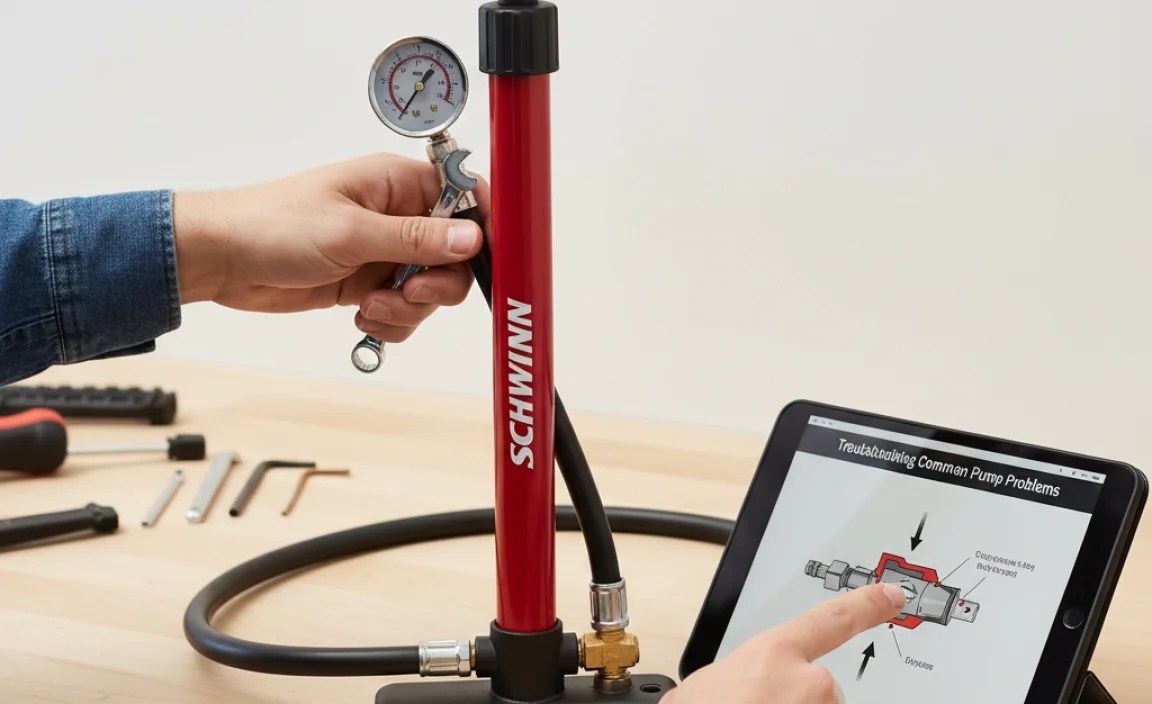
Sometimes, your schwinn floor pump might not work perfectly. You might have trouble getting air into the tire. Or the gauge might not be accurate. These problems can be frustrating. But there are often simple solutions. First, make sure the pump head is firmly attached to the valve. If it’s loose, air will leak out. Second, check the hose for any damage. Cracks or holes can cause leaks. Third, make sure the gauge is working correctly. If it’s not, you might need to replace it. Finally, make sure the pump is clean and oiled. This will help it work smoothly. By troubleshooting these common problems, you can keep your pump in good condition.
- Check the pump head connection.
- Look for damage to the hose.
- Verify the gauge accuracy.
- Clean and oil the pump regularly.
- Make sure valve is not clogged.
Imagine you are getting ready for a bike ride. You grab your schwinn floor pump to fill your tires. But the pump won’t work! Don’t panic. Take a deep breath and check the basics. Is the pump head on tight? Is the hose blocked? Is the gauge moving? Sometimes, the simplest things can cause problems. By checking these things one by one, you can often find the solution. And if you can’t fix it yourself, don’t be afraid to ask for help. A local bike shop can often repair your pump. This will save you the cost of buying a new one.
Why Is Air Leaking from the Valve?
Air leaking from the valve is a common problem. It usually means the pump head isn’t properly attached. Make sure the pump head is pushed all the way onto the valve. Also, check the rubber seal inside the pump head. If it’s worn out, it won’t create a tight seal. You might need to replace the seal. Another cause could be a damaged valve on your tire. If the valve is bent or broken, it won’t hold air. In this case, you’ll need to replace the tire or valve core. Using a schwinn floor pump correctly helps prevent air leaks.
What If the Gauge Shows the Wrong Pressure?
An inaccurate gauge can be misleading. It can cause you to over or underinflate your tires. If you think your gauge is wrong, compare it to another gauge. You can use a gauge at a bike shop or auto repair shop. If the readings are different, your gauge is likely faulty. You can try to calibrate the gauge. Some gauges have an adjustment screw. If not, you might need to replace the gauge. Accurate tire pressure is important for safety and performance. A schwinn floor pump with a reliable gauge is essential.
How to Fix a Clogged Pump Hose?
A clogged pump hose can prevent air from flowing. To fix it, first disconnect the hose from the pump and the valve. Then, try blowing air through the hose. This might dislodge the clog. You can also use a thin wire or needle to poke through the hose. Be careful not to damage the hose. If the clog is stubborn, try soaking the hose in warm, soapy water. This can help loosen the debris. Rinse the hose thoroughly before reattaching it. A clean hose ensures your schwinn floor pump works efficiently.
Fun Fact or Stat: The first bicycle tire pump was invented in the late 1800s!
Choosing the Right Pump for Your Needs
Picking the right pump depends on what you need. Do you ride a lot? A good schwinn floor pump is a must. If you only ride sometimes, a smaller pump might be okay. Think about the types of tires you have. Some pumps work better with certain valves. Consider the size of your tires. A bigger tire needs more air. A pump with a large chamber will help. Also, think about storage. Do you have space for a floor pump? Or do you need a smaller pump that you can carry? Choosing the right pump makes biking easier.
- Consider how often you ride.
- Think about your tire types.
- Consider the size of your tires.
- Think about pump storage.
- Choose a pump that fits your needs.
- A good pump makes biking easier.
Imagine you are at a bike shop. There are so many pumps to choose from. It can be confusing! But if you know what to look for, it’s easier. Start by thinking about your bike. What kind of tires do you have? What size are they? Then, think about how you ride. Do you go on long rides? Or just short trips? A schwinn floor pump is great for home use. But if you need a pump on the road, a smaller one is better. By answering these questions, you can find the perfect pump for you. This will make your bike rides more enjoyable.
What Size Pump Do I Need?
The size of the pump matters. A larger pump can fill tires faster. This is good if you have big tires. Or if you ride often. A smaller pump is easier to carry. This is good for emergencies on the road. Think about where you will use the pump most. If it’s at home, a larger schwinn floor pump is a good choice. If it’s on the road, a smaller pump is better. Choose the size that fits your needs.
What Features Are Important?
Some pump features are more important than others. A good gauge is essential. It helps you fill tires to the right pressure. A comfortable handle makes pumping easier. A stable base keeps the pump from tipping over. A dual pump head works with different valves. Consider these features when choosing a pump. A schwinn floor pump often has these features. This makes it a good choice for many riders.
How Much Should I Spend?
Pump prices can vary a lot. A basic pump is less expensive. But it might not have all the features you want. A high-end pump costs more. But it might last longer and work better. Think about your budget. How much are you willing to spend? A schwinn floor pump is often a good value. It offers good features for a reasonable price. Choose a pump that fits your budget and your needs.
Fun Fact or Stat: Some high-end floor pumps can cost over $100!
Safety Tips When Using a Floor Pump
Using a schwinn floor pump is usually safe. But there are some things to keep in mind. Always make sure the pump head is securely attached. If it’s loose, it can pop off. This can hurt you. Be careful not to overinflate your tires. Too much air can cause the tire to explode. This can be dangerous. Always check the pressure gauge. Make sure you are within the recommended range. Wear safety glasses. This protects your eyes from flying debris. Keep the pump clean. This prevents it from malfunctioning. By following these tips, you can use your pump safely.
- Securely attach the pump head.
- Avoid overinflating tires.
- Check the pressure gauge.
- Wear safety glasses.
- Keep the pump clean.
- Follow instructions carefully.
Imagine you are pumping up your tire. Suddenly, the pump head pops off. It hits you in the face! This can be painful. It can also be dangerous. That’s why it’s so important to be careful. Always double-check the connection. Make sure it’s tight and secure. And always be aware of your surroundings. Don’t pump your tires in a crowded area. Keep children and pets away. A schwinn floor pump is a useful tool. But it’s important to use it safely. By following these safety tips, you can avoid accidents.
Why Is It Important to Check the Pressure?
Checking the pressure is very important. Overinflated tires can explode. Underinflated tires can cause accidents. The right pressure makes riding safer. It also makes it easier. Check the tire sidewall for the recommended pressure. Use a gauge to measure the pressure. A schwinn floor pump with a gauge is very helpful. Always check the pressure before each ride. This ensures a safe and enjoyable experience.
What to Do If the Tire Explodes?
If a tire explodes, stay calm. Protect your face and eyes. Move away from the bike. Let the air escape completely. Then, inspect the tire and rim. Look for damage. Replace the tire if needed. Check the rim for dents or cracks. If the rim is damaged, replace it too. A tire explosion can be scary. But staying calm helps you handle the situation. Using a schwinn floor pump carefully can prevent explosions.
How to Store the Pump Safely?
Store your pump in a safe place. Keep it away from children and pets. Store it in a dry area. This prevents rust and damage. Don’t store it in direct sunlight. This can damage the hose. Coil the hose neatly. This prevents kinks. Store the pump upright. This keeps it stable. A schwinn floor pump is a valuable tool. Storing it safely helps it last longer.
Fun Fact or Stat: Tire explosions can send debris flying at speeds of up to 30 mph!
Summary
A schwinn floor pump is a great tool for bike owners. It helps you keep your tires properly inflated. Proper inflation makes your rides safer and more enjoyable. Floor pumps are easier to use than hand pumps. They have a gauge to show you the tire pressure. This helps you avoid over or underinflation. Schwinn is a trusted brand. They make durable and reliable pumps. Regular maintenance will keep your pump working well. This includes cleaning, checking for leaks, and oiling the parts. Choose the right pump for your needs. Consider tire size, valve type, and storage space. Following safety tips will help you avoid accidents.
Conclusion
A schwinn floor pump is a must-have for any cyclist. It makes inflating tires quick and easy. It also helps you maintain the correct tire pressure. This improves your bike’s performance and safety. Taking care of your pump will make it last longer. Choose the right pump for your bike and riding style. You will enjoy smoother and safer rides. A good floor pump is a smart investment. It will keep you rolling for years to come.
Frequently Asked Questions
Question No 1: What is a floor pump?
Answer: A floor pump is a type of bike pump. It stands on the ground. You use your body weight to push air into the tire. It’s easier to use than a hand pump. Floor pumps usually have a gauge. The gauge shows how much air is in the tire. This helps you get the right pressure. A schwinn floor pump is a popular choice. It’s known for being reliable and easy to use. Many cyclists prefer floor pumps for their convenience and accuracy.
Question No 2: How do I use a floor pump?
Answer: Using a floor pump is simple. First, attach the pump head to the tire valve. Make sure it’s on tight. Then, stand with your feet on the base of the pump. Grip the handle firmly. Push down on the handle. This forces air into the tire. Watch the gauge to see the pressure. Stop when you reach the recommended pressure. Detach the pump head. You’re ready to ride! A schwinn floor pump makes this process even easier. Its design is user-friendly.
Question No 3: What is PSI?
Answer: PSI stands for pounds per square inch. It’s a way to measure air pressure. Bike tires have a recommended PSI range. This tells you how much air to put in. The gauge on a schwinn floor pump shows the PSI. Keeping your tires within the recommended PSI range is important. It makes your ride smoother and safer. It also helps your tires last longer. Checking the PSI regularly is a good habit for any cyclist.
Question No 4: How do I know what PSI to use?
Answer: The recommended PSI is on the side of your tire. Look for a range like “40-65 PSI.” This means you should put between 40 and 65 pounds of air in your tire. The exact number depends on your weight and riding style. If you’re heavier, use a higher PSI. If you ride on rough roads, use a lower PSI. A schwinn floor pump with a gauge helps you find the perfect pressure. Experiment to see what works best for you.
Question No 5: What are the different types of valves?
Answer: The two main types of valves are Schrader and Presta. Schrader valves are like the ones on car tires. They are wider and have a pin in the middle. Presta valves are thinner and have a small nut on the end. Most schwinn floor pumps work with both types of valves. You might need to adjust the pump head. Knowing the type of valve you have is important. It helps you attach the pump correctly. This ensures a good seal and efficient pumping.
Question No 6: How do I maintain my floor pump?
Answer: Maintaining your floor pump is easy. Keep it clean and dry. Wipe it down with a damp cloth. Check the hose for cracks or damage. Make sure the pump head is tight. Oil the moving parts of the pump. This keeps them working smoothly. Store your pump in a dry place. This prevents rust. A little care will help your schwinn floor pump last longer. This saves you money in the long run. A well-maintained pump is a reliable tool.


