
How to Read PSI on Bike Pressure Gauge: Easy Guide

Have you ever wondered how to read PSI on a bike pressure gauge? It might seem tricky. But it’s easier than you think! Knowing your bike’s tire pressure is super important. It helps you ride safely and smoothly.
Imagine your tires are balloons. Too much air, and they could pop! Not enough air, and it’s hard to pedal. The right amount of air makes all the difference. Let’s learn how to read PSI on a bike pressure gauge. Then you can keep your tires just right!
Key Takeaways
- Learning how to read PSI on a bike pressure gauge ensures optimal tire pressure.
- Correct tire pressure improves your bike’s performance and handling.
- PSI stands for “pounds per square inch,” a measure of air pressure.
- Always check the recommended PSI range on your tire’s sidewall.
- Using a reliable gauge will help you maintain your bike tires properly.
How To Read PSI On A Bike Gauge


Do you know how to read PSI on a bike pressure gauge? It’s a key skill for any cyclist. PSI means “pounds per square inch”. This tells you how much air is in your tires. Reading the gauge helps you inflate your tires correctly. The right pressure makes riding easier and safer. Too little air makes pedaling hard. Too much air could cause a flat tire. So, knowing how to read the gauge is very important. You will get the hang of it with a little practice. A bike pump with a built-in gauge makes the job simpler. Remember to check your tire pressure regularly, especially before long rides. This small step can make a big difference in your cycling experience. A well-maintained tire improves control and comfort. So, let’s learn how to read that gauge!
- Find the PSI number on the gauge.
- Look for the needle or digital display.
- Match the reading to the recommended PSI on your tire.
- Add air if the PSI is too low.
- Release air if the PSI is too high.
Understanding how to read PSI on a bike pressure gauge is vital. It helps you maintain your bike tires. This leads to a safer and more enjoyable ride. Always check the recommended PSI range on the tire sidewall. This is usually printed clearly. Different tires need different pressures. Road bikes often need higher PSI. Mountain bikes usually need lower PSI. Using the right pressure prevents flats and improves grip. It also makes pedaling more efficient. Remember to use a good quality bike pump with a built-in gauge. This makes it easier to get accurate readings. Regular checks ensure your tires are always ready to go. Keeping your tires properly inflated will improve your cycling experience.
Fun Fact or Stat: Did you know that properly inflated tires can make you ride up to 10% faster?
Why Does PSI Matter for Bike Tires?
Have you ever wondered why PSI is so important for your bike tires? Imagine trying to ride with flat tires. It’s hard work, right? That’s because the air pressure isn’t right. PSI affects how your bike rides. It impacts your speed, comfort, and safety. Too little air, and your tires drag. Too much air, and the ride is bumpy. Finding the right PSI is like finding the perfect balance. It makes your ride smooth and efficient. Checking your PSI regularly can also prevent flats. So, paying attention to your tire pressure is always a good idea. It helps you enjoy your bike rides even more. Always remember to check the recommended PSI before you head out.
How Often Should You Check Your Bike’s PSI?
How often should you check your bike’s PSI? Well, it depends on how often you ride. If you ride every day, check it once a week. If you only ride on weekends, check it before each ride. Tires lose air over time. This is normal. Temperature changes can also affect PSI. Cold weather makes the pressure go down. Warm weather makes it go up. Checking regularly helps you keep the pressure right. It also helps you spot any slow leaks. So, make it a habit to check your tires. A quick check can save you from a flat tire later. It’s a small thing that makes a big difference. Keeping your tires properly inflated ensures a smoother, safer ride.
What Happens if PSI Is Too High or Low?
What happens if your bike’s PSI is too high or too low? Too high, and your tires can explode! Okay, maybe not explode, but they can get damaged. The ride will also be very bumpy and uncomfortable. Too low, and your tires can get pinched. This can cause a flat tire. You’ll also have to work harder to pedal. The bike will feel sluggish and slow. The right PSI gives you the best of both worlds. It’s a comfortable ride. It’s also an efficient ride. So, always aim for the sweet spot. Check the recommended PSI on your tire. Use a good gauge to get an accurate reading. Keeping your tires properly inflated will make every ride better.
Fun Fact or Stat: The ideal PSI can vary by as much as 20 PSI depending on the tire size and rider weight!
Bike Pressure Gauge Types

There are many different bike pressure gauge types. Knowing the types can help you choose the right one. Some gauges are built into bike pumps. Others are separate handheld devices. Digital gauges give you a precise reading. Analog gauges have a needle that points to the pressure. Some gauges work with Presta valves. Others work with Schrader valves. Some work with both! A good gauge is accurate and easy to read. It should also be durable and long-lasting. Investing in a quality gauge is worth it. It helps you keep your tires properly inflated. This improves your riding experience. A well-maintained bike is a happy bike. Knowing the types will help with how to read PSI on a bike pressure gauge.
- Digital gauges offer precise readings.
- Analog gauges are simple and reliable.
- Floor pumps often have built-in gauges.
- Handheld gauges are portable and convenient.
- Some gauges work with both Presta and Schrader valves.
Choosing the right bike pressure gauge is important. Digital gauges are very accurate. They show the PSI on a screen. This is easy to read. Analog gauges use a needle. The needle points to the PSI. These are simple to use. They don’t need batteries. Floor pumps with built-in gauges are great for home use. They make inflating tires easy. Handheld gauges are small and light. You can take them with you on rides. Some gauges are designed for specific valve types. Presta valves are common on road bikes. Schrader valves are like car tire valves. Make sure your gauge is compatible with your valves. A good gauge will help you maintain your tires. This leads to safer and more enjoyable rides. Remember how to read PSI on a bike pressure gauge and use a quality one.
Fun Fact or Stat: Digital gauges are generally more accurate than analog gauges, but they require batteries.
Digital vs. Analog Bike Gauges
Which is better: a digital or an analog bike gauge? Digital gauges give you a precise number. There’s no guessing involved. They are easy to read, especially in low light. But they need batteries. Analog gauges are simple and reliable. They don’t need batteries. Some people find them easier to use. The needle points to the PSI. You just have to read the scale. Both types can be accurate. It depends on the quality of the gauge. Consider your needs when choosing. Do you want precision? Go digital. Do you want simplicity? Go analog. Knowing how to read PSI on a bike pressure gauge is important regardless of the type.
Floor Pump Gauges vs. Handheld Gauges
Should you use a floor pump gauge or a handheld gauge? Floor pump gauges are built into the pump. They are convenient for home use. You can easily inflate your tires and check the pressure. Handheld gauges are small and portable. You can take them with you on rides. This is useful if you want to check your pressure on the go. Some people use both. They use a floor pump to inflate their tires at home. Then they use a handheld gauge to double-check the pressure. It’s all about what works best for you. Regardless, understanding how to read PSI on a bike pressure gauge is key.
Presta vs. Schrader Valve Compatibility
Do you know the difference between Presta and Schrader valves? Presta valves are thin and have a small nut on top. Schrader valves are wider and look like car tire valves. Some gauges only work with one type of valve. Others work with both. Make sure your gauge is compatible with your valves. Using the wrong gauge can damage the valve. It can also give you an inaccurate reading. Check your valve type before buying a gauge. Knowing how to read PSI on a bike pressure gauge is useless if the gauge doesn’t fit your valve.
Fun Fact or Stat: Presta valves are often found on high-performance road bikes, while Schrader valves are more common on mountain bikes and hybrid bikes.
Steps To Check Your Bike Tire PSI

Checking your bike tire PSI is easy. First, find the recommended PSI range on your tire. It’s usually printed on the sidewall. Next, remove the valve cap. Then, attach the gauge to the valve. Make sure it’s on tight. Read the PSI on the gauge. If it’s too low, add air. If it’s too high, release some air. Check the PSI again after adjusting. Repeat until you reach the desired pressure. It’s a good idea to check both tires. This ensures they are both properly inflated. Regular checks keep your tires in good condition. They also make your rides safer and more enjoyable. Knowing how to read PSI on a bike pressure gauge makes this process simple.
- Find the recommended PSI on your tire’s sidewall.
- Remove the valve cap from the tire.
- Attach the pressure gauge to the valve securely.
- Read the PSI on the gauge’s display.
- Adjust the tire pressure as needed.
- Recheck the PSI after making adjustments.
Following these steps makes checking your bike tire PSI simple. Always start by finding the recommended PSI range. This is important because different tires need different pressures. The range is usually printed on the tire’s sidewall. Look for something like “PSI 30-50”. Next, remove the valve cap. This protects the valve from dirt and damage. Attach the gauge firmly to the valve. A hissing sound means air is escaping. Make sure the gauge is on tight to get a good seal. Read the PSI on the gauge. Compare it to the recommended range. If it’s too low, use a pump to add air. If it’s too high, release some air by pressing the valve core. Recheck the PSI after each adjustment. This ensures you don’t over or under inflate. Replace the valve cap when you’re done. Knowing how to read PSI on a bike pressure gauge and following these steps will keep your tires in top shape.
Fun Fact or Stat: The “pinch flat” is a common type of flat tire caused by riding with too little air pressure, which allows the tire to be pinched between the rim and the road.
Finding the Recommended PSI Range
Where do you find the recommended PSI range for your bike tires? Look on the tire’s sidewall. The numbers are usually printed in small writing. It might say something like “Inflate to 35-65 PSI”. This means the tire should have between 35 and 65 PSI. The range is there for a reason. It helps you get the best performance from your tires. Don’t inflate below the minimum. Don’t inflate above the maximum. Staying within the range keeps you safe. It also makes your ride more comfortable. Always check the sidewall before inflating your tires. Knowing how to read PSI on a bike pressure gauge is only useful if you know the right range.
Attaching the Gauge to the Valve Correctly
How do you attach the gauge to the valve correctly? First, remove the valve cap. Then, line up the gauge with the valve. Push the gauge onto the valve firmly. Make sure it’s a tight fit. If you hear air leaking, adjust the gauge. Sometimes you need to wiggle it a little. A good seal is important. It gives you an accurate reading. Some gauges have a lever. You need to flip the lever to lock the gauge in place. This creates a secure connection. Practice makes perfect. After a few tries, you’ll get the hang of it. Knowing how to read PSI on a bike pressure gauge depends on getting a good reading.
Adjusting Tire Pressure After Checking
What do you do after checking your tire pressure? If the PSI is too low, add air. Use a bike pump to inflate the tire. Check the pressure again after adding air. If the PSI is too high, release some air. Most gauges have a small button for this. Press the button to let air out. Check the pressure again after releasing air. Keep adjusting until you reach the desired PSI. It’s a process of adding and releasing air. Be patient. Take your time. The goal is to get the pressure just right. Knowing how to read PSI on a bike pressure gauge helps you make these adjustments accurately.
Fun Fact or Stat: Some modern bike pumps have a “smart head” that automatically adjusts to fit both Presta and Schrader valves.
PSI Chart For Different Bike Types
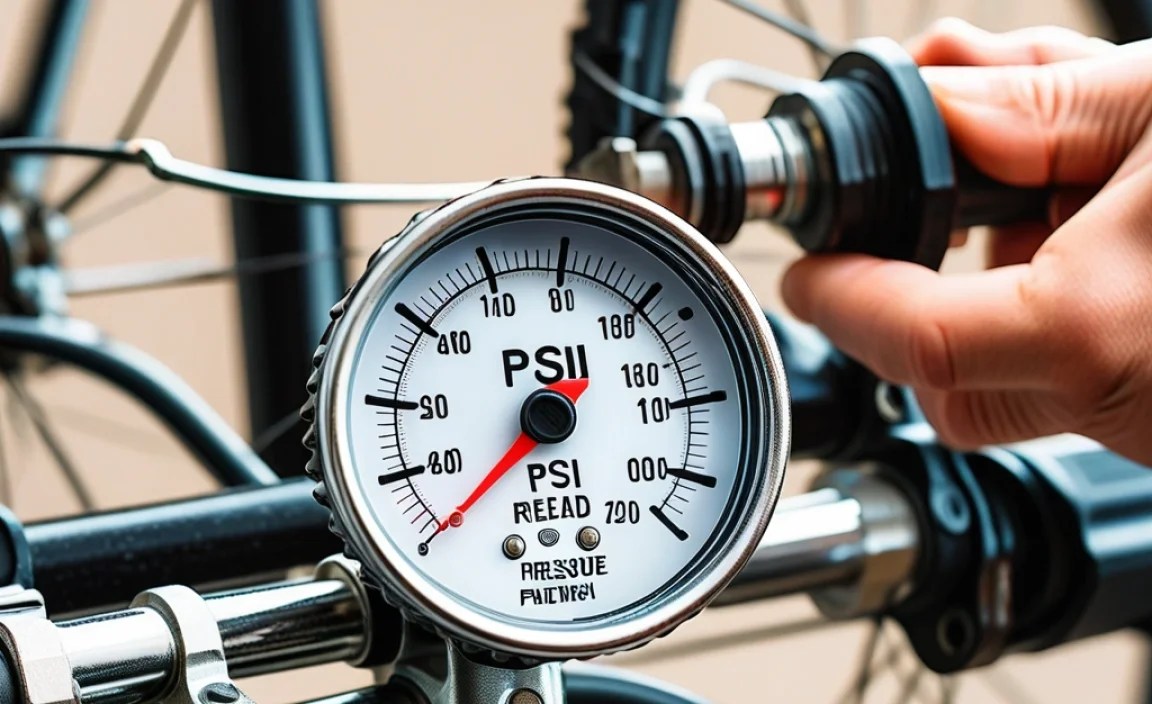
Different bike types need different PSI levels. Road bikes usually need higher PSI. This makes them fast and efficient on smooth roads. Mountain bikes need lower PSI. This gives them better grip on rough trails. Hybrid bikes are in between. They need a moderate PSI. This makes them good for both roads and trails. The right PSI depends on your bike type and riding style. It also depends on your weight. Heavier riders may need more PSI. Lighter riders may need less. Checking a PSI chart can help you find the right pressure. This improves your ride quality and safety. Knowing how to read PSI on a bike pressure gauge is essential, but knowing the right PSI to aim for is just as important.
| Bike Type | Recommended PSI Range | Why This PSI? |
|---|---|---|
| Road Bike | 80-130 PSI | Higher pressure for speed and efficiency on pavement. |
| Mountain Bike | 25-35 PSI | Lower pressure for better grip on trails. |
| Hybrid Bike | 40-70 PSI | Moderate pressure for mixed terrain. |
| BMX Bike | 40-60 PSI | Higher pressure for jumps and tricks. |
| Kids’ Bike | 30-50 PSI | Lower pressure for comfort and control. |
- Road bikes need high PSI for speed.
- Mountain bikes need low PSI for grip.
- Hybrid bikes need medium PSI for versatility.
- BMX bikes need specific PSI for tricks.
- Kids’ bikes need lower PSI for safety.
Using a PSI chart can help you find the right tire pressure. Remember that these are just general guidelines. The best PSI for you may vary. It depends on your weight, riding style, and the specific tires you use. Road bikes typically need high PSI. This reduces rolling resistance and makes you go faster. Mountain bikes need lower PSI. This allows the tires to conform to the terrain. It also provides better traction. Hybrid bikes are designed for a mix of surfaces. So, they need a medium PSI. BMX bikes often use higher PSI. This helps with jumps and tricks. Kids’ bikes need lower PSI for comfort and control. Always check the tire sidewall for the recommended range. Experiment to find what works best for you. Now you know more about how to read PSI on a bike pressure gauge and how to apply it to different bike types.
Fun Fact or Stat: Tire pressure can affect your rolling resistance, with optimal pressure reducing the energy needed to move forward.
Road Bike PSI Recommendations
What’s the right PSI for a road bike? Road bikes usually need high pressure. This makes them fast on smooth roads. A typical range is 80-130 PSI. But it depends on your weight and tire size. Lighter riders can use lower pressure. Heavier riders need higher pressure. Wider tires can handle lower pressure. Narrower tires need higher pressure. Experiment to find what works best for you. A good starting point is around 100 PSI. Then, adjust from there. Knowing how to read PSI on a bike pressure gauge is key to getting the right pressure.
Mountain Bike PSI Recommendations
What’s the right PSI for a mountain bike? Mountain bikes usually need lower pressure. This gives them better grip on trails. A typical range is 25-35 PSI. But it depends on the terrain and your weight. Softer trails need lower pressure. Harder trails need higher pressure. Lighter riders can use lower pressure. Heavier riders need higher pressure. Tubeless tires can run at even lower pressure. This gives you amazing grip. Experiment to find what works best for you. Knowing how to read PSI on a bike pressure gauge is important for trail safety.
Hybrid Bike PSI Recommendations
What’s the right PSI for a hybrid bike? Hybrid bikes are in between. They need a moderate pressure. This makes them good for both roads and trails. A typical range is 40-70 PSI. But it depends on your preferences. If you ride mostly on roads, use higher pressure. If you ride mostly on trails, use lower pressure. Experiment to find what works best for you. Start in the middle of the range. Then, adjust up or down. Knowing how to read PSI on a bike pressure gauge helps you fine-tune your ride.
Fun Fact or Stat: Running tubeless tires on a mountain bike allows you to use significantly lower PSI without the risk of pinch flats.
Common Mistakes When Checking PSI
Many people make mistakes when checking PSI. One common mistake is not checking often enough. Tires lose air over time. So, regular checks are important. Another mistake is using an inaccurate gauge. A cheap gauge might not give you a correct reading. Always use a good quality gauge. Some people also forget to check the tire sidewall. This tells you the recommended PSI range. Ignoring this range can lead to problems. Over or under inflating your tires is also a mistake. This can affect your ride quality and safety. Learning how to read PSI on a bike pressure gauge is important, but avoiding these mistakes is also crucial for tire maintenance.
- Not checking tire pressure frequently enough.
- Using an inaccurate or unreliable gauge.
- Ignoring the recommended PSI range on the tire.
- Over-inflating or under-inflating the tires.
- Failing to seat the gauge properly on the valve.
Avoiding these common mistakes will help you maintain your tires properly. Checking your tires regularly is key. Tires lose air slowly. So, check them at least once a week. Invest in a good quality gauge. A cheap gauge might not be accurate. Always check the tire sidewall for the recommended PSI range. This is important for safety and performance. Don’t over inflate your tires. This can make the ride bumpy. It can also increase the risk of a blowout. Don’t under inflate your tires. This can lead to pinch flats. It also makes pedaling harder. Make sure the gauge is seated properly on the valve. A loose connection can give you a false reading. By avoiding these mistakes, you can ensure your tires are always in good condition. Knowing how to read PSI on a bike pressure gauge is only half the battle; you also need to use the information correctly.
Fun Fact or Stat: Most tires lose about 1-2 PSI per day, so regular checks are essential for maintaining optimal performance.
Using an Inaccurate Pressure Gauge
Why is it bad to use an inaccurate pressure gauge? An inaccurate gauge gives you a false reading. You might think your tires are properly inflated. But they might be too high or too low. This can affect your ride quality and safety. Over inflated tires can be dangerous. They can blow out. Under inflated tires can lead to pinch flats. They also make pedaling harder. A good gauge is accurate and reliable. It gives you a true reading. Invest in a quality gauge. It’s worth the money. Knowing how to read PSI on a bike pressure gauge is useless if the gauge is wrong.
Ignoring The Recommended PSI Range
Why should you not ignore the recommended PSI range? The PSI range is there for a reason. It tells you the safe and optimal pressure for your tires. Inflating outside this range can be dangerous. Over inflating can cause a blowout. Under inflating can cause a pinch flat. The range also affects performance. The right pressure gives you the best grip and rolling resistance. Always check the sidewall for the recommended range. Stay within those numbers. Knowing how to read PSI on a bike pressure gauge is important, but knowing the right range is more important.
Over-Inflating Or Under-Inflating Tires
What happens if you over-inflate or under-inflate your tires? Over-inflating makes the ride bumpy. It also increases the risk of a blowout. The tire can explode if the pressure is too high. Under-inflating makes pedaling harder. It also increases the risk of a pinch flat. The tire can get pinched between the rim and the road. The right pressure gives you the best of both worlds. It’s a comfortable ride. It’s also an efficient ride. So, always aim for the sweet spot. Knowing how to read PSI on a bike pressure gauge helps you avoid these problems.
Fun Fact or Stat: Road bike tires are more susceptible to blowouts if over-inflated, especially on hot days.
Summary
Learning how to read PSI on a bike pressure gauge is a crucial skill for any cyclist. It helps you maintain your tires properly. This leads to a safer and more enjoyable ride. PSI stands for “pounds per square inch.” It measures the air pressure in your tires. Different bike types need different PSI levels. Road bikes need higher PSI, while mountain bikes need lower PSI. Always check the recommended PSI range on your tire’s sidewall. Use a good quality gauge to get an accurate reading. Checking your tire pressure regularly will help you avoid flats and improve your bike’s performance.
Conclusion
Knowing how to read PSI on a bike pressure gauge is a simple skill. It makes a big difference for your bike. Proper tire pressure improves your ride. It also keeps you safe. Check your tires often. Use a good gauge. Keep your tires inflated correctly. Enjoy your rides!
Frequently Asked Questions
Question No 1: What does PSI stand for in bike tire pressure?
Answer: PSI stands for “pounds per square inch”. It’s a measure of air pressure. In the context of bike tires, PSI tells you how much air is inside the tire. The higher the PSI, the more air pressure there is. The lower the PSI, the less air pressure there is. Knowing what PSI means is the first step in learning how to read PSI on a bike pressure gauge. It’s important to maintain the correct PSI for your bike tires to ensure optimal performance, safety, and comfort during your rides. Always check the recommended PSI range on the tire’s sidewall.
Question No 2: Where can I find the recommended PSI for my bike tires?
Answer: You can find the recommended PSI for your bike tires on the tire’s sidewall. Look for a set of numbers followed by “PSI”. For example, it might say “35-65 PSI”. This means the recommended pressure is between 35 and 65 pounds per square inch. The manufacturer puts this information there to help you maintain your tires properly. It’s important to stay within this range to avoid problems. Over-inflating or under-inflating your tires can lead to flats or other issues. Remember, knowing how to read PSI on a bike pressure gauge is important, but knowing the correct range is crucial.
Question No 3: How often should I check the PSI of my bike tires?
Answer: You should check the PSI of your bike tires regularly. A good rule of thumb is to check them before each ride. At the very least, check them once a week. Tires lose air over time. This is normal. Temperature changes can also affect the pressure. Checking frequently helps you keep the pressure right. It also helps you spot any slow leaks. Making it a habit to check your tires will ensure they are always ready to go. This small step can prevent flats and improve your riding experience. Also, learning how to read PSI on a bike pressure gauge can save you from potential tire issues.
Question No 4: What type of bike pressure gauge should I use?
Answer: There are two main types of bike pressure gauges: digital and analog. Digital gauges are very accurate. They show the PSI on a screen. Analog gauges use a needle. The needle points to the PSI. Both types can be good. It depends on your preferences. Digital gauges need batteries. Analog gauges don’t. Choose a gauge that is easy to read and use. Make sure it is compatible with your bike’s valves. Presta valves are common on road bikes. Schrader valves are like car tire valves. A good gauge will help you maintain your tires properly. Knowing how to read PSI on a bike pressure gauge is easier with a quality gauge.
Question No 5: What happens if I over-inflate my bike tires?
Answer: Over-inflating your bike tires can be dangerous. It can make the ride bumpy and uncomfortable. It also increases the risk of a blowout. A blowout is when the tire explodes. This can cause you to lose control of the bike. Always stay within the recommended PSI range. The range is printed on the tire’s sidewall. Don’t exceed the maximum pressure. If you accidentally over-inflate, release some air until you reach the correct pressure. Learning how to read PSI on a bike pressure gauge helps you avoid over-inflation.
Question No 6: What happens if I under-inflate my bike tires?
Answer: Under-inflating your bike tires can also cause problems. It can make pedaling harder. It also increases the risk of a pinch flat. A pinch flat is when the tire gets pinched between the rim and the road. This can cause a hole in the tube. Always stay within the recommended PSI range. If you accidentally under-inflate, add air until you reach the correct pressure. Checking your tires regularly and knowing how to read PSI on a bike pressure gauge will help you avoid under-inflation. Properly inflated tires will provide a smoother, safer, and more efficient ride.


