
What is the Cycle Setting on a Spectra Breast Pump? A Simple Guide

The cycle setting on a Spectra breast pump controls the number of suction cycles per minute. A higher cycle speed provides more frequent, gentler suctions, mimicking a baby’s natural nursing pattern. Adjusting the cycle setting, along with the suction level, helps customize your pumping experience for comfort and efficient milk expression.
Feeling lost with all the buttons and settings on your Spectra breast pump? You’re definitely not alone! Many new moms find the controls a bit confusing at first. The cycle setting is one of the key features that lets you personalize your pumping session, making it more comfortable and effective. Understanding how to adjust the cycle can truly make a difference in your milk output and overall experience.
In this guide, we’ll break down exactly what the cycle setting does, how to adjust it, and tips for finding the perfect setting for *you*. Ready to take control of your Spectra pump? Let’s get started!
Understanding the Cycle Setting

The cycle setting on your Spectra pump refers to the number of times the pump suctions and releases per minute. It’s measured in cycles per minute (CPM). Think of it as the *speed* of the pump. A higher cycle speed means more frequent, shorter suctions, while a lower cycle speed means fewer, longer suctions.
Why does this matter? Well, different cycle speeds can feel different and affect milk flow differently for each mom. Some women respond better to faster cycles, while others prefer a slower, stronger pull. It’s all about finding what works best for *your* body and your milk supply.
How to Adjust the Cycle Setting on Your Spectra Pump

Adjusting the cycle setting is usually pretty straightforward. Here’s a general guide, but always refer to your Spectra pump’s manual for specific instructions, as models can vary slightly:
- Turn on your pump: Press the power button to get started.
- Find the cycle control button: This is usually indicated by a wavy line symbol or labeled as “Cycle.”
- Adjust the speed: Use the up and down arrows (or rotary dial, depending on your model) to increase or decrease the cycle speed. The display will show the CPM.
- Start low: Begin with a higher cycle speed (around 70 CPM) and gradually decrease it until you find a comfortable and effective setting.
Cycle vs. Suction: What’s the Difference?

It’s easy to confuse cycle and suction settings, but they control different aspects of the pumping process:
- Cycle (Speed): Controls how *often* the pump suctions and releases per minute.
- Suction (Strength): Controls how *strong* the suction is during each cycle.
Think of it like this: Cycle is the rhythm, and suction is the intensity. You need to adjust *both* to find the perfect pumping experience.
Finding Your Ideal Cycle Setting

There’s no one-size-fits-all answer here. The best cycle setting is the one that feels most comfortable and helps you express the most milk. Here are some tips to help you find your sweet spot:
- Start in massage mode: Most Spectra pumps have a massage mode (also called stimulation mode) with a fast cycle speed to stimulate let-down. Use this for a few minutes before switching to expression mode.
- Listen to your body: Pay attention to how your breasts feel. If you experience pain or discomfort, reduce the suction level or increase the cycle speed.
- Experiment: Try different cycle speeds and suction levels to see what works best for you at different times of the day.
- Keep a log: Note the cycle speed, suction level, and milk output for each pumping session. This can help you identify patterns and optimize your settings.
- Consult a lactation consultant: If you’re struggling to find the right settings or experiencing pain, a lactation consultant can provide personalized guidance.
Troubleshooting Cycle Setting Issues
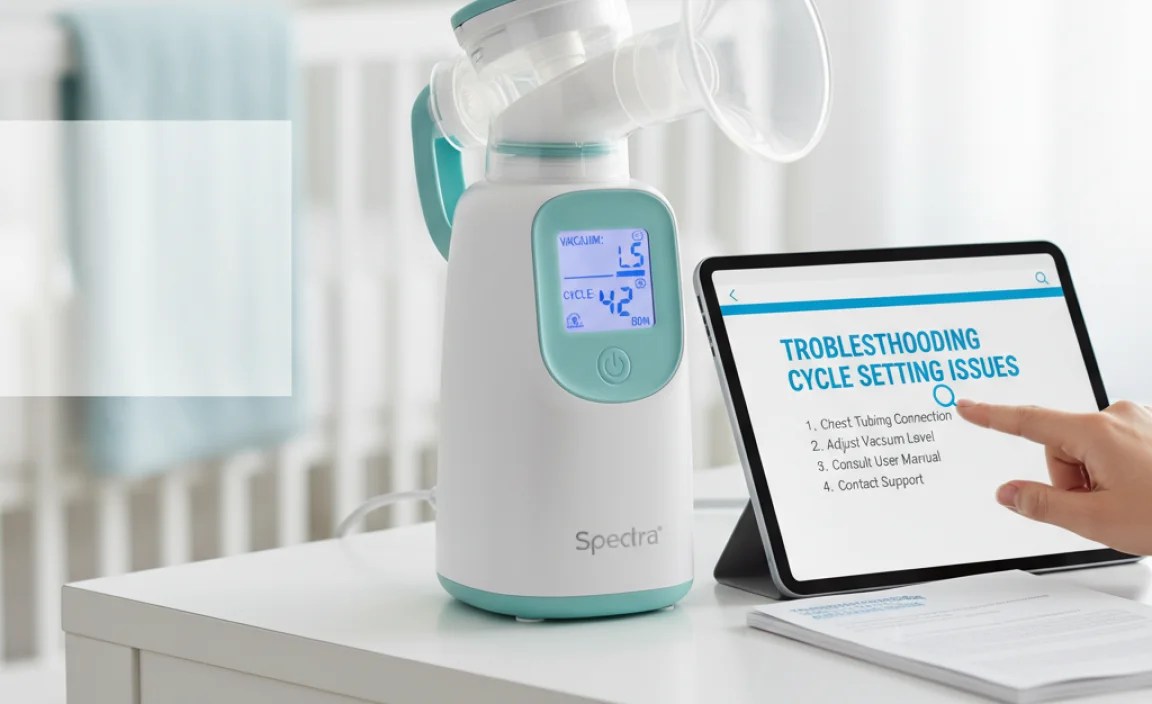
Sometimes, things don’t go as planned. Here are some common issues you might encounter and how to address them:
| Issue | Possible Cause | Solution |
|---|---|---|
| Pump feels too fast | Cycle speed is too high | Reduce the cycle speed gradually. |
| Pump feels too slow | Cycle speed is too low | Increase the cycle speed gradually. |
| Not expressing enough milk | Incorrect cycle/suction settings | Experiment with different combinations of cycle speed and suction level. Ensure proper flange fit. |
| Experiencing pain or discomfort | Suction too high or incorrect flange size | Reduce the suction level. Check flange size and ensure proper fit. |
| Pump suddenly stops cycling | Pump malfunction | Check the power cord and connections. If the problem persists, contact Spectra customer support. |
Advanced Cycle Setting Techniques
Once you’re comfortable with the basics, you can explore some advanced techniques to optimize your pumping:
- Varying cycle speeds: Some moms find it helpful to start with a fast cycle speed to stimulate let-down, then switch to a slower speed for more efficient milk expression, and then back to a faster speed to finish.
- Power pumping: This technique involves pumping for 20 minutes, resting for 10 minutes, pumping for 10 minutes, resting for 10 minutes, and pumping for 10 minutes. Use a cycle speed and suction level that you find comfortable for extended pumping.
- Pumping on the go: When pumping in a car or other less-than-ideal location, you might need to adjust the cycle speed and suction level to compensate for the movement and distractions.
Spectra Pump Models and Cycle Settings
Spectra offers various pump models, each with slightly different features and cycle settings. Here’s a brief overview:
| Model | Cycle Range (Approximate) | Key Features |
|---|---|---|
| Spectra S1/S2 | 38-54 CPM | Hospital-grade, rechargeable battery (S1), quiet operation, massage mode. |
| Spectra 9 Plus | 38-54 CPM | Portable, lightweight, rechargeable battery, massage mode. |
| Spectra Dew 350 | N/A (Vacuum Strength Adjustment) | Basic model, adjustable vacuum suction |
Note: Always consult your pump’s manual for precise cycle ranges and specific instructions.
The Importance of Proper Flange Fit
While we’re focusing on cycle settings, it’s crucial to mention flange fit. Using the wrong flange size can cause pain, reduce milk output, and even damage your nipples. A properly fitted flange should allow your nipple to move freely in the tunnel without rubbing or pinching.
If you’re experiencing pain or noticing that your nipple is rubbing against the sides of the flange, you likely need a different size. Spectra offers flanges in various sizes, and you can also find helpful guides online to determine the correct size for you. A lactation consultant can also assist with flange fitting.
Maintaining Your Spectra Pump for Optimal Performance
To ensure your Spectra pump continues to perform optimally, regular maintenance is essential:
- Clean after each use: Disassemble and wash all pump parts that come into contact with breast milk with warm, soapy water. Rinse thoroughly and air dry.
- Sterilize regularly: Sterilize pump parts regularly, especially when your baby is young or if they have any health concerns. You can use a microwave sterilizer, boiling water, or dishwasher (check your pump’s manual for specific instructions).
- Replace parts as needed: Replace valves, membranes, and tubing regularly, as they can wear out over time and affect pump performance. Spectra recommends replacing these parts every 3-6 months, depending on usage.
- Check for damage: Inspect all pump parts regularly for any signs of damage, such as cracks, tears, or discoloration. Replace any damaged parts immediately.
- Store properly: Store your pump and its parts in a clean, dry place when not in use.
Maximizing Milk Output: Beyond Cycle Settings
While cycle settings play a crucial role, several other factors can influence your milk output:
- Stay hydrated: Drink plenty of water throughout the day.
- Eat a balanced diet: Nourish your body with healthy foods.
- Get enough rest: Sleep deprivation can negatively impact milk supply.
- Reduce stress: Stress can interfere with let-down. Find ways to relax and manage stress.
- Pump regularly: Pump frequently, especially in the early weeks, to establish a good milk supply.
- Try galactagogues: Some foods and herbs, such as oatmeal, fenugreek, and blessed thistle, are believed to increase milk supply. Consult with your doctor or a lactation consultant before taking any supplements.
When to Seek Professional Help
While this guide provides helpful information, there are times when it’s best to seek professional help:
- You’re experiencing persistent pain or discomfort while pumping.
- You’re not expressing enough milk, despite trying different cycle settings and techniques.
- You have concerns about your milk supply.
- You have questions about pumping or breastfeeding.
A lactation consultant can provide personalized guidance and support to help you overcome any challenges you may be facing.
FAQ About Cycle Settings on Spectra Pumps
What is the best cycle speed for milk letdown?
A faster cycle speed, usually in massage mode (around 70 CPM or higher), is generally best for stimulating milk letdown. This mimics the rapid sucking of a baby at the beginning of a feeding.
How do I know if my cycle speed is too high?
If the pumping feels uncomfortable, causes nipple pain, or doesn’t seem to be effectively expressing milk, the cycle speed might be too high. Reduce the speed gradually until you find a more comfortable and productive setting.
Can the cycle setting affect my milk supply?
Yes, the cycle setting, along with the suction level, can affect your milk supply. Finding the right combination that works for your body is crucial for efficient milk expression and maintaining a healthy milk supply.
Is there a difference between cycle settings on different Spectra models?
While the basic function of the cycle setting is the same across Spectra models, the specific cycle ranges and how they’re adjusted may vary. Always refer to your pump’s manual for detailed instructions.
What should I do if my Spectra pump isn’t cycling properly?
First, check the power cord and connections. If the pump is still not cycling correctly, it could be a malfunction. Contact Spectra customer support for assistance or to inquire about repairs.
Can I change the cycle setting during a pumping session?
Yes, you can and should experiment with different cycle settings during a pumping session to find what works best for you at different points. Many moms start with a faster cycle to stimulate letdown and then switch to a slower cycle for more efficient milk removal.
Does a higher cycle speed always mean more milk?
Not necessarily. While a faster cycle speed can help initiate letdown, a slower, more comfortable cycle speed with appropriate suction may be more effective for overall milk removal. It’s about finding the balance that works for your body.
Conclusion
Understanding the cycle setting on your Spectra breast pump is a key step towards a more comfortable and efficient pumping experience. By experimenting with different cycle speeds and suction levels, and by paying attention to your body’s cues, you can find the perfect settings to maximize your milk output and make pumping a more pleasant part of your breastfeeding journey. Remember to consult your pump’s manual for specific instructions and don’t hesitate to reach out to a lactation consultant for personalized guidance if needed. Happy pumping!
“`


