
Bicycle Floor Pump: Find YOUR Perfect Tire Pressure

Have you ever seen a bike with flat tires? It cannot move. A bicycle floor pump can help. It fills the tires with air. Then the bike can roll again. It makes riding fun and easy.
Do you know how pumps work? They push air into the tire. This makes the tire firm. A good pump is very important. It keeps your bike ready to go.
Key Takeaways
- A bicycle floor pump helps keep your tires properly inflated.
- Using the right pressure makes biking easier and safer for you.
- Look for pumps with gauges to measure air pressure correctly.
- Different pumps work best with different types of bike valves.
- Keeping your tires inflated saves energy and prevents flats.
Choosing the Right Bicycle Floor Pump

Choosing the right bicycle floor pump is important. You want one that works well. You also want one that lasts a long time. There are many things to think about. Consider the type of valve your bike has. Some bikes use Schrader valves. Others use Presta valves. Make sure the pump works with your valve type. Some pumps can handle both. Look for a pump with a gauge. A gauge tells you how much air is in the tire. This helps you avoid over or under-inflating your tires. Think about the size of the pump. A bigger pump might push more air. But a smaller pump might be easier to store. Read reviews before you buy. See what other people say about the pump. This can help you make a good choice.
- Check the type of valve on your bike tires.
- Look for a pump with an easy-to-read gauge.
- Consider the size and weight of the pump.
- Read reviews from other bike riders.
- Make sure the pump is made well.
A good bicycle floor pump makes a big difference. It can make pumping tires much easier. It can also help your tires last longer. A pump with a gauge is very helpful. It lets you put the right amount of air in your tires. Too much air can make the ride bumpy. Not enough air can make it hard to pedal. The right amount of air makes biking more fun. Think about where you will store the pump. If you have little space, get a smaller one. If you have lots of bikes, get a strong one. A good pump is a great tool for any bike rider.
What Type of Valves Do You Have?
Do you know what kind of valves your bike tires have? There are two main types: Schrader and Presta. Schrader valves are like the ones on car tires. They are wider and have a pin in the middle. Presta valves are thinner and have a nut on the end. You need to unscrew the nut before you pump air. Knowing your valve type is important. It helps you choose the right pump. Some pumps only work with one type of valve. Others can work with both. Look for a pump that fits your needs. Using the wrong pump can be hard. It might even damage your valve. So, check your valves before you buy a pump.
What is a Good Pressure Gauge?
Have you ever pumped too much air into a tire? It can be dangerous. A good pressure gauge can help. It tells you how much air is in the tire. Look for a gauge that is easy to read. Some gauges have big numbers. Others have a needle that points to the pressure. Make sure the gauge shows the right units. PSI and bar are common units. Know what pressure your tires need. This is usually written on the side of the tire. A good gauge helps you get the pressure just right. This makes biking safer and more fun. It also helps your tires last longer.
What Size Pump Do You Need?
Do you have a small bike or a big bike? The size of your bike can help you decide what size pump you need. A small pump might work for a small bike. But a bigger pump might be better for a big bike. Bigger pumps usually push more air with each pump. This can make it faster to fill your tires. But bigger pumps can also be harder to store. Think about where you will keep the pump. If you have little space, a smaller pump is better. If you have lots of space, a bigger pump might be okay. Choose a size that works for you.
Fun Fact or Stat: The first bicycle pump was invented in the late 1800s, shortly after the invention of the pneumatic tire!
How to Use a Bicycle Floor Pump Correctly

Using a bicycle floor pump the right way is key. First, make sure the pump head fits your tire valve. If you have a Presta valve, unscrew the valve nut a little. Then, push the pump head onto the valve. Make sure it is on tight. Now, lock the pump head to the valve. Most pumps have a lever to do this. Start pumping the handle up and down. Watch the gauge to see the pressure. Stop when you reach the right pressure. Unlock the pump head and take it off the valve. If you have a Presta valve, screw the valve nut back on. Check the tire to make sure it feels firm. If it is too soft, add more air. If it is too hard, let some air out.
- Make sure the pump head fits your valve.
- Lock the pump head onto the valve.
- Pump the handle up and down smoothly.
- Watch the gauge to check the pressure.
- Remove the pump head carefully.
- Check the tire pressure by feel.
It is important to use the bicycle floor pump correctly. This will help you avoid problems. If the pump head does not fit, do not force it. You might damage the valve. Make sure the pump head is locked on tight. If it is loose, air will leak out. Pump the handle smoothly. Do not pump too fast or too slow. Watch the gauge carefully. Over-inflating the tire can cause it to burst. Under-inflating the tire can make it hard to pedal. Take your time and do it right. With practice, you will become a pro at using a bike pump.
How Do I Attach the Pump Head?
Attaching the pump head can be tricky. First, know what kind of valve you have. Schrader valves have a wide opening. Presta valves have a small opening with a nut. Open the pump head lever. This loosens the inside. Put the pump head on the valve. Make sure it goes on straight. Close the lever to lock it. If it is too loose, adjust the tightness. Some pump heads work for both valve types. You might need to flip a part inside. Make sure it is set for the right valve. A good fit is important. It keeps air from leaking out.
How Do I Read the Pressure Gauge?
Reading the pressure gauge is very important. It tells you how much air is in the tire. Look for the numbers on the gauge. They show the pressure in PSI or bar. Find out what pressure your tires need. It is usually on the side of the tire. Pump until the needle reaches the right number. Do not go over or under. Some gauges have two scales. One for PSI and one for bar. Make sure you are reading the right scale. A good gauge helps you get the pressure just right. This makes your ride safe and fun.
What if Air is Leaking Out?
Sometimes air leaks out when you pump. This can be frustrating. First, check the pump head. Make sure it is locked on tight. If it is loose, air will leak. Also, check the valve. Make sure it is not damaged. If the valve is bent, it might leak. Try a different pump head. Maybe yours is worn out. If the tire has a hole, air will leak out fast. You might need to patch the tire. Or you might need a new tire. Finding the leak can be hard. But fixing it will make pumping much easier.
Fun Fact or Stat: Tire pressure is measured in PSI (pounds per square inch) or BAR (a metric unit). Check your tire’s sidewall for the recommended PSI!
Maintaining Your Bicycle Floor Pump
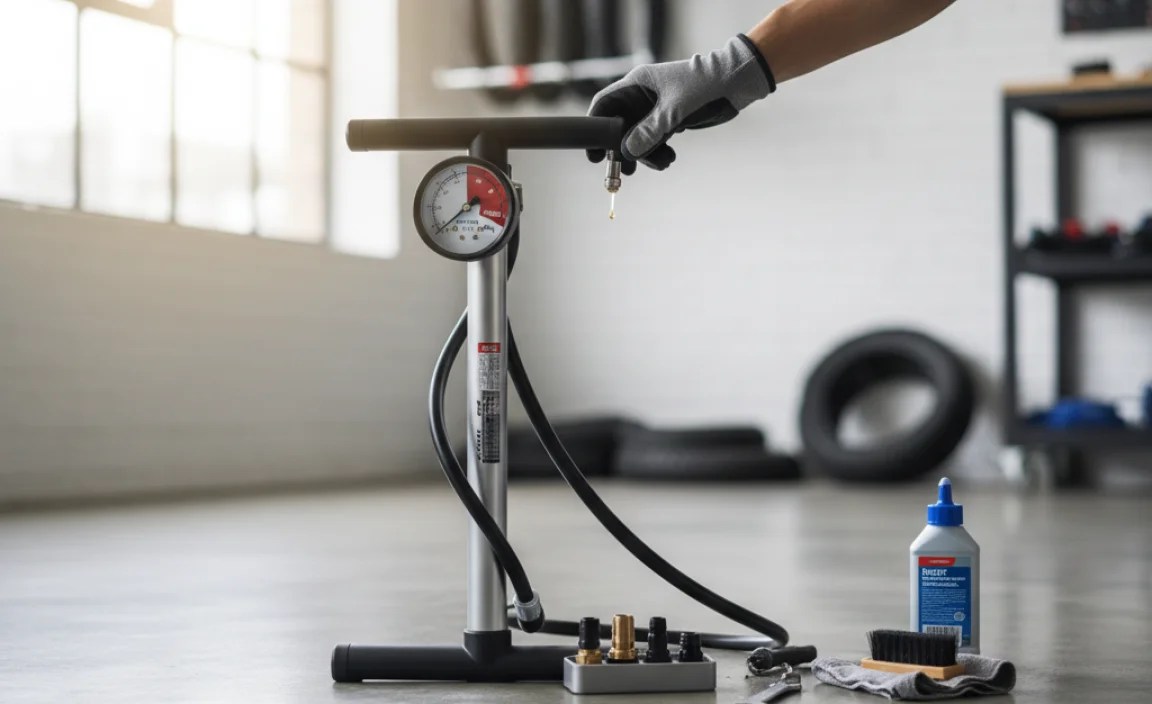
Taking care of your bicycle floor pump is important. It helps it last longer. Keep it clean. Wipe off any dirt or mud. Store it in a dry place. This stops it from rusting. Check the hose for cracks. If you see any, replace the hose. Oil the moving parts. This keeps them working smoothly. Check the pump head. Make sure it fits your valves well. If it is loose, tighten it or replace it. Some pumps have parts that wear out. You can buy new parts to fix them. Read the pump’s instructions. They tell you how to take care of it. A little care can make your pump last a long time.
- Wipe down your pump after each use.
- Store the pump in a dry place.
- Check the hose for cracks or wear.
- Oil the moving parts regularly.
- Replace worn-out parts as needed.
A well-maintained bicycle floor pump is a good investment. It will save you money in the long run. If you take care of it, you won’t have to buy a new one so soon. Cleaning the pump is easy. Just wipe it down with a damp cloth. Storing it in a dry place is also easy. Put it in a shed or garage. Checking the hose and oiling the parts takes a little more time. But it is worth it. Replacing parts can be tricky. But many bike shops can help. Taking care of your pump is like taking care of your bike. It keeps everything running smoothly.
How Often Should I Clean My Pump?
How often should you clean your pump? It depends on how often you use it. If you use it every day, clean it once a week. If you use it once a month, clean it every few months. Cleaning it keeps dirt from getting inside. Dirt can damage the pump. Wipe it down with a damp cloth. Pay attention to the pump head. It can get dirty from the tire valves. Use a small brush to clean it. Keep your pump clean for best results. This helps it last longer and work better.
How Do I Check the Hose for Cracks?
The hose is an important part of your pump. It carries the air to the tire. If the hose has cracks, air will leak out. Check the hose often. Look for small lines or splits. Bend the hose to see if any cracks open up. If you see cracks, replace the hose. You can buy a new hose at a bike shop. Replacing the hose is easy. It can save you from having to buy a new pump. A good hose is important for pumping tires.
How Do I Oil the Moving Parts?
Oiling the moving parts keeps your pump working well. The handle and the piston need oil. Use a light oil, like bike chain oil. Put a few drops on the moving parts. Pump the handle a few times to spread the oil. Do this every few months. It keeps the pump smooth. It also stops rust from forming. A little oil can make a big difference. Your pump will be easier to use. It will also last longer. Oiling the parts is a simple way to care for your pump.
Fun Fact or Stat: Regularly oiling the piston and other moving parts can significantly extend the life of your bicycle floor pump!
Troubleshooting Common Bicycle Floor Pump Issues
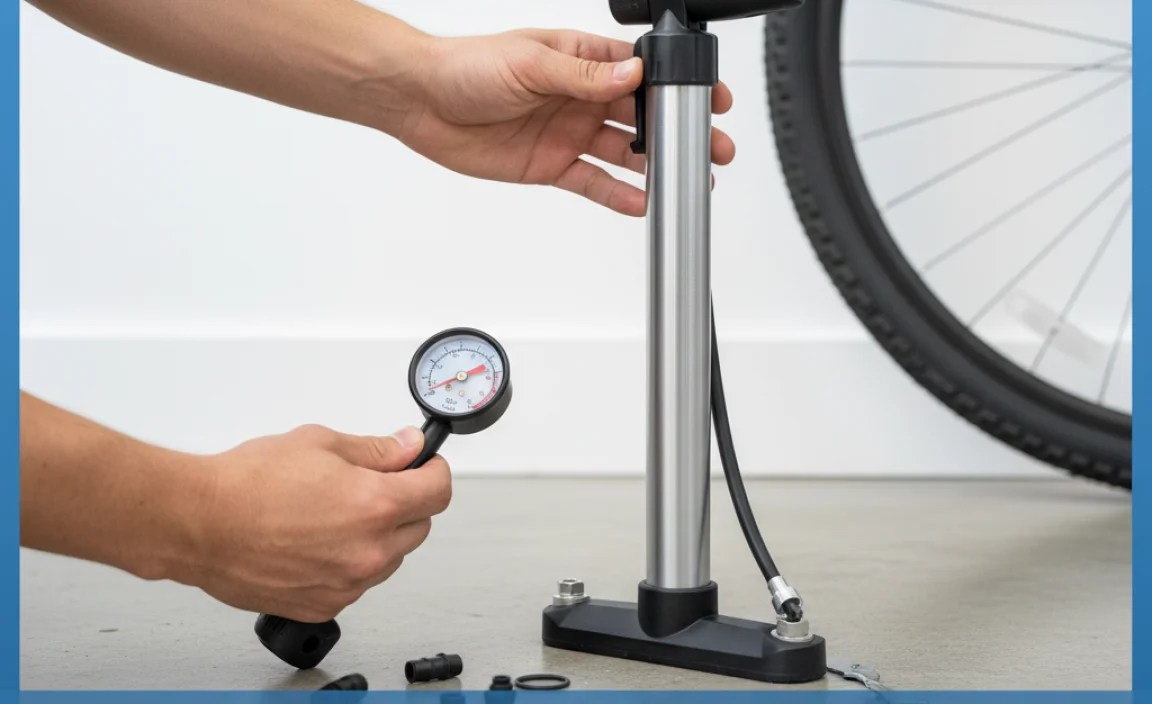
Sometimes, a bicycle floor pump might not work right. You might have some problems. One common problem is air leaking. This can happen if the pump head is not on tight. Make sure it is locked onto the valve. Another problem is a broken hose. If the hose has a hole, air will leak out. Replace the hose if this happens. Sometimes, the pump might be hard to push. This can be because the piston is dry. Oil the piston to make it easier to pump. If the gauge does not work, it might be broken. You might need to replace the gauge. Check the pump’s instructions for more help.
- Check for air leaks around the pump head.
- Inspect the hose for holes or cracks.
- Oil the piston if the pump is hard to push.
- Make sure the gauge is working correctly.
- Read the pump’s instructions for help.
It is good to know how to fix common bicycle floor pump problems. This can save you time and money. If air is leaking, try a new pump head. Sometimes the old one wears out. If the hose is broken, a new hose is easy to install. Oiling the piston is simple. Just put a few drops of oil on it. If the gauge is broken, you can buy a new one. Many bike shops sell pump parts. Fixing your pump is better than buying a new one. It is also good for the environment.
What if the Pump Head Won’t Lock?
If the pump head won’t lock, check the lever. Make sure it moves freely. Sometimes the lever gets stuck. Try oiling the lever. If the lever is broken, you need a new pump head. Also, check the rubber inside the pump head. If it is worn out, it won’t grip the valve. You can buy a new rubber part. Make sure you get the right size. A pump head that locks well is important. It keeps air from leaking out.
What if the Hose is Cracked?
A cracked hose can cause air to leak. This makes it hard to pump tires. Check the hose carefully for cracks. Bend it to see if any cracks open up. If you see cracks, replace the hose. You can buy a new hose at a bike shop. Make sure you get the right size. Replacing the hose is easy. It can save you from buying a new pump. A good hose is important for pumping tires.
What if the Gauge Isn’t Working?
If the gauge isn’t working, you won’t know the tire pressure. This can be dangerous. Check the gauge for damage. If the needle is stuck, try tapping it gently. If the gauge is still not working, replace it. You can buy a new gauge at a bike shop. Make sure you get the right size. A working gauge is important. It helps you get the tire pressure just right. This makes biking safer and more fun.
Fun Fact or Stat: Most bicycle floor pumps are designed to be easily repairable, with replacement parts readily available!
Comparing Different Types of Bicycle Floor Pumps

There are many types of bicycle floor pumps. Some are big and strong. Others are small and light. Some have fancy features. Others are simple and basic. Think about what you need in a pump. A big pump can fill tires faster. A small pump is easier to carry. A fancy pump might have a digital gauge. A basic pump might be cheaper. Read reviews and compare prices. This will help you find the best pump for you. Consider the types of bikes you own. Some pumps work better with certain bikes.
- Consider the size and weight of the pump.
- Think about the types of valves on your bikes.
- Look at the pressure gauge and its features.
- Read reviews and compare prices.
- Consider the pump’s durability.
It is important to compare bicycle floor pumps before you buy one. Look at the different features. Some pumps have a wide base. This makes them stable. Some have a long hose. This makes it easier to reach the tires. Some have a comfortable handle. This makes pumping easier. Think about what is important to you. Do you want a pump that is easy to use? Or do you want a pump that is very accurate? Do your research and find the best pump for your needs.
What are the Benefits of a Tall Pump?
A tall pump can be easier to use. You don’t have to bend over as much. This can save your back. Tall pumps often have longer strokes. This means they push more air with each pump. This can fill your tires faster. Tall pumps are good for people who have trouble bending. They are also good for people who want to fill tires quickly. A tall pump can be a good choice for many riders.
What are the Benefits of a Short Pump?
A short pump is easier to store. It takes up less space. This is good if you have a small apartment. Short pumps are also lighter. This makes them easier to carry. You can take them with you on trips. Short pumps are good for people who have little storage space. They are also good for people who travel a lot. A short pump can be a good choice for some riders.
What About Digital Gauges?
Digital gauges are very accurate. They show the tire pressure in numbers. This is easier to read than a needle gauge. Digital gauges can also show different units. You can switch between PSI and bar. Some digital gauges have other features. They can remember your favorite pressure. They can also turn off automatically. Digital gauges are good for people who want accuracy. They are also good for people who like gadgets.
Fun Fact or Stat: Digital gauges on bicycle pumps can offer accuracy within 1 PSI, helping you fine-tune your tire pressure!
Understanding Tire Pressure and Your Bike
Knowing about tire pressure is important for biking. Tire pressure is how much air is in your tires. The right pressure makes biking easier. It also makes it safer. Too little air makes it hard to pedal. Too much air can make the ride bumpy. Check your tires before each ride. Use a bicycle floor pump to add air if needed. The right pressure depends on your tires. It also depends on your weight. Look on the side of the tire. It will tell you the right pressure range. Use a pump with a gauge to get the pressure right.
- Check your tire pressure before each ride.
- Find the recommended pressure on your tire’s sidewall.
- Use a pump with a gauge to measure pressure.
- Adjust pressure for your weight and riding style.
- Proper tire pressure makes biking safer and easier.
Getting the tire pressure right is key. It affects how your bike rides. It also affects how long your tires last. Too little pressure can cause flats. Too much pressure can damage the tires. Use a bicycle floor pump to add air. A pump with a gauge is very helpful. It lets you get the pressure just right. Experiment with different pressures. See what feels best for you. Remember to check your tires often. Tire pressure can change over time. Keep your tires properly inflated for the best ride.
What Happens With Too Little Air?
Too little air in your tires can cause problems. It makes it harder to pedal. The tires have more friction with the road. This slows you down. It also makes you work harder. Too little air can also cause flats. The tire can get pinched between the rim and the road. This can damage the tire. Check your tires often. Use a pump to add air when needed. Keep your tires properly inflated for a better ride.
What Happens With Too Much Air?
Too much air in your tires can also cause problems. It makes the ride bumpy. The tires don’t absorb bumps as well. This can be uncomfortable. Too much air can also damage the tires. It can cause them to burst. This can be dangerous. Check your tires often. Let some air out if needed. Keep your tires properly inflated for a safer ride.
How Does Weight Affect Tire Pressure?
Your weight affects the tire pressure you need. If you are heavier, you need more air. This is because your weight puts more pressure on the tires. If you are lighter, you need less air. This is because your weight puts less pressure on the tires. Adjust the tire pressure for your weight. This will give you the best ride. Check your tires often. Adjust the pressure as needed.
Fun Fact or Stat: Proper tire pressure can reduce rolling resistance by up to 20%, making your rides faster and easier!
Bicycle Floor Pump Safety Tips
Using a bicycle floor pump is usually safe. But you should still be careful. Always check the tire pressure. Do not over-inflate the tires. This can cause them to burst. Wear safety glasses when pumping. This protects your eyes from flying debris. Keep the pump in good condition. Check the hose for cracks. Oil the moving parts. Store the pump in a safe place. Keep it away from children. Read the pump’s instructions before using it. Follow these safety tips for a safe pumping experience.
- Always check the tire pressure gauge.
- Do not over-inflate your tires.
- Wear safety glasses to protect your eyes.
- Keep the pump in good working order.
- Store the pump safely away from children.
Following safety tips is important. It keeps you safe while pumping tires. Always use a bicycle floor pump in a well-lit area. This helps you see what you are doing. Make sure the pump is stable. This prevents it from falling over. Be careful when removing the pump head. Do not pull too hard. This can damage the valve. If you have any problems, stop pumping. Ask an adult for help. Staying safe is the most important thing.
Why Wear Safety Glasses?
Wearing safety glasses protects your eyes. Sometimes, small pieces of dirt can fly up. These pieces can get in your eyes. This can be painful. Safety glasses keep the dirt out. They also protect your eyes from bursting tires. If a tire bursts, pieces of rubber can fly. Safety glasses keep your eyes safe. Always wear safety glasses when pumping tires. It is a simple way to protect yourself.
How Do I Avoid Over-Inflating?
Over-inflating tires can be dangerous. It can cause them to burst. Always check the tire pressure gauge. Find the recommended pressure on the tire. Do not pump past that number. Stop pumping when you reach the right pressure. Check the pressure again after pumping. Let some air out if needed. Avoiding over-inflation keeps you safe. It also protects your tires.
What Should I Do If I Have Problems?
Sometimes, you might have problems with the pump. The pump head might not lock. The hose might be cracked. The gauge might not work. If you have any problems, stop pumping. Ask an adult for help. Do not try to fix the pump yourself. You might make the problem worse. An adult can help you fix the pump. They can also show you how to use it safely.
Fun Fact or Stat: Over-inflating your bicycle tires can reduce their lifespan by up to 30%!
Summary
A bicycle floor pump is a very useful tool. It helps you keep your tires inflated. This makes biking easier and safer. Choose a pump that works for your bike. Look for a pump with a gauge. This helps you get the right pressure. Take care of your pump. Keep it clean and oiled. Know how to fix common problems. Check your tire pressure often. The right pressure makes biking more fun.
Remember to choose the right pump for you. Think about the type of valves you have. Also, think about the size of the pump. A good pump will last for years. It will help you enjoy biking. Keep your tires inflated. It keeps you rolling smoothly.
Conclusion
A bicycle floor pump is a must-have for bike owners. It keeps your tires at the right pressure. This makes riding safer and more fun. Pick a pump that fits your needs and bike type. Check your tires often and add air when needed. With the right pump, you will be ready for any adventure.
Frequently Asked Questions
Question No 1: Why do I need a bicycle floor pump?
Answer: A bicycle floor pump is important for keeping your bike tires properly inflated. Proper inflation makes riding easier and safer. It reduces the risk of flat tires. It also helps your tires last longer. A floor pump is more efficient than a small hand pump. It lets you fill your tires quickly and easily. It often includes a gauge to monitor the pressure. This helps you avoid over or under-inflating your tires. Proper tire inflation improves your riding experience.
Question No 2: How often should I check my tire pressure?
Answer: You should check your tire pressure before each ride. Tire pressure can change over time. It can decrease due to small leaks. Changes in temperature can also affect pressure. Checking before each ride ensures your tires are properly inflated. This helps you avoid flats and makes riding easier. It also helps you maintain control of your bike. Regular checks keep you safe and improve your ride. It only takes a few minutes to check.
Question No 3: What is the correct tire pressure for my bike?
Answer: The correct tire pressure is usually printed on the side of your tire. Look for a range in PSI (pounds per square inch). The correct pressure depends on your tire size and type. It also depends on your weight and riding style. A higher pressure is good for smooth roads. A lower pressure is good for rough roads. Experiment to find what feels best for you. Always stay within the recommended range. Using a bicycle floor pump with a gauge helps you get the pressure right.
Question No 4: Can I use a car tire pump on my bicycle?
Answer: You can sometimes use a car tire pump on your bicycle. It depends on the valve type. Most car pumps fit Schrader valves. Some bikes have Schrader valves. If your bike has Presta valves, you need an adapter. An adapter lets you connect the car pump to the Presta valve. Be careful not to over-inflate the tire. Car pumps can fill tires very quickly. A bicycle floor pump is usually a better choice. It is designed for bike tires. It gives you more control.
Question No 5: How do I know if my bicycle floor pump is working correctly?
Answer: There are a few ways to check if your bicycle floor pump is working right. First, check the gauge. Does it show the pressure changing when you pump? If not, the gauge might be broken. Next, listen for air leaks. Are you losing air around the pump head? If so, the pump head might not be tight. Also, feel the tire. Does it feel firmer after pumping? If not, the pump might not be pushing air. If you have any problems, check the pump’s instructions.
Question No 6: What should I do if my tire keeps losing air?
Answer: If your tire keeps losing air, you might have a leak. Check the tire for punctures. Look for small holes or cuts. You can also put the tire in water. Look for bubbles. The bubbles show where the air is leaking. If you find a small hole, you can patch the tire. If the hole is big, you might need a new tire. Also, check the valve. Make sure it is tight. A loose valve can also cause air leaks. A bicycle floor pump is helpful for keeping tires topped off until you can fix the leak.


