How to Pump Air in Cycle Tyre: A Beginner’s Guide

Quick Summary: Pumping air into your bike tires is easy! First, find your tire’s recommended PSI (pounds per square inch). Then, connect your pump to the valve (either Schrader or Presta). Lock the pump head onto the valve. Finally, pump until you reach the recommended PSI. Check the pressure with a gauge, and you’re ready to ride!
Ever felt your bike struggling, making each pedal stroke harder than it should be? Or maybe you’ve experienced the dreaded pinch flat? Often, the culprit is simply low tire pressure. It’s a common issue, but thankfully, it’s also one of the easiest bike maintenance tasks to master. Properly inflated tires make your ride smoother, faster, and safer. In this guide, we’ll walk you through each step, from identifying your valve type to achieving the perfect PSI. Let’s get pumping!
1. Gather Your Tools and Information

Before you start, make sure you have everything you need. This will make the process smoother and prevent any frustrating interruptions.
What You’ll Need:
- Bike Pump: A floor pump is recommended for ease of use and accuracy. A hand pump is a good portable option for emergencies.
- Tire Pressure Gauge: Many floor pumps have a built-in gauge, but a separate gauge can provide more accurate readings.
- Your Bike: Obviously!
- Recommended Tire Pressure: This is usually printed on the sidewall of your tire.
Understanding Tire Pressure (PSI)
PSI stands for pounds per square inch. It’s the unit used to measure the amount of air in your tire. The correct PSI is crucial for optimal performance and preventing flats. Check the sidewall of your tire for the recommended PSI range. For example, it might say “50-85 PSI.”
Different types of bikes and tires require different PSI levels. Here’s a general guideline:
- Road Bikes: 80-130 PSI
- Mountain Bikes: 25-35 PSI (lower for tubeless setups)
- Hybrid Bikes: 50-70 PSI
- Gravel Bikes: 30-60 PSI
Note: These are just general guidelines. Always refer to the recommended PSI printed on your specific tire.
2. Identify Your Valve Type
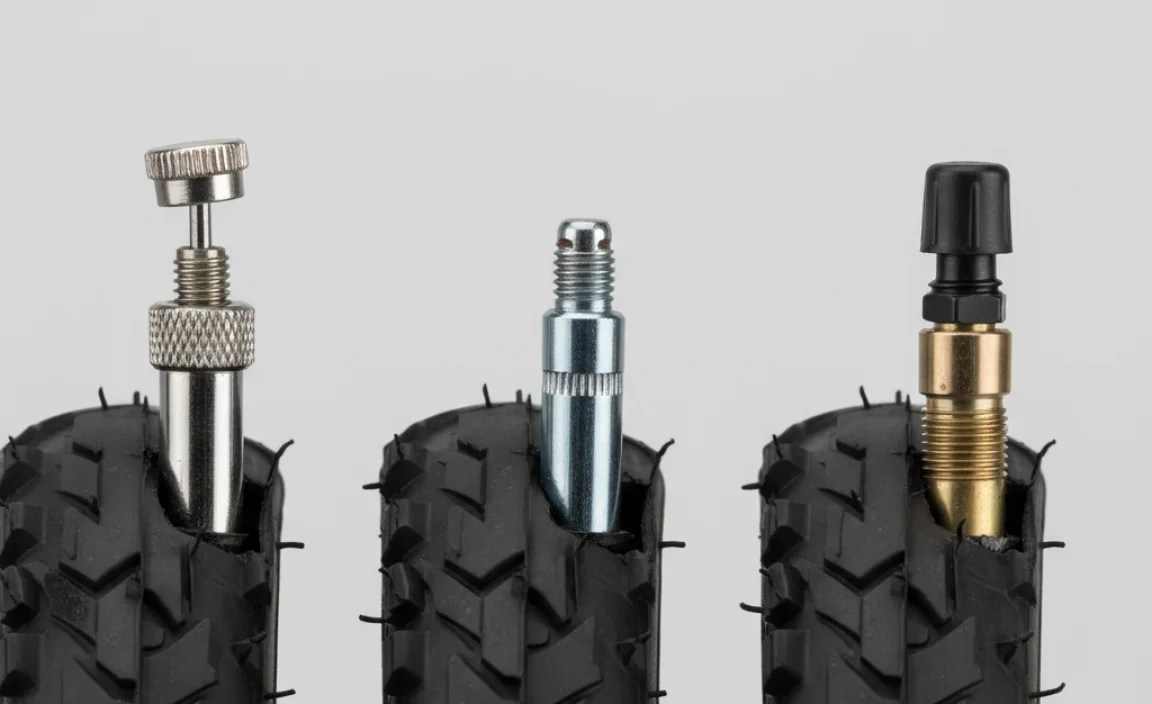
There are two main types of valves you’ll encounter on bike tires: Schrader and Presta. Knowing which one you have is essential for using the correct pump.
Schrader Valves
Schrader valves are the same type you find on car tires. They are wider and have a spring-loaded pin in the center.
Characteristics of Schrader Valves:
- Wider and sturdier appearance.
- Spring-loaded pin visible in the center.
- Common on mountain bikes, hybrid bikes, and some entry-level road bikes.
Presta Valves
Presta valves are narrower and have a locking nut at the tip. You need to unscrew the nut to inflate the tire.
Characteristics of Presta Valves:
- Narrower and more delicate appearance.
- Locking nut at the tip that needs to be unscrewed.
- Common on road bikes and higher-end mountain bikes.
Identifying Your Valve: Look closely at the valve on your tire. Is it wide like a car tire valve (Schrader), or narrow with a small nut at the end (Presta)?
3. Prepare Your Pump
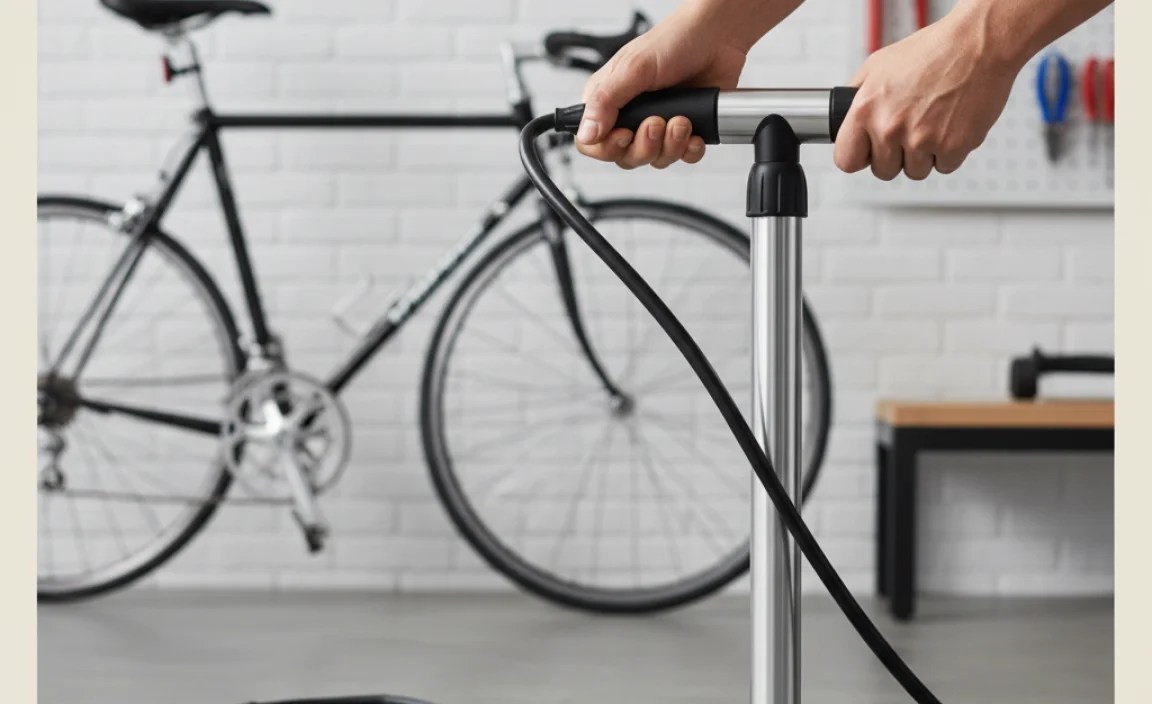
Now that you know your valve type, it’s time to prepare your pump. Most pumps have a dual head that can accommodate both Schrader and Presta valves. Some pumps require you to disassemble and reassemble the head to switch between valve types, while others have a simple switch or lever.
Adjusting Your Pump Head
Here’s how to adjust your pump head for each valve type:
For Schrader Valves:
- Ensure the pump head is set to the Schrader setting. This might involve flipping a lever or disassembling and reassembling the head.
- The opening for the Schrader valve is usually wider.
For Presta Valves:
- Ensure the pump head is set to the Presta setting.
- The opening for the Presta valve is usually narrower.
Loosening the Presta Valve Nut
If you have a Presta valve, you need to loosen the locking nut before attaching the pump. Simply unscrew it a few turns until it’s loose. Don’t remove it completely.
4. Attach the Pump to the Valve

Now for the crucial step: connecting the pump to the valve. This requires a bit of finesse to ensure a secure and airtight connection.
Attaching to a Schrader Valve:
- Place the pump head straight onto the valve.
- Press firmly until the pump head is fully seated on the valve.
- Engage the locking lever (if your pump has one). This secures the pump head to the valve.
Attaching to a Presta Valve:
- Place the pump head straight onto the valve.
- Press firmly until the pump head is fully seated on the valve.
- Engage the locking lever (if your pump has one).
Important: A hissing sound indicates that the pump head is not properly sealed. Readjust the pump head until the hissing stops.
5. Start Pumping
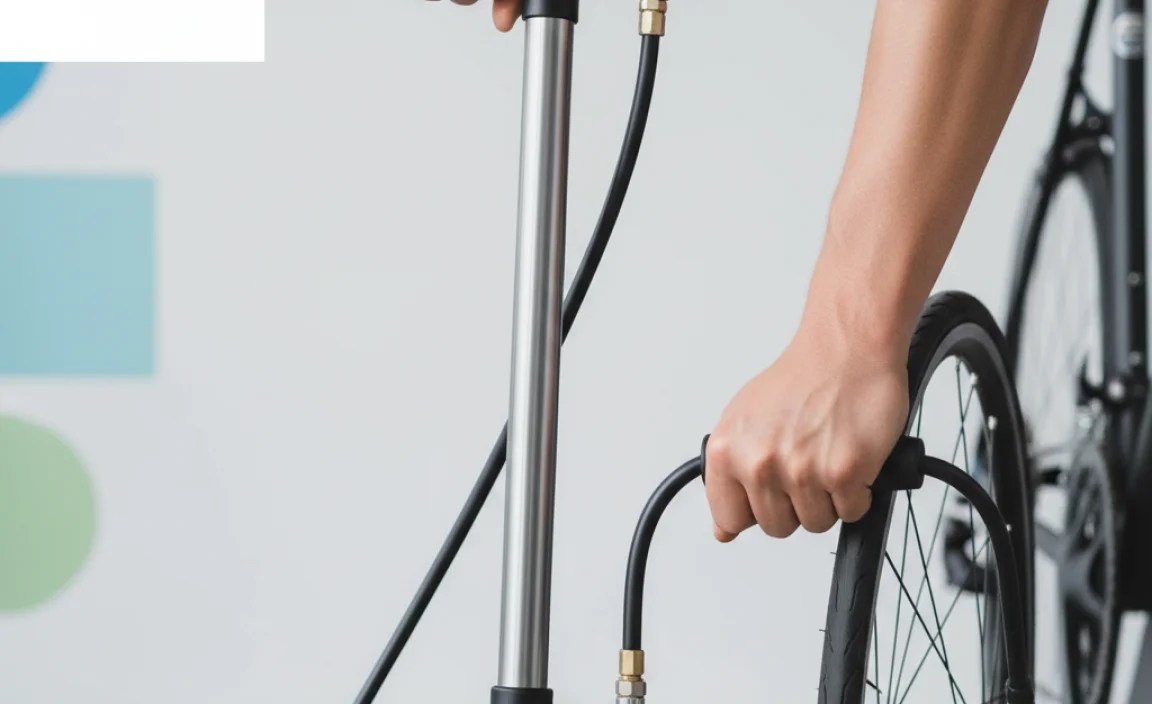
With the pump securely attached, it’s time to start pumping. Use a smooth, consistent motion to inflate the tire.
Using a Floor Pump:
- Place the pump on the ground and stand with one foot on each side of the base for stability.
- Grip the pump handle firmly.
- Use your body weight to push the handle down, inflating the tire.
- Pull the handle back up to draw in more air.
- Repeat this motion until you reach the desired PSI.
Using a Hand Pump:
- Place the pump head on the valve and lock it in place.
- Grip the pump firmly with both hands.
- Push and pull the pump handle to inflate the tire.
- Hand pumps require more effort and take longer to inflate a tire.
Monitoring the Pressure
Keep an eye on the pressure gauge as you pump. Stop when you reach the recommended PSI for your tire. If you’re using a separate gauge, detach the pump and check the pressure periodically.
Caution: Be careful not to overinflate the tire, as this can cause it to explode. If you accidentally overinflate, release some air by pressing the pin on the Schrader valve or gently pressing the valve core on the Presta valve.
6. Detach the Pump
Once you’ve reached the desired PSI, it’s time to detach the pump.
Detaching from a Schrader Valve:
- Disengage the locking lever (if your pump has one).
- Pull the pump head straight off the valve.
Detaching from a Presta Valve:
- Disengage the locking lever (if your pump has one).
- Pull the pump head straight off the valve.
- Tighten the locking nut on the Presta valve. This prevents air from leaking out.
7. Check the Tire Pressure
Even if your pump has a gauge, it’s always a good idea to double-check the tire pressure with a separate gauge. This ensures accuracy and peace of mind.
Using a Tire Pressure Gauge:
- Place the gauge on the valve.
- Press firmly until the gauge gives a reading.
- Compare the reading to the recommended PSI on your tire.
- Adjust the pressure as needed.
8. Inspect Your Tire
Before you head out for a ride, take a quick look at your tire for any signs of damage, such as cuts, bulges, or embedded objects. Remove any debris and replace the tire if necessary.
9. Important Considerations and Best Practices
Keep these extra tips in mind for optimal tire inflation:
- Check Tire Pressure Regularly: Check your tire pressure before each ride, or at least once a week.
- Use a Quality Pump: A good quality pump will make the job easier and more accurate.
- Store Your Bike Properly: Storing your bike in a cool, dry place can help prolong the life of your tires.
- Consider Tubeless Tires: Tubeless tires offer several advantages, including lower pressure capabilities and increased puncture resistance.
- Adjust Pressure for Conditions: Consider lowering your tire pressure slightly for wet or slippery conditions to improve traction.
10. Troubleshooting Common Issues
Sometimes, things don’t go as planned. Here are some common issues you might encounter and how to solve them:
| Issue | Possible Cause | Solution |
|---|---|---|
| Pump won’t attach to valve | Incorrect pump head setting | Adjust the pump head to the correct setting for your valve type (Schrader or Presta). |
| Air leaking while pumping | Poor seal between pump head and valve | Ensure the pump head is fully seated on the valve and the locking lever is engaged. Readjust if necessary. |
| Tire not inflating | Valve core is stuck | For Presta valves, try tapping the valve core to loosen it. You may need to replace the valve core if it’s severely stuck. |
| Pump gauge not working | Faulty gauge | Use a separate tire pressure gauge to check the pressure. |
| Can’t reach desired PSI | Leak in the tire or valve | Inspect the tire and valve for any leaks. Replace the tire or valve if necessary. |
FAQ: Pumping Air in Your Cycle Tyre
Here are some frequently asked questions to help you further understand how to pump air in your cycle tyre:
What PSI should my bike tires be?
The recommended PSI is printed on the sidewall of your tire. It usually provides a range (e.g., 50-85 PSI). Choose a pressure within that range based on your weight, riding style, and terrain.
How often should I pump up my bike tires?
Ideally, you should check and inflate your tires before each ride. At a minimum, check them once a week. Tires lose pressure over time, so regular inflation is important.
Can I use a car tire pump on my bike?
Yes, if you have a Schrader valve. However, car tire pumps can sometimes overinflate bike tires quickly, so be cautious and monitor the pressure closely. It’s best to use a pump specifically designed for bicycles.
What’s the difference between Schrader and Presta valves?
Schrader valves are wider and similar to car tire valves. Presta valves are narrower and have a locking nut at the tip. Presta valves are generally used on road bikes and high-performance bikes.
Why is my tire going flat even after I pump it up?
There could be a puncture in the tire, a leak in the valve, or a poor seal between the tire and rim. Inspect the tire for any visible damage and check the valve core. If you can’t find the leak, try using soapy water to locate it.
What happens if I overinflate my tires?
Overinflating your tires can lead to a rough ride, reduced grip, and an increased risk of a blowout. Always stay within the recommended PSI range printed on your tire.
Can I use a hand pump for regular inflation?
While hand pumps are great for emergencies on the road, they are less efficient for regular inflation. A floor pump is recommended for home use as it’s easier to use and provides more accurate pressure readings.
Conclusion
Pumping air into your bike tires is a fundamental skill that every cyclist should know. It’s not just about convenience; it’s about safety, performance, and prolonging the life of your tires. By following these simple steps, you can ensure your tires are properly inflated, ready for any adventure. Now you know how to pump air in cycle tyre, get out there and enjoy the ride, knowing your tires are in top condition!
“`