
How to Store Hose Away From Direct Sunlight: Smart Tips

Storing your hose away from direct sunlight is key to making it last longer. Sunlight can damage the hose material, causing it to crack and become brittle. The best ways to protect your hose include storing it on a reel in a shed or garage, using a protective cover, or keeping it in a shaded area. This keeps it safe from harmful UV rays and extends its life.
Have you ever pulled out your garden hose only to find it cracked, stiff, and leaking? Sunlight is often the culprit! Direct sunlight breaks down the materials in your hose, making it weak and prone to damage. This is a common problem, but don’t worry – there are simple ways to protect your hose and keep it in good condition.
In this guide, I’ll walk you through the best methods for storing your hose away from direct sunlight. We’ll cover everything from choosing the right storage location to using protective covers. By the end, you’ll know exactly how to keep your hose in top shape, so it’s ready whenever you need it. Let’s get started!
Why Direct Sunlight Damages Hoses

Direct sunlight is a hose’s worst enemy. The ultraviolet (UV) rays from the sun break down the polymers in the hose material, leading to several problems. Understanding these issues can help you appreciate why proper storage is so important.
Cracking and Brittleness
UV radiation causes the hose material to lose its flexibility. Over time, this leads to cracks and makes the hose brittle. Once cracks appear, they can quickly worsen, leading to leaks and reduced water pressure.
Reduced Lifespan
A hose left in direct sunlight will degrade much faster than one that is properly stored. The constant exposure to UV rays accelerates wear and tear, significantly shortening the hose’s lifespan. This means you’ll need to replace your hose more often, which can be costly.
Loss of Flexibility
Sunlight can make your hose stiff and difficult to handle. A flexible hose is much easier to maneuver around your garden or yard. When a hose loses its flexibility, it becomes a hassle to use, often kinking and tangling.
Fading and Discoloration
The sun can also cause the color of your hose to fade. While this is mostly a cosmetic issue, it’s a sign that the material is breaking down. Fading and discoloration indicate that the hose is being damaged by UV radiation.
Best Ways to Store Your Hose Away from Direct Sunlight

Now that you know why it’s important to protect your hose from sunlight, let’s look at the best storage methods. These options will help extend the life of your hose and keep it in good working condition.
1. Use a Hose Reel in a Shed or Garage
One of the most effective ways to protect your hose is to store it on a reel inside a shed or garage. This provides complete protection from sunlight and other weather elements.
Benefits of Using a Hose Reel
- Protection from UV Rays: The enclosed space blocks direct sunlight, preventing UV damage.
- Organization: A reel keeps your hose neatly organized and prevents kinks.
- Easy Access: You can easily reel out the hose when you need it and reel it back in when you’re done.
- Extended Lifespan: By protecting the hose from the elements, you can significantly extend its lifespan.
Types of Hose Reels
- Manual Reels: These require you to manually wind the hose onto the reel.
- Automatic Reels: These have a spring-loaded mechanism that automatically retracts the hose.
- Wall-Mounted Reels: These can be mounted on the wall of your shed or garage, saving floor space.
- Portable Reels: These have wheels, so you can easily move them around your yard.
2. Use a Protective Hose Cover
If you don’t have a shed or garage, a protective hose cover is a great alternative. These covers are made from UV-resistant materials that shield the hose from sunlight.
Benefits of Using a Hose Cover
- UV Protection: The cover blocks harmful UV rays, preventing damage to the hose material.
- Weather Resistance: Covers also protect against rain, snow, and other weather elements.
- Easy to Use: Simply slip the cover over your hose when you’re not using it.
- Affordable: Hose covers are a cost-effective way to protect your hose.
Types of Hose Covers
- Fabric Covers: These are made from durable, UV-resistant fabrics like canvas or polyester.
- Plastic Covers: These are made from UV-resistant plastic and are often waterproof.
- Insulated Covers: These provide extra protection against extreme temperatures.
3. Store the Hose in a Shaded Area
If you can’t store your hose in a shed, garage, or with a cover, try to find a shaded area. This could be under a tree, behind a bush, or on the north side of your house.
Benefits of Storing in a Shaded Area
- Reduced UV Exposure: Shade significantly reduces the amount of direct sunlight that reaches the hose.
- Simple and Free: This method doesn’t require any special equipment or cost.
- Convenient: You can quickly coil the hose and place it in the shade after each use.
Tips for Storing in a Shaded Area
- Choose a Cool Spot: Look for a shaded area that stays relatively cool, as heat can also damage the hose.
- Avoid Direct Contact with the Ground: Place the hose on a pallet or rack to keep it off the ground and prevent moisture damage.
- Secure the Hose: Use a hose hanger or reel to keep the hose neatly coiled and prevent it from becoming a tripping hazard.
4. Bury the Hose (With Caution)
While not always practical, burying your hose can protect it from sunlight and temperature extremes. However, this method requires careful consideration to avoid other potential issues.
Benefits of Burying the Hose
- Complete UV Protection: The soil completely blocks sunlight, preventing UV damage.
- Temperature Regulation: The ground provides insulation, keeping the hose cooler in summer and warmer in winter.
- Out of Sight: A buried hose is hidden from view, which can improve the appearance of your yard.
Potential Drawbacks of Burying the Hose
- Difficult Access: Digging up the hose each time you need to use it can be inconvenient.
- Moisture Damage: Constant exposure to moisture in the soil can lead to mold and mildew growth.
- Root Damage: Tree roots can grow around the hose, potentially damaging it.
- Freezing: In cold climates, a buried hose can freeze and crack if not properly drained.
How to Safely Bury a Hose
- Choose the Right Location: Select a spot that is well-drained and free from tree roots.
- Use a Protective Sleeve: Place the hose inside a PVC pipe or other protective sleeve to prevent damage from soil and roots.
- Bury at the Right Depth: Bury the hose deep enough to provide insulation but shallow enough for easy access (about 6-12 inches).
- Mark the Location: Use a marker or stake to indicate where the hose is buried.
- Drain the Hose: Always drain the hose completely before burying it for the winter to prevent freezing.
Comparing Hose Storage Methods
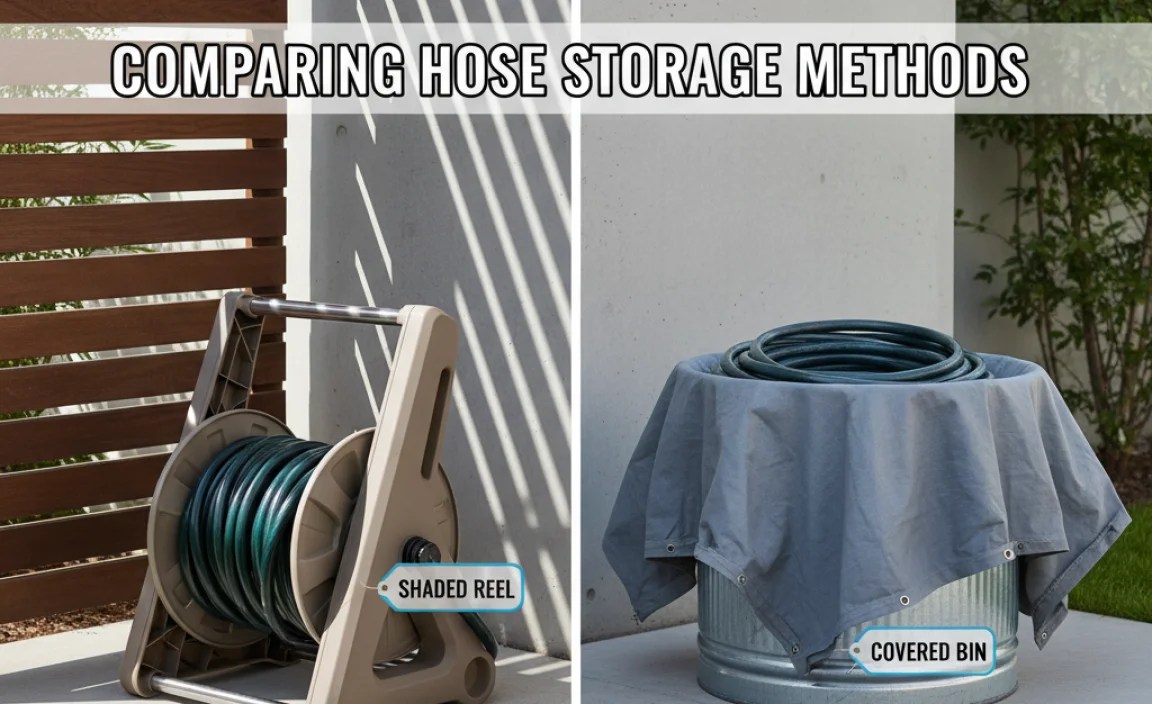
Here’s a quick comparison of the different hose storage methods to help you choose the best option for your needs.
| Storage Method | Pros | Cons | Cost |
|---|---|---|---|
| Hose Reel in Shed/Garage | Excellent UV protection, organized storage, easy access | Requires a shed or garage, can be expensive | $50 – $200+ |
| Protective Hose Cover | Good UV protection, easy to use, affordable | May not provide complete protection, can be bulky | $15 – $50 |
| Shaded Area | Simple, free, reduces UV exposure | May not provide complete protection, can be inconvenient | $0 |
| Burying the Hose | Complete UV protection, temperature regulation, hidden from view | Difficult access, potential moisture and root damage, requires careful planning | $10 – $30 (for protective sleeve) |
Additional Tips for Hose Maintenance
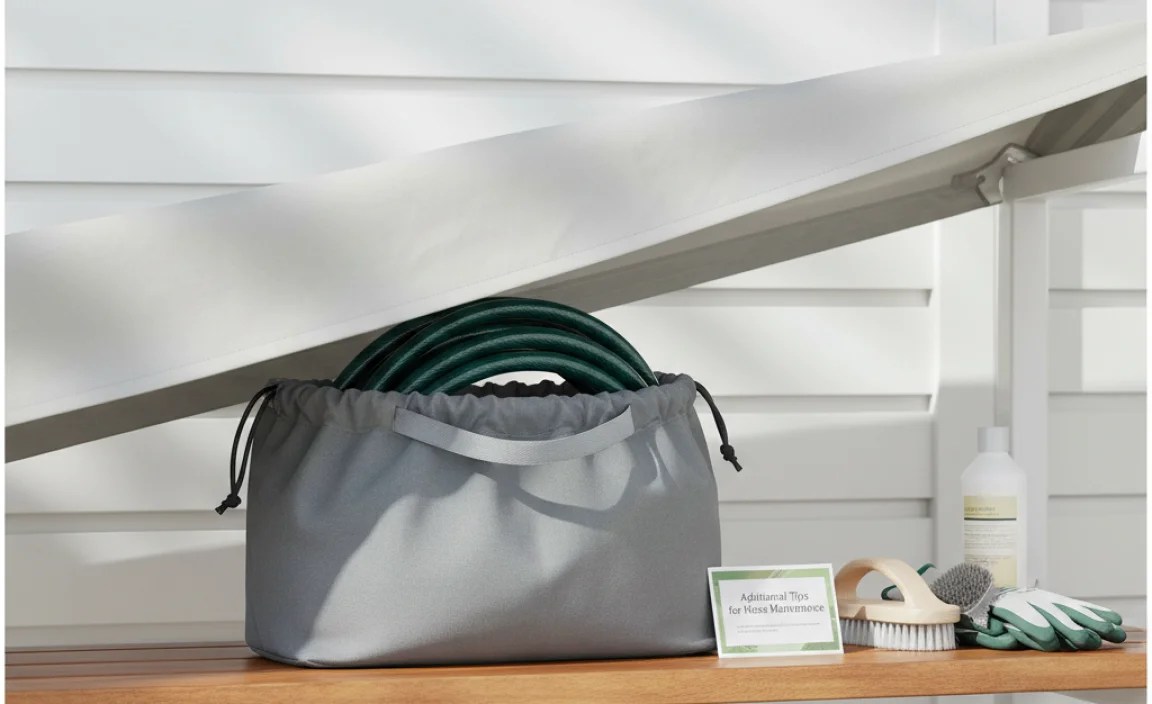
In addition to proper storage, here are some extra tips to keep your hose in good condition.
- Drain the Hose After Each Use: Emptying the hose prevents water from sitting inside and causing damage.
- Avoid Kinking: Kinks can weaken the hose material and cause leaks. Use a hose reel or carefully coil the hose to prevent kinks.
- Protect from Freezing: In cold climates, disconnect the hose from the faucet and store it indoors to prevent freezing.
- Inspect Regularly: Check the hose for cracks, leaks, and other damage. Repair any issues promptly to prevent them from worsening.
- Use a Nozzle: A good quality nozzle can help control water pressure and prevent damage to the hose.
- Clean the Hose: Periodically clean the hose with mild soap and water to remove dirt and debris.
Choosing the Right Hose Material

The material of your hose can also affect its resistance to sunlight and other elements. Here are some common hose materials and their properties.
| Hose Material | Pros | Cons | Best Use |
|---|---|---|---|
| Rubber | Durable, flexible, resistant to cracking | Heavier, more expensive | Heavy-duty use, professional landscaping |
| Vinyl | Lightweight, affordable | Less durable, prone to kinking and cracking | Light use, small gardens |
| Reinforced Vinyl | More durable than standard vinyl, better kink resistance | Still less durable than rubber | Medium use, general gardening |
| Polyurethane | Lightweight, flexible, kink-resistant | Can be expensive | General gardening, RVs, boats |
Understanding UV Resistance in Materials
UV resistance refers to a material’s ability to withstand the harmful effects of ultraviolet radiation from the sun. When a material is UV resistant, it means it can endure prolonged exposure to sunlight without significant degradation, such as cracking, fading, or loss of strength.
Importance of UV Resistance
- Longevity: UV-resistant materials last longer when exposed to sunlight, reducing the need for frequent replacements.
- Performance: They maintain their structural integrity and performance characteristics over time.
- Appearance: UV resistance helps prevent fading and discoloration, keeping the material looking new for longer.
Factors Affecting UV Resistance
- Material Composition: Some materials, like certain types of plastic and rubber, are naturally more UV resistant than others.
- Additives: UV stabilizers can be added to materials to enhance their resistance to UV radiation.
- Thickness: Thicker materials generally offer better UV protection than thinner ones.
- Color: Darker colors tend to absorb more UV radiation, while lighter colors reflect it. However, darker colors can also heat up more, which can cause other types of degradation.
Examples of UV-Resistant Materials
- UV-Resistant Plastics: Certain types of plastics, such as polyethylene (PE) and polypropylene (PP), can be made UV resistant by adding stabilizers.
- UV-Resistant Fabrics: Fabrics like acrylic, polyester, and canvas can be treated with UV-resistant coatings.
- UV-Resistant Rubber: Some types of rubber, like EPDM (ethylene propylene diene monomer), are naturally UV resistant.
FAQ: Storing Hoses Away from Direct Sunlight
Why is it important to store my garden hose out of direct sunlight?
Direct sunlight contains UV rays that can break down the hose material, causing it to crack, become brittle, and leak. Storing your hose away from sunlight extends its lifespan and keeps it in good working condition.
Can I just leave my hose on the grass?
Leaving your hose on the grass exposes it to sunlight and moisture, which can damage the material. It’s better to store it on a reel, in a shed, or in a shaded area.
What is the best type of hose reel to use?
The best type of hose reel depends on your needs and preferences. Manual reels are simple and affordable, while automatic reels offer more convenience. Wall-mounted reels save space, and portable reels are easy to move around your yard.
How do I clean my garden hose?
To clean your garden hose, mix mild soap with water and use a soft brush to scrub the hose. Rinse thoroughly with clean water and let it dry before storing it.
Can I use a tarp to cover my hose?
Yes, a tarp can provide some protection from sunlight, but it’s not as effective as a hose cover or storing the hose in a shed. Make sure the tarp is UV-resistant and securely covers the entire hose.
What if my hose freezes in the winter?
If your hose freezes, bring it indoors to thaw slowly. Avoid using hot water or a heat gun, as this can damage the material. Once thawed, inspect the hose for cracks or leaks.
Are some hose materials more resistant to sunlight than others?
Yes, rubber hoses are generally more resistant to sunlight than vinyl hoses. Reinforced vinyl hoses offer better durability than standard vinyl hoses. Consider the material when purchasing a hose for long-term use.
Conclusion
Protecting your hose from direct sunlight is a simple yet effective way to extend its life and keep it in good working condition. Whether you choose to store it on a reel in a shed, use a protective cover, or find a shaded area, taking these steps will help prevent UV damage and ensure your hose is ready whenever you need it. By following these tips and maintaining your hose properly, you’ll save money and avoid the frustration of dealing with a cracked, leaky hose. Happy gardening!


