
Easy Pump for Kids Bike: Ride Ready, Fast!

Quick Summary: Need to pump up your kid’s bike tires? No problem! Find a bike pump with a Presta/Schrader valve adapter. Remove the valve cap, firmly attach the pump head, and lock it in place. Pump until you reach the recommended PSI (printed on the tire’s sidewall). Detach the pump head carefully and replace the valve cap. Now your kid is ready to roll!
Is your child’s bike tire looking a little flat? Don’t worry, it happens! A properly inflated tire makes their ride safer and much more fun. It might seem tricky, but pumping up a kid’s bike tire is super easy. You just need the right pump and a few simple steps. We’ll walk you through everything you need to know to get their tires inflated perfectly. Get ready to make bike maintenance a breeze!
Choosing the Right Pump for Your Kid’s Bike

Not all bike pumps are created equal! The best pump for your kid’s bike depends on the type of valve their tires have. Most kids’ bikes use either Schrader or Presta valves. Let’s figure out which one you need and what kind of pump works best.
Understanding Schrader vs. Presta Valves
These are the two most common types of valves you’ll find on bike tires. Here’s how to tell them apart:
- Schrader Valves: These are the same type of valve you find on car tires. They’re wider and have a spring-loaded pin in the center.
- Presta Valves: These are narrower and have a small nut at the top that you need to unscrew to inflate the tire.
Look at your child’s bike tire. Is the valve wide like a car tire, or narrow with a little nut? That’s how you’ll know which type you have!
Types of Bike Pumps
Now that you know which valve type you’re dealing with, let’s look at the pumps that work with them:
- Floor Pumps: These are the most common type of bike pump. They stand on the floor and have a handle that you push down to inflate the tire. Many floor pumps have dual heads that work with both Schrader and Presta valves.
- Hand Pumps: These are smaller and portable, making them great for taking on rides. They require more effort to use than floor pumps. Some hand pumps have adapters for both valve types.
- CO2 Inflators: These use cartridges of compressed CO2 to quickly inflate a tire. They’re great for emergencies, but you’ll need to buy replacement cartridges. They usually require a specific adapter for either Schrader or Presta valves.
Recommended Pumps for Kids’ Bikes
Here are a few pumps that work well for kids’ bikes:
- Schwinn 500 Floor Pump: A reliable and affordable floor pump that works with both Schrader and Presta valves.
- Topeak Mini Morph Hand Pump: A compact and powerful hand pump that’s easy to carry on rides.
- Lezyne Micro Floor Drive HP: A mini floor pump that combines the portability of a hand pump with the efficiency of a floor pump.
Step-by-Step Guide to Pumping Up a Kid’s Bike Tire

Alright, let’s get those tires inflated! Here’s a step-by-step guide for both Schrader and Presta valves:
Pumping a Tire with a Schrader Valve
- Remove the Valve Cap: Unscrew the plastic cap on the valve and set it aside.
- Attach the Pump Head: Firmly press the pump head onto the valve. Make sure it’s snug to prevent air from leaking out.
- Lock the Pump Head (if applicable): Some pumps have a lever or switch that locks the pump head onto the valve. Engage this lever.
- Pump the Tire: Start pumping! Use smooth, steady strokes. You’ll feel resistance as the tire inflates.
- Check the Pressure: Most floor pumps have a gauge that shows the tire pressure in PSI (pounds per square inch). Look for the recommended PSI on the tire’s sidewall.
- Reach the Correct Pressure: Keep pumping until you reach the recommended PSI.
- Detach the Pump Head: Carefully remove the pump head from the valve.
- Replace the Valve Cap: Screw the valve cap back on. This helps keep dirt and debris out of the valve.
Pumping a Tire with a Presta Valve
- Remove the Valve Cap: Unscrew the plastic cap on the valve and set it aside.
- Loosen the Valve Nut: Unscrew the small nut at the top of the valve. Don’t remove it completely; just loosen it enough to allow air to flow.
- Press the Valve Core: Gently tap the valve core to make sure it’s not stuck. You should hear a little puff of air.
- Attach the Pump Head: Firmly press the pump head onto the valve. Make sure it’s snug.
- Lock the Pump Head (if applicable): Engage the locking lever on the pump head.
- Pump the Tire: Start pumping! Use smooth, steady strokes.
- Check the Pressure: Use the gauge on the pump to monitor the tire pressure.
- Reach the Correct Pressure: Inflate the tire to the recommended PSI.
- Detach the Pump Head: Carefully remove the pump head from the valve.
- Tighten the Valve Nut: Screw the valve nut back down until it’s snug.
- Replace the Valve Cap: Screw the valve cap back on.
Important Considerations for Kids’ Bike Tires

Here are a few extra things to keep in mind when pumping up your child’s bike tires:
Finding the Correct Tire Pressure
The recommended tire pressure is usually printed on the sidewall of the tire. It will be listed in PSI (pounds per square inch). Make sure you don’t over-inflate the tire, as this can cause it to burst. Under-inflating can lead to a flat tire or a less comfortable ride. A good starting point is usually between 30-50 PSI for most kids’ bikes, but always double-check the tire itself.
Why Tire Pressure Matters
Maintaining the correct tire pressure is crucial for:
- Safety: Properly inflated tires provide better grip and handling.
- Comfort: The right pressure makes for a smoother, more comfortable ride.
- Performance: Correctly inflated tires roll more efficiently, making it easier to pedal.
- Tire Life: Proper inflation prevents premature wear and tear.
When to Check Tire Pressure
You should check your child’s bike tire pressure regularly, especially before longer rides. A good rule of thumb is to check it at least once a week. Tires can slowly lose air over time, so regular checks will ensure they’re always properly inflated.
Troubleshooting Common Pumping Problems
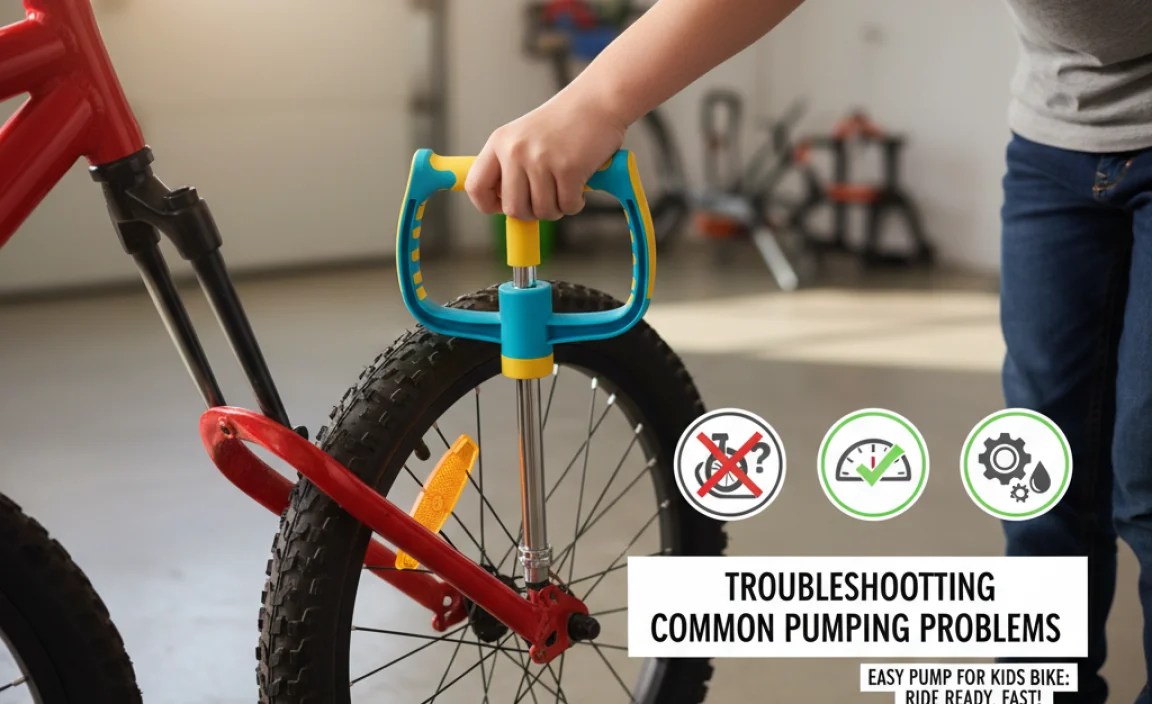
Sometimes, things don’t go as planned. Here are some common problems you might encounter and how to fix them:
Air Leaking Around the Pump Head
If you hear air hissing around the pump head, it means the connection isn’t tight enough. Try these solutions:
- Re-attach the Pump Head: Make sure the pump head is firmly pressed onto the valve.
- Check the Locking Lever: If your pump has a locking lever, make sure it’s fully engaged.
- Replace the Pump Head: The rubber seal inside the pump head can wear out over time. If the problem persists, you may need to replace the pump head.
Pump Not Inflating the Tire
If the pump isn’t inflating the tire, there could be a few issues:
- Valve Core Stuck: For Presta valves, make sure the valve core is loose. Gently tap it to free it up.
- Pump Malfunction: Check the pump for any obvious damage or blockages.
- Flat Tire: If the tire is completely flat, there may be a puncture. You’ll need to repair or replace the tube before you can inflate it.
Difficulty Pumping
If you’re having trouble pumping, it could be due to:
- High Tire Pressure: As the tire inflates, it becomes harder to pump. This is normal.
- Pump Malfunction: Check the pump for any issues.
- Your Technique: Make sure you’re using smooth, steady strokes. Use your body weight to help you push down on the pump handle.
Essential Tools for Bike Maintenance

While a pump is the most important tool for tire maintenance, here are some other useful tools to have on hand:
- Tire Levers: These are used to remove the tire from the rim when you need to repair or replace the tube.
- Patch Kit: A patch kit contains everything you need to fix a puncture in a tire tube.
- Multi-Tool: A multi-tool includes a variety of wrenches, screwdrivers, and other tools that can be used for basic bike repairs.
- Wrench Set: A set of wrenches is useful for tightening bolts and making adjustments to your bike.
Maintaining Your Bike Pump
To keep your bike pump in good working condition, follow these tips:
- Store it Properly: Store your pump in a dry place to prevent rust and corrosion.
- Clean it Regularly: Wipe down the pump with a damp cloth to remove dirt and grime.
- Lubricate Moving Parts: Apply a small amount of lubricant to the moving parts of the pump to keep them working smoothly.
- Replace Worn Parts: If you notice any worn or damaged parts, replace them promptly.
Table: Comparing Bike Pump Types
| Pump Type | Pros | Cons | Best For |
|---|---|---|---|
| Floor Pump | Easy to use, accurate pressure gauge, durable | Less portable | Home use, regular maintenance |
| Hand Pump | Portable, lightweight | Requires more effort, less accurate gauge | On-the-go repairs, emergencies |
| CO2 Inflator | Fast inflation, very portable | Requires cartridges, can be wasteful | Racing, quick repairs |
Table: Recommended Tire Pressure Ranges for Kids’ Bikes
| Tire Size (inches) | Recommended PSI Range |
|---|---|
| 12″ | 25-35 PSI |
| 16″ | 30-40 PSI |
| 20″ | 35-45 PSI |
| 24″ | 40-50 PSI |
FAQ About Pumping Kids’ Bike Tires
Here are some frequently asked questions about pumping up kids’ bike tires:
What does PSI mean?
PSI stands for pounds per square inch. It’s a measure of air pressure. The higher the PSI, the more air is in the tire.
How do I know what PSI to use for my kid’s bike?
The recommended PSI is usually printed on the sidewall of the tire. Look for a range, like “35-50 PSI.”
Can I use a car tire pump on a bike?
Yes, if your bike has Schrader valves. However, car tire pumps can sometimes over-inflate bike tires quickly, so be careful.
What if I don’t have a pump with a gauge?
You can buy a separate tire pressure gauge to check the pressure. Or, you can squeeze the tire. It should feel firm, but not rock hard.
Why does my tire keep losing air?
Tires naturally lose air over time. It could also be a slow leak caused by a small puncture. Check the tire for any visible damage.
How often should I pump up my kid’s bike tires?
Check the tire pressure at least once a week, or before any longer rides.
What’s the difference between a Schrader and Presta valve?
Schrader valves are wider and have a spring-loaded pin in the center, like car tires. Presta valves are narrower and have a small nut at the top.
Conclusion
Pumping up your kid’s bike tires is a simple task that can make a big difference in their riding experience. By choosing the right pump, following the steps outlined in this guide, and keeping a few key considerations in mind, you can ensure their tires are always properly inflated. This will improve their safety, comfort, and performance. So, grab your pump and get those tires inflated – adventure awaits!


