
Mountain Bike Tire Pressure Calculator: Find Your Perfect PSI

Quick Summary: Finding the right mountain bike tire pressure is easy! Use a mountain bike tire pressure calculator or start with these simple guidelines: Aim for 24-26 PSI (1.7-1.8 BAR) for riders 150-160 lbs, adding or subtracting about 1 PSI (0.07 BAR) for every 10 lbs of body weight. Your ideal pressure depends on your weight, tire size, and the type of terrain you’re riding. Adjust based on feel, and always stay within your tire manufacturer’s recommended range!
Getting the perfect mountain bike tire pressure can feel like a dark art. Too high, and you’re bouncing all over the trail. Too low, and you risk a pinch flat or a wobbly ride. It’s a common frustration for new and experienced riders alike. But don’t worry, it doesn’t have to be complicated!
In this guide, I’ll walk you through the simple steps to find your ideal mountain bike tire pressure. We’ll cover how to use a mountain bike tire pressure calculator, understand the factors that affect pressure, and fine-tune your setup for the best possible ride. Let’s get started!
Why Tire Pressure Matters for Mountain Biking

Tire pressure is crucial for mountain biking because it directly impacts:
- Grip: Lower pressure increases the contact patch of the tire, providing more grip on loose or technical terrain.
- Rolling Resistance: Higher pressure generally reduces rolling resistance on smooth surfaces, but too high can make the ride harsh and reduce grip.
- Puncture Resistance: Higher pressure reduces the risk of pinch flats (snake bites), but too high can make the tire more susceptible to cuts from sharp rocks.
- Ride Comfort: Lower pressure absorbs bumps and vibrations, providing a smoother and more comfortable ride.
- Handling: The right pressure provides better stability and control, especially when cornering or navigating technical sections.
Using a Mountain Bike Tire Pressure Calculator

A mountain bike tire pressure calculator is a great starting point. These calculators take into account several factors to give you a recommended pressure range. Here’s how to use one effectively:
- Find a Reliable Calculator: Many cycling websites and apps offer tire pressure calculators. A quick search for “mountain bike tire pressure calculator” will give you several options. Some popular choices include those from SRAM, ENVE, and specialized bike shops.
- Gather Your Information: You’ll need the following information:
- Rider Weight: Your weight including gear (hydration pack, tools, etc.).
- Tire Size: The width of your tires in inches (e.g., 2.3″, 2.5″). This is usually printed on the tire sidewall.
- Rim Width: The internal width of your rims in millimeters. This might be printed on the rim, or you can find it on the manufacturer’s website.
- Terrain Type: The type of trails you typically ride (e.g., hardpack, loose, rocky).
- Riding Style: How aggressively you ride (e.g., mellow, aggressive).
- Enter the Data: Input the information into the calculator. Be as accurate as possible for the best results.
- Get Your Recommendation: The calculator will provide a recommended pressure range for your front and rear tires. Note that the rear tire usually needs slightly more pressure than the front.
Factors Affecting Mountain Bike Tire Pressure

Several factors influence the ideal tire pressure for your mountain bike. Understanding these factors will help you fine-tune your pressure for optimal performance:
- Rider Weight: Heavier riders need higher pressure to prevent pinch flats and rim damage. Lighter riders can run lower pressures for better grip and comfort.
- Tire Size: Wider tires have a larger volume of air and can be run at lower pressures than narrower tires. This is because the larger volume provides more cushioning.
- Rim Width: Wider rims support the tire better, allowing you to run lower pressures without the tire rolling off the rim in corners. Narrower rims require higher pressures to maintain stability.
- Terrain Type: Rocky and technical trails require higher pressures to prevent pinch flats and rim damage. Smooth, hardpack trails allow for higher pressures for lower rolling resistance. Loose or muddy trails benefit from lower pressures for increased grip.
- Riding Style: Aggressive riders who corner hard and jump frequently need higher pressures to prevent tire roll and rim strikes. Mellow riders can run lower pressures for a more comfortable ride.
- Tire Construction: Tires with thicker sidewalls and puncture protection can be run at lower pressures without the risk of damage. Lighter, more supple tires may require higher pressures.
- Tube vs. Tubeless: Tubeless setups allow you to run significantly lower pressures than tubes because there’s no inner tube to pinch flat. This improves grip, comfort, and rolling resistance on rough terrain.
Starting Pressure Guidelines
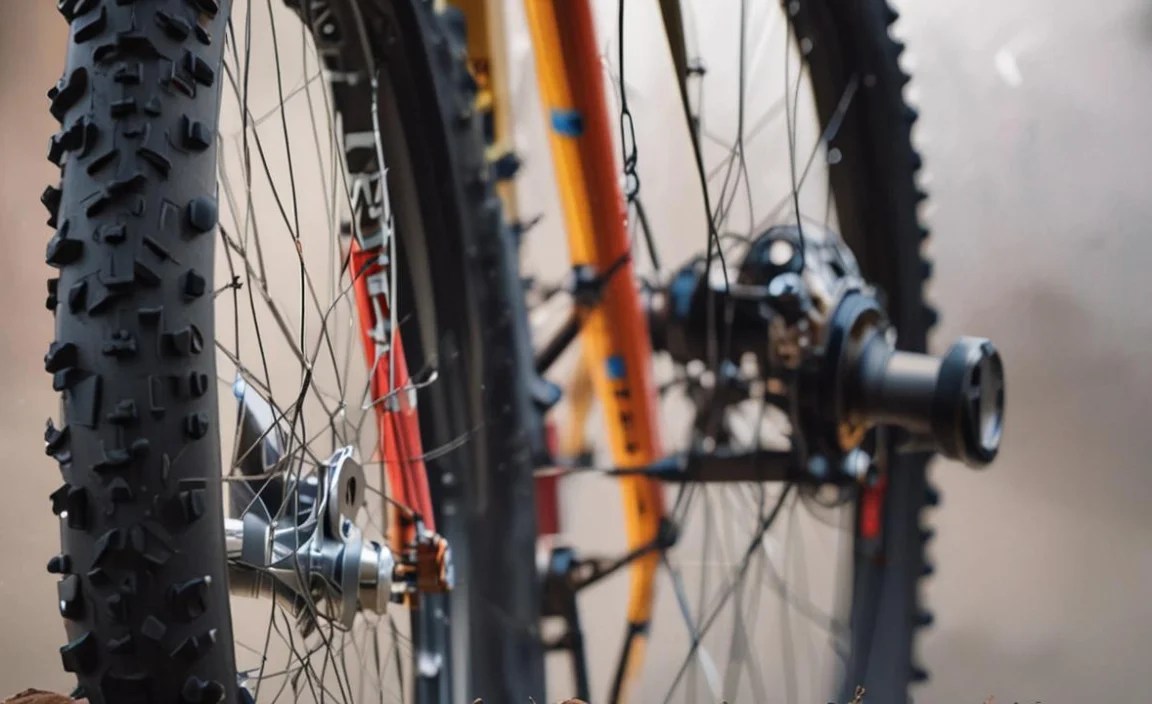
If you don’t have access to a tire pressure calculator, here are some general guidelines to get you started. These are based on rider weight and tire size, assuming a tubeless setup. Remember to adjust based on your specific conditions and preferences.
| Rider Weight (lbs) | Tire Size (inches) | Front Tire Pressure (PSI) | Rear Tire Pressure (PSI) |
|---|---|---|---|
| 130-140 | 2.3-2.5 | 21-23 | 23-25 |
| 150-160 | 2.3-2.5 | 22-24 | 24-26 |
| 170-180 | 2.3-2.5 | 23-25 | 25-27 |
| 190-200 | 2.3-2.5 | 24-26 | 26-28 |
| 210-220 | 2.3-2.5 | 25-27 | 27-29 |
Note: These pressures are starting points. Always stay within the tire manufacturer’s recommended pressure range, which is usually printed on the tire sidewall.
Fine-Tuning Your Tire Pressure

Once you have a starting pressure, it’s time to fine-tune it based on your riding experience. Here’s how:
- Start with the Recommended Range: Inflate your tires to the pressure recommended by the calculator or the guidelines above.
- Go for a Ride: Ride a familiar trail with a variety of terrain. Pay attention to how the bike feels.
- Assess Grip: Do you feel like you have good grip in corners and on loose surfaces? If not, try lowering the pressure by 1-2 PSI.
- Check for Pinch Flats: After the ride, inspect your tires for signs of pinch flats (two small cuts side-by-side). If you’re getting pinch flats, increase the pressure by 1-2 PSI.
- Evaluate Ride Comfort: Is the ride harsh and bumpy? If so, try lowering the pressure by 1-2 PSI. Be careful not to go too low, or you’ll risk pinch flats.
- Adjust Incrementally: Make small adjustments (1-2 PSI at a time) and repeat the process until you find the sweet spot where you have good grip, a comfortable ride, and no pinch flats.
Tools You’ll Need
To accurately measure and adjust your tire pressure, you’ll need the following tools:
- Accurate Pressure Gauge: A digital pressure gauge is the most accurate way to measure tire pressure. Analog gauges are also available, but they can be less precise. Look for a gauge that reads in PSI (pounds per square inch) and BAR (metric unit of pressure).
- Bike Pump: A floor pump with a built-in pressure gauge is essential for inflating your tires to the desired pressure. A mini-pump is useful for making adjustments on the trail.
- Shock Pump (Optional): If you have air suspension, a shock pump is needed to adjust the pressure in your forks and shocks. Some shock pumps also have a very accurate, low-pressure gauge that can be used for fine-tuning tire pressure, especially for tubeless setups.
Tire Pressure for Different Riding Conditions
Your ideal tire pressure may vary depending on the specific riding conditions. Here are some general guidelines:
- Hardpack Trails: On smooth, hardpack trails, you can run slightly higher pressures for lower rolling resistance and faster speeds. However, don’t go too high, or you’ll lose grip and comfort.
- Loose Trails: On loose, gravelly, or sandy trails, lower pressures will increase grip and prevent the tires from washing out. Be careful not to go too low, or you’ll risk pinch flats.
- Rocky Trails: On rocky and technical trails, higher pressures are needed to prevent pinch flats and rim damage. Consider using tire inserts for added protection.
- Wet Trails: In wet conditions, lower pressures can improve grip on slippery surfaces. However, be extra cautious of pinch flats, as wet rocks can be particularly sharp.
Tubeless vs. Tubes: Tire Pressure Considerations
Whether you’re running tubeless tires or traditional tubes significantly impacts the tire pressure you should use.
Tubeless Setups
Tubeless setups allow you to run much lower tire pressures because there’s no inner tube to pinch. This offers several advantages:
- Improved Grip: Lower pressures increase the contact patch of the tire, providing more grip on loose and technical terrain.
- Increased Comfort: Lower pressures absorb bumps and vibrations, resulting in a smoother and more comfortable ride.
- Reduced Rolling Resistance: On rough terrain, tubeless tires with lower pressures can actually roll faster than higher-pressure tube-type tires because they conform to the trail surface better.
- Fewer Flats: Tubeless tires are less prone to pinch flats and can often seal small punctures on the fly with sealant.
When running tubeless, start with the pressure recommended by a tire pressure calculator and then fine-tune it based on your riding experience. You can typically run 2-5 PSI lower than with tubes.
Tube-Type Setups
With tube-type setups, you need to run higher pressures to prevent pinch flats. Pinch flats occur when the inner tube gets pinched between the tire and the rim, resulting in two small cuts side-by-side (hence the name “snake bite”).
When running tubes, start with the pressure recommended by a tire pressure calculator and then increase it by 2-5 PSI. Monitor your tires for pinch flats, and adjust the pressure accordingly. Consider using thicker or more durable tubes for added protection.
Mountain Bike Tire Pressure Calculator: A Practical Example
Let’s see how a tire pressure calculator helps in a real-world scenario. Imagine you’re getting ready for a weekend of mountain biking and want to optimize your tire pressure for the trails. Here’s how you would use the calculator:
-
- Gather Your Information:
- Rider Weight: 175 lbs (including gear)
- Tire Size: 2.4 inches (front and rear)
- Rim Width: 30mm (internal width)
- Terrain Type: Mixed terrain (hardpack, loose dirt, and some rocky sections)
- Riding Style: Moderately aggressive
- Enter the Data into the Calculator:
- Gather Your Information:
You input your rider weight, tire size, rim width, terrain type, and riding style into your chosen mountain bike tire pressure calculator (like the one from SRAM or ENVE).
-
- Get the Recommendation:
The calculator suggests the following:
-
-
- Front Tire Pressure: 23 PSI
- Rear Tire Pressure: 25 PSI
- Set Your Initial Tire Pressure:
-
Using a reliable digital pressure gauge, you set your front tire to 23 PSI and your rear tire to 25 PSI.
-
- Test Ride and Fine-Tune:
You hit the trails and immediately notice that the bike feels stable and responsive. However, after a few rocky sections, you feel a couple of rim strikes. You decide to add 1 PSI to both tires.
-
-
- New Front Tire Pressure: 24 PSI
- New Rear Tire Pressure: 26 PSI
-
With the slightly higher pressure, the rim strikes are gone, and the bike still maintains good grip and feels comfortable over various terrains. You’ve successfully fine-tuned your tire pressure using the calculator as a starting point!
FAQ: Mountain Bike Tire Pressure
- Q: What happens if my tire pressure is too low?A: If your tire pressure is too low, you risk pinch flats (snake bites), rim damage, and tire roll in corners. The bike may also feel sluggish and unstable.
- Q: What happens if my tire pressure is too high?A: If your tire pressure is too high, you’ll have less grip, a harsher ride, and a greater risk of cuts from sharp rocks. The bike may also feel bouncy and unpredictable.
- Q: How often should I check my tire pressure?A: Ideally, you should check your tire pressure before every ride. Tires can lose pressure over time, especially tubeless setups.
- Q: Can I use a regular car tire gauge for my mountain bike tires?A: While you can technically use a car tire gauge, they are often not accurate at the lower pressures used for mountain bike tires. A dedicated bike tire gauge is recommended for better accuracy.
- Q: What is the ideal tire pressure for a beginner mountain biker?A: As a beginner, it’s best to start with the pressure recommended by a tire pressure calculator or the guidelines in this article. Focus on finding a pressure that provides a comfortable ride and good grip without risking pinch flats. As you gain experience, you can fine-tune the pressure to suit your riding style and terrain.
- Q: Should I use the same pressure in my front and rear tires?A: No, typically, you’ll want to run slightly lower pressure in your front tire compared to your rear tire. The front tire is responsible for steering and grip, so a lower pressure can improve handling. The rear tire bears more weight, so a slightly higher pressure can help prevent pinch flats and rim damage.
- Q: What are tire inserts and do I need them?A: Tire inserts are foam or plastic inserts that fit inside your tire, between the tire and the rim. They provide added protection against pinch flats and rim damage, allowing you to run lower pressures. Tire inserts are especially useful for aggressive riders, rocky terrain, and tubeless setups. While not essential for all riders, they can be a worthwhile investment if you frequently experience flats or ride in challenging conditions. Examples include CushCore and Huck Norris. Check out resources like BikeRadar’s guide to tire inserts for more details.
Conclusion
Finding the perfect mountain bike tire pressure is a balancing act, but it’s well worth the effort. By using a mountain bike tire pressure calculator as a starting point, understanding the factors that affect pressure, and fine-tuning your setup based on your riding experience, you can unlock the full potential of your bike and enjoy a smoother, faster, and more confident ride. So grab your pump, hit the trails, and experiment until you find the sweet spot that works for you. Happy riding!


