How to Use Floor Pump: Easy Guide for Perfect Pressure

Do you love riding your bike? Do you ever get a flat tire? It can be a bummer! Luckily, learning how to use floor pump is easy. It helps you keep your tires full of air. This makes riding much more fun and safe.
Have you ever tried to pump your tire with a small hand pump? It takes forever! A floor pump is much faster. It’s also easier to use. Let’s learn how to use one. Then you can get back to riding in no time.
Imagine you are ready for a big bike ride. You check your tires. They are soft and flat. Don’t worry! With a floor pump, you can quickly fill them up. You’ll be on your way in minutes! Learning how to use floor pump is a skill every bike rider should know.
Key Takeaways
- Using a floor pump is the easiest way to inflate your bike tires quickly.
- Make sure the pump head is securely attached to the tire valve stem.
- Always check the tire pressure gauge on the floor pump as you inflate.
- Knowing how to use floor pump can save you from flat tire frustration.
- Different pumps work with different valve types, so use the correct adapter.
Understanding Your Floor Pump
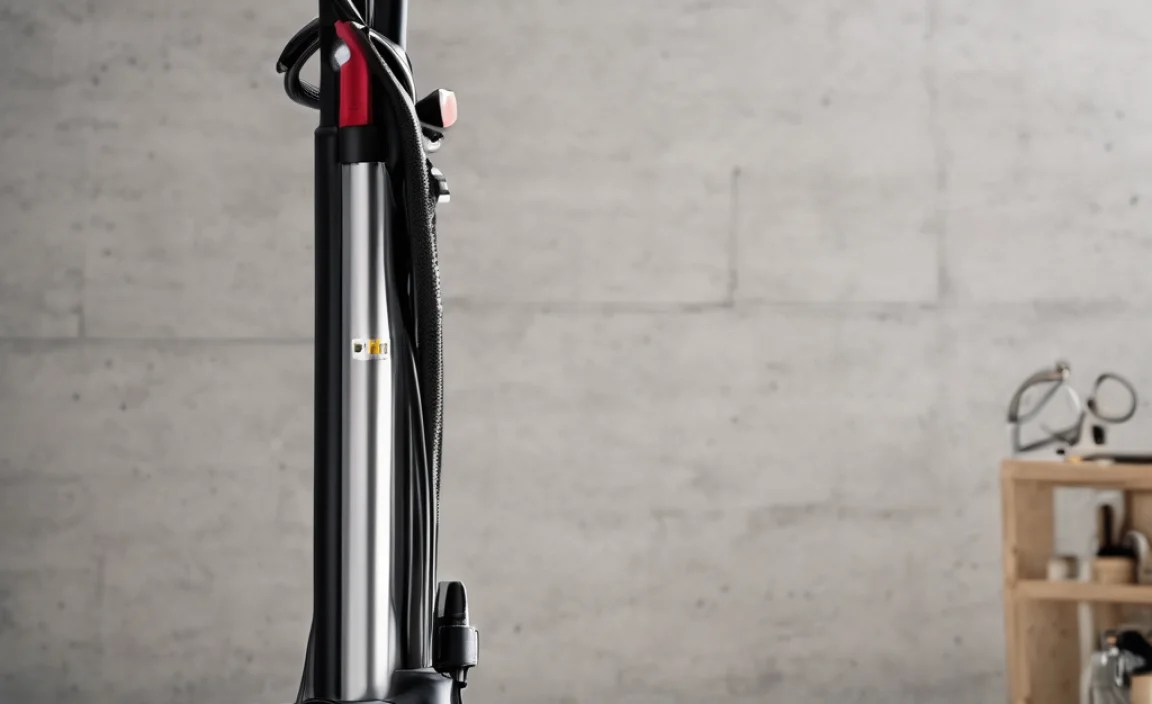
A floor pump is a tool that helps you put air into your bike tires. It has a long tube and a handle. You push the handle up and down to pump air. The air goes through the tube and into your tire. Floor pumps are better than small hand pumps. They pump more air with each push. This makes it faster to fill your tires. Most floor pumps have a gauge. The gauge shows you how much air is in your tire. This is important because you don’t want to put too much air in. Too much air can make your tire explode! Not enough air makes it hard to ride. So, the gauge helps you get it just right. Floor pumps are easy to use once you know how. They are a must-have for any bike owner. Keep your tires properly inflated for a smooth and safe ride.
- Floor pumps make inflating tires much easier.
- They have a gauge to measure air pressure.
- Floor pumps are more efficient than hand pumps.
- Many pumps work with both Schrader and Presta valves.
- A good floor pump will last for many years.
It’s important to know the parts of your floor pump. The base keeps it steady on the ground. The barrel is where the air is compressed. The hose connects the pump to your tire valve. The pump head attaches to the valve. Some pump heads work with both types of valves. Others you need to switch around. Always make sure the pump head is on tight. This will stop air from leaking out. Knowing your pump helps you use it better. It also helps you fix it if something goes wrong. A good floor pump is an important tool for any cyclist. Take care of it, and it will take care of your tires.
Why Use a Floor Pump?
Have you ever tried using a small hand pump to fill a tire? It can take a very long time! Floor pumps are much faster and easier. They let you pump more air with each push. This means you can fill your tires quickly. Floor pumps also have a gauge. The gauge tells you how much air is in the tire. This helps you avoid putting in too much or too little air. Using a floor pump saves you time and energy. It also makes sure your tires are properly inflated. This makes your bike ride smoother and safer. So, if you ride your bike often, a floor pump is a great investment. It will make your life much easier!
Parts of a Floor Pump
A floor pump has several important parts. The base keeps the pump steady. The barrel is where the air gets squeezed. The handle is what you push to pump air. The hose connects the pump to your tire. The pump head attaches to the tire valve. The gauge shows how much air is in the tire. Each part works together to fill your tire with air. Understanding these parts helps you use the pump better. It also helps you fix it if something breaks. Knowing the parts makes using a floor pump much easier. It also helps you take care of your pump so it lasts a long time.
Different Types of Valves
Bike tires use two main types of valves. They are called Schrader and Presta. Schrader valves are like the ones on car tires. They are wider and have a spring-loaded pin in the middle. Presta valves are thinner and have a nut at the top. You need to unscrew the nut to pump air into a Presta valve. Some floor pumps work with both types of valves. Others need an adapter. Make sure your pump matches your tire valves. Using the wrong pump head can damage the valve. Knowing the difference helps you use your floor pump correctly. It also prevents you from damaging your tires.
Fun Fact or Stat: The first bicycle air pump was invented in 1887. It was much bigger and harder to use than the floor pumps we have today!
Choosing the Right Floor Pump

Picking the right floor pump can make a big difference. There are many different types to choose from. Some are better for certain types of bikes. Think about what kind of bike you have. Do you have a mountain bike or a road bike? Mountain bikes need lower tire pressure. Road bikes need higher tire pressure. Look for a pump that can reach the pressure you need. Also, check the pump head. Does it work with both Schrader and Presta valves? Some pumps have a switch to change between the two. Others need different adapters. Make sure the pump is easy to use. The handle should be comfortable to grip. The base should be stable. A good floor pump is an investment. It will make inflating your tires much easier and faster. Take your time and choose the one that’s right for you.
- Consider the type of bike you have.
- Check the maximum pressure the pump can reach.
- Make sure the pump head fits your tire valves.
- Choose a pump with a comfortable handle.
- Look for a pump with a stable base.
When choosing a floor pump, read reviews online. See what other people say about different pumps. Some pumps are better for high-pressure tires. Others are better for low-pressure tires. Some pumps are easier to use than others. Consider the size of the gauge. A bigger gauge is easier to read. Think about how often you will use the pump. If you ride your bike every day, get a good quality pump. If you only ride sometimes, a cheaper pump might be okay. Remember, a good floor pump will last for many years. It will save you time and frustration. It will also help you keep your tires properly inflated. This makes your bike ride safer and more enjoyable.
High-Pressure vs. Low-Pressure Pumps
Some floor pumps are made for high-pressure tires. These are good for road bikes. Road bikes need high tire pressure to roll fast. Other pumps are made for low-pressure tires. These are good for mountain bikes. Mountain bikes need low tire pressure for grip on trails. High-pressure pumps can usually reach 100 PSI or more. Low-pressure pumps usually max out around 50 PSI. Using the wrong pump can be hard. You might not be able to get enough air in your tires. Check the pump’s specs before you buy it. Make sure it’s right for your type of bike. This will make inflating your tires much easier.
Pump Head Types
The pump head is what connects the pump to your tire valve. Some pumps have a single head that works for both Schrader and Presta valves. These are very convenient. Other pumps have two separate heads. You have to switch between them depending on the valve type. Some pump heads are easier to use than others. Look for one that’s easy to attach and remove. Make sure it creates a tight seal. This will prevent air from leaking out. A good pump head makes inflating your tires much easier. It also saves you time and frustration.
Gauge Size and Accuracy
The gauge on your floor pump tells you how much air is in your tire. A bigger gauge is easier to read. This is especially helpful if you have trouble seeing small numbers. Accuracy is also important. You want the gauge to show the correct pressure. Some gauges are more accurate than others. Read reviews to see what people say about the gauge accuracy. An accurate gauge helps you inflate your tires to the right pressure. This makes your bike ride safer and more enjoyable. It also helps your tires last longer.
Fun Fact or Stat: Some high-end floor pumps have digital gauges that show the tire pressure with even more accuracy than analog gauges!
Preparing Your Bike and Pump

Before you start pumping, get everything ready. First, make sure your bike is stable. You can lean it against a wall. Or, you can use a bike stand. This will keep it from falling over while you pump. Next, find the valve on your tire. Take off the valve cap. This is a small cap that protects the valve. Now, check your floor pump. Make sure the pump head is set up for the right type of valve. If you have a Presta valve, loosen the nut at the top. You don’t need to remove it. Just loosen it enough to let air in. Now you are ready to attach the pump head to the valve. Make sure it’s on tight. This will prevent air from leaking out. Taking these steps will make the pumping process much smoother and easier.
- Make sure your bike is stable.
- Remove the valve cap from your tire.
- Check that the pump head matches your valve type.
- Loosen the nut on Presta valves.
- Attach the pump head securely to the valve.
It’s important to keep your pump in good condition. Check the hose for cracks or leaks. Make sure the pump head is clean. Dirt and grime can prevent it from sealing properly. If your pump isn’t working well, try cleaning it. You can use a damp cloth to wipe down the outside. You can also use a small brush to clean the pump head. Sometimes, you might need to replace the pump head or the hose. These parts can wear out over time. Taking care of your pump will help it last longer. It will also make sure it works properly when you need it. A well-maintained pump is a reliable tool for keeping your tires inflated.
Stabilizing Your Bike
Keeping your bike steady is important when you pump your tires. If the bike falls over, it could get damaged. You could also get hurt. Lean your bike against a wall or a sturdy object. Make sure it won’t slip or slide. A bike stand is even better. It holds your bike upright and stable. This makes it much easier to pump your tires. You can focus on pumping without worrying about the bike falling. Stabilizing your bike is a simple step. But it makes a big difference in safety and ease of use.
Removing the Valve Cap
The valve cap is a small plastic or metal cap. It protects the valve from dirt and damage. Before you pump your tire, you need to remove the valve cap. Just unscrew it and set it aside. Don’t lose it! You’ll need it to put back on after you pump. Removing the valve cap is a quick and easy step. But it’s important to do it before you start pumping. Otherwise, you won’t be able to attach the pump head to the valve.
Checking the Pump Head
Before you attach the pump head, check it carefully. Make sure it’s set up for the right type of valve. Some pumps have a switch to change between Schrader and Presta valves. Others need different adapters. If you have a Presta valve, loosen the nut at the top before attaching the pump head. A loose nut lets the air flow in. A tight nut blocks the air. Checking the pump head is an important step. It ensures you can pump air into your tire correctly.
Fun Fact or Stat: Valve caps were originally designed to keep dirt and water out of the valve, but they also help to keep air from slowly leaking out of the tire!
Attaching the Pump Head Correctly
Now it’s time to attach the pump head to your tire valve. This is a very important step. If you don’t do it right, air will leak out. The pump won’t work properly. First, line up the pump head with the valve. Push it straight onto the valve. Make sure it goes on all the way. Some pump heads have a lever. You need to flip the lever to lock the pump head in place. This creates a tight seal. If your pump head doesn’t have a lever, just push it on firmly. Give it a little wiggle to make sure it’s secure. You should not hear any air leaking out. If you do, try adjusting the pump head. Make sure it’s on tight and lined up correctly. A good seal is essential for efficient pumping.
- Line up the pump head with the valve.
- Push the pump head straight onto the valve.
- Flip the lever to lock the pump head (if applicable).
- Make sure the pump head is securely attached.
- Listen for air leaks and adjust if needed.
Different pump heads attach in different ways. Some are push-on. Others are screw-on. Some have a lever to lock them in place. Read the instructions for your pump head carefully. This will help you attach it correctly. If you are having trouble, ask someone for help. A bike shop can show you how to use your pump head. Practice makes perfect. The more you use your pump, the easier it will become. Attaching the pump head correctly is key to inflating your tires. It prevents air leaks and ensures efficient pumping. Take your time and do it right.
Push-On vs. Screw-On Heads
Some pump heads push straight onto the valve. These are easy to use. You just line them up and push. Other pump heads screw onto the valve. These can be more secure. But they take a little longer to attach. Choose the type of pump head you like best. Consider what is easiest for you. Both types can work well if attached correctly. Practice attaching both kinds to see which you prefer. The important thing is to get a good seal. This prevents air from leaking out.
Using the Locking Lever
Many pump heads have a locking lever. This lever helps create a tight seal. After you push the pump head onto the valve, flip the lever. The lever locks the pump head in place. This prevents air from leaking out while you pump. Make sure the lever is fully engaged. If it’s not, the pump head might not be secure. The lever makes pumping easier and more efficient. It also helps you get an accurate pressure reading.
Checking for Air Leaks
After you attach the pump head, check for air leaks. Listen carefully. Do you hear a hissing sound? If so, air is leaking out. Try adjusting the pump head. Make sure it’s lined up correctly. Make sure it’s pushed on tight. If you have a locking lever, make sure it’s fully engaged. Sometimes, the valve itself might be leaking. If so, you might need to replace the valve. Finding and fixing air leaks is important. It ensures you can pump your tires properly.
Fun Fact or Stat: Some professional cyclists use special pump heads that are designed to create an even tighter seal, allowing them to inflate their tires to extremely high pressures!
Pumping Air Into Your Tire

Now comes the fun part: pumping air! Place both hands on the pump handle. Keep your back straight and your arms relaxed. Push the handle down smoothly and steadily. You will feel some resistance. That’s normal. The pump is compressing air. Watch the gauge as you pump. The needle will move as the pressure increases. When you lift the handle, the pump will draw in more air. Keep pumping until you reach the desired pressure. Check the side of your tire. It will tell you the recommended pressure range. Don’t over-inflate your tire. This can cause it to explode. Pumping air takes a little effort. But it’s a great way to keep your tires properly inflated.
- Place both hands on the pump handle.
- Push the handle down smoothly and steadily.
- Watch the gauge to monitor the pressure.
- Pump until you reach the recommended pressure.
- Avoid over-inflating your tire.
It’s important to use the right pumping technique. Use your whole body to push the handle down. Don’t just use your arms. This will make it easier and more efficient. Keep your movements smooth and consistent. Avoid jerky or sudden movements. This can damage the pump or the tire valve. Take breaks if you need to. Pumping air can be tiring, especially for high-pressure tires. Remember to check the pressure often. This will help you avoid over-inflating your tire. Proper pumping technique makes the process easier and safer. It also helps you get the best performance from your tires.
Using Proper Technique
Good technique makes pumping easier. Stand with your feet shoulder-width apart. Bend your knees slightly. Use your body weight to push down on the handle. Keep your back straight. Don’t bend at the waist. This will help you avoid back pain. Pull up on the handle smoothly. Let the pump do the work. Don’t force it. With practice, you’ll develop a smooth and efficient pumping motion. This will make inflating your tires much less tiring.
Watching the Gauge
The gauge is your guide. It tells you how much air is in your tire. Watch the gauge closely as you pump. Stop pumping when you reach the recommended pressure. The pressure is usually measured in PSI (pounds per square inch). The recommended pressure is printed on the side of your tire. It’s important to stay within this range. Too little pressure can make it hard to ride. Too much pressure can cause the tire to explode.
Avoiding Over-Inflation
Over-inflating your tires is dangerous. It can cause the tire to burst. This can damage your bike and injure you. Always check the recommended pressure range on the side of your tire. Stop pumping when you reach the upper limit of this range. It’s better to under-inflate slightly than to over-inflate. If you are not sure, ask a bike shop for help. They can show you how to inflate your tires properly.
Fun Fact or Stat: Over-inflated tires can actually decrease your bike’s performance by reducing the contact area with the road, leading to less grip and a harsher ride!
Removing the Pump Head
Once you have reached the correct tire pressure, it’s time to remove the pump head. This step is just as important as attaching it. If you do it wrong, you can lose air from your tire. First, if your pump head has a locking lever, flip it back to the unlocked position. This releases the seal. Next, pull the pump head straight off the valve. Be careful not to bend or damage the valve. Some air might escape as you remove the pump head. This is normal. It shouldn’t be a lot of air. If a lot of air is coming out, you might not have released the locking lever properly. Try again, making sure the lever is in the unlocked position. After you remove the pump head, put the valve cap back on. This protects the valve from dirt and damage. Removing the pump head correctly helps you keep your tires properly inflated.
| Step | Action | Why |
|---|---|---|
| 1 | Unlock Lever | Releases the seal |
| 2 | Pull Straight Off | Prevents valve damage |
| 3 | Replace Valve Cap | Protects the valve |
| 4 | Check Tire Pressure | Ensures proper inflation |
- Flip the locking lever to the unlocked position.
- Pull the pump head straight off the valve.
- Replace the valve cap.
- Check the tire pressure one last time.
- Store your pump in a safe place.
It’s a good idea to check the tire pressure one last time after you remove the pump head. Use your floor pump to check the pressure. Or, you can use a separate tire gauge. This will confirm that you have inflated the tire to the correct pressure. If the pressure is too low, you might need to add a little more air. If the pressure is too high, you can let some air out by pressing gently on the valve. Always double-check your work. This will ensure that your tires are properly inflated. Proper tire inflation is essential for a safe and enjoyable bike ride.
Releasing the Locking Lever
The locking lever is what creates a tight seal between the pump head and the valve. Before you remove the pump head, you must release the lever. Flip it back to the unlocked position. If you don’t release the lever, it will be difficult to remove the pump head. You could also damage the valve. Releasing the lever is a simple step. But it’s important to do it correctly. This will help you remove the pump head smoothly and easily.
Pulling Straight Off
When you remove the pump head, pull it straight off the valve. Don’t twist or bend it. This can damage the valve. A damaged valve can leak air. It might even need to be replaced. Pulling straight off helps protect the valve. It also makes it easier to remove the pump head. Use a firm and steady motion. But don’t force it. If the pump head is stuck, make sure the locking lever is fully released.
Replacing the Valve Cap
The valve cap protects the valve from dirt and damage. After you remove the pump head, put the valve cap back on. Screw it on tightly. This will help keep the valve clean. It will also prevent air from slowly leaking out. The valve cap is a small part. But it plays an important role in keeping your tires properly inflated.
Fun Fact or Stat: Some valve caps have a built-in valve core remover, which can be handy for replacing a damaged valve core on the road!
Summary
Learning how to use floor pump is an important skill for any bike rider. A floor pump makes it easy to inflate your tires quickly and accurately. First, make sure your bike is stable and remove the valve cap. Then, attach the pump head securely to the valve. Pump air into the tire, watching the gauge to reach the recommended pressure. Finally, remove the pump head carefully and replace the valve cap. With a little practice, you’ll be able to keep your tires properly inflated. This will ensure a smooth and safe ride.
Conclusion
Using a floor pump is easy. It’s also a great way to keep your bike tires in good shape. Properly inflated tires make riding more fun. They also make it safer. Remember to check your tire pressure before each ride. Use your floor pump to add air when needed. Learning how to use floor pump will help you enjoy your bike for years to come. So get out there and ride!
Frequently Asked Questions
Question No 1: What is a floor pump, and why should I use one?
Answer: A floor pump is a type of air pump designed to inflate tires. It is called a floor pump because it stands on the floor. You operate it by using your hands and body weight to push down on a handle. Floor pumps are much more efficient than smaller hand pumps. They allow you to inflate your tires quickly and easily. They also have a gauge. The gauge helps you to inflate the tire to the proper pressure. Using a floor pump ensures your tires are properly inflated. This makes your bike rides safer and more enjoyable. Learning how to use floor pump is a great skill.
Question No 2: How do I know what tire pressure my bike tires need?
Answer: The recommended tire pressure for your bike tires is printed on the side of the tire. Look for a range of numbers followed by “PSI.” PSI stands for pounds per square inch. This is the unit used to measure tire pressure. The recommended pressure range is a guide. It tells you the minimum and maximum pressure for your tire. You can adjust the pressure within this range. Consider your weight and riding conditions. Heavier riders might prefer higher pressure. Riding on rough surfaces might require lower pressure. Always stay within the recommended range. This will ensure optimal performance and safety.
Question No 3: My floor pump doesn’t seem to be working. What should I do?
Answer: First, check that the pump head is securely attached to the tire valve. Make sure the locking lever is engaged. If the pump head is loose, air will leak out. This will prevent you from inflating the tire. Next, check the pump hose for cracks or leaks. A damaged hose can also cause air to leak out. Finally, make sure the pump is clean and free of debris. Dirt and grime can interfere with the pump’s operation. If you have checked all of these things and the pump still isn’t working, it might need to be repaired or replaced. You may need to learn how to use floor pump from a professional.
Question No 4: Can I use a floor pump to inflate car tires?
Answer: While you technically could try to inflate car tires with a floor pump, it is not recommended. Car tires require much higher pressures than bike tires. Floor pumps are designed for the lower pressures of bicycle tires. It would take a very long time and a lot of effort to inflate a car tire with a floor pump. You are better off using an air compressor designed for car tires. These compressors can deliver the high pressures needed to inflate car tires quickly and efficiently. Using the right tool for the job will save you time and effort.
Question No 5: How often should I check and inflate my bike tires?
Answer: It’s a good idea to check your bike tire pressure before each ride. Tires can slowly lose air over time. Riding with properly inflated tires is important for safety and performance. Check the pressure using your floor pump or a separate tire gauge. Inflate your tires to the recommended pressure if needed. This will ensure a smooth and efficient ride. It will also help prevent flat tires. Regular maintenance will keep your bike in good condition. Knowing how to use floor pump will help.
Question No 6: What is the difference between Schrader and Presta valves, and which one does my bike have?
Answer: Schrader and Presta valves are two common types of valves used on bike tires. Schrader valves are similar to the valves on car tires. They are wider and have a spring-loaded pin in the center. Presta valves are narrower and have a nut at the top that you need to loosen to inflate the tire. Look at your tire valves to determine which type you have. Most mountain bikes and hybrid bikes have Schrader valves. Road bikes often have Presta valves. Your floor pump needs to be compatible with your valve type. Some pumps have adapters for both types of valves. This makes them very versatile.