
Ultimate Tubeless Tire Floor Pump: Get Setup Easy!

Have you ever seen a bike tire that looked flat? It can be a bummer! But what if you could fix it fast? A tubeless tire floor pump can help. It’s like a superhero for your bike tires.
Imagine your bike is ready for a big race. You check the tires, and they need air. With the right pump, you’re back on track in minutes. It makes bike riding more fun. You spend less time fixing and more time riding.
Why is having the right pump important? It can save you time and effort. Plus, it keeps your tires in great shape. Let’s learn more about how a tubeless tire floor pump works. We will explore what makes it so useful.
Key Takeaways
- A tubeless tire floor pump makes inflating tires easy and fast.
- Proper tire pressure improves your bike’s performance and handling.
- Using the correct pump helps prevent damage to your tubeless tires.
- Look for pumps with accurate gauges for precise inflation.
- Investing in a quality pump saves time and money in the long run.
Why Use a Tubeless Tire Floor Pump?

A tubeless tire floor pump is super useful for anyone with a bike. These pumps are made to work with tubeless tires. Tubeless tires don’t have an inner tube. This means they can be lighter and have fewer flats. But, you need a good pump to keep them inflated. A regular pump might not work as well. A tubeless tire floor pump can push more air in quickly. This helps the tire seal to the rim. It makes setting up tubeless tires much easier. It also lets you keep the tire pressure just right. This helps you ride better and have more fun on your bike.
- It makes setting up tubeless tires easier.
- You can keep your tire pressure just right.
- It helps you ride better and have more fun.
- These pumps can push more air in quickly.
- It helps the tire seal to the rim.
Imagine you are getting ready for a big bike ride. You want to make sure your tires are perfect. With a tubeless tire floor pump, you can easily check and adjust the pressure. This is important for a few reasons. First, the right pressure helps your tires roll smoothly. This means you don’t have to work as hard to pedal. Second, it helps your tires grip the road or trail. This makes your bike safer to ride. Third, it can help prevent flats. When your tires have the right amount of air, they are less likely to get pinched. A good pump is a must-have for any serious biker.
Fun Fact or Stat: Did you know that tubeless tires can reduce rolling resistance by up to 15% compared to traditional tires?
What Makes a Good Pump?
What should you look for in a good pump? First, check the gauge. A good gauge shows you the tire pressure. You want one that is easy to read. It should also be accurate. This way, you know exactly how much air is in your tires. Second, look at the pump head. The pump head connects to the tire valve. Some pump heads work with both types of valves. These are Presta and Schrader valves. Third, think about the pump’s handle. You want a handle that is comfy to hold. It should also give you good grip. This makes it easier to pump air into your tires. A good pump will last for years.
How Does it Save Time?
Have you ever been late because you had to fix a flat tire? A good tubeless tire floor pump can save you time. It helps you inflate your tires quickly. This means you can get back on your bike faster. Setting up tubeless tires can be tricky. It often needs a lot of air, fast. A pump designed for tubeless tires can do this easily. Also, a good pump lets you check and adjust your tire pressure quickly. This way, you can keep your tires in top shape. You’ll spend less time fixing and more time riding.
What About Regular Pumps?
Can you use a regular pump for tubeless tires? Sometimes, but it might not work as well. Regular pumps might not push enough air fast enough. This can make it hard to seal the tire to the rim. A tubeless tire floor pump is made for this job. It can deliver a big burst of air. This helps the tire seat properly. Also, regular pumps might not have an accurate gauge. This makes it hard to get the tire pressure just right. If you have tubeless tires, a special pump is a good idea.
Fun Fact or Stat: Some high-end tubeless tire floor pumps can inflate a tire in fewer than 10 strokes!
Choosing the Right Tubeless Pump

Choosing the right tubeless tire floor pump can seem hard. But, if you know what to look for, it’s easier. First, think about the size of your tires. Some pumps are better for mountain bike tires. Others are better for road bike tires. Mountain bike tires are bigger and need more air. Road bike tires need higher pressure. Second, look at the gauge. An accurate gauge is very important. It helps you get the right tire pressure. Third, check the pump head. Make sure it works with your tire valves. Some pump heads work with both Presta and Schrader valves. Finally, think about your budget. Good pumps can cost more, but they are worth it.
- Consider the size of your tires.
- Look for an accurate gauge.
- Check the pump head compatibility.
- Think about your budget.
- Read reviews from other cyclists.
Imagine you are at the bike shop. You see lots of different pumps. How do you pick the best one? Start by reading the reviews. See what other cyclists say about the pumps. Do they like them? Are they easy to use? Do they last a long time? Next, try out the pumps if you can. See how they feel in your hands. Is the handle comfy? Is it easy to pump? Look closely at the gauge. Is it easy to read? Does it seem accurate? Ask the shop staff for help. They can tell you about the different pumps and help you choose the right one. A good pump is an investment in your biking fun.
Fun Fact or Stat: The pressure gauge on a floor pump is called an analog gauge, while digital gauges are increasingly common for better accuracy.
What About Digital Gauges?
Have you seen pumps with digital gauges? These gauges show the tire pressure on a screen. Some people like them because they are easy to read. Digital gauges can be very accurate. They often show the pressure in small steps. This lets you get the pressure just right. But, digital gauges need batteries. You need to make sure the batteries are good. Some people prefer analog gauges. Analog gauges don’t need batteries. They can also be very accurate. It’s all about what you like best.
Presta or Schrader Valves?
What kind of valves do your tires have? There are two main types: Presta and Schrader. Presta valves are thin and have a little nut on the end. Road bikes often use Presta valves. Schrader valves are wider, like the ones on car tires. Mountain bikes often use Schrader valves. Some pumps work with both types of valves. These pumps have a special pump head. The pump head can switch between Presta and Schrader. Check what kind of valves your tires have. Make sure the pump you choose works with them.
Is a High Price Worth It?
Do you need to spend a lot of money on a pump? Not always. But, a higher-priced pump might be worth it. Higher-priced pumps are often made with better materials. They can last longer. They might also have more features. For example, they might have a more accurate gauge. Or, they might be easier to use. If you ride your bike a lot, a good pump is a good investment. It can save you time and trouble in the long run. But, you can also find good pumps at lower prices. Do some research and find the best pump for your needs.
Fun Fact or Stat: Some professional cyclists use floor pumps that cost over $300 for maximum precision and durability.
How to Use a Tubeless Floor Pump

Using a tubeless tire floor pump is easy once you know how. First, make sure the pump head is set for your tire valve. If you have a Presta valve, unscrew the little nut on the end. Then, push the pump head onto the valve. Make sure it’s on tight. Next, stand with your feet on the pump’s base. Hold the handle with both hands. Start pumping up and down. Watch the gauge to see the tire pressure. Keep pumping until you reach the right pressure. Then, take the pump head off the valve. Screw the nut back on the Presta valve, if you have one. That’s it! Your tire is now inflated.
- Set the pump head for your valve type.
- Push the pump head onto the valve tightly.
- Stand on the pump’s base for stability.
- Pump up and down, watching the gauge.
- Remove the pump head carefully.
Imagine you are teaching a friend how to use a pump. What tips would you give them? First, tell them to make sure the pump head is on tight. If it’s loose, air will leak out. This makes it harder to inflate the tire. Second, tell them to use their whole body to pump. Don’t just use your arms. Use your legs and back too. This makes it easier and less tiring. Third, tell them to check the tire pressure often. Don’t over-inflate the tire. This can cause it to burst. Finally, tell them to practice. The more they use the pump, the better they will get. Pumping tires can be easy and fun!
Fun Fact or Stat: The ideal tire pressure is often printed on the sidewall of your tire. Always check it!
What if Air Leaks Out?
Sometimes, air leaks out when you try to pump. This can be frustrating. First, check the pump head. Make sure it’s on the valve tight. If it’s loose, air will leak out. Second, check the valve core. The valve core is the part inside the valve. It can sometimes get loose. You can tighten it with a special tool. Third, check the tire for leaks. If there’s a hole in the tire, air will leak out. You might need to patch the tire. If you can’t find the leak, ask a bike shop for help.
How Do I Read the Gauge?
The gauge shows you the tire pressure. Tire pressure is measured in PSI or BAR. PSI stands for pounds per square inch. BAR is another unit of pressure. Most gauges show both PSI and BAR. Look for the numbers on the gauge. The numbers show how much air is in the tire. The right tire pressure depends on your tires. It also depends on how you ride. Check the side of your tire. It will tell you the right pressure range. Don’t go over or under this range.
Pumping Mountain Bike Tires
Pumping mountain bike tires is a bit different. Mountain bike tires are bigger. They need more air. But, they don’t need as much pressure as road bike tires. Mountain bike tires usually need between 25 and 35 PSI. Road bike tires can need over 100 PSI. When pumping mountain bike tires, use a pump that can deliver a lot of air. A tubeless tire floor pump works great for this. Check the tire pressure often. Adjust it to match the trails you are riding.
Fun Fact or Stat: Some mountain bikers adjust their tire pressure before each ride depending on the trail conditions.
Maintaining Your Tubeless Pump

Taking care of your tubeless tire floor pump will help it last longer. First, keep it clean. Wipe it down with a cloth after each use. This removes dirt and grime. Second, store it in a dry place. This prevents rust. Third, check the pump head often. Make sure it’s in good shape. If it’s worn out, replace it. Fourth, oil the pump occasionally. This keeps it working smoothly. Use a light machine oil. Put a few drops on the moving parts. By taking care of your pump, you can keep it working for years.
- Keep the pump clean and dry.
- Store it in a safe place.
- Check the pump head regularly.
- Oil the pump occasionally.
- Replace worn-out parts.
Imagine your pump is a car. What would you do to keep it running well? You would change the oil, right? You should do the same for your pump. Oil the moving parts every few months. This keeps them from getting stuck. You would also check the tires on your car. Check the pump head on your pump. Make sure it’s not cracked or worn out. If it is, replace it. Just like a car, a pump needs regular care. A little care can go a long way. It will keep your pump working great for years.
Fun Fact or Stat: A well-maintained floor pump can last for over a decade with proper care!
Cleaning the Pump
Cleaning your pump is easy. Just wipe it down with a damp cloth. Use a little soap if needed. Don’t use harsh chemicals. They can damage the pump. Pay attention to the pump head. Clean it carefully. Dirt can get stuck in the pump head. This can make it hard to use. After cleaning, dry the pump with a clean cloth. Store it in a dry place.
Oiling the Pump
Oiling your pump keeps it working smoothly. Use a light machine oil. You can find this at most hardware stores. Put a few drops of oil on the moving parts. These include the piston and the handle. Work the handle up and down. This spreads the oil around. Wipe off any extra oil. Don’t use too much oil. This can attract dirt.
Replacing Parts
Sometimes, parts on your pump will wear out. The pump head is a common part to replace. You can buy new pump heads at bike shops. The hose can also wear out. If it gets cracked or brittle, replace it. You can also replace the gauge. If the gauge is not accurate, get a new one. Replacing parts is cheaper than buying a new pump. It also helps reduce waste.
Fun Fact or Stat: Many floor pump manufacturers offer rebuild kits, allowing you to replace all the wear parts at once.
Troubleshooting Pump Problems
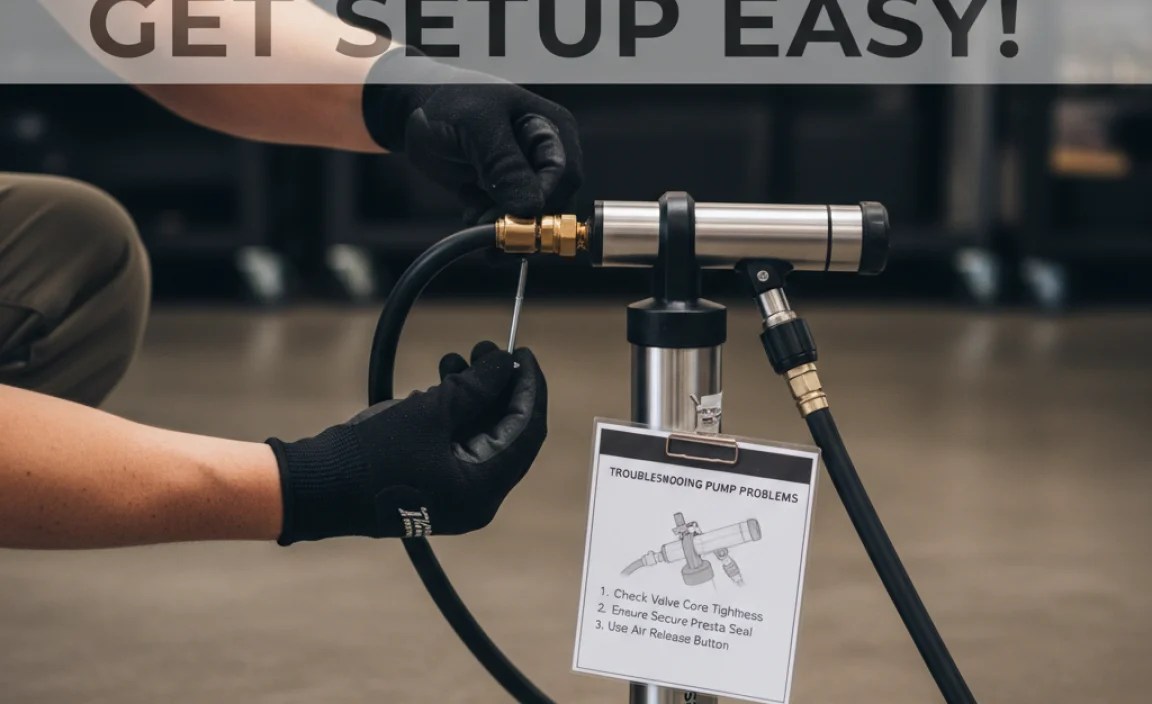
Sometimes, you might have problems with your tubeless tire floor pump. What if it’s hard to pump? This could be because the pump is dry. Try oiling the pump. What if air is leaking out? Check the pump head. Make sure it’s on tight. Also, check the valve core. It might be loose. What if the gauge isn’t working? The gauge might be broken. You might need to replace it. Don’t give up! Most pump problems are easy to fix.
- Hard to pump: Oil the pump.
- Air leaking: Check the pump head.
- Gauge not working: Replace the gauge.
- Pump not sealing: Clean the pump head.
- Hose is cracked: Replace the hose.
Imagine you are on a bike ride and your tire is low. You pull out your pump, but it’s not working right. What do you do? First, stay calm. Don’t get frustrated. Second, check the basics. Is the pump head on tight? Is the valve core tight? Is there anything blocking the pump? Third, try a few simple fixes. Oil the pump. Clean the pump head. If you still can’t get it to work, ask for help. Another cyclist might have a pump you can use. Or, you can call a friend for a ride. The most important thing is to stay safe and keep trying.
Fun Fact or Stat: Carrying a small multi-tool with a valve core remover can help fix common pump and tire issues on the road.
Pump Won’t Seal
If your pump won’t seal to the valve, try these steps. First, make sure the pump head is clean. Dirt can prevent it from sealing. Second, check the rubber gasket inside the pump head. If it’s worn out, replace it. Third, make sure you are using the right side of the pump head. Some pump heads have two sides: one for Presta and one for Schrader.
Hard to Push Down
If it’s hard to push down on the pump, try oiling it. The piston might be dry. This makes it harder to move. Put a few drops of oil on the piston. Work the handle up and down. This spreads the oil around. If it’s still hard to push, the pump might be damaged. You might need to replace it.
Gauge is Inaccurate
If the gauge is inaccurate, you can try to fix it. First, check the gauge against another gauge. This will tell you how far off it is. If it’s only a little off, you can adjust your pumping. If it’s way off, you should replace the gauge. You can buy new gauges at bike shops. Make sure to get the right size and type.
Fun Fact or Stat: Some high-end pumps have calibration adjustments so you can fine-tune the gauge accuracy.
Tubeless Tire Types and Compatibility
Not all tubeless tires are the same. There are different types of tubeless tires. Some are easier to set up than others. Tubeless-ready tires are designed to work with sealant. The sealant helps to seal small leaks. Tubeless tires need a special rim. The rim has a special shape. This shape helps the tire seal to the rim. When choosing a tubeless tire floor pump, make sure it works with your tire type. Some pumps are better for certain types of tires. Read the pump’s description carefully.
- Tubeless-ready tires need sealant.
- Tubeless tires need a special rim.
- Some pumps work better with certain tires.
- Check tire and rim compatibility.
- Consider tire width when choosing a pump.
Imagine you are buying new tires for your bike. You see the words “tubeless-ready.” What does this mean? It means the tires are designed to work without inner tubes. But, you need to use sealant. The sealant fills in small holes and gaps. This helps the tire hold air. You also need special rims. These rims have a special shape. This shape helps the tire lock onto the rim. If you use tubeless-ready tires, you need a tubeless tire floor pump. This pump can deliver a big burst of air. This helps the tire seat on the rim quickly. Tubeless tires can be a lot of fun. They can also give you a better ride.
Fun Fact or Stat: Tubeless tires are popular for mountain biking because they allow lower tire pressures, improving grip and comfort.
Tubeless-Ready vs. UST
What’s the difference between tubeless-ready and UST tires? UST stands for Universal System Tubeless. UST tires are designed to be used without sealant. They have a tighter fit on the rim. Tubeless-ready tires need sealant. They are lighter than UST tires. Most modern tubeless systems are tubeless-ready. This is because they offer a good balance of weight and performance. Check your tire’s label to see what type it is.
Rim Compatibility
Not all rims are compatible with tubeless tires. You need a rim that is designed for tubeless use. These rims have a special shape. This shape helps the tire seal to the rim. Look for rims that are labeled as “tubeless-ready.” These rims are designed to work with tubeless-ready tires. Using the wrong rim can be dangerous. The tire might come off the rim while you are riding.
Tire Width Considerations
Tire width is important when choosing a pump. Wider tires need more air. A pump that is designed for narrow tires might not work well. Look for a pump that can deliver a lot of air. This is especially important for mountain bike tires. Mountain bike tires are wider than road bike tires. Make sure the pump is compatible with your tire width.
Fun Fact or Stat: Using wider tires can reduce the risk of pinch flats and improve ride comfort.
Tubeless vs. Tube Tires: A Comparison
What’s better: tubeless or tube tires? Both have their pros and cons. Tube tires are cheaper and easier to fix. But, they are more likely to get flats. Tubeless tires are more expensive and harder to set up. But, they are less likely to get flats. They also offer better performance. They can be run at lower pressures. This improves grip and comfort. Choosing between tubeless and tube tires depends on your needs. It also depends on your riding style. A tubeless tire floor pump is essential for tubeless setups.
- Tube tires are cheaper and easier to fix.
- Tubeless tires have fewer flats.
- Tubeless tires offer better performance.
- Choose based on your needs and riding style.
- Consider the cost and maintenance.
Imagine you are talking to a friend who is new to biking. They ask you, “Should I get tubeless or tube tires?” What would you say? You would explain the pros and cons of each. You would tell them that tube tires are a good choice for beginners. They are cheaper and easier to deal with. But, if they are serious about biking, they might want to try tubeless. Tubeless tires can give them a better ride. They can also save them from flats. You would also tell them that tubeless tires need a special pump. A tubeless tire floor pump is a must-have for tubeless setups. In the end, the choice is up to them.
Fun Fact or Stat: Many professional cyclists prefer tubeless tires for their performance advantages in racing.
Flat Protection
Tubeless tires offer better flat protection. This is because they can be run at lower pressures. Lower pressures reduce the risk of pinch flats. Pinch flats happen when the tube gets pinched between the tire and the rim. Tubeless tires also use sealant. The sealant fills in small holes and gaps. This prevents air from leaking out. Tube tires don’t have this protection. They are more likely to get flats.
Ride Quality
Tubeless tires offer a better ride quality. They can be run at lower pressures. Lower pressures improve grip and comfort. They also reduce rolling resistance. This means you can ride faster with less effort. Tube tires don’t offer the same level of performance. They need to be run at higher pressures. This makes the ride harsher and less comfortable.
Cost and Maintenance
Tube tires are cheaper to buy and maintain. Tubes are inexpensive and easy to replace. Tubeless tires are more expensive. They also require more maintenance. You need to buy sealant and replace it regularly. You also need to make sure the rim is tubeless-ready. However, the benefits of tubeless tires can outweigh the costs. Especially for serious cyclists.
| Feature | Tube Tires | Tubeless Tires |
|---|---|---|
| Cost | Lower | Higher |
| Flat Protection | Lower | Higher |
| Ride Quality | Lower | Higher |
| Maintenance | Easier | More complex |
Fun Fact or Stat: Sealant in tubeless tires can often seal punctures up to 6mm in size, preventing flats on the trail.
Summary
A tubeless tire floor pump is a great tool for bike riders. It helps you keep your tires in top shape. These pumps make it easy to inflate tubeless tires. They can deliver a lot of air quickly. This helps the tire seal to the rim. A good pump has an accurate gauge. This lets you get the right tire pressure. Taking care of your pump will help it last longer. Keep it clean and oiled. Replace worn-out parts. With the right pump, you can enjoy a better ride.
Conclusion
Choosing the right pump can make a big difference. A tubeless tire floor pump is a must-have for anyone with tubeless tires. It can save you time and trouble. It also helps you get the most out of your bike. So, do your research and find the best pump for you. Happy riding!
Frequently Asked Questions
Question No 1: What is a tubeless tire floor pump?
Answer: A tubeless tire floor pump is a special pump made for tubeless tires. Tubeless tires don’t have an inner tube. This pump can push a lot of air fast. This helps the tire seal to the rim. It’s different from a regular pump. Regular pumps might not give enough air quickly. This pump makes setting up tubeless tires easier. It also helps you keep the right tire pressure. It is a useful tool for bike riders.
Question No 2: Can I use a regular pump for tubeless tires?
Answer: You can try to use a regular pump. But it might not work well. Regular pumps might not push enough air fast. This can make it hard to seal the tire. A tubeless tire floor pump is designed to do this. It has a special chamber that releases a lot of air. This helps the tire seat on the rim. If you have tubeless tires, a special pump is best. It will make the job much easier. It will also save you time and effort.
Question No 3: How do I know what tire pressure to use?
Answer: The right tire pressure depends on a few things. It depends on your tires. It also depends on how you ride. Check the side of your tire. It will tell you the right pressure range. The range is usually in PSI. PSI means pounds per square inch. Use a tubeless tire floor pump with an accurate gauge. This will help you get the pressure just right. Experiment with different pressures. Find what works best for you.
Question No 4: How often should I check my tire pressure?
Answer: You should check your tire pressure before each ride. This will help ensure your tires are properly inflated. It will also make sure your ride is safe and smooth. Use a tubeless tire floor pump with a gauge. Check the pressure and add air if needed. This only takes a few minutes. It’s a good habit to get into. Proper tire pressure improves your bike’s performance. It also helps prevent flats.
Question No 5: What if my tubeless tire keeps losing air?
Answer: If your tubeless tire keeps losing air, there might be a leak. First, check the valve core. Make sure it’s tight. You can tighten it with a special tool. Second, check the tire for punctures. Small punctures can be sealed with sealant. But larger punctures might need a patch. If you can’t find the leak, take your bike to a shop. They can help you find and fix the problem. A good tubeless tire floor pump is essential for keeping your tires inflated.
Question No 6: How do I maintain my tubeless tire floor pump?
Answer: To keep your pump working well, do a few things. First, keep it clean. Wipe it down after each use. Second, store it in a dry place. This prevents rust. Third, oil the moving parts. This keeps them working smoothly. Fourth, check the pump head. Make sure it’s in good shape. Replace it if it’s worn out. A little care will help your tubeless tire floor pump last longer. It will also ensure it’s ready when you need it.


