
How to Use Hose for CO₂ Inflator: Easy Guide

Quick Summary: Using a hose with your CO₂ inflator is easy! First, screw the hose onto the inflator head. Next, firmly press the hose end onto your tire valve. Finally, gently twist the CO₂ cartridge into the inflator to fill your tire. The hose gives you better control and prevents freezing your fingers.
Ever tried inflating a tire with a CO₂ inflator only to fumble with the cartridge, freeze your fingers, or struggle to get a good seal on the valve? You’re not alone! Many cyclists find direct CO₂ inflators a bit tricky. That’s where a hose comes in handy. It adds control, protects your hands, and makes inflation much smoother.
In this guide, I’ll walk you through how to use a hose with your CO₂ inflator, step-by-step. We’ll cover everything from choosing the right hose to mastering the inflation technique. Soon, you’ll be back on the road with perfectly inflated tires, without any hassle. Let’s get started!
Why Use a Hose with Your CO₂ Inflator?

Before we dive into the “how,” let’s talk about the “why.” Using a hose with your CO₂ inflator offers several advantages:
- Better Control: A hose gives you more control over the inflation process. You can hold the inflator and cartridge steady while attaching the hose to the valve.
- Hand Protection: CO₂ cartridges get extremely cold when discharged. A hose keeps your hands away from the freezing metal, preventing frostbite.
- Improved Seal: The hose end often has a more secure connection to the valve, reducing air leakage during inflation.
- Easier Access: Hoses can reach valves in tight spaces, especially on bikes with disc brakes or deep-section rims.
- Reduced Valve Damage: By reducing fumbling and direct pressure on the valve stem, a hose can help prevent damage, especially to delicate Presta valves.
Types of CO₂ Inflator Hoses

Not all hoses are created equal. Here’s a quick rundown of the common types you’ll encounter:
- Threaded Hoses: These screw onto both the inflator head and the valve. They offer a secure connection but take a bit longer to attach.
- Push-On Hoses: These simply push onto the valve, often with a lever or clamp to secure them. They’re faster to use but might not be as secure as threaded hoses.
- Universal Hoses: Some hoses are designed to work with both Presta and Schrader valves, while others are valve-specific.
Material Matters
The material of the hose also affects its performance and durability:
- Rubber: Rubber hoses are flexible and durable but can degrade over time, especially with exposure to sunlight and ozone.
- Braided Steel: Braided steel hoses are extremely durable and resistant to kinking. They often offer a more precise feel.
- Reinforced Polymer: These hoses combine the flexibility of rubber with the durability of synthetic materials.
What You’ll Need

Before you start, gather these items:
- CO₂ Inflator Head: This is the part that holds the CO₂ cartridge and connects to the hose.
- CO₂ Inflator Hose: Choose a hose that’s compatible with your inflator head and valve type.
- CO₂ Cartridges: Make sure you have the correct size and number of cartridges for your tire size and desired pressure.
- Tire Levers (optional): If you need to remove the tire to find a puncture.
- Multi-Tool (optional): For tightening the hose or removing the wheel.
- Gloves (optional): To protect your hands from the cold.
Step-by-Step Guide: Using a Hose with Your CO₂ Inflator

Here’s a detailed guide to inflating your tire using a CO₂ inflator and hose:
Step 1: Prepare Your Bike and Tire
- Find the Puncture: Locate the source of the flat. Remove any debris (glass, thorns, etc.) from the tire.
- Remove the Wheel (if necessary): If the puncture is large or you can’t easily access the valve, remove the wheel from the bike. Use tire levers if needed to remove one side of the tire from the rim.
- Check the Tube: Inspect the inner tube for damage. If it’s a small puncture, you might be able to patch it later. If it’s a large tear, you’ll need to replace the tube.
Step 2: Attach the Hose to the Inflator Head
- Identify the Thread: Determine if your hose screws onto the inflator head or pushes on.
- Threaded Hose: Align the threads of the hose with the threads on the inflator head. Gently screw the hose on until it’s snug. Avoid overtightening, which could damage the threads.
- Push-On Hose: Push the hose onto the inflator head until it clicks or locks into place. Make sure it’s securely attached.
Step 3: Prepare the CO₂ Cartridge
- Check the Cartridge: Ensure the cartridge is the correct size and type for your inflator.
- Thread the Cartridge (if necessary): Some inflators require you to pre-thread the cartridge into the head before attaching the hose. Follow the manufacturer’s instructions.
Step 4: Attach the Hose to the Tire Valve
- Identify the Valve Type: Determine whether you have a Presta or Schrader valve.
- Presta Valve: Unscrew the valve nut at the top of the valve stem.
- Schrader Valve: Simply remove the valve cap.
- Attach the Hose End: Firmly press the hose end onto the valve. For threaded hoses, screw the hose onto the valve until it’s snug. For push-on hoses, ensure the lever or clamp is engaged to secure the connection.
Step 5: Inflate the Tire
- Hold the Inflator and Wheel Steady: Keep both the inflator and the wheel stable to prevent leaks.
- Activate the CO₂ Cartridge: Gently twist the CO₂ cartridge into the inflator head (or, if pre-threaded, fully tighten it). You should hear a hissing sound as the CO₂ is released.
- Control the Inflation: Inflate the tire in short bursts to avoid overinflation. Monitor the tire pressure by feel.
- Remove the Hose: Once the tire is sufficiently inflated, quickly remove the hose from the valve.
- Tighten the Presta Valve Nut (if applicable): Screw the valve nut back down on Presta valves.
Step 6: Check the Tire Pressure
- Squeeze the Tire: Feel the tire to check if it’s firm. It should feel similar to your other tire.
- Use a Tire Gauge (optional): For more accurate pressure readings, use a portable tire gauge.
- Adjust as Needed: If the tire is too soft, add more CO₂. If it’s too hard, carefully release some air by pressing the valve core.
Troubleshooting Tips
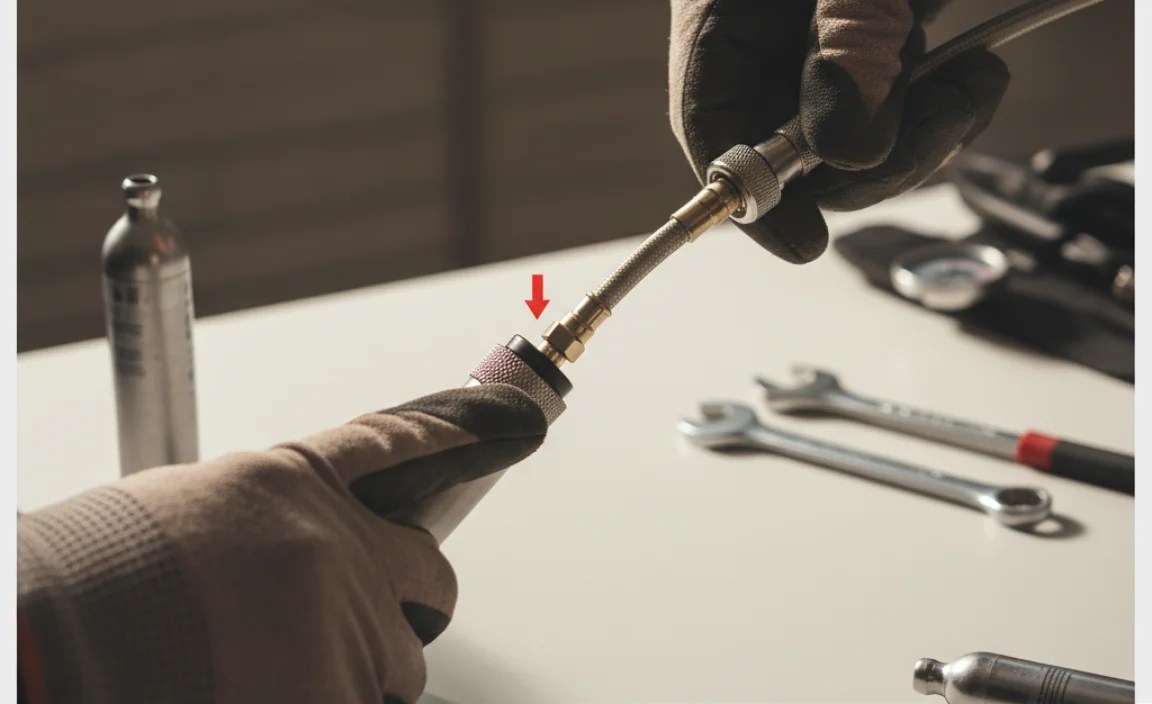
Sometimes, things don’t go as planned. Here are some common issues and how to fix them:
- Leakage at the Valve: Ensure the hose is securely attached to the valve. Try tightening the connection or repositioning the hose.
- Frozen Fingers: Wear gloves to protect your hands from the cold. Or use an insulated sleeve on the CO₂ cartridge.
- Empty Cartridge: Make sure the cartridge is full before using it. Some cartridges may be faulty.
- Inflator Not Working: Check the inflator mechanism for blockages or damage. Refer to the manufacturer’s instructions for troubleshooting.
Choosing the Right CO₂ Cartridge Size
Selecting the correct CO₂ cartridge size is crucial for achieving the desired tire pressure. Here’s a general guideline:
| Tire Size | Recommended Cartridge Size |
|---|---|
| 700x23c (Road Bike) | 16g |
| 700×25-28c (Road Bike) | 16g – 20g |
| 700×32-40c (Gravel Bike) | 20g – 25g |
| 26″ Mountain Bike | 16g – 20g |
| 27.5″ Mountain Bike | 20g – 25g |
| 29″ Mountain Bike | 25g |
Note: These are just recommendations. Actual pressure achieved will vary based on tire volume, valve type, and inflation technique. Always check your tire’s recommended pressure range.
Safety First
CO₂ inflators are convenient, but they also require caution:
- Read the Instructions: Always read and follow the manufacturer’s instructions for your specific inflator.
- Protect Your Eyes: Wear safety glasses or goggles to protect your eyes from flying debris.
- Ventilate the Area: Use CO₂ inflators in a well-ventilated area.
- Dispose of Cartridges Properly: Punctured CO₂ cartridges are recyclable. Check your local recycling guidelines.
- Avoid Overinflation: Overinflating your tires can lead to blowouts. Always check the recommended pressure range on your tire sidewall.
Maintaining Your CO₂ Inflator and Hose
Proper maintenance will keep your CO₂ inflator and hose in good working condition for years to come:
- Clean Regularly: Wipe down the inflator and hose with a clean cloth after each use.
- Check for Damage: Inspect the hose for cracks, cuts, or other damage. Replace the hose if necessary.
- Lubricate Threads: Apply a small amount of grease or lubricant to the threads of the inflator head and hose to prevent corrosion and ensure smooth operation.
- Store Properly: Store the inflator and hose in a cool, dry place away from direct sunlight.
CO₂ vs. Hand Pumps: Which is Right for You?
CO₂ inflators are great for quick repairs on the road, but they’re not always the best choice. Here’s a comparison:
| Feature | CO₂ Inflator | Hand Pump |
|---|---|---|
| Speed | Very fast | Slow |
| Ease of Use | Easy, once you get the hang of it | Requires more effort |
| Cost | More expensive (requires cartridges) | Less expensive (one-time purchase) |
| Reliability | Can fail if cartridge is empty or inflator malfunctions | Generally reliable, but can be tiring |
| Environmental Impact | Cartridges contribute to waste | More environmentally friendly |
| Best Use Case | Quick repairs during races or group rides | Everyday inflation and topping off pressure |
Ultimately, the best choice depends on your riding style and priorities. Many cyclists carry both a CO₂ inflator and a small hand pump for backup.
Frequently Asked Questions (FAQ)
Q: Can I reuse a CO₂ cartridge?
A: No, CO₂ cartridges are single-use only. Once punctured, they cannot be refilled.
Q: How many CO₂ cartridges should I carry?
A: It’s a good idea to carry at least two cartridges. This gives you a backup in case the first one fails or you need to make adjustments.
Q: Will CO₂ damage my tires?
A: CO₂ can cause tire pressure to drop slightly over time due to its smaller molecule size. It’s best to replace CO₂ with regular air as soon as possible.
Q: Can I use a CO₂ inflator on tubeless tires?
A: Yes, CO₂ inflators can be used on tubeless tires. However, be aware that CO₂ can dry out the sealant over time. It’s best to reinflate with regular air after the ride.
Q: What’s the difference between 16g and 25g CO₂ cartridges?
A: The number indicates the amount of CO₂ in the cartridge. Larger cartridges (25g) are typically used for larger tires, such as mountain bike tires, while smaller cartridges (16g) are sufficient for road bike tires.
Q: My CO₂ inflator is leaking. What should I do?
A: Check the connection between the inflator head and the hose, and between the hose and the valve. Make sure everything is tightened securely. If the leaking persists, the inflator may be damaged and need to be replaced.
Q: Can I bring CO₂ cartridges on an airplane?
A: Regulations vary by airline and country. Generally, small CO₂ cartridges for personal use are permitted in checked baggage but not in carry-on baggage. Check with your airline before traveling.
Beyond the Basics: Pro Tips for CO₂ Inflation
- Practice Makes Perfect: Before relying on your CO₂ inflator on a ride, practice using it at home. This will help you become familiar with the process and troubleshoot any potential issues.
- Carry a Spare Tube: Even with a CO₂ inflator, it’s always a good idea to carry a spare inner tube. If the puncture is too large to seal, you’ll need to replace the tube.
- Use Tire Sealant: Tire sealant can help prevent flats by automatically sealing small punctures. This can save you the hassle of using a CO₂ inflator in the first place. Learn more about tubeless tire sealants.
- Consider a Hybrid Inflator: Some inflators combine CO₂ inflation with a mini-pump. This gives you the speed of CO₂ with the reliability of a hand pump.
- Don’t Forget to Recycle: Recycle your used CO₂ cartridges properly. Many bike shops and recycling centers accept them.
Conclusion
Using a hose with your CO₂ inflator can make roadside repairs much easier and more reliable. By following these steps and tips, you’ll be able to quickly and confidently inflate your tires, getting you back on the road in no time. Remember to practice, stay safe, and always carry a backup plan. Happy riding!


