
How to Use Inline Filter in Hose: Easy Guide

Quick Summary: Using an inline filter in your hose is simple! First, identify the direction of water flow. Then, attach the filter to your hose, making sure the “in” side connects to your water source and the “out” side connects to your device. Secure connections tightly to prevent leaks. Regularly clean or replace the filter to maintain optimal performance and protect your equipment from sediment and debris.
Dealing with dirty water when you’re washing your bike or topping off your hydration pack can be a real pain. Sediment and debris can clog nozzles, damage pumps, and leave you with a less-than-ideal cleaning experience. But don’t worry, there’s an easy solution: using an inline filter in your hose. It’s a simple way to ensure clean water, protect your equipment, and make your outdoor tasks much more efficient. Let’s get started and show you how to install and use one!
What is an Inline Hose Filter?
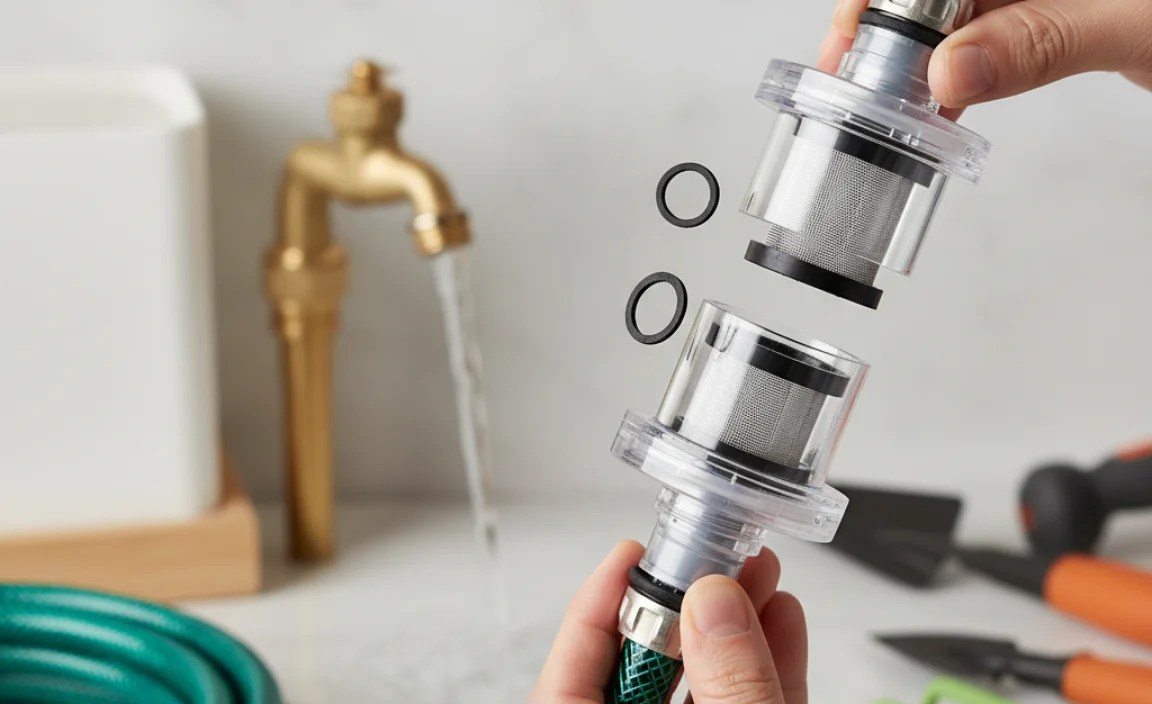
An inline hose filter is a device that connects directly to your garden hose to filter out sediment, rust, and other debris from the water supply. It’s designed to improve water quality and protect equipment that uses the water, such as pressure washers, sprinklers, and even your bike washing setup.
Why Use an Inline Filter?
Here are several reasons why using an inline filter is a great idea:
- Protects Equipment: Prevents sediment from damaging pumps, nozzles, and other sensitive components.
- Improves Water Quality: Provides cleaner water for washing bikes, cars, or filling pools.
- Extends Equipment Life: Reduces wear and tear on your tools by keeping them free from debris.
- Easy to Install: Simple to attach and use with standard garden hoses.
Tools and Materials You’ll Need

Before you start, gather these essential items:
- Inline Hose Filter: Choose one that fits your hose size (usually ¾ inch).
- Garden Hose: Your standard garden hose.
- Wrench or Pliers (Optional): For tightening connections if needed.
- Thread Seal Tape (Teflon Tape): To ensure a watertight seal.
Step-by-Step Guide: How to Use an Inline Filter in Your Hose

Follow these simple steps to install and use your inline hose filter:
Step 1: Prepare the Filter
Unpack your new inline filter and inspect it for any damage. Make sure you have all the necessary components.
Step 2: Identify Water Flow Direction
Most inline filters have an arrow indicating the direction of water flow. It’s crucial to install the filter correctly to ensure proper filtration.
Step 3: Apply Thread Seal Tape
Wrap thread seal tape (Teflon tape) around the threads of both the inlet and outlet connections of the filter. This will help create a watertight seal and prevent leaks.
Pro Tip: Wrap the tape in the opposite direction that you’ll be screwing the hose onto the filter. This prevents the tape from unraveling as you tighten the connection.
Step 4: Connect the Inlet Side
Attach the “in” side of the filter to your water source (e.g., the faucet or spigot). Hand-tighten the connection, then use a wrench or pliers to tighten it a bit more. Be careful not to overtighten, as this can damage the filter or hose.
Step 5: Connect the Outlet Side
Attach the “out” side of the filter to your hose. Again, hand-tighten the connection and then use a wrench or pliers for a snug fit. Ensure the hose is securely connected to prevent leaks.
Step 6: Test for Leaks
Turn on the water slowly and check for any leaks at the connections. If you see leaks, turn off the water, tighten the connections further, and retest.
Step 7: Flush the Filter
Before using the filtered water for your intended purpose, let the water run through the filter for a few minutes. This will flush out any manufacturing residue or loose particles from the filter.
Step 8: Regular Maintenance
To keep your inline filter working efficiently, clean or replace the filter cartridge regularly. The frequency depends on the water quality in your area and how often you use the filter.
Maintaining Your Inline Filter
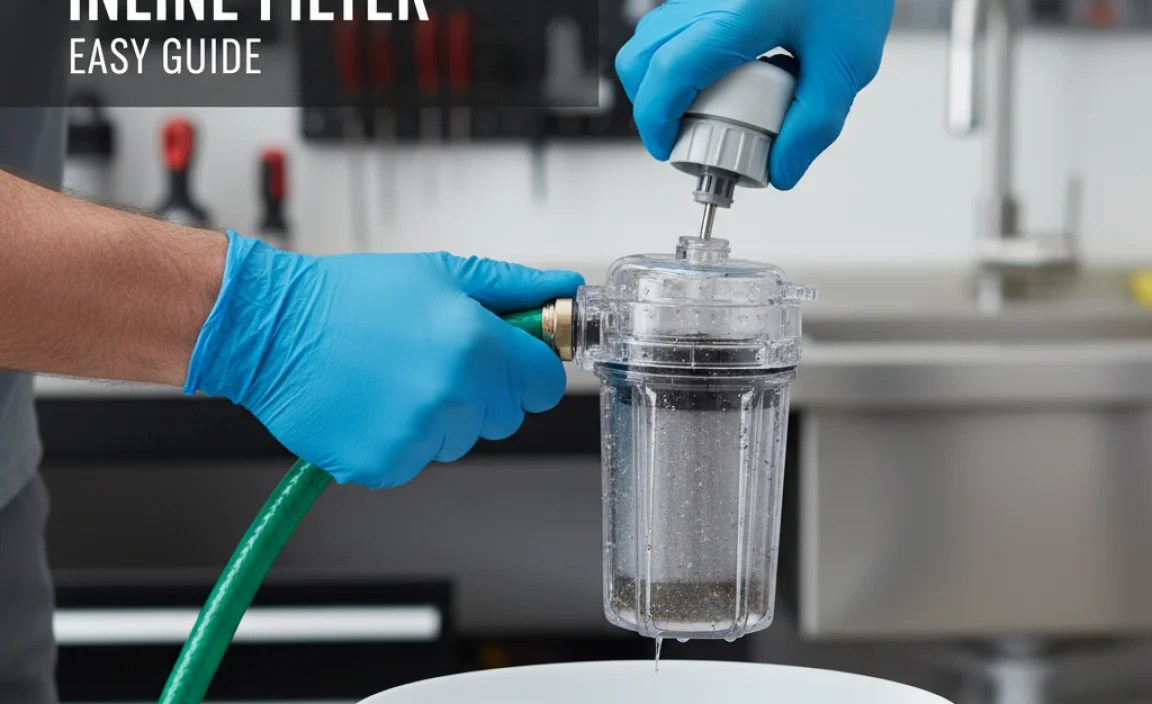
Proper maintenance is key to extending the life and effectiveness of your inline filter.
Cleaning the Filter
Some inline filters have a cleanable filter cartridge. Here’s how to clean it:
- Turn off the water supply.
- Disconnect the filter from the hose.
- Open the filter housing.
- Remove the filter cartridge.
- Rinse the cartridge with clean water to remove sediment and debris.
- Reassemble the filter and reconnect it to the hose.
Replacing the Filter Cartridge
If your filter cartridge is not cleanable or is heavily soiled, you’ll need to replace it. Follow these steps:
- Turn off the water supply.
- Disconnect the filter from the hose.
- Open the filter housing.
- Remove the old filter cartridge.
- Insert a new filter cartridge.
- Reassemble the filter and reconnect it to the hose.
Signs You Need to Clean or Replace Your Filter
- Reduced Water Flow: If the water flow is noticeably slower, it’s time to check the filter.
- Dirty Water: If the water coming out of the filter is not clear, the filter is likely clogged.
- Visible Debris: If you can see sediment or debris in the filter housing, it’s time to clean or replace the filter.
Choosing the Right Inline Filter
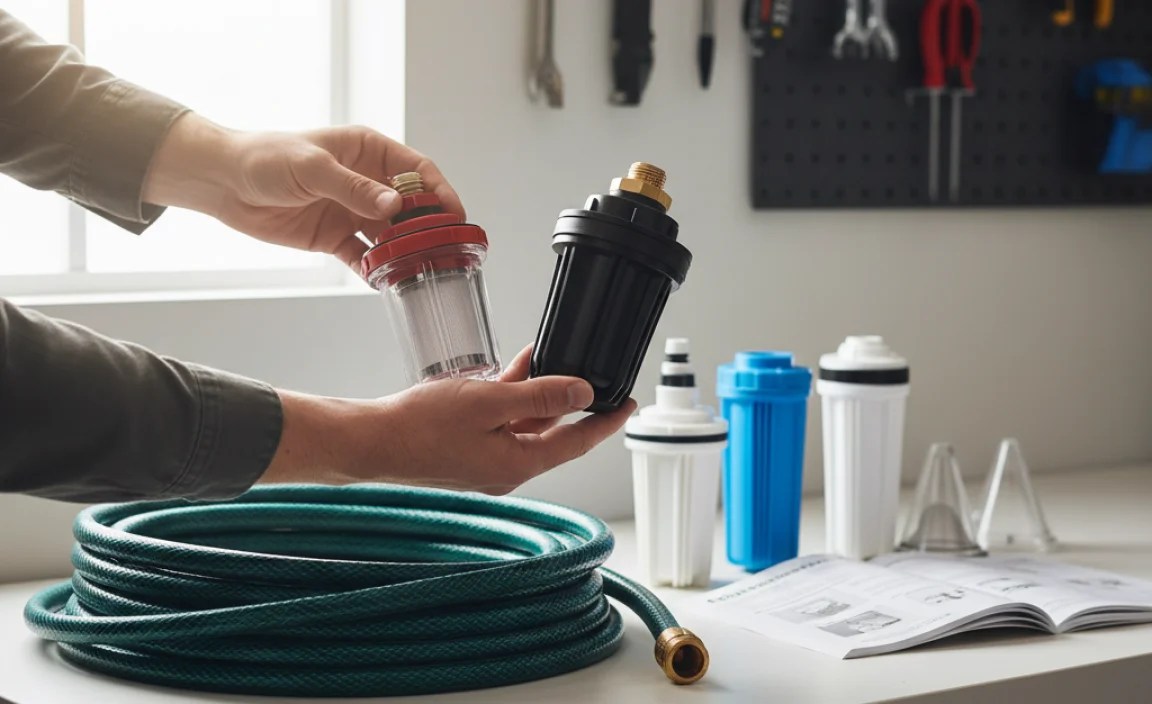
With so many options available, selecting the right inline filter can seem daunting. Here’s what to consider:
Filter Size and Flow Rate
Make sure the filter size matches your hose connection (usually ¾ inch). Also, consider the flow rate. A higher flow rate is better for tasks like pressure washing, while a lower flow rate is fine for general watering.
Filter Material
Filters come in various materials, including:
- Sediment Filters: Remove sand, silt, and rust.
- Carbon Filters: Reduce chlorine, odors, and improve taste.
- Combination Filters: Offer a mix of filtration capabilities.
Filter Micron Rating
The micron rating indicates the size of particles the filter can remove. A lower micron rating means the filter can remove smaller particles, providing cleaner water.
Durability and Construction
Look for filters made from durable materials that can withstand outdoor conditions and water pressure. Check customer reviews to see how well the filter holds up over time.
Inline Filter Applications
Inline filters are versatile and can be used in various applications:
- Bike Washing: Protect your bike washing equipment from sediment and debris.
- Pressure Washing: Prevent clogs and damage to your pressure washer.
- Gardening: Provide cleaner water for your plants.
- RV and Camping: Filter water for drinking and washing in your RV or campsite.
- Pool Filling: Reduce sediment and debris when filling your swimming pool.
Troubleshooting Common Issues
Even with careful installation, you might encounter some issues. Here’s how to troubleshoot them:
Leaks at Connections
If you experience leaks at the connections, try these steps:
- Turn off the water supply.
- Tighten the connections further using a wrench or pliers.
- If the leaks persist, remove the connections, apply fresh thread seal tape, and reassemble.
Reduced Water Flow
If the water flow is reduced, the filter might be clogged. Try these solutions:
- Turn off the water supply.
- Disconnect the filter and inspect the filter cartridge.
- Clean or replace the filter cartridge as needed.
Discolored Water
If the water is discolored, it indicates the filter is doing its job by trapping sediment and debris. However, it also means it’s time to clean or replace the filter cartridge.
Cost Considerations
The cost of an inline filter can vary depending on the type, size, and features. Here’s a general breakdown:
| Type of Filter | Average Cost | Lifespan |
|---|---|---|
| Basic Sediment Filter | $10 – $20 | 3-6 months |
| Premium Sediment Filter | $20 – $40 | 6-12 months |
| Carbon Filter | $25 – $50 | 6-12 months |
| Combination Filter | $30 – $60 | 6-12 months |
In addition to the initial cost, factor in the cost of replacement cartridges. Consider buying cartridges in bulk to save money over time.
Benefits of Using an Inline Filter
Let’s summarize the key benefits of using an inline filter in your hose:
- Extended Equipment Life: Protects your equipment from damage caused by sediment and debris.
- Improved Water Quality: Provides cleaner water for various tasks.
- Cost Savings: Reduces the need for repairs and replacements of equipment.
- Convenience: Easy to install and maintain.
- Versatility: Can be used in a wide range of applications.
Inline Filters vs. Other Filtration Methods
Inline filters are just one type of water filtration system. Here’s how they compare to other methods:
| Filtration Method | Pros | Cons | Best Use |
|---|---|---|---|
| Inline Filters | Easy to install, portable, affordable | Limited filtration capacity, requires regular maintenance | Bike washing, gardening, RV camping |
| Faucet Filters | Convenient for drinking water, easy to switch on/off | Limited flow rate, may not fit all faucets | Drinking water, cooking |
| Whole House Filters | Filters all water entering the house, long-lasting | Expensive to install, requires professional installation | Comprehensive water filtration for the entire home |
| Water Filter Pitchers | Portable, affordable | Slow filtration, limited capacity | Drinking water for small households |
Where to Buy Inline Filters
You can purchase inline filters at various retailers, including:
- Home Improvement Stores: Like Home Depot and Lowe’s.
- Hardware Stores: Local hardware stores often carry a selection of filters.
- Online Retailers: Amazon, eBay, and specialty online stores.
- RV and Camping Stores: Stores like Camping World often sell filters for RV use.
Tips for Extending the Life of Your Hose
While you’re improving your water quality with an inline filter, here are some tips to keep your hose in top shape, too:
- Store Properly: Coil your hose neatly after each use to prevent kinks and damage.
- Avoid Direct Sunlight: Store your hose in a shaded area to prevent UV damage.
- Drain After Use: Drain the hose completely after each use to prevent freezing and cracking in cold weather.
- Use a Hose Reel: A hose reel can help keep your hose organized and prevent damage.
- Inspect Regularly: Check your hose regularly for cracks, leaks, and other damage. Replace it if necessary.
Understanding Water Pressure and Its Impact
Water pressure plays a significant role in how effectively your inline filter works and how well your equipment performs. Here’s a breakdown:
What is Water Pressure?
Water pressure is the force that moves water through your pipes and hoses. It’s typically measured in pounds per square inch (PSI).
Ideal Water Pressure
The ideal water pressure for most homes is between 40 and 60 PSI. Lower pressure can result in weak water flow, while higher pressure can damage pipes and appliances.
Impact on Inline Filters
High water pressure can cause inline filters to burst or leak, while low water pressure can reduce their effectiveness. Make sure your water pressure is within the recommended range for your filter.
Testing Water Pressure
You can test your water pressure using a water pressure gauge, which can be purchased at most hardware stores. Simply attach the gauge to an outdoor faucet and turn on the water.
Adjusting Water Pressure
If your water pressure is too high, you can install a pressure regulator to reduce it. If it’s too low, you may need to consult a plumber to identify and fix the issue.
FAQ: Inline Hose Filters
What is an inline hose filter?
An inline hose filter is a device that attaches to your garden hose to remove sediment, rust, and other debris from the water supply, improving water quality and protecting your equipment.
How do I install an inline hose filter?
Simply attach the “in” side of the filter to your water source and the “out” side to your hose, ensuring the direction of water flow matches the arrow on the filter. Use thread seal tape to prevent leaks.
How often should I clean or replace my inline filter?
The frequency depends on your water quality and usage. Check the filter regularly and clean or replace it when you notice reduced water flow, dirty water, or visible debris.
Can I use an inline filter for drinking water?
Some inline filters are designed for drinking water, but make sure to choose one specifically labeled for potable water use. These filters typically have a finer micron rating and may include carbon filtration to remove odors and improve taste.
Will an inline filter increase water pressure?
No, an inline filter will not increase water pressure. In fact, a clogged filter can reduce water pressure. Cleaning or replacing the filter can help maintain optimal water flow.
What are the benefits of using an inline filter?
Inline filters protect your equipment, improve water quality, extend equipment life, are easy to install, and are versatile for various applications like bike washing, gardening, and RV camping.
Where can I buy an inline hose filter?
You can purchase inline filters at home improvement stores, hardware stores, online retailers like Amazon and eBay, and RV and camping stores.
Conclusion
Using an inline filter in your hose is a simple yet effective way to ensure clean water for your various tasks. By following the steps outlined in this guide, you can easily install and maintain your filter, protect your equipment, and enjoy the benefits of improved water quality. So, go ahead and add an inline filter to your setup and experience the difference it makes!


