
How to Easily Upgrade Floor Pump with Braided Hose

Quick Summary: Upgrading your floor pump with a braided hose is a simple way to improve its durability and performance. This involves removing the old hose, selecting a compatible braided hose, and securely attaching it using the appropriate fittings. This upgrade enhances the pump’s longevity and provides a more reliable connection for accurate tire inflation.
Is your floor pump hose cracked, kinked, or just plain worn out? Don’t toss the whole pump! Upgrading to a braided hose is an easy, affordable way to breathe new life into your trusty inflator. A braided hose resists kinks, handles higher pressures, and lasts much longer than standard rubber hoses. Think of it as a quick performance boost for your bike maintenance routine. Ready to get started? This guide will walk you through each step, so you can get back to riding with confidence.
Why Upgrade to a Braided Hose?

Before we dive into the how-to, let’s quickly cover why you should consider this upgrade.
- Increased Durability: Braided hoses are made with reinforced materials, making them far more resistant to wear and tear than standard rubber hoses.
- Improved Pressure Handling: The braided construction allows for higher pressure inflation without the risk of bursting or weakening.
- Reduced Kinking: Say goodbye to frustrating kinks that restrict airflow. Braided hoses maintain their shape and allow for consistent inflation.
- Enhanced Accuracy: A stable hose connection leads to more accurate pressure readings, ensuring your tires are always perfectly inflated.
Tools and Materials You’ll Need

Gather these items before you begin. This will make the process smoother and more efficient.
- New braided hose (ensure it’s compatible with your pump)
- Hose clamps or appropriate fittings for your pump and hose
- Screwdrivers (usually flathead or Phillips, depending on your pump)
- Pliers (for tightening clamps)
- Utility knife or hose cutter
- Soapy water or lubricant (to ease hose installation)
- Wrench (if your pump uses threaded fittings)
Step-by-Step Guide: Upgrading Your Floor Pump Hose

Follow these steps carefully to ensure a successful upgrade. If you are not comfortable doing this yourself, take it to a local bike shop.
Step 1: Disconnect the Old Hose
First, you need to remove the existing hose from your floor pump. This usually involves unscrewing or unclamping it from both the pump body and the chuck (the part that attaches to your tire valve).
- Locate the Hose Connections: Identify where the hose connects to the pump body and the chuck.
- Loosen Clamps or Unscrew Fittings: Use a screwdriver or wrench to loosen any clamps or unscrew any fittings securing the hose.
- Remove the Old Hose: Gently pull the hose free from both connections. If it’s stuck, try twisting it slightly while pulling.
Step 2: Prepare the New Braided Hose
Before attaching the new hose, ensure it’s the correct length and properly prepared.
- Measure the Old Hose (Optional): If you want to maintain the same hose length, measure your old hose before discarding it.
- Cut the Braided Hose to Length: Use a utility knife or hose cutter to cut the braided hose to the desired length. Ensure the cut is clean and straight.
- Prepare the Hose Ends: If necessary, slightly widen the hose ends with a small screwdriver or awl to make it easier to attach to the fittings.
Step 3: Attach the Hose to the Pump Body
Now, connect one end of the braided hose to the pump body.
- Apply Lubricant: Lightly lubricate the end of the hose and the pump body connection with soapy water or a similar lubricant. This will help the hose slide on more easily.
- Slide the Hose onto the Connection: Push the hose onto the pump body connection as far as it will go.
- Secure with Clamp or Fitting: Tighten the hose clamp or screw on the fitting to secure the hose to the pump body. Ensure it’s snug but not overtightened.
Step 4: Attach the Hose to the Chuck
Next, connect the other end of the braided hose to the chuck.
- Apply Lubricant: As with the pump body, lightly lubricate the end of the hose and the chuck connection.
- Slide the Hose onto the Chuck Connection: Push the hose onto the chuck connection as far as it will go.
- Secure with Clamp or Fitting: Tighten the hose clamp or screw on the fitting to secure the hose to the chuck. Again, ensure it’s snug but not overtightened.
Step 5: Test for Leaks
Once everything is connected, it’s crucial to test for leaks.
- Attach the Chuck to a Tire Valve: Connect the chuck to a tire valve on your bike.
- Pump Air: Start pumping air into the tire.
- Check for Leaks: Listen for any hissing sounds or feel for air escaping around the hose connections.
- Tighten Connections if Necessary: If you detect any leaks, tighten the hose clamps or fittings slightly until the leaks stop.
Choosing the Right Braided Hose

Selecting the correct braided hose is crucial for a successful upgrade. Here’s what to consider:
- Compatibility: Ensure the hose is compatible with your floor pump’s make and model. Check the hose diameter and fitting types.
- Length: Choose a hose length that is comfortable for you to use. Consider the distance between your pump and your bike’s tires.
- Material: Look for hoses made from high-quality materials like stainless steel or reinforced nylon for maximum durability.
- Fittings: Ensure the hose comes with the correct fittings for your pump and chuck, or purchase them separately.
Troubleshooting Common Issues
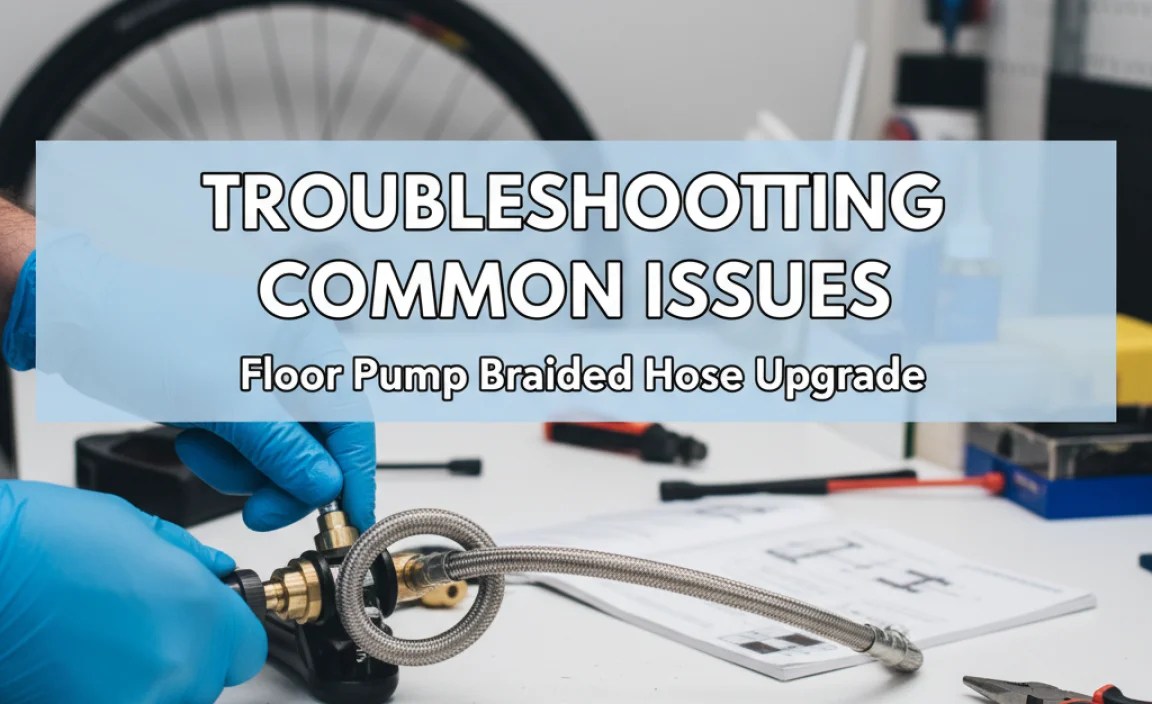
Sometimes, things don’t go exactly as planned. Here are some common issues and how to resolve them.
| Issue | Possible Cause | Solution |
|---|---|---|
| Leaks at hose connections | Loose clamps or fittings | Tighten clamps or fittings. Ensure they are properly seated. |
| Hose won’t slide onto connections | Hose diameter too small, connections corroded | Lubricate connections, widen hose end slightly, or replace corroded parts. |
| Chuck won’t attach to tire valve | Incorrect chuck type | Ensure you’re using the correct chuck for your valve type (Presta or Schrader). |
| Pump feels harder to use after upgrade | Hose too narrow, kinks in the hose | Use a wider hose, ensure the hose isn’t kinked, and check for obstructions. |
Maintaining Your Braided Hose
Proper maintenance will extend the life of your new braided hose.
- Regular Inspection: Periodically inspect the hose for any signs of wear, cracks, or damage.
- Cleaning: Clean the hose with a damp cloth to remove dirt and grime. Avoid using harsh chemicals.
- Storage: Store your floor pump in a cool, dry place to prevent the hose from deteriorating.
Floor Pump Maintenance Tips
While you’re upgrading your hose, consider these general floor pump maintenance tips to keep your pump in top condition:
- Check the Piston O-Ring: The piston O-ring is a critical component that maintains pressure. Replace it if it’s worn or cracked.
- Lubricate Moving Parts: Periodically lubricate the piston and other moving parts with a light oil or grease.
- Clean the Air Filter: Some floor pumps have an air filter. Clean or replace it regularly to prevent dirt from entering the pump.
- Inspect the Base: Ensure the base of your pump is stable and free from damage.
Braided Hose vs. Standard Hose: A Detailed Comparison
Here’s a table that highlights the key differences between braided and standard hoses:
| Feature | Braided Hose | Standard Hose |
|---|---|---|
| Durability | High (resistant to wear and tear) | Low (prone to cracking and damage) |
| Pressure Handling | Excellent (can handle high pressures) | Limited (may burst or weaken under high pressure) |
| Kink Resistance | High (maintains shape, resists kinking) | Low (easily kinks, restricting airflow) |
| Lifespan | Long (lasts for many years with proper care) | Short (needs frequent replacement) |
| Cost | Higher initial cost | Lower initial cost |
Alternative Upgrades for Your Floor Pump
Besides upgrading the hose, consider these other enhancements for your floor pump:
- Upgrade the Chuck: A high-quality chuck can improve the seal and make it easier to inflate tires.
- Replace the Gauge: If your pump’s gauge is inaccurate, replace it with a more precise model.
- Add a Pressure Relief Valve: This allows you to fine-tune tire pressure by releasing small amounts of air.
Floor Pump Recommendation Table
| Floor Pump | Material | Max Pressure | Pros | Cons |
|---|---|---|---|---|
| Lezyne Classic Floor Drive | Steel barrel and piston | 220 psi | Durable, accurate gauge, stylish design | Higher price point |
| Topeak JoeBlow Sport III | Steel barrel, composite base | 160 psi | Reliable, easy to use, affordable | Gauge could be larger |
| Park Tool PFP-5 Home Mechanic Floor Pump | Steel barrel and base | 160 psi | Durable, stable base, rebuildable | Basic features |
| Serfas TCPG | Steel barrel, composite base | 160 psi | Good value, comfortable handle | Less durable than steel base models |
FAQ: Upgrading Your Floor Pump Hose
- Q: What is a braided hose?
- A braided hose is a type of hose reinforced with a woven outer layer, typically made of stainless steel or nylon. This braiding provides extra strength and durability, making it resistant to kinks and high pressure.
- Q: Why should I upgrade my floor pump hose?
- Upgrading to a braided hose improves durability, pressure handling, and reduces kinking, leading to more accurate and reliable tire inflation.
- Q: How do I know if a braided hose is compatible with my pump?
- Check the hose diameter and fitting types to ensure they match your pump’s specifications. Consult your pump’s manual or the manufacturer’s website for compatibility information.
- Q: What tools do I need for this upgrade?
- You’ll need screwdrivers, pliers, a utility knife or hose cutter, hose clamps or fittings, and possibly a wrench, depending on your pump.
- Q: How do I prevent leaks after the upgrade?
- Ensure all connections are tight and properly seated. Use hose clamps or fittings that provide a secure seal. Test for leaks by pumping air and listening for hissing sounds.
- Q: Can I use any braided hose for this upgrade?
- No, you must use a braided hose specifically designed for floor pumps or air compressors. Other types of braided hoses may not be compatible with the pressures and fittings used in floor pumps.
- Q: How often should I replace my floor pump hose?
- A standard rubber hose should be replaced every 1-2 years, or sooner if you notice cracks, kinks, or leaks. A braided hose can last much longer, often 5 years or more with proper care.
Conclusion
Upgrading your floor pump with a braided hose is a simple yet effective way to enhance its performance and longevity. By following these steps and tips, you can enjoy more reliable and accurate tire inflation for years to come. So go ahead, give your trusty floor pump the upgrade it deserves, and get back to enjoying those smooth, confident rides! Happy cycling!


