
How to Identify Cheap vs Premium Gauge: Easy Guide

Have you ever wondered about gauges? Gauges measure things. They can measure pressure, depth, or thickness. But how do you know if a gauge is good? How can you tell if it’s cheap or premium? Figuring out how to identify cheap vs premium gauge can be tricky.
Imagine you’re buying a new tire gauge. You want it to last. You also want it to be accurate. A good gauge will help you keep your tires properly inflated. This saves gas and keeps you safe. Let’s learn how to identify cheap vs premium gauge.
Good gauges are made well. They use strong materials. They also have clear markings. Cheap gauges might break easily. They may also give you the wrong readings. So, let’s explore what makes a gauge great.
Key Takeaways
- Premium gauges use higher-quality materials for better durability.
- Accuracy is crucial; test the gauge against a known standard.
- Clear, easy-to-read markings indicate a higher-quality gauge.
- Examine the gauge’s construction for solid, precise assembly.
- Knowing how to identify cheap vs premium gauge saves money.
Understanding Gauge Materials and Build
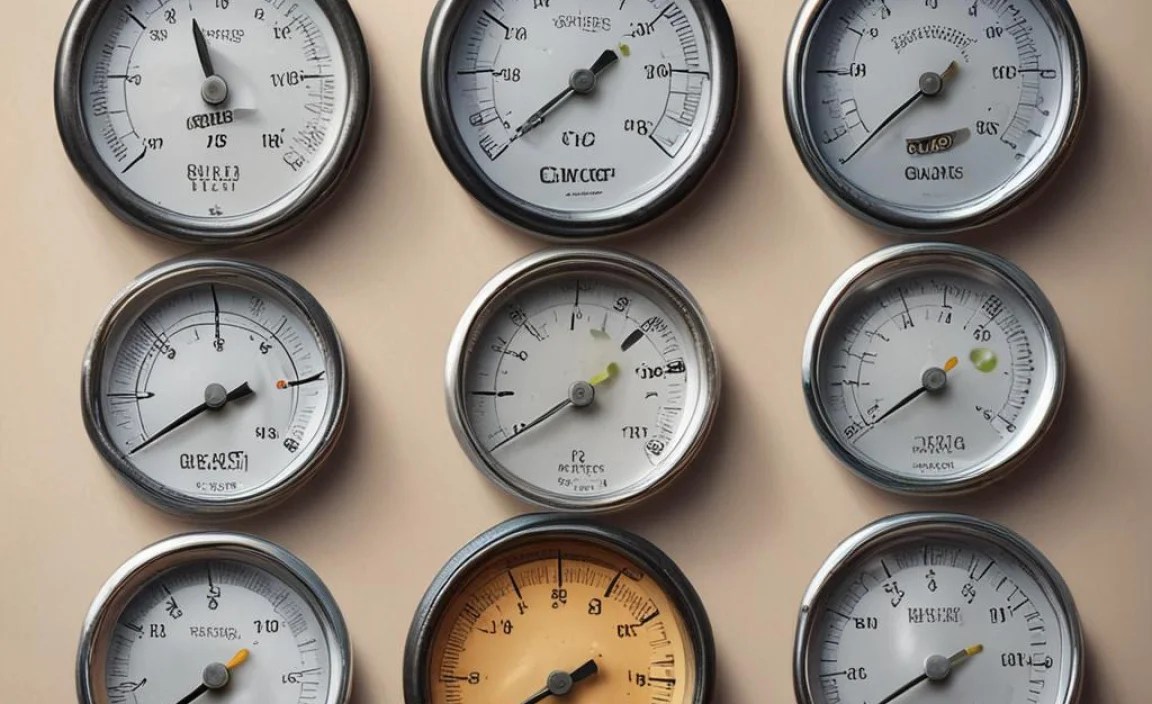
The materials used in a gauge matter a lot. Premium gauges often use stainless steel or brass. These metals are strong and resist rust. Cheap gauges might use plastic or thin metal. These materials can break or bend easily. The build quality is also important. A well-built gauge feels solid in your hand. The parts fit together tightly. There are no gaps or loose pieces. Look closely at the connections. Screws and fittings should be strong. They should not strip or break when tightened. A sturdy build means the gauge will last longer. It will also give more accurate readings. Checking the materials and build can help you how to identify cheap vs premium gauge. You want something that will last. You also want something that is reliable.
- Check for stainless steel or brass.
- Avoid plastic or thin metal parts.
- Feel the weight and sturdiness.
- Look for tight, precise connections.
- Test the fittings for strength.
Think about buying a toy. A toy made of strong plastic lasts longer. A toy made of thin plastic breaks quickly. Gauges are similar. A gauge made of strong materials will last. It will also give you better readings. Pay attention to the small details. Check the screws and dials. Make sure they are well-made. A good gauge is an investment. It will save you money in the long run. It is better to spend more money on a good gauge. It will work well for a long time. Knowing how to identify cheap vs premium gauge ensures accuracy. It also ensures long-term reliability. This keeps you safe and saves you money.
What Metals Make a Gauge Premium?
Have you ever seen a shiny, strong tool and wondered why it looked so good? The answer often lies in the metal. Premium gauges use metals like stainless steel and brass. These metals are strong. They also resist rust and corrosion. Stainless steel is great because it doesn’t rust. This is important if you use the gauge outside. Brass is also good because it is strong and doesn’t spark. This makes it safe to use around flammable materials. Cheap gauges often use regular steel or plastic. These materials can rust or break easily. They might not last long. So, when you’re looking at a gauge, check the metal. A good metal means a good gauge. This helps you how to identify cheap vs premium gauge.
How Does Build Quality Affect Accuracy?
Imagine building a tower of blocks. If the blocks are wobbly, the tower will fall. A gauge is similar. If the parts are loose, the readings will be wrong. Build quality affects accuracy. Premium gauges are built with precision. The parts fit together perfectly. There are no gaps or loose screws. This makes the gauge more accurate. Cheap gauges might have loose parts. They may also have gaps. This can cause the readings to be off. Always check the build quality. Make sure everything is tight and secure. A well-built gauge is more accurate. It will give you the right readings every time. This helps you how to identify cheap vs premium gauge.
Why Are Strong Connections Important?
Picture a water hose connected to a faucet. If the connection is weak, the hose will leak. Gauges are similar. If the connections are weak, the gauge won’t work right. Strong connections are very important. Premium gauges have strong connections. The screws and fittings are made of strong metal. They are also tightened securely. This prevents leaks and ensures accurate readings. Cheap gauges might have weak connections. The screws might be loose. The fittings might be made of plastic. This can cause leaks and wrong readings. Always check the connections. Make sure they are strong and secure. This helps you how to identify cheap vs premium gauge. It also ensures the gauge works properly.
Fun Fact or Stat: Stainless steel gauges can last over 25 years with proper care!
Checking for Accuracy and Calibration

Accuracy is the most important thing in a gauge. A gauge that is not accurate is useless. Premium gauges are carefully calibrated. This means they are set to give correct readings. They are tested against known standards. This ensures they are accurate. Cheap gauges might not be calibrated well. They may not be tested. This can lead to wrong readings. Always check the accuracy of a gauge. Compare it to a known standard. If it’s off, don’t use it. Look for gauges that have been certified. This means they have been tested and proven accurate. Knowing how to identify cheap vs premium gauge involves checking accuracy. It also involves checking calibration. This helps you get the right measurements every time.
- Compare the gauge to a known standard.
- Look for calibration certificates.
- Check if the needle moves smoothly.
- Test the gauge at different points.
- Avoid gauges with inconsistent readings.
Imagine you are baking a cake. You need to measure the ingredients correctly. If you use the wrong measurements, the cake will not turn out right. Gauges are the same. They need to be accurate to give you the right information. A good gauge will help you make the right decisions. It will also keep you safe. Spend time checking the accuracy of a gauge. It is worth the effort. It will give you peace of mind. You will know you are getting the right readings. This is essential for any job. Checking for accuracy helps you how to identify cheap vs premium gauge. It ensures you get reliable results.
How Do You Calibrate a Gauge?
Have you ever noticed that some scales need to be set to zero before you weigh something? That’s calibration! To calibrate a gauge, you compare it to a standard. A standard is a known, accurate measurement. Premium gauges often come with calibration certificates. These certificates show that the gauge has been tested. They also show that it is accurate. To calibrate a gauge yourself, you need a standard. You then adjust the gauge until it matches the standard. This ensures the gauge gives correct readings. Cheap gauges might not be easy to calibrate. They may not have adjustments. This makes them less accurate. Knowing how to identify cheap vs premium gauge includes understanding calibration.
What is a Calibration Certificate?
Imagine getting a report card for your gauge. That’s what a calibration certificate is like. A calibration certificate is a document. It shows that a gauge has been tested. It also shows that it meets certain accuracy standards. Premium gauges often come with these certificates. The certificate tells you when the gauge was tested. It also tells you who tested it. It shows the results of the tests. This gives you confidence that the gauge is accurate. Cheap gauges usually don’t have these certificates. This means they haven’t been tested. You can’t be sure if they are accurate. A calibration certificate helps you how to identify cheap vs premium gauge.
Why is Regular Calibration Important?
Think about a musical instrument. If you don’t tune it, it will sound bad. Gauges are similar. If you don’t calibrate them, they will give wrong readings. Regular calibration is very important. Premium gauges should be calibrated regularly. This ensures they stay accurate over time. Calibration helps to correct any drift. Drift is when a gauge slowly loses its accuracy. Cheap gauges might not hold their calibration well. They may need to be calibrated more often. This can be a hassle. Regular calibration helps you how to identify cheap vs premium gauge. It keeps your measurements reliable.
Fun Fact or Stat: Some industries require gauges to be calibrated every three months to ensure safety!
Ease of Reading and Display Clarity

A gauge should be easy to read. The numbers and markings should be clear. They should be easy to see. Premium gauges have large, clear displays. The numbers are well-spaced. The markings are easy to understand. The needle is also easy to see. Cheap gauges might have small, cluttered displays. The numbers might be hard to read. The markings might be confusing. This can make it hard to get accurate readings. Look for gauges with good contrast. The numbers should stand out against the background. The display should also be easy to read in different lighting conditions. A clear display helps you how to identify cheap vs premium gauge. It also helps you avoid mistakes.
| Feature | Cheap Gauge | Premium Gauge |
|---|---|---|
| Materials | Plastic, thin metal | Stainless steel, brass |
| Accuracy | Less accurate | Highly accurate |
| Display | Small, cluttered | Large, clear |
| Durability | Breaks easily | Long-lasting |
| Calibration | Rarely calibrated | Regularly calibrated |
- Look for large, clear numbers.
- Check for well-spaced markings.
- Ensure the needle is easy to see.
- Test the display in different lighting.
- Avoid cluttered or confusing displays.
Imagine you are trying to read a map in the dark. It would be hard to see the roads and landmarks. A gauge is similar. If the display is not clear, it will be hard to get accurate readings. A good gauge will have a clear, easy-to-read display. This will make your job easier. It will also help you avoid mistakes. Take the time to check the display. Make sure it is easy to read in all conditions. This is an important part of how to identify cheap vs premium gauge. It ensures you get reliable information.
What Makes a Gauge Display Easy to Read?
Have you ever tried to read a sign that was too small or blurry? It’s frustrating! A gauge display should be easy to read at a glance. Premium gauges have features that make this possible. They use large, bold numbers. They also use high-contrast colors. This makes the numbers stand out. The markings are clear and simple. They are easy to understand. Cheap gauges might have small, cramped displays. The numbers might be faded. The markings might be confusing. An easy-to-read display helps you how to identify cheap vs premium gauge. It also saves you time and effort.
How Does Lighting Affect Display Clarity?
Picture trying to read a book in bright sunlight. The glare can make it hard to see the words. Lighting affects display clarity. Premium gauges are designed to be readable in all lighting conditions. They might have a backlight. This makes the display easy to see in the dark. They might also have a non-glare coating. This reduces reflections in bright light. Cheap gauges might not have these features. The display might be hard to read in bright or dark conditions. Always test the display in different lighting. This helps you how to identify cheap vs premium gauge. It ensures you can read the gauge anywhere.
Why Are Simple Markings Important?
Think about a complicated instruction manual. It can be hard to understand. Simple markings are important on a gauge. Premium gauges use simple, clear markings. The units of measurement are easy to understand. There are no confusing symbols or abbreviations. Cheap gauges might use complicated markings. They may also use abbreviations that are hard to understand. This can lead to mistakes. Simple markings help you how to identify cheap vs premium gauge. They also make it easier to get accurate readings.
Fun Fact or Stat: Gauges with a white face and black numbers are generally considered the easiest to read!
Considering the Gauge’s Intended Use

The best gauge for you depends on what you need it for. A tire gauge is different from a pressure gauge for a pool. Premium gauges are designed for specific uses. They are made to handle the conditions they will face. For example, a gauge used in a chemical plant needs to resist corrosion. A gauge used underwater needs to be waterproof. Cheap gauges might not be designed for specific uses. They may not be able to handle harsh conditions. Think about where you will be using the gauge. Choose one that is designed for that environment. This will help you how to identify cheap vs premium gauge. It will also ensure the gauge lasts longer.
- Consider the environment where it will be used.
- Check if the gauge is designed for that use.
- Look for gauges with special features.
- Avoid using a gauge for the wrong purpose.
- Read the manufacturer’s instructions carefully.
Imagine using a hammer to screw in a screw. It wouldn’t work very well. The same is true for gauges. Using the wrong gauge for the job can lead to problems. It can also be dangerous. Always choose a gauge that is designed for the specific task. This will ensure you get accurate readings. It will also keep you safe. Take the time to research different types of gauges. Learn about their intended uses. This will help you make the right choice. Considering the intended use is important for how to identify cheap vs premium gauge. It ensures you get the right tool for the job.
How Do Environmental Conditions Affect Gauges?
Have you ever left a toy outside in the rain? It might get damaged. Environmental conditions can affect gauges. Heat, cold, moisture, and chemicals can all damage a gauge. Premium gauges are designed to withstand these conditions. They are made of materials that resist corrosion. They may also have special coatings. Cheap gauges might not be able to handle harsh conditions. They may rust or break easily. Consider the environment where you will be using the gauge. Choose one that is designed to handle those conditions. This helps you how to identify cheap vs premium gauge.
What Special Features Should I Look For?
Imagine a Swiss Army knife. It has many different tools in one. Some gauges have special features. These features make them more useful. Premium gauges might have features like a backlight. This makes them easy to read in the dark. They might also have a pressure relief valve. This protects the gauge from overpressure. They might also have a data logging feature. This allows you to record measurements over time. Cheap gauges usually don’t have these features. Think about what features would be useful for your needs. This helps you how to identify cheap vs premium gauge.
Why Is It Important to Follow Instructions?
Think about building a Lego set. If you don’t follow the instructions, you might not build it correctly. It is important to follow instructions for gauges. The manufacturer’s instructions tell you how to use the gauge correctly. They also tell you how to care for it. Premium gauges come with detailed instructions. These instructions can help you get the most out of your gauge. Cheap gauges might not have good instructions. Always read the instructions carefully. This helps you how to identify cheap vs premium gauge. It also ensures you use the gauge safely and correctly.
Fun Fact or Stat: Gauges used in space must withstand extreme temperatures ranging from -250°F to +250°F!
Checking the Gauge’s Response Time
A gauge should respond quickly to changes. When the pressure changes, the needle should move right away. Premium gauges have a fast response time. This means they can quickly show changes in pressure or other measurements. Cheap gauges might have a slow response time. The needle might move slowly or not at all. This can make it hard to get accurate readings. Test the gauge’s response time. Apply pressure and see how quickly the needle moves. A fast response time is important for how to identify cheap vs premium gauge. It ensures you get up-to-date information.
- Apply pressure and watch the needle.
- Check if the needle moves quickly.
- Avoid gauges with a slow response.
- Test the gauge at different pressures.
- Look for smooth, consistent movement.
Imagine you are watching a race. You want to know who is in the lead right now. A gauge is similar. You want it to show you the current measurement right away. A good gauge will have a fast response time. This will help you make quick decisions. It will also help you avoid problems. Take the time to test the gauge’s response time. Make sure it is fast and accurate. This is an important part of how to identify cheap vs premium gauge. It ensures you get timely information.
How Does Response Time Affect Accuracy?
Have you ever tried to catch a ball that was thrown too slowly? It’s hard to react in time! Response time affects accuracy. If a gauge is slow to respond, the reading might not be accurate. Premium gauges have a fast response time. This means they can keep up with changing conditions. This helps you get accurate readings. Cheap gauges might have a slow response time. This can lead to errors. A fast response time is crucial for how to identify cheap vs premium gauge.
What Causes a Slow Response Time?
Imagine a rusty hinge on a door. It’s hard to open and close! Several things can cause a slow response time in a gauge. One cause is friction. If the moving parts are not lubricated, they might stick. Another cause is a heavy needle. A heavy needle takes longer to move. Premium gauges are designed to minimize friction. They also use lightweight needles. Cheap gauges might have more friction. They may also use heavier needles. Knowing what causes slow response helps you how to identify cheap vs premium gauge.
How Can I Test the Response Time?
Think about tapping your foot to a song. You can tell if the beat is off. You can test a gauge’s response time by applying pressure quickly. Watch how fast the needle moves. Premium gauges will respond almost instantly. Cheap gauges will be slower. You can also test the response time by releasing pressure. The needle should quickly return to its starting point. Testing the response time helps you how to identify cheap vs premium gauge. It also ensures you get reliable readings.
Fun Fact or Stat: Some high-speed gauges can respond to pressure changes in milliseconds!
Considering Brand Reputation and Warranty
The brand of a gauge can tell you a lot about its quality. Some brands are known for making high-quality, reliable gauges. Premium gauges often come from well-known brands. These brands have a good reputation. They have been making gauges for a long time. They also offer good customer support. Cheap gauges might come from unknown brands. These brands might not have a good reputation. They may also not offer good customer support. Look for brands that offer a warranty. This shows they stand behind their product. Considering brand reputation and warranty helps you how to identify cheap vs premium gauge. It also gives you peace of mind.
- Research the brand’s reputation.
- Look for well-known brands.
- Check for customer reviews.
- See if the gauge has a warranty.
- Contact customer support with questions.
Imagine you are buying a new phone. You would probably choose a brand that you trust. Gauges are similar. You want to choose a brand that is known for quality and reliability. A good brand will stand behind its product. It will also offer good customer support. This is important if you have any problems with the gauge. Take the time to research different brands. Read customer reviews. This will help you make the right choice. Considering brand and warranty is an important part of how to identify cheap vs premium gauge. It ensures you get a reliable product.
Why Does Brand Reputation Matter?
Have you ever noticed that some stores are known for selling good products? Brand reputation matters because it reflects the quality of the product. Premium gauges often come from brands with a good reputation. These brands have a history of making reliable, accurate gauges. They invest in quality materials and manufacturing processes. Cheap gauges might come from brands with a poor reputation. These brands might cut corners to save money. This can lead to lower quality. A good brand reputation helps you how to identify cheap vs premium gauge.
What Should a Good Warranty Cover?
Imagine buying a new bike. You would want a warranty that covers any defects. A good warranty should cover defects in materials and workmanship. This means the manufacturer will repair or replace the gauge. This is if it breaks due to a manufacturing problem. Premium gauges often come with longer warranties. They may also cover more types of damage. Cheap gauges might have shorter warranties. They may also have more restrictions. Check the warranty carefully. This helps you how to identify cheap vs premium gauge.
How Can I Research a Brand?
Think about looking up a restaurant online before you eat there. You can research a brand by reading customer reviews. Look for reviews on websites like Amazon or Google. See what other people are saying about the brand’s gauges. Premium gauges will usually have positive reviews. Cheap gauges might have negative reviews. You can also visit the brand’s website. See if they have a history of making gauges. Researching a brand helps you how to identify cheap vs premium gauge. It also ensures you make an informed decision.
Fun Fact or Stat: Some premium gauge brands have been in business for over 100 years!
Summary
Choosing the right gauge can seem hard. But knowing how to identify cheap vs premium gauge makes it easier. Look at the materials. Premium gauges use strong metals like stainless steel and brass. Check the accuracy. A good gauge will give you correct readings. Make sure the display is clear and easy to read. Consider what you will use the gauge for. Choose one that is designed for that purpose. Check the response time. A good gauge will respond quickly to changes. Look at the brand reputation and warranty. Choose a brand that you trust. A good gauge is an investment. It will give you reliable measurements for years to come.
Think about all the things you’ve learned. You now know what to look for in a good gauge. You can choose a gauge that is right for you. You can also avoid buying a cheap, unreliable gauge. By following these tips, you can get the most out of your gauge. You can also stay safe.
Conclusion
Knowing how to identify cheap vs premium gauge is important. It helps you choose the right tool for the job. Premium gauges are made with better materials. They are more accurate and last longer. Cheap gauges might save you money at first. But they can break easily and give wrong readings. Consider the materials, accuracy, display, and brand. This will help you make an informed decision. Choose a gauge that meets your needs and budget. A good gauge is an investment in accuracy and safety.
Frequently Asked Questions
Question No 1: What is the most important thing to look for in a gauge?
Answer: The most important thing is accuracy. A gauge that is not accurate is useless. You want to make sure the gauge gives you the correct readings. Compare it to a known standard. Look for calibration certificates. Check if the needle moves smoothly. Test the gauge at different points. Avoid gauges with inconsistent readings. Checking for accuracy is vital for how to identify cheap vs premium gauge. It ensures you get reliable results.
Question No 2: What materials are used in premium gauges?
Answer: Premium gauges use high-quality materials. These materials include stainless steel and brass. Stainless steel is strong and resists rust. Brass is also strong and doesn’t spark. Cheap gauges might use plastic or thin metal. These materials can break or bend easily. Always check the materials before you buy a gauge. This helps you how to identify cheap vs premium gauge. It also ensures you get a durable product.
Question No 3: How important is the brand of the gauge?
Answer: The brand of the gauge is very important. Some brands are known for making high-quality, reliable gauges. Premium gauges often come from well-known brands. These brands have a good reputation. They have been making gauges for a long time. They also offer good customer support. Cheap gauges might come from unknown brands. These brands might not have a good reputation. Look for brands that offer a warranty. This shows they stand behind their product.
Question No 4: How do I know if a gauge is easy to read?
Answer: A gauge should be easy to read at a glance. The numbers and markings should be clear. They should be easy to see. Premium gauges have large, clear displays. The numbers are well-spaced. The markings are easy to understand. The needle is also easy to see. Cheap gauges might have small, cluttered displays. The numbers might be hard to read. Always check the display before you buy a gauge. This helps you how to identify cheap vs premium gauge.
Question No 5: What does “calibration” mean for a gauge?
Answer: Calibration means setting a gauge to give correct readings. Premium gauges are carefully calibrated. This means they are tested against known standards. This ensures they are accurate. Cheap gauges might not be calibrated well. They may not be tested. This can lead to wrong readings. Always check for calibration certificates. This is an important part of how to identify cheap vs premium gauge. It ensures you get reliable results.
Question No 6: Why is response time important in a gauge?
Answer: Response time is how quickly a gauge reacts to changes. A gauge should respond quickly to changes. When the pressure changes, the needle should move right away. Premium gauges have a fast response time. This means they can quickly show changes in pressure. Cheap gauges might have a slow response time. Test the gauge’s response time before you buy it. A fast response time is important for how to identify cheap vs premium gauge. It ensures you get up-to-date information.


