
Easy: How to Test If Your Bike Gauge Is Accurate

Do you love riding your bike? Do you know how much air is in your tires? Making sure your tires have the right amount of air is super important. It helps you ride faster and safer. But how do you test if your bike gauge is accurate? Let’s find out!
A bike gauge tells you the pressure in your tires. If the gauge is wrong, your tires might be too flat or too full. This can make riding hard or even dangerous. So, let’s learn how to check if your bike gauge is working right.
Having the right tire pressure makes biking more fun. It also helps your tires last longer. Keep reading to learn some easy ways to make sure your bike gauge is accurate!
Key Takeaways
- Always check your bike tire pressure before you ride for a safer journey.
- Use multiple gauges to see if they give you the same accurate reading.
- Compare your gauge’s readings with a trusted source to ensure accuracy.
- Knowing how to test if your bike gauge is accurate helps maintain your tires.
- Regularly inspect your bike gauge for damage that could affect its readings.
Why Test Bike Gauge Accuracy?

It’s important to know if your bike gauge is correct. An accurate gauge helps you keep your tires at the right pressure. This makes your ride smoother and safer. If your tires are under-inflated, you could get a flat tire more easily. Over-inflated tires can burst! Checking your gauge is a simple way to avoid these problems. Plus, the right tire pressure helps you ride faster and use less energy. Think of it like this: properly inflated tires are like having the right shoes for a race. They help you perform your best. Knowing your gauge is accurate gives you peace of mind. You can enjoy your bike rides without worrying about your tires. So, taking a few minutes to test your gauge can make a big difference in your biking experience.
- Safe rides rely on correct tire pressure.
- Accurate gauges prevent flats and bursts.
- Correct pressure improves riding speed.
- Testing gauges saves energy when biking.
- Peace of mind comes from knowing your tire pressure is right.
Imagine you’re getting ready for a big bike race. You pump up your tires using your gauge. But what if the gauge is wrong? Your tires could be too soft, making it harder to pedal. Or they could be too hard, making the ride bumpy and uncomfortable. Testing your gauge ensures your tires are just right. This helps you ride your best. It also keeps you safe on the road or trail. Think of it like tuning a musical instrument. If the instrument isn’t tuned correctly, the music won’t sound good. Similarly, if your tires aren’t inflated correctly, your ride won’t be as enjoyable or efficient. Testing your bike gauge is like tuning your bike for the best possible performance.
Fun Fact or Stat: Did you know that properly inflated tires can improve your cycling efficiency by up to 10%? That means you can go further with the same amount of effort!
Why Gauge Accuracy Matters
Why should you bother checking if your gauge is accurate? Well, imagine you’re baking a cake. If you don’t measure the ingredients correctly, the cake won’t turn out right. It might be too dry, too sweet, or just plain yucky. The same goes for your bike tires. If you don’t inflate them to the right pressure, your ride won’t be as good. Under-inflated tires can make it harder to pedal and increase your risk of getting a flat. Over-inflated tires can make the ride bumpy and uncomfortable. Plus, they can even burst if they get too hot. Testing your gauge helps you avoid all these problems. It ensures your tires are just right for a smooth, safe, and enjoyable ride.
How Tire Pressure Affects Performance
Have you ever tried running with shoes that are too big or too small? It’s not very comfortable, is it? Your bike tires are similar. If they don’t have the right amount of air, your ride won’t be as smooth or efficient. When your tires are properly inflated, they roll more easily over the ground. This means you can go faster with less effort. Plus, the right tire pressure helps you maintain control of your bike. You’ll be able to steer more easily and stop more quickly. Testing your bike gauge ensures you get these benefits. It’s like having the perfect pair of shoes for running. It makes everything easier and more enjoyable.
The Risks of Inaccurate Readings
What could happen if your bike gauge is wrong? Well, lots of things! If your gauge tells you your tires have enough air when they don’t, you could end up with a flat tire. This is especially true if you’re riding on rough roads or trails. On the other hand, if your gauge tells you your tires need more air when they’re already full, you could over-inflate them. This can make the ride bumpy and uncomfortable. In extreme cases, over-inflated tires can even burst, which is dangerous. Testing your gauge helps you avoid these risks. It’s like having a safety net. It protects you from potential problems and ensures a safe and enjoyable ride.
Steps to Test Your Bike Gauge

Testing your bike gauge is easier than you think! First, you’ll need a few things. Grab your bike pump, your gauge, and another gauge if you have one. A second gauge helps you compare readings. Start by inflating your bike tire to a pressure you think is right. Now, use your gauge to check the pressure. Write down the reading. If you have a second gauge, check the pressure again. Compare the two readings. If they’re the same, your gauge is likely accurate. If they’re different, one of the gauges might be wrong. You can also compare your gauge to a gauge at a local bike shop. They often have accurate gauges for public use. Remember, consistent readings are key. This shows your gauge is working properly.
- Gather your pump, gauge, and a spare.
- Inflate your tire to a reasonable pressure.
- Note the pressure reading on your gauge.
- Compare readings with a second gauge.
- Check against a known accurate gauge.
Imagine you’re a detective trying to solve a mystery. Your bike gauge is giving you a clue about your tire pressure. But is the clue reliable? To find out, you need to gather more evidence. That’s where the second gauge comes in. It’s like having a second witness. If both witnesses agree, you can be more confident in their story. Similarly, if both gauges give you the same reading, you can be more confident in your tire pressure. But if the gauges disagree, you need to investigate further. Testing your bike gauge is like solving a puzzle. You’re trying to piece together the clues to get the right answer.
Fun Fact or Stat: Most professional bike mechanics recommend checking your tire pressure at least once a week to maintain optimal performance and safety!
Gathering Necessary Tools
Before you start testing your bike gauge, make sure you have everything you need. First, you’ll need your bike pump. This is what you’ll use to inflate your tires. Next, you’ll need your bike gauge. This is what you’ll use to measure the tire pressure. It’s also helpful to have a second bike gauge. This allows you to compare readings and see if your gauge is accurate. Finally, you might want to have a notebook and pen. This will help you keep track of the readings you get from each gauge. Having all these tools ready will make the testing process much easier and more efficient.
Comparing with a Second Gauge
One of the best ways to test your bike gauge is to compare its readings with those of a second gauge. This is like having a backup plan. If your main gauge isn’t working properly, you’ll have another one to rely on. To do this, first inflate your tire to a certain pressure using your bike pump. Then, use your first gauge to measure the pressure. Write down the reading. Next, use your second gauge to measure the pressure. Write down that reading too. Compare the two readings. If they’re the same, your first gauge is likely accurate. If they’re different, one of the gauges might be wrong. In that case, you can try comparing both gauges to a third gauge to see which one is the most reliable.
Using a Bike Shop Gauge
Another great way to test your bike gauge is to use a gauge at a local bike shop. Bike shops often have high-quality gauges that are regularly calibrated. This means they’re likely to be very accurate. To do this, first inflate your tire to a certain pressure using your bike pump. Then, use your gauge to measure the pressure. Write down the reading. Next, take your bike to your local bike shop and ask to use their gauge. Measure the pressure again and write down that reading. Compare the two readings. If they’re the same, your gauge is likely accurate. If they’re different, your gauge might need to be replaced. Using a bike shop gauge is a simple and reliable way to check the accuracy of your own gauge.
Understanding Gauge Types
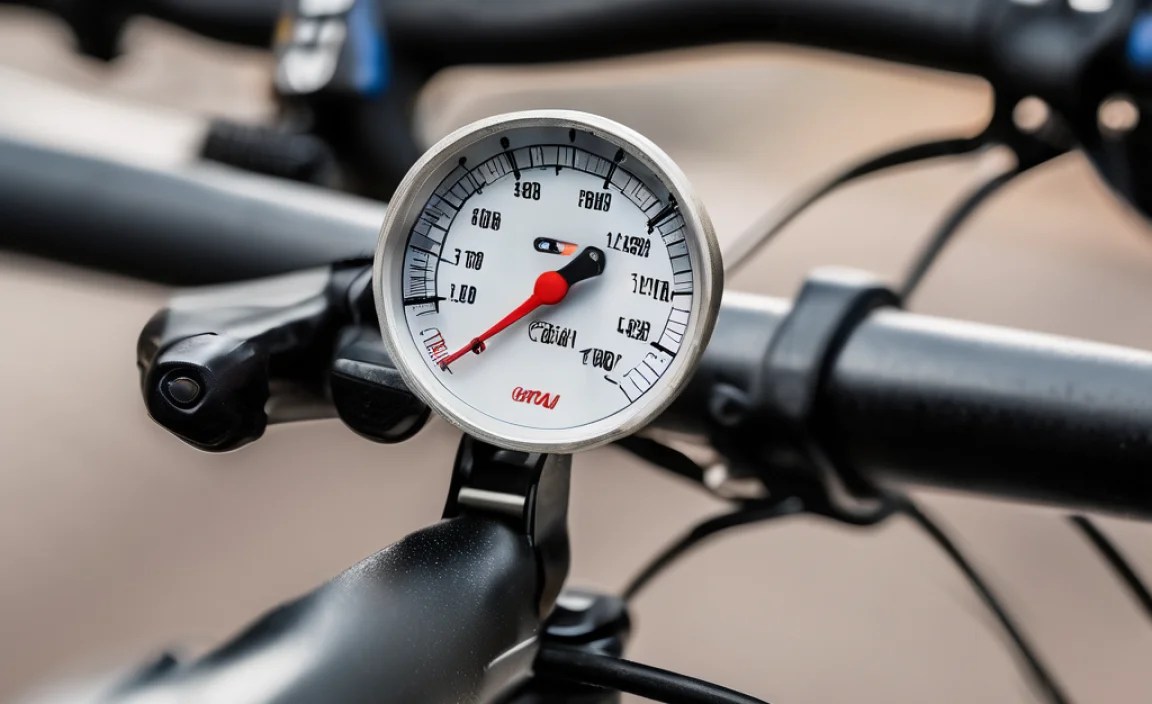
There are different kinds of bike gauges. Some are digital, and some are analog. Digital gauges show the pressure on a screen. Analog gauges have a needle that points to the pressure. Digital gauges can be easier to read. They often give you a precise number. Analog gauges are simple and don’t need batteries. Both types can be accurate if they are well-made. Some gauges are built into the bike pump. Others are separate tools. Knowing the type of gauge you have helps you use it correctly. It also helps you understand its readings. Different gauges might need different testing methods.
- Digital gauges show pressure on a screen.
- Analog gauges use a needle to show pressure.
- Digital gauges can be easier to read precisely.
- Analog gauges are simple and reliable.
- Consider the gauge type when testing.
Think of your bike gauge as a translator. It takes the air pressure in your tire and translates it into a number you can understand. But just like human translators, bike gauges can sometimes make mistakes. That’s why it’s important to understand the different types of gauges and how they work. Digital gauges are like computers. They use sensors to measure the pressure and display it on a screen. Analog gauges are like clocks. They use a spring and a needle to show the pressure. Both types of gauges have their pros and cons. Testing your bike gauge ensures it’s translating the air pressure accurately.
Fun Fact or Stat: The first tire pressure gauges were invented in the late 1800s, around the same time as the invention of the pneumatic tire!
Digital vs. Analog Gauges
When it comes to bike gauges, you have two main choices: digital and analog. Digital gauges are like having a calculator for your tire pressure. They give you a precise reading on a screen, making it easy to see the exact pressure in your tires. Analog gauges, on the other hand, are more like a traditional clock. They have a needle that points to the pressure on a dial. Some people find analog gauges easier to read at a glance, while others prefer the precision of digital gauges. Both types of gauges can be accurate, but it’s important to choose one that you find easy to use and understand. Testing your bike gauge ensures that whichever type you choose is giving you reliable readings.
Built-in vs. Separate Gauges
Some bike pumps come with gauges built right into them. These are convenient because you don’t need a separate tool to measure your tire pressure. However, built-in gauges can sometimes be less accurate than separate gauges. This is because they’re often smaller and less precise. Separate gauges, on the other hand, are designed specifically for measuring tire pressure. They tend to be more accurate and reliable. If you have a built-in gauge, it’s a good idea to test it regularly against a separate gauge to make sure it’s giving you correct readings. If you’re serious about maintaining your bike’s performance, a separate gauge might be a better choice.
Understanding Pressure Units
Bike gauges measure tire pressure in different units. The most common units are PSI (pounds per square inch) and BAR (a metric unit of pressure). Most gauges show both units. It’s important to understand what these units mean and how they relate to each other. For example, 1 BAR is equal to about 14.5 PSI. Knowing this can help you compare readings from different gauges. It can also help you understand the recommended tire pressure for your bike. The recommended pressure is usually printed on the side of the tire. Testing your bike gauge involves checking that it’s showing the correct pressure in the units you understand.
Common Gauge Problems
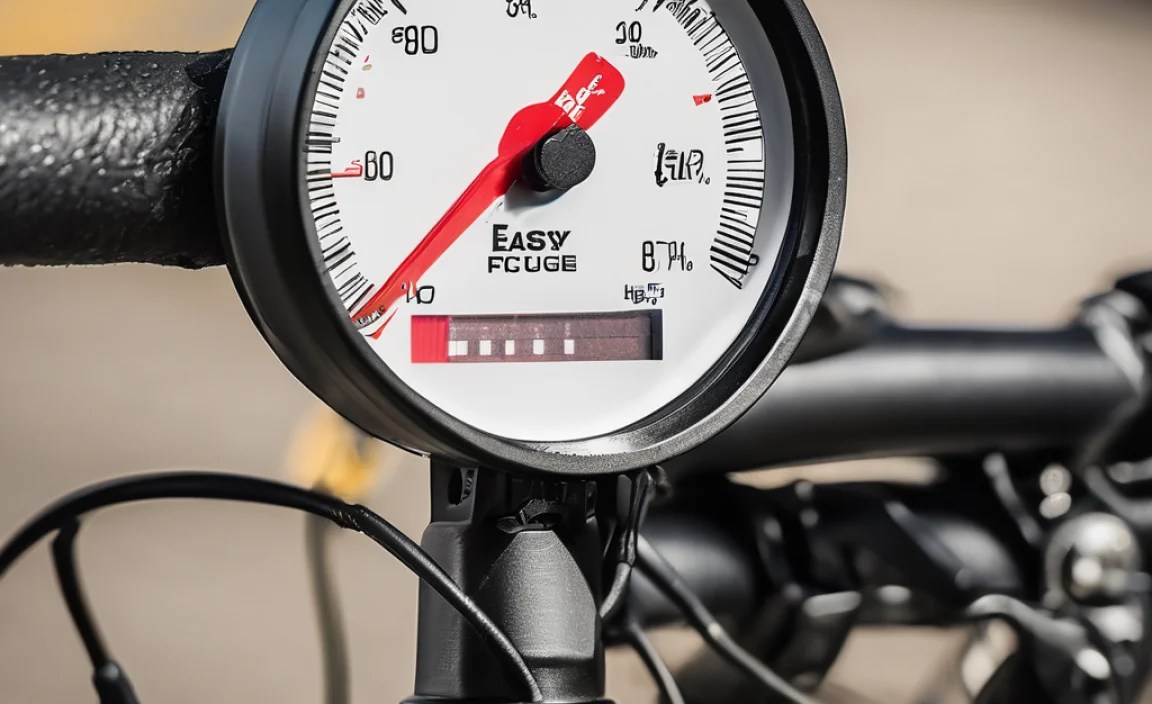
Sometimes, bike gauges stop working right. They might show the wrong pressure. The needle on an analog gauge might be bent. Digital gauges might have dead batteries. Hoses can leak air. Dirt can clog the gauge. If your gauge is broken, it’s important to fix it or get a new one. Using a broken gauge can lead to under-inflated or over-inflated tires. This can make riding dangerous. Regular checks can help you spot problems early. Knowing what to look for keeps your gauge accurate.
- Bent needles on analog gauges cause errors.
- Dead batteries affect digital gauge readings.
- Leaky hoses reduce pressure accuracy.
- Dirt can clog and damage the gauge.
- Replace broken gauges for safety.
Imagine your bike gauge is like a superhero. It has the important job of telling you how much air is in your tires. But even superheroes have weaknesses. Bike gauges can get damaged, worn out, or just plain confused. A bent needle is like a superhero with a twisted arm. It can’t point in the right direction. Dead batteries are like a superhero who’s run out of energy. They can’t power the gauge. Leaky hoses are like a superhero with a hole in their suit. They’re losing air pressure. Testing your bike gauge helps you spot these weaknesses. It ensures your gauge is always ready to save the day.
Fun Fact or Stat: Gauges with digital displays are more sensitive to temperature and humidity than mechanical gauges!
Bent Needles and Misalignment
One common problem with analog bike gauges is a bent needle. If the needle is bent, it won’t point to the correct pressure on the dial. This can lead to inaccurate readings. To check for a bent needle, look at the gauge from the side. If the needle looks crooked or doesn’t line up with the zero mark when there’s no pressure, it’s likely bent. Sometimes, you can gently bend the needle back into place. However, if the needle is severely bent or damaged, it’s best to replace the gauge. Testing your bike gauge regularly can help you spot a bent needle early and prevent inaccurate readings.
Battery Issues in Digital Gauges
Digital bike gauges rely on batteries to power their displays. If the batteries are low or dead, the gauge won’t work properly. The display might be dim, or the gauge might not turn on at all. To avoid this problem, it’s a good idea to check the batteries regularly. If the display looks weak, replace the batteries with fresh ones. Also, make sure to use the correct type of batteries for your gauge. Using the wrong batteries can damage the gauge or cause it to malfunction. Testing your bike gauge includes checking the batteries to ensure they’re in good condition.
Leaks and Blockages
Leaks and blockages can also cause problems with bike gauges. If there’s a leak in the hose or valve, air can escape, leading to inaccurate readings. To check for leaks, listen for hissing sounds or feel for air escaping around the connections. Blockages can occur if dirt or debris gets into the gauge. This can prevent the gauge from measuring the pressure correctly. To clean the gauge, use a soft cloth to wipe away any dirt or debris. You can also try blowing compressed air through the gauge to remove any blockages. Testing your bike gauge involves checking for leaks and blockages to ensure it’s working properly.
Maintaining Your Bike Gauge

Taking care of your bike gauge helps it last longer. Store it in a safe place. This keeps it away from dirt and damage. Check it often for problems. Replace it if it’s not accurate. Clean it gently. Don’t drop it. Keep the hose in good shape. These simple steps help your gauge stay accurate. A well-maintained gauge gives you reliable readings. This keeps your tires at the right pressure. This makes your rides safer and more fun. Remember, a little care goes a long way.
- Store your gauge in a safe, clean place.
- Regularly check for damage or wear.
- Replace gauges that are consistently inaccurate.
- Clean the gauge gently with a soft cloth.
- Handle the gauge carefully to avoid drops.
Think of your bike gauge as a valuable tool. Like any tool, it needs proper care to work its best. Storing it in a safe place is like giving it a cozy home. Checking it often is like giving it a regular checkup. Replacing it when it’s worn out is like giving it a new lease on life. Cleaning it gently is like giving it a refreshing bath. Testing your bike gauge ensures you’re giving it the care it needs. It’s an investment in your bike’s performance and your own safety.
Fun Fact or Stat: High-quality bike gauges can last for many years with proper care and maintenance!
Proper Storage Techniques
One of the best ways to maintain your bike gauge is to store it properly. Avoid leaving it in direct sunlight or extreme temperatures, as this can damage the gauge over time. Instead, store it in a cool, dry place, such as a toolbox or drawer. Also, be careful not to drop or bump the gauge, as this can damage the internal components. When storing the gauge, make sure the hose is not kinked or bent, as this can also cause damage. Testing your bike gauge is more effective when the gauge is stored correctly and protected from damage.
Regular Cleaning and Inspection
Regular cleaning and inspection are also important for maintaining your bike gauge. Use a soft, dry cloth to wipe away any dirt or debris from the gauge. Avoid using harsh chemicals or solvents, as these can damage the gauge. Inspect the gauge regularly for any signs of damage, such as cracks, leaks, or bent needles. If you notice any problems, have the gauge repaired or replaced. Testing your bike gauge after cleaning and inspection ensures that it’s still working properly.
When to Replace Your Gauge
Even with proper care and maintenance, bike gauges can eventually wear out or become inaccurate. If you notice that your gauge is consistently giving you incorrect readings, it’s time to replace it. Also, if the gauge is damaged or broken, it’s best to replace it rather than trying to repair it. A new gauge will ensure that you’re getting accurate readings and that your tires are properly inflated. Testing your bike gauge regularly will help you determine when it’s time for a replacement.
Using Other Inflation Tools
Besides a gauge, you need a pump. Hand pumps are small and easy to carry. Floor pumps are bigger and easier to use. CO2 inflators fill tires quickly. Each tool has its pros and cons. Hand pumps take longer to fill tires. Floor pumps are great for home use. CO2 inflators are good for emergencies. No matter what you use, an accurate gauge is important. It helps you get the right tire pressure. Combining the right pump with a good gauge keeps your tires in top shape.
| Tool | Pros | Cons | Best For |
|---|---|---|---|
| Hand Pump | Portable, lightweight | Takes longer, tiring | On-the-go repairs |
| Floor Pump | Easy to use, efficient | Not portable | Home use |
| CO2 Inflator | Fast inflation | Single use, cold | Emergency situations |
| Air Compressor | Very fast, precise | Requires power, bulky | Workshops, frequent use |
Imagine you’re a chef. You have different tools for different jobs. A whisk is great for mixing batter. A knife is great for chopping vegetables. A spatula is great for flipping pancakes. Similarly, there are different tools for inflating your bike tires. A hand pump is like a whisk. It’s small and easy to use for small jobs. A floor pump is like a knife. It’s bigger and more efficient for bigger jobs. A CO2 inflator is like a spatula. It’s quick and easy for emergencies. Testing your bike gauge ensures you’re using the right tools and getting the right results.
Fun Fact or Stat: CO2 inflators use compressed carbon dioxide to fill tires almost instantly, but the cartridges get very cold during use!
Hand Pumps: Pros and Cons
Hand pumps are small, lightweight, and easy to carry with you on your bike rides. This makes them perfect for fixing flat tires on the go. However, hand pumps can take a long time to inflate a tire, and they can be tiring to use. They’re best for small adjustments or emergency situations. When using a hand pump, it’s especially important to have an accurate gauge, as it can be difficult to tell how much air you’re putting into the tire. Testing your bike gauge ensures you can rely on it when you’re out on the road.
Floor Pumps: Efficiency and Ease
Floor pumps are larger and more efficient than hand pumps. They have a long handle and a footrest, which makes them easier to use. Floor pumps can inflate a tire quickly and accurately, making them ideal for home use. Many floor pumps come with built-in gauges, but it’s still a good idea to test the gauge regularly to make sure it’s accurate. Floor pumps are a great investment for any serious cyclist.
CO2 Inflators: Quick Fixes on the Road
CO2 inflators use compressed carbon dioxide to fill tires quickly. They’re small and lightweight, making them perfect for carrying with you on your bike rides. CO2 inflators are great for fixing flat tires in a hurry, but they can be expensive to use, as you need to buy new CO2 cartridges each time. Also, CO2 cartridges can get very cold during use, so it’s important to wear gloves to protect your hands. Testing your bike gauge is still important when using a CO2 inflator, as it helps you ensure that you’re not over-inflating your tire.
Summary
Keeping your bike tires properly inflated is crucial for a safe and enjoyable ride. An accurate bike gauge is key to achieving this. We’ve discussed different methods for how to test if your bike gauge is accurate, including comparing it with other gauges and checking for common problems like bent needles or dead batteries. Understanding the different types of gauges, such as digital and analog, and knowing how to maintain them properly will help ensure they provide reliable readings. Remember to store your gauge carefully, clean it regularly, and replace it when necessary. By following these steps, you can be confident that your tires are always inflated to the correct pressure, making your rides smoother, faster, and safer. Always prioritize safety and have fun on your bike!
Conclusion
Knowing how to test if your bike gauge is accurate is a simple but important skill for every cyclist. An accurate gauge helps you maintain the correct tire pressure. This improves your bike’s performance and keeps you safe. By following the steps outlined in this article, you can easily check your gauge and ensure it’s giving you reliable readings. So, take a few minutes to test your gauge today. Your bike and your body will thank you!
Frequently Asked Questions
Question No 1: Why is it important to have an accurate bike gauge?
Answer: An accurate bike gauge ensures your tires are inflated to the correct pressure. This is important for several reasons. First, it improves your bike’s performance. Properly inflated tires roll more easily, allowing you to ride faster and more efficiently. Second, it enhances your safety. Under-inflated tires can increase the risk of flats, while over-inflated tires can burst. Third, it prolongs the life of your tires. Correct tire pressure reduces wear and tear. Therefore, having an accurate gauge is crucial for a safe, efficient, and enjoyable cycling experience.
Question No 2: How often should I test my bike gauge for accuracy?
Answer: You should test your bike gauge for accuracy regularly. A good rule of thumb is to check it at least once a month. However, if you use your bike frequently or ride in challenging conditions, you might want to check it more often. Also, it’s a good idea to test your gauge if you notice any signs of damage or if it’s been dropped or exposed to extreme temperatures. Regular testing will help you ensure that your gauge is giving you reliable readings and that your tires are always properly inflated.
Question No 3: What are some common signs that my bike gauge might be inaccurate?
Answer: There are several signs that your bike gauge might be inaccurate. One common sign is inconsistent readings. If your gauge gives you different readings each time you check the same tire, it might be inaccurate. Another sign is a bent needle on analog gauges. If the needle is bent or doesn’t line up with the zero mark, the gauge is likely inaccurate. For digital gauges, a dim display or failure to turn on can indicate battery issues affecting accuracy. Additionally, if your tires consistently feel too soft or too hard even when the gauge indicates the correct pressure, the gauge might be faulty. Knowing how to test if your bike gauge is accurate can help you identify these issues early.
Question No 4: Can temperature affect the accuracy of my bike gauge?
Answer: Yes, temperature can affect the accuracy of your bike gauge. When the temperature increases, the air pressure in your tires also increases. This means that your gauge might show a higher reading on a hot day than on a cold day, even if the actual amount of air in your tires is the same. To get the most accurate reading, it’s best to check your tire pressure in a stable temperature environment. Also, keep in mind that digital gauges can be more sensitive to temperature changes than analog gauges. Testing your bike gauge under different temperature conditions can help you understand how temperature affects its readings.
Question No 5: What should I do if I find out that my bike gauge is inaccurate?
Answer: If you find out that your bike gauge is inaccurate, the first thing you should do is try to identify the cause of the inaccuracy. Check for common problems like bent needles, dead batteries, or leaks. If you can fix the problem, great! If not, it’s best to replace the gauge with a new one. Using an inaccurate gauge can lead to under-inflated or over-inflated tires, which can be dangerous. When buying a new gauge, choose a high-quality one from a reputable brand. Also, remember to test your new gauge for accuracy before using it.
Question No 6: Are digital bike gauges more accurate than analog gauges?
Answer: Digital and analog bike gauges both have their pros and cons when it comes to accuracy. Digital gauges often provide more precise readings, displaying the exact pressure on a screen. This can make it easier to get the correct tire pressure. However, digital gauges rely on batteries, which can affect their accuracy if they’re low or dead. Analog gauges are simpler and don’t require batteries. They can be very accurate if they’re well-made and properly maintained. Ultimately, the accuracy of a bike gauge depends more on the quality of the gauge than on whether it’s digital or analog. Regular testing is essential for ensuring the accuracy of both types of gauges.


