
Pump Gauge Accuracy Types: Ultimate Guide

Quick Summary:
Understanding bike pump gauge accuracy is key for proper tire inflation. There are primarily two types: analog and digital. Analog gauges are common and affordable but can be less precise. Digital gauges offer better accuracy with a numerical readout, reducing guesswork. Choosing the right type depends on your need for precision and your budget.
Ever wondered if your bike tires are truly inflated to the right pressure? It’s a common frustration! Overinflating can lead to a bumpy ride and potential tire damage, while underinflating can slow you down and increase the risk of pinch flats. The key to getting it right is understanding the accuracy of your bike pump’s gauge.
In this guide, we’ll break down the different types of pump gauges, how they work, and what you need to know to choose the best one for your needs. We’ll cover both analog and digital gauges, exploring their pros, cons, and how to make sure you’re getting the most accurate readings possible. Let’s get started and take the guesswork out of tire inflation!
Understanding Bike Pump Gauges

A bike pump gauge tells you the air pressure inside your tire. This pressure is measured in pounds per square inch (PSI) or BAR (a metric unit). Knowing your tire’s recommended pressure (usually printed on the tire sidewall) and having an accurate gauge are vital for a safe and efficient ride. Without a reliable gauge, you’re essentially guessing, which can lead to problems.
Why Gauge Accuracy Matters
Accuracy matters for several reasons:
- Performance: Correct tire pressure optimizes rolling resistance, making your ride faster and easier.
- Comfort: Proper inflation absorbs bumps and vibrations, enhancing comfort.
- Safety: Underinflated tires increase the risk of flats, while overinflated tires can burst.
- Tire Life: Consistent, correct pressure extends the life of your tires.
Types of Pump Gauges

Bike pump gauges come in two main types: analog and digital. Each has its own set of advantages and disadvantages.
Analog Gauges
Analog gauges are the most common type found on bike pumps. They use a needle that moves along a scale to indicate pressure. They are generally more affordable and don’t require batteries.
How Analog Gauges Work
Analog gauges use a Bourdon tube, a curved, hollow tube that straightens out slightly when pressure is applied. This movement is linked to a needle that indicates the pressure on the gauge face. The higher the pressure, the more the tube straightens, and the further the needle moves.
Pros of Analog Gauges
- Affordable: Generally less expensive than digital gauges.
- No Batteries Required: Always ready to use without worrying about battery life.
- Easy to Read: Simple, visual representation of pressure.
- Durable: Can withstand more physical abuse.
Cons of Analog Gauges
- Lower Accuracy: Can be less accurate than digital gauges, especially at lower pressures.
- Parallax Error: Reading the gauge at an angle can lead to inaccurate readings.
- Smaller Increments: Harder to read precise pressure values, especially on gauges with small scales.
Digital Gauges
Digital gauges use electronic sensors to measure pressure and display it on a digital screen. They tend to be more accurate and offer features like adjustable units (PSI, BAR, kPa). They do require batteries.
How Digital Gauges Work
Digital gauges use a pressure sensor that converts the pressure into an electrical signal. This signal is then processed by a small computer and displayed on the digital screen. The sensor provides a precise reading, making digital gauges more accurate than analog ones.
Pros of Digital Gauges
- High Accuracy: More precise readings compared to analog gauges.
- Easy to Read: Clear digital display eliminates guesswork.
- Multiple Units: Can often switch between PSI, BAR, and kPa.
- Additional Features: Some models include features like backlights and auto shut-off.
Cons of Digital Gauges
- More Expensive: Generally cost more than analog gauges.
- Battery Dependent: Requires batteries, which can run out at inconvenient times.
- Less Durable: Can be more susceptible to damage from drops or moisture.
Accuracy Comparison: Analog vs. Digital
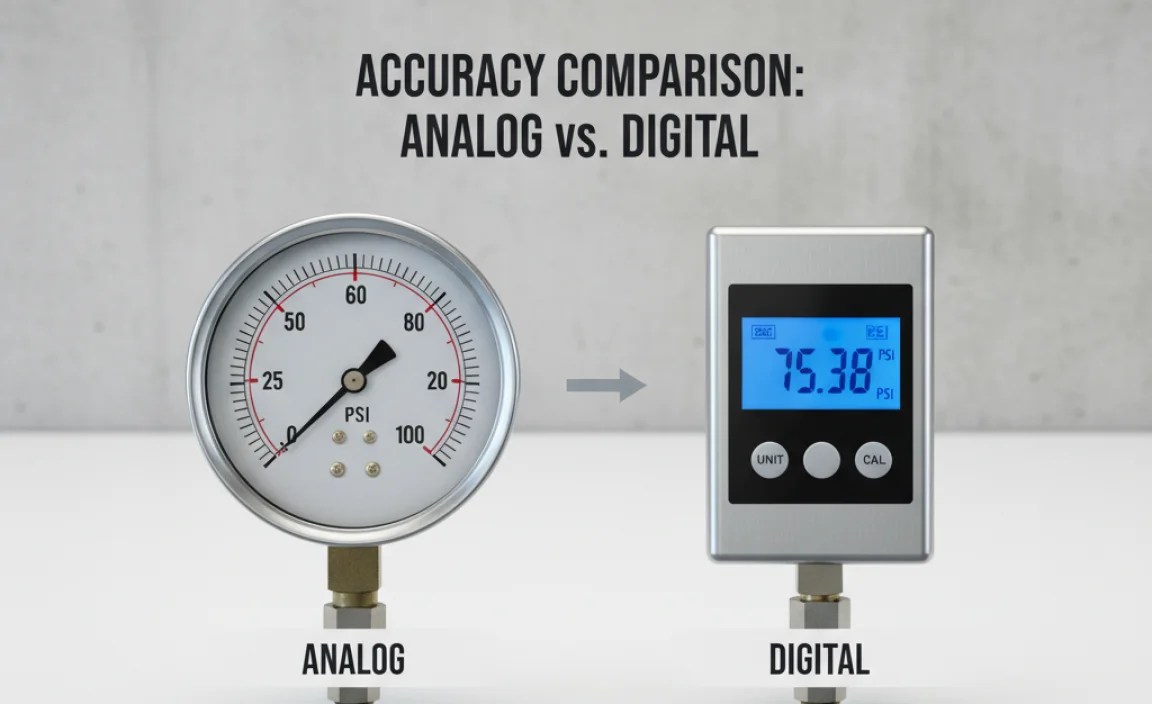
| Feature | Analog Gauge | Digital Gauge |
|---|---|---|
| Accuracy | ±2-5 PSI | ±0.5-1 PSI |
| Readability | Visual scale, can be subjective | Digital display, very clear |
| Cost | Lower | Higher |
| Power Source | None | Battery |
| Durability | More robust | Less robust |
Factors Affecting Gauge Accuracy
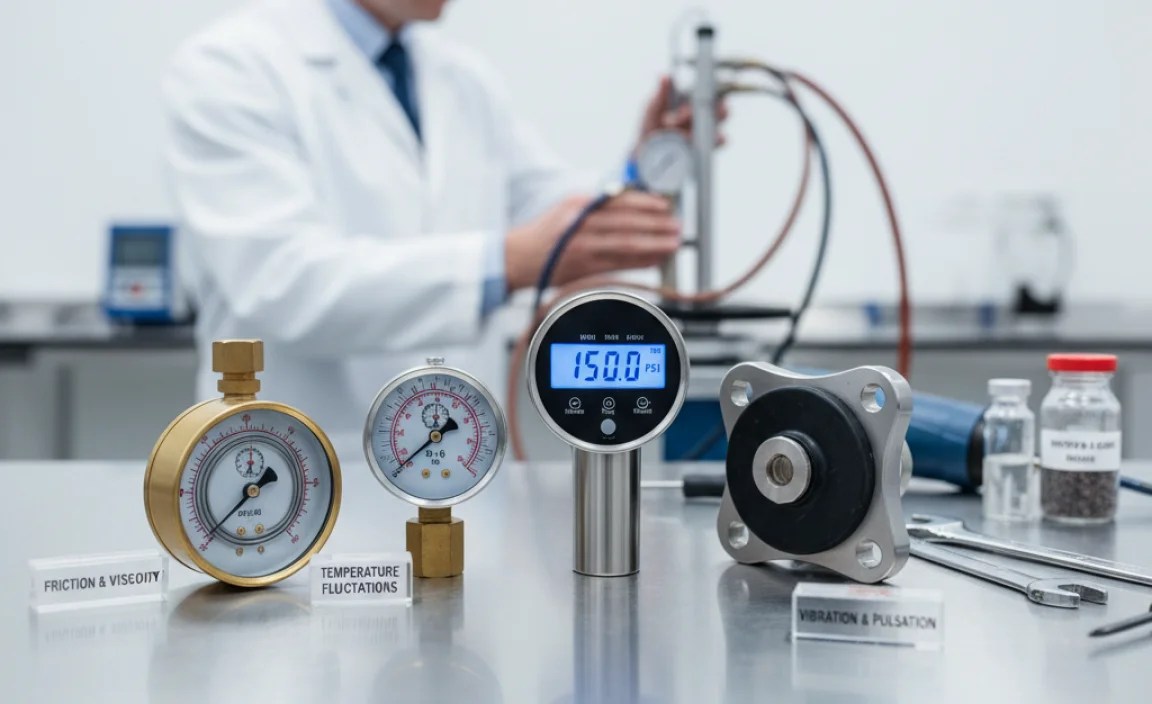
Even with a high-quality gauge, several factors can affect its accuracy.
Calibration
Gauges can drift out of calibration over time, especially with frequent use or rough handling. Professional calibration services exist, but they can be costly. For most cyclists, understanding the limitations of your gauge is sufficient.
Temperature
Temperature can affect the accuracy of both analog and digital gauges. Extreme temperatures can cause the materials in the gauge to expand or contract, leading to inaccurate readings. It’s best to inflate your tires in a moderate temperature environment.
Altitude
Altitude affects pressure readings. If you’re inflating your tires at a high altitude, the gauge will read slightly lower than the actual pressure. This is because the atmospheric pressure is lower at higher altitudes. For most recreational cyclists, this difference is negligible, but racers might consider this factor.
Gauge Condition
A damaged gauge will likely provide inaccurate readings. Check your gauge regularly for cracks, leaks, or other signs of damage. If you suspect your gauge is damaged, it’s best to replace it.
How to Improve Gauge Accuracy

While you can’t eliminate all sources of error, here are some tips to improve the accuracy of your bike pump gauge:
Use a Consistent Inflation Method
Always use the same inflation method. Quick, forceful pumps can generate heat, which affects pressure readings. Use smooth, steady pumps for more consistent results.
Check Tire Pressure Regularly
Tire pressure naturally decreases over time. Check your tire pressure before each ride, or at least once a week. This will help you maintain the correct pressure and identify any leaks or other issues.
Avoid Extreme Temperatures
As mentioned earlier, extreme temperatures can affect gauge accuracy. Inflate your tires in a moderate temperature environment for best results.
Use a Separate Gauge for Verification
If you’re concerned about the accuracy of your pump gauge, use a separate, high-quality gauge to verify the readings. This can help you identify any discrepancies and determine if your pump gauge needs to be replaced.
Proper Gauge Placement
When using an analog gauge, make sure you’re looking at it straight on to avoid parallax error. Position yourself directly in front of the gauge and read the pressure at eye level.
Choosing the Right Gauge for Your Needs
Selecting the right pump gauge depends on your priorities and budget.
For Casual Riders
If you’re a casual rider who primarily rides for recreation, an analog gauge is likely sufficient. They are affordable and easy to use, providing a reasonable level of accuracy for everyday riding. Look for one with a clear, easy-to-read scale.
For Performance-Oriented Riders
If you’re a performance-oriented rider, such as a racer or serious enthusiast, a digital gauge is a worthwhile investment. The higher accuracy can make a noticeable difference in performance and comfort. Look for a model with a high-resolution display and multiple units.
For Mountain Bikers
Mountain bikers often run lower tire pressures, where small changes can significantly impact performance. A digital gauge is highly recommended for the increased precision it offers.
For Tubeless Setups
Setting up tubeless tires often requires precise pressure adjustments. A digital gauge is almost essential for ensuring a proper seal and optimal performance.
Step-by-Step Guide to Using a Bike Pump with a Gauge
Here’s how to use a bike pump with a gauge:
- Prepare the Pump: Ensure the pump head is compatible with your valve type (Presta or Schrader). Most pumps have a reversible head or adapter.
- Attach the Pump Head: Firmly attach the pump head to the valve. For Presta valves, first unlock the valve by unscrewing the small nut.
- Secure the Connection: Engage the lever on the pump head to create a secure, airtight seal.
- Inflate the Tire: Begin pumping, using smooth, steady strokes. Watch the gauge as you inflate.
- Monitor the Pressure: Inflate to the recommended pressure printed on your tire sidewall.
- Remove the Pump Head: Disengage the lever and carefully remove the pump head from the valve. For Presta valves, tighten the valve nut.
- Check the Tire: Give the tire a squeeze to ensure it feels firm but not overly hard.
Troubleshooting Common Gauge Problems
Here are some common problems you might encounter with bike pump gauges, and how to troubleshoot them:
Gauge Not Reading
- Check the Connection: Ensure the pump head is securely attached to the valve.
- Check the Valve: Make sure the valve is not clogged or damaged.
- Check the Pump: Inspect the pump for leaks or damage.
- Replace the Gauge: If none of these steps work, the gauge may be faulty and need replacement.
Inaccurate Readings
- Calibrate the Gauge: Compare the reading with a known accurate gauge.
- Check for Damage: Inspect the gauge for cracks or leaks.
- Consider Temperature: Inflate tires in a moderate temperature environment.
- Replace the Gauge: If the gauge consistently provides inaccurate readings, replace it.
Digital Gauge Not Working
- Check the Batteries: Replace the batteries if they are low or dead.
- Check the Connections: Ensure the battery contacts are clean and secure.
- Reset the Gauge: Some digital gauges have a reset button.
- Replace the Gauge: If none of these steps work, the gauge may be faulty and need replacement.
Maintaining Your Bike Pump Gauge
Proper maintenance can extend the life and accuracy of your bike pump gauge.
Cleaning
Keep your gauge clean by wiping it down with a soft, dry cloth. Avoid using harsh chemicals or solvents, which can damage the gauge.
Storage
Store your pump in a dry, protected environment. Avoid exposing it to extreme temperatures or moisture.
Regular Inspection
Regularly inspect your gauge for signs of damage, such as cracks, leaks, or loose connections. Address any issues promptly to prevent further damage.
Advanced Techniques for Gauge Accuracy
For those seeking even greater accuracy, consider these advanced techniques:
Using a Digital Pressure Tester
A digital pressure tester is a handheld device that provides highly accurate pressure readings. These testers are often used by professional mechanics and racers.
Calibrating with a Known Standard
If you have access to a calibrated pressure source, you can use it to calibrate your pump gauge. This involves comparing the gauge’s reading to the known standard and adjusting it accordingly.
Accounting for Temperature and Altitude
Use online calculators or charts to adjust your target pressure based on temperature and altitude. This can help you achieve the most accurate pressure for your riding conditions. Check out resources like the Engineering ToolBox for more info.
Real-World Examples
Let’s look at some real-world scenarios to illustrate the importance of gauge accuracy.
Road Racing
In road racing, even a small difference in tire pressure can affect rolling resistance and cornering performance. Riders often use digital gauges to fine-tune their tire pressure for optimal results.
Mountain Biking
Mountain bikers need to adjust their tire pressure based on the terrain and conditions. Lower pressures provide better traction on loose surfaces, while higher pressures prevent pinch flats on rocky trails. Accurate gauges are essential for making these adjustments.
Commuting
Commuters rely on their bikes for daily transportation. Maintaining the correct tire pressure ensures a smooth, efficient, and safe ride. A reliable gauge can help prevent flats and other issues.
FAQ About Pump Gauge Accuracy
What is the ideal PSI for my bike tires?
The ideal PSI varies depending on your tire size, weight, and riding conditions. Check the tire sidewall for the recommended pressure range. Start in the middle of the range and adjust based on your preference and riding style.
How often should I check my tire pressure?
Check your tire pressure before each ride, or at least once a week. Tires naturally lose pressure over time.
Can temperature affect tire pressure?
Yes, temperature can affect tire pressure. Higher temperatures cause the air inside the tire to expand, increasing pressure. Lower temperatures cause the air to contract, decreasing pressure.
Is a digital gauge worth the extra cost?
If you value accuracy and precision, a digital gauge is worth the extra cost. It provides more accurate readings and eliminates guesswork. But for casual riders, an analog gauge is often sufficient.
How do I know if my gauge is accurate?
Compare the reading with a known accurate gauge or pressure tester. If there’s a significant difference, your gauge may need to be replaced.
Can I use a car tire pressure gauge on my bike?
Yes, you can use a car tire pressure gauge on a bike with Schrader valves. However, car gauges often have a larger pressure range and may not be as accurate at lower pressures.
What does PSI stand for?
PSI stands for pounds per square inch. It’s a common unit of pressure measurement.
Conclusion
Understanding the different types of pump gauges and their accuracy is essential for maintaining your bike tires and ensuring a safe and enjoyable ride. Whether you choose an affordable analog gauge or a precise digital gauge, knowing the factors that affect accuracy and how to improve it will help you get the most out of your cycling experience.
By following the tips and guidelines outlined in this guide, you’ll be well-equipped to choose the right gauge for your needs, maintain your tires properly, and enjoy the benefits of optimal tire pressure. Happy cycling!


