
What Do “Cycle” and “Vacuum” Mean on My Breast Pump?

Quick Summary: “Cycle” refers to how many times the pump pulls and releases per minute, mimicking a baby’s natural sucking rhythm. “Vacuum” is the suction strength, measured in mmHg, and controls how forcefully the pump pulls milk from your breast. Adjusting both helps you find the most comfortable and effective settings for milk expression.
Using a breast pump can feel overwhelming at first. All those buttons and settings! Two of the most important are “cycle” and “vacuum.” Understanding what they mean and how they work together is key to a comfortable and efficient pumping experience. Many new moms find these settings confusing, but don’t worry, it’s easier than you think. Knowing how to adjust these settings can really boost your milk output and make pumping less of a chore.
In this guide, we’ll break down what cycle and vacuum mean on your breast pump. We’ll explain how to adjust them for the best results, and give you tips for finding the perfect settings for your body. Get ready to master your pump and make the most of your breastfeeding journey!
Understanding Cycle and Vacuum

Let’s dive into what these two key settings really do. They are the heart of how your breast pump works.
What is Cycle?
The “cycle” setting on your breast pump refers to the number of times the pump completes a suction and release action per minute. Think of it as how many “sucks” the pump does in 60 seconds. It’s often measured in cycles per minute (CPM). A higher cycle speed means the pump is pulling and releasing more rapidly.
Here’s why cycle is important:
- Mimics Baby’s Sucking: Different babies have different sucking patterns. Cycle adjustments allow you to mimic your baby’s natural rhythm, which can stimulate milk let-down more effectively.
- Stimulation Phase: Many pumps have a “stimulation” mode with a faster cycle speed. This helps to trigger your milk ejection reflex (let-down).
- Expression Phase: Once milk is flowing, you typically switch to a slower cycle speed for more efficient milk removal.
What is Vacuum?
The “vacuum” setting refers to the suction strength of the breast pump. It’s the amount of negative pressure the pump applies to your breast, and it’s usually measured in millimeters of mercury (mmHg). A higher vacuum level means a stronger pull.
Here’s why vacuum is important:
- Milk Removal: Vacuum strength directly affects how much milk is extracted. A stronger vacuum can remove more milk in less time.
- Comfort: Too much vacuum can cause pain and discomfort. Finding the right balance is crucial.
- Individual Sensitivity: Every woman has a different pain threshold. What feels comfortable for one person might be too strong for another.
How Cycle and Vacuum Work Together

Cycle and vacuum settings don’t work in isolation. They interact to create the overall pumping experience. Think of it like this:
- Cycle is the pace: It sets the rhythm of the pump.
- Vacuum is the power: It determines how strong each pull is.
Here’s how they work together in the two main phases of pumping:
- Stimulation Phase: High cycle (fast pace) + low vacuum (gentle pull) to stimulate let-down.
- Expression Phase: Lower cycle (slower pace) + higher vacuum (stronger pull) to efficiently remove milk.
Finding Your Ideal Settings

Finding the right cycle and vacuum settings is a personal journey. What works best depends on your body, your baby, and your pump. Here’s a step-by-step guide to help you find your sweet spot.
Step 1: Start with the Basics
Always begin with the lowest settings on both cycle and vacuum. This gives your body a chance to adjust and prevents discomfort. Think of it like easing into a workout – you wouldn’t start with the heaviest weights!
Step 2: The Stimulation Phase
If your pump has a stimulation mode, use it. If not, set the cycle speed to the highest comfortable setting and the vacuum to a low level. Pump for a few minutes until you see milk start to flow.
Step 3: The Expression Phase
Once your milk starts flowing, gradually decrease the cycle speed and increase the vacuum. Increase the vacuum slowly, only as high as is comfortable. If you feel any pain, reduce the vacuum immediately.
Step 4: Listen to Your Body
Pay close attention to how your breasts feel. Discomfort is a sign that you need to adjust the settings. Experiment with different combinations of cycle and vacuum until you find what feels best for you.
Step 5: Keep a Record
Once you find settings that work well, write them down! This will save you time and frustration in future pumping sessions. You can also track your milk output to see how different settings affect your production.
Troubleshooting Common Issues
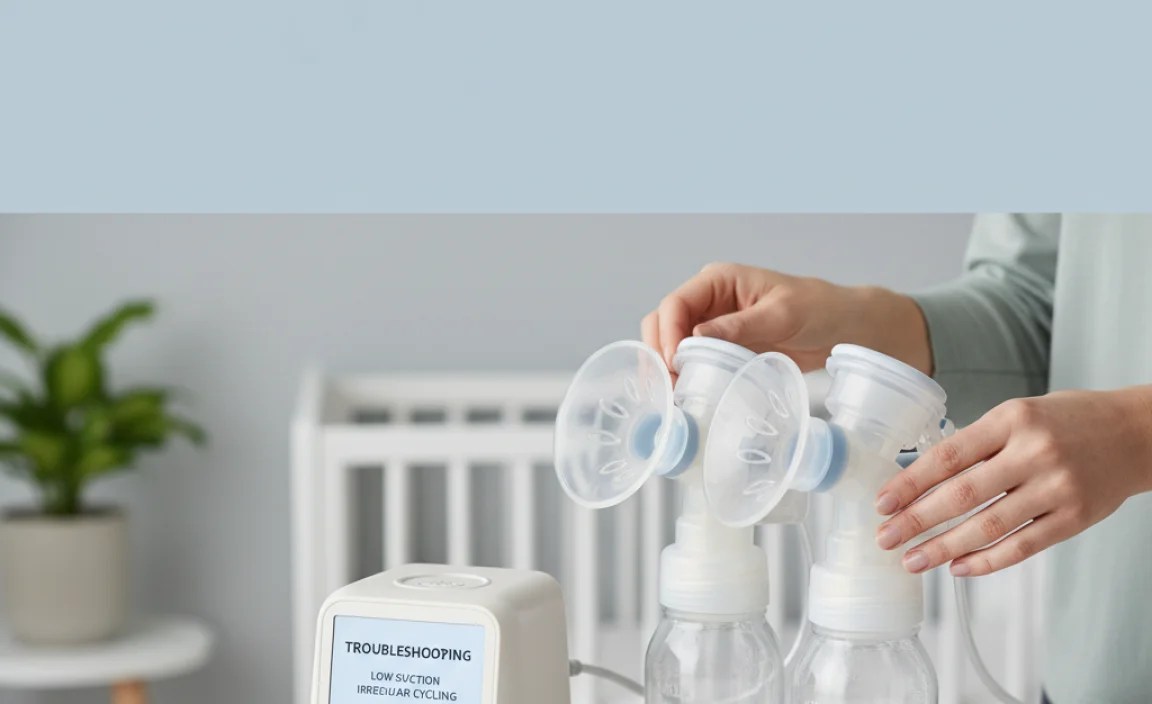
Even with the right settings, you might encounter some challenges. Here are a few common issues and how to address them.
Problem: Not Enough Milk
If you’re not getting enough milk, try these adjustments:
- Increase Vacuum: Gradually increase the vacuum strength, but stop if it becomes uncomfortable.
- Adjust Cycle: Experiment with slightly faster or slower cycle speeds.
- Check Flange Size: Make sure your breast flange fits properly. An incorrect size can reduce milk output.
- Massage: Gently massage your breasts before and during pumping to stimulate milk flow.
Problem: Pain or Discomfort
Pain is a sign that something isn’t right. Here’s what to do:
- Reduce Vacuum: Immediately lower the vacuum strength.
- Check Flange Fit: Ensure your flange is the correct size and isn’t rubbing or pinching.
- Take Breaks: If you’re experiencing persistent pain, take a break from pumping and consult with a lactation consultant.
Problem: Slow Let-Down
A slow let-down can make pumping frustrating. Try these tips:
- Warm Compress: Apply a warm compress to your breasts before pumping.
- Relaxation: Try to relax and think positive thoughts. Stress can inhibit let-down.
- Look at Baby Pictures: Looking at pictures or videos of your baby can help stimulate let-down.
Choosing the Right Breast Pump

The type of breast pump you use can also affect your experience. Here’s a quick overview of the different types:
- Manual Pumps: These are hand-operated and good for occasional use.
- Electric Pumps: These are more powerful and efficient for regular pumping.
- Hospital-Grade Pumps: These are the strongest and most efficient pumps, often used for establishing milk supply.
When choosing a pump, consider these factors:
- Frequency of Use: How often will you be pumping?
- Portability: Do you need a pump that’s easy to transport?
- Features: Does the pump have adjustable cycle and vacuum settings?
- Budget: How much are you willing to spend?
Tips for Comfortable Pumping
Pumping doesn’t have to be a chore. Here are some tips to make it more comfortable and enjoyable.
- Find a Comfortable Spot: Choose a relaxing and private place to pump.
- Use a Hands-Free Bra: This allows you to multitask while pumping.
- Stay Hydrated: Drink plenty of water to support milk production.
- Distract Yourself: Watch TV, read a book, or listen to music to take your mind off pumping.
- Snack Smart: Keep healthy snacks on hand to replenish your energy.
Cycle and Vacuum Settings: A Deeper Dive
Let’s explore cycle and vacuum settings in more detail. Understanding the nuances can help you fine-tune your pumping sessions.
Understanding Cycle Range
Cycle speeds on breast pumps typically range from 30 to 60 cycles per minute (CPM). Some pumps offer even wider ranges. Here’s a general guideline:
- 30-45 CPM: Often used for the expression phase, providing a slower, more thorough milk removal.
- 45-60 CPM: Commonly used for the stimulation phase, mimicking a baby’s initial rapid sucking to trigger let-down.
Experiment within these ranges to find what feels best for you. Remember, every woman is different, and what works for one person may not work for another.
Understanding Vacuum Range
Vacuum strength is usually measured in millimeters of mercury (mmHg) and can range from 50 to 250 mmHg or higher on some pumps. Here’s a general guide:
- 50-100 mmHg: Considered a low vacuum, suitable for the stimulation phase or for women with sensitive nipples.
- 100-150 mmHg: A moderate vacuum, often used for the expression phase once milk flow is established.
- 150-250+ mmHg: A higher vacuum, used by some women for efficient milk removal. Use with caution and only if comfortable.
It’s crucial to increase vacuum levels gradually and stop immediately if you experience any pain or discomfort.
Breast Pump Settings Chart
Here is a quick chart showing how cycle and vacuum settings are typically used in different pumping phases.
| Phase | Cycle (CPM) | Vacuum (mmHg) | Purpose |
|---|---|---|---|
| Stimulation | 45-60 | 50-100 | Trigger let-down |
| Expression | 30-45 | 100-150+ | Efficient milk removal |
Common Myths About Cycle and Vacuum
There are a lot of misconceptions about cycle and vacuum settings. Let’s debunk some common myths.
Myth 1: Higher Vacuum = More Milk
While a stronger vacuum can remove more milk, it’s not always the best approach. Too much vacuum can cause pain, nipple damage, and even reduce milk supply over time. Comfort is key!
Myth 2: Faster Cycle = Faster Let-Down
A faster cycle can help trigger let-down, but it’s not the only factor. Relaxation, warm compresses, and proper flange fit also play important roles.
Myth 3: One Setting Works for Everyone
Every woman’s body is different. What works for your friend may not work for you. Experiment to find your own ideal settings.
Myth 4: You Should Always Use the Highest Settings
Using the highest settings can lead to discomfort and potential damage. Start low and gradually increase until you find what’s comfortable and effective.
Advanced Pumping Techniques
Once you’ve mastered the basics, you can explore some advanced pumping techniques to optimize your milk output.
Power Pumping
Power pumping mimics cluster feeding and can help increase milk supply. Here’s how to do it:
- Pump for 20 minutes.
- Rest for 10 minutes.
- Pump for 10 minutes.
- Rest for 10 minutes.
- Pump for 10 minutes.
Do this once a day for a few days to boost your milk production.
Hands-On Pumping
Hands-on pumping involves massaging and compressing your breasts while pumping. This can help remove more milk and improve drainage.
Lactation Consultant
Consider working with a lactation consultant. These professionals can provide personalized guidance and help you troubleshoot any pumping challenges. You can find a certified consultant through organizations like the International Lactation Consultant Association (ILCA).
Maintaining Your Breast Pump
Proper maintenance is essential for keeping your breast pump working efficiently and safely. Here are some tips:
- Clean After Each Use: Disassemble and wash all pump parts that come into contact with breast milk.
- Sterilize Regularly: Sterilize pump parts according to the manufacturer’s instructions.
- Replace Parts: Replace worn or damaged parts, such as valves and membranes, to maintain optimal suction.
- Check Tubing: Inspect tubing for cracks or tears and replace as needed.
- Follow Manufacturer’s Instructions: Always refer to your pump’s manual for specific cleaning and maintenance guidelines.
Cycle and Vacuum Settings: Quick Tips and Tricks
Here are some quick tips and tricks to help you master your breast pump settings:
- Use a Timer: Set a timer to track your pumping sessions and ensure you’re pumping for the right amount of time.
- Experiment with Settings: Don’t be afraid to experiment with different cycle and vacuum settings to find what works best for you.
- Stay Consistent: Try to pump at the same times each day to establish a consistent milk supply.
- Relax and Breathe: Take deep breaths and try to relax during pumping sessions.
- Seek Support: Join a breastfeeding support group or talk to other moms for tips and encouragement.
FAQ: Cycle and Vacuum on Breast Pumps
Here are some frequently asked questions about cycle and vacuum settings on breast pumps.
- What is the best cycle speed for pumping?
- The best cycle speed varies, but generally, a faster cycle (45-60 CPM) is used for stimulation, and a slower cycle (30-45 CPM) is used for expression.
- How do I know if my vacuum is too high?
- If you experience pain, discomfort, or nipple damage, your vacuum is likely too high. Reduce the vacuum strength immediately.
- Can I adjust the cycle and vacuum settings on all breast pumps?
- Most electric breast pumps allow you to adjust cycle and vacuum settings. Manual pumps typically don’t have these adjustable features.
- What does mmHg mean?
- mmHg stands for millimeters of mercury, which is the unit used to measure vacuum strength on breast pumps.
- How often should I replace breast pump parts?
- Replace valves and membranes every 4-6 weeks, or sooner if you notice a decrease in suction. Check tubing regularly and replace if damaged.
- Why is my milk supply decreasing even though I’m pumping regularly?
- Several factors can affect milk supply, including stress, dehydration, and incorrect pump settings. Ensure you’re using the right cycle and vacuum settings and consult with a lactation consultant if needed.
- Is it normal to feel discomfort when pumping?
- Some mild discomfort is normal, but significant pain is not. Adjust your pump settings or flange size to improve comfort.
Conclusion
Understanding cycle and vacuum settings on your breast pump is essential for a comfortable and efficient pumping experience. By experimenting with different combinations and listening to your body, you can find the perfect settings to maximize milk output and minimize discomfort. Remember to maintain your pump properly, seek support when needed, and trust your instincts. With the right knowledge and tools, you can confidently navigate your breastfeeding journey and provide the best nutrition for your baby.
“`


