
How to Use Hose for Fat Bike Tires: Easy Guide

Quick Summary: Using a hose to inflate fat bike tires is possible, but it requires some extra steps. You’ll need an adapter to connect the hose to your tire’s valve. Make sure your hose has a pressure gauge to avoid over-inflation. Inflate slowly and check the pressure frequently to get it just right for optimal performance on snow or sand!
Fat bike tires are big and need a lot of air, but sometimes your regular bike pump just won’t cut it. You might be wondering if you can use a regular air compressor hose, like the one you use for your car tires. It can be done, but you need to be careful! Over-inflating a fat bike tire is easy to do with a powerful air compressor, and that can lead to a bad time. This guide will walk you through using a hose safely and effectively, so you can get back to enjoying your ride. We’ll cover the tools you need, step-by-step instructions, and important safety tips to keep you and your tires in good shape. Let’s get started!
Understanding Fat Bike Tire Inflation

Fat bike tires are designed to run at much lower pressures than regular bike tires. This is what gives them their amazing grip and floatation on soft surfaces like snow and sand. Because of this, getting the pressure just right is super important.
Why Low Pressure Matters
- Traction: Lower pressure increases the contact patch of the tire, providing more grip on slippery surfaces.
- Comfort: Softer tires absorb bumps and vibrations, making for a more comfortable ride.
- Floatation: Low pressure allows the tire to “float” over soft surfaces instead of sinking in.
Typical Pressure Ranges
Fat bike tire pressures are usually between 5 and 15 PSI (Pounds per Square Inch). This is much lower than a mountain bike or road bike tire. Always check the recommended pressure range printed on the sidewall of your tire. This will give you a good starting point.
| Surface | Recommended PSI |
|---|---|
| Snow | 4-6 PSI |
| Sand | 6-8 PSI |
| Packed Trails | 8-12 PSI |
Tools and Equipment You’ll Need

Before you start, gather all the necessary tools to make the process smooth and safe.
- Air Compressor with Hose: A standard air compressor with a hose is the primary tool. Make sure it has an adjustable pressure regulator.
- Adapter Nozzle: You’ll need an adapter to connect the air compressor hose to your bike’s valve (Presta or Schrader).
- Accurate Pressure Gauge: A reliable digital or analog pressure gauge is essential for precise inflation. Don’t rely solely on the compressor’s gauge, as it might not be accurate at low pressures.
- Valve Core Tool (Optional): Useful for removing or tightening the valve core if needed.
- Soapy Water (Optional): To check for leaks around the valve stem.
- Rag or Cloth: To wipe off any excess water or dirt.
Step-by-Step Guide to Inflating Fat Bike Tires with a Hose

Follow these steps to safely and effectively inflate your fat bike tires using an air compressor hose.
Step 1: Prepare Your Bike and Compressor
First, make sure your bike is stable and in a safe position. If you have a bike stand, use it. If not, lean the bike against a wall or have someone hold it steady. Next, prepare your air compressor:
- Turn on the compressor: Allow it to build pressure.
- Adjust the pressure regulator: Set the regulator to a low pressure, around 10 PSI. It’s always better to start low and increase gradually.
- Attach the hose: Make sure the hose is securely connected to the compressor.
Step 2: Connect the Adapter Nozzle
Now, attach the appropriate adapter nozzle to the end of the air compressor hose. Most bike tires use either Presta or Schrader valves. Make sure you have the correct adapter for your valve type.
- Schrader Valve: This is the same type of valve you find on car tires. The adapter should screw directly onto the valve.
- Presta Valve: This type has a small nut at the top that needs to be loosened before you can inflate the tire. After loosening the nut, press down on the valve to make sure it’s not stuck.
Step 3: Attach the Hose to the Tire Valve
Carefully attach the adapter nozzle to the tire valve. Make sure it’s a secure connection to prevent air from leaking out.
- Schrader Valve: Push the adapter straight onto the valve. You should hear a slight hiss of air as it connects.
- Presta Valve: Gently push the adapter onto the valve. Ensure the connection is snug.
Step 4: Inflate the Tire in Short Bursts
Inflate the tire in short, controlled bursts. This is crucial to avoid over-inflation. Remember, fat bike tires require very low pressure, so even a small amount of air can make a big difference.
- Apply short bursts of air: Press the air compressor nozzle for only a second or two at a time.
- Check the pressure frequently: After each burst, remove the adapter and use your accurate pressure gauge to check the tire pressure.
- Repeat: Continue adding air in short bursts and checking the pressure until you reach the desired PSI.
Step 5: Fine-Tune the Pressure
Once you’re close to the desired pressure, make very small adjustments. A few quick puffs of air can be enough to reach the perfect PSI. Use your pressure gauge to confirm the final pressure.
Step 6: Remove the Adapter and Secure the Valve
After reaching the correct pressure, carefully remove the adapter nozzle from the tire valve.
- Schrader Valve: Simply pull the adapter straight off.
- Presta Valve: After removing the adapter, tighten the small nut on the valve to seal it.
Step 7: Check for Leaks
It’s always a good idea to check for leaks around the valve stem. You can do this by applying a small amount of soapy water to the area. If you see bubbles forming, there’s a leak. Tighten the valve core with a valve core tool or replace the valve if necessary.
Safety Tips for Using a Hose on Fat Bike Tires

Using an air compressor hose can be convenient, but it’s important to prioritize safety.
- Always Use a Pressure Gauge: Never rely solely on the compressor’s gauge. Use a separate, accurate pressure gauge to ensure precise inflation.
- Start with Low Pressure: Begin with the compressor’s regulator set to a low pressure (around 10 PSI) and increase gradually.
- Inflate in Short Bursts: Avoid long, continuous bursts of air. Short bursts give you more control and prevent over-inflation.
- Check Tire Pressure Frequently: After each burst of air, check the tire pressure with your gauge.
- Never Exceed Maximum Pressure: Always stay within the recommended pressure range printed on the tire sidewall.
- Inspect Tires Regularly: Check your tires for any signs of damage, such as cuts, bulges, or wear.
- Be Aware of Ambient Temperature: Tire pressure can change with temperature. Check and adjust pressure as needed, especially when riding in extreme conditions.
Troubleshooting Common Issues
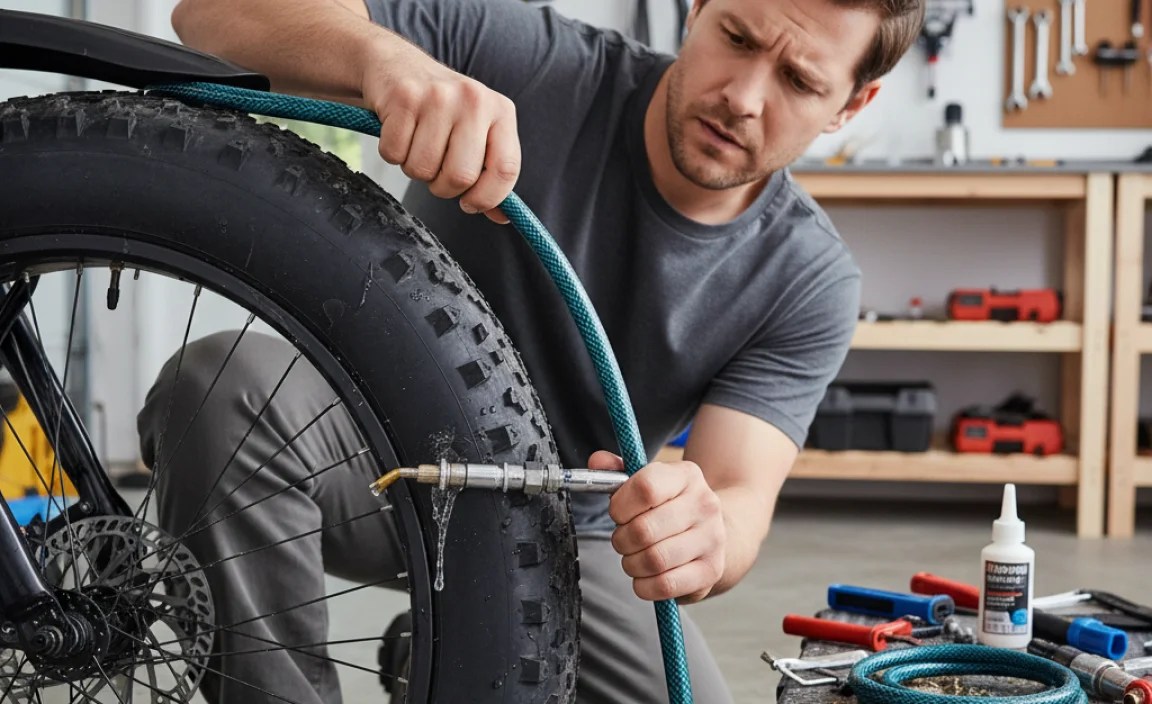
Sometimes things don’t go as planned. Here are some common issues you might encounter and how to fix them.
Air Leaking from the Valve
- Problem: Air is leaking around the valve stem after inflating the tire.
- Solution:
- Presta Valve: Make sure the valve nut is tightened.
- Both Valves: Use a valve core tool to tighten the valve core. If the leak persists, the valve core may need to be replaced.
Adapter Not Fitting Properly
- Problem: The adapter nozzle doesn’t fit securely on the valve.
- Solution:
- Make sure you’re using the correct adapter for your valve type (Presta or Schrader).
- Check the adapter for any damage or debris that might be preventing a proper seal.
Over-Inflation
- Problem: You accidentally over-inflated the tire.
- Solution:
- Carefully release some air by pressing down on the valve core (Presta) or using the end of the pressure gauge to depress the pin in the center of the valve (Schrader).
- Check the pressure with your gauge and adjust as needed.
Compressor Not Building Enough Pressure
- Problem: The air compressor isn’t building enough pressure to inflate the tire.
- Solution:
- Make sure the compressor is turned on and properly connected to a power source.
- Check the pressure regulator and increase the pressure setting.
- Ensure there are no leaks in the hose or connections.
Alternative Inflation Methods
While using an air compressor hose can be a convenient option, there are other ways to inflate your fat bike tires.
- Floor Pump: A high-volume floor pump designed for bike tires is a great option. Look for one with a built-in pressure gauge.
- Hand Pump: A portable hand pump is useful for on-the-go inflation, but it can take a while to inflate a fat bike tire.
- CO2 Inflator: CO2 inflators are quick and easy to use, but they require CO2 cartridges. They’re best for emergency situations on the trail.
| Method | Pros | Cons |
|---|---|---|
| Air Compressor | Fast, convenient | Can easily over-inflate, requires electricity |
| Floor Pump | Accurate, reliable | Requires manual effort |
| Hand Pump | Portable, no electricity needed | Slow, requires significant effort |
| CO2 Inflator | Very fast, compact | Requires cartridges, can be wasteful |
FAQ About Using a Hose for Fat Bike Tires
Can I use any air compressor hose for my fat bike tires?
Not all hoses are suitable. Use one with an adjustable pressure regulator and the correct adapter for your tire valve (Presta or Schrader). Always use a separate pressure gauge to ensure accuracy.
What PSI should I inflate my fat bike tires to?
Fat bike tires typically require very low pressure, usually between 5 and 15 PSI. Check the recommended pressure range printed on the tire’s sidewall for the most accurate value.
How do I know if I’m over-inflating my tires?
Use an accurate pressure gauge after short bursts of air. If the pressure exceeds the recommended range on the tire sidewall, release some air until you reach the correct PSI.
What is the difference between Presta and Schrader valves?
Schrader valves are similar to those on car tires, while Presta valves are narrower and have a small nut that needs to be loosened before inflation. Make sure you use the correct adapter for your valve type.
What if air is leaking from the valve after inflation?
For Presta valves, tighten the valve nut. For both types, use a valve core tool to tighten the valve core. If the leak persists, the valve core may need to be replaced.
Can I use a regular car tire inflator on my fat bike tires?
Yes, but with extreme caution. Car tire inflators often deliver air at a high volume and pressure, making it easy to over-inflate fat bike tires. Use very short bursts of air and check the pressure frequently with an accurate gauge.
How often should I check the pressure in my fat bike tires?
Check your tire pressure before each ride, especially if you’re riding in varying conditions. Temperature changes can affect tire pressure, so it’s important to monitor it regularly.
Conclusion
Using an air compressor hose to inflate your fat bike tires can be a quick and convenient method, as long as you take the necessary precautions. Remember to use an accurate pressure gauge, inflate in short bursts, and never exceed the recommended pressure range. By following these steps and safety tips, you can keep your tires properly inflated and enjoy a smooth, comfortable ride on any terrain. Now that you’re armed with this knowledge, go ahead and confidently maintain your fat bike tires, ensuring optimal performance and safety on all your adventures!


