
How to Use Hand Pump for Air Mattress Quickly: Easy Guide

Quick Summary:
Need to inflate your air mattress fast with a hand pump? Connect the correct nozzle to the pump and mattress valve. Secure the connection, then pump steadily using your body weight. Open the valve to test firmness, and repeat until fully inflated. Disconnect quickly to prevent air loss, and you’re all set!
Ever struggled to inflate an air mattress with a hand pump, feeling like it takes forever? You’re not alone! It’s a common frustration, especially when you’re eager to relax after a long day of camping or setting up a guest room. The good news is, with the right technique, you can inflate your air mattress quickly and efficiently.
In this guide, I’ll walk you through a step-by-step process that will have your air mattress ready in no time. We’ll cover everything from choosing the right nozzle to using your body weight for maximum pumping power. Get ready to say goodbye to slow, tiring inflation and hello to a comfortable night’s sleep!
Understanding Your Hand Pump and Air Mattress

Before diving into the inflation process, let’s quickly understand the key components we’ll be working with. This knowledge will make the whole process smoother and more efficient.
Types of Hand Pumps
Hand pumps come in various shapes and sizes, but they all operate on the same basic principle: using manual force to push air into an object. Here are a few common types:
- Single-Action Pumps: These pumps inflate only when you push down on the handle. They’re simple and inexpensive but can be slower.
- Double-Action Pumps: These pumps inflate on both the upstroke and downstroke, making them much faster and more efficient.
- Bellows Pumps: These pumps use a foot-operated bellows system. They can be less tiring than hand pumps, especially for larger air mattresses.
Identifying Your Air Mattress Valve
Air mattresses use different types of valves to prevent air from escaping. Knowing your valve type is crucial for selecting the correct nozzle.
- Boston Valves: These valves have a wide opening and a two-part system: a one-way valve for inflation and a cap for deflation.
- Pinch Valves: These valves require you to pinch the base to open them for inflation and deflation.
- Stem Valves: Similar to bicycle tire valves, these require a pump nozzle that can press down on a small pin to allow airflow.
Essential Tools and Preparation
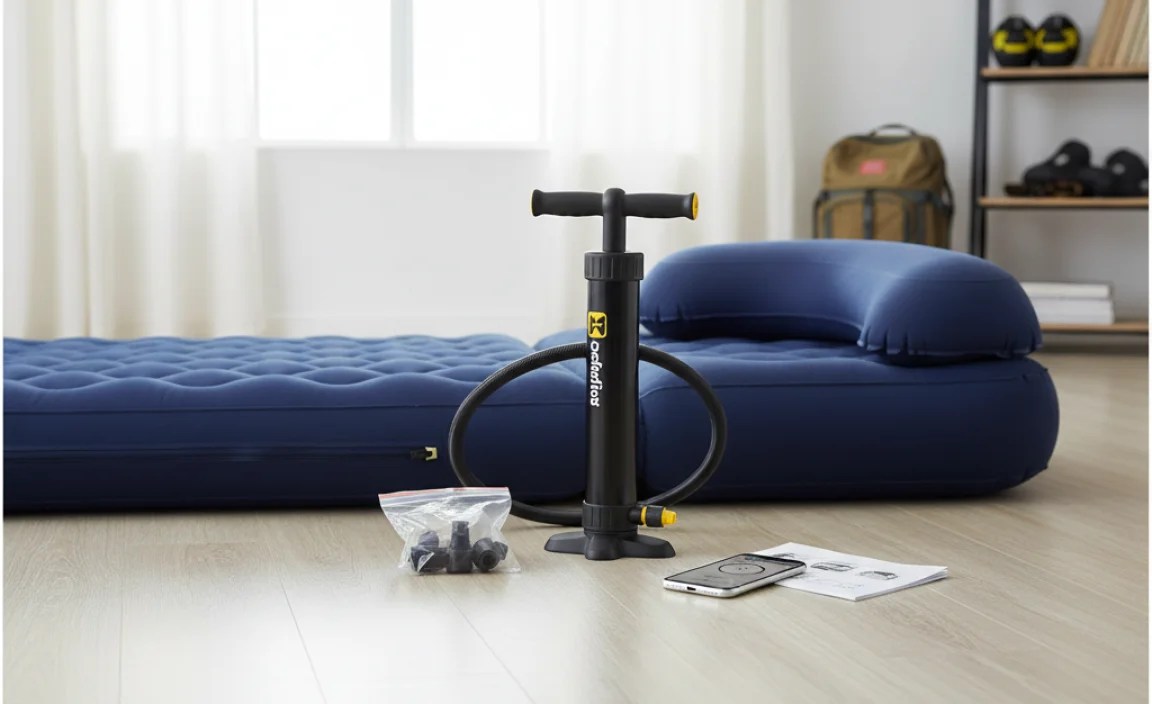
Before you start pumping, gather the necessary tools and prepare your workspace. This will save you time and frustration later.
What You’ll Need
- Hand Pump: Choose a pump that’s appropriate for the size of your air mattress. A double-action pump is highly recommended for faster inflation.
- Nozzle Adapters: Most hand pumps come with a set of nozzle adapters. Select the one that fits snugly into your air mattress valve.
- Clean Cloth: Use this to wipe down the air mattress and pump nozzle to remove any dirt or debris.
- (Optional) Knee Pad or Cushion: If you’ll be pumping on a hard surface, a knee pad can make the process more comfortable.
Preparing Your Workspace
Choose a clean, flat surface to inflate your air mattress. Remove any sharp objects that could puncture the mattress. Ensure you have enough space to move around the mattress as it inflates.
Step-by-Step Guide to Inflating Your Air Mattress

Now, let’s get to the main event! Follow these steps for quick and efficient air mattress inflation.
Step 1: Select the Correct Nozzle
This is arguably the most crucial step. A poorly fitted nozzle will result in air leakage and a frustratingly slow inflation process. Compare the provided nozzles with your air mattress valve. The ideal nozzle should fit snugly without needing to be forced. If your pump didn’t come with the right size, you may need to purchase a universal adapter kit from a local sports store or online retailer like Amazon.
Step 2: Connect the Nozzle to the Pump
Once you’ve selected the correct nozzle, securely attach it to the hand pump. Most nozzles either screw on or snap into place. Ensure the connection is tight to prevent air leakage during pumping. Give it a gentle tug to confirm it’s properly attached.
Step 3: Attach the Nozzle to the Air Mattress Valve
Carefully insert the nozzle into the air mattress valve. For Boston valves, you may need to unscrew the top cap first. For pinch valves, pinch the base of the valve to open it before inserting the nozzle. Ensure the nozzle is fully inserted and creates a good seal. This is crucial for efficient inflation.
Step 4: Begin Pumping
Now for the fun part! Place one hand on the pump handle and the other on the base to stabilize the pump. Use your body weight to push down on the handle in a smooth, steady motion. If you have a double-action pump, you’ll feel air being pumped on both the upstroke and downstroke. If you have a single-action pump, focus on the downstroke.
Pro Tip: Use your core muscles to help with the pumping motion. This will reduce strain on your arms and make the process more efficient.
Step 5: Monitor the Air Mattress
As you pump, periodically check the air mattress to gauge its firmness. Avoid over-inflating, as this can damage the mattress, especially in hot weather where the air expands. The mattress should feel firm but still have some give. A good rule of thumb is to stop when you can press down about an inch or two with your hand.
Step 6: Disconnect the Pump and Secure the Valve
Once the air mattress is sufficiently inflated, quickly remove the nozzle from the valve. For Boston valves, immediately replace the top cap. For pinch valves, release the pinch. The goal is to minimize air loss during disconnection. Some air loss is inevitable, but a quick and decisive movement will help retain most of the air.
Step 7: Fine-Tune the Firmness (If Needed)
After disconnecting the pump, test the firmness of the air mattress again. If it’s too soft, reattach the pump and add a few more pumps of air. If it’s too firm, carefully open the valve and release a small amount of air. Repeat this process until you achieve the desired firmness.
Troubleshooting Common Issues
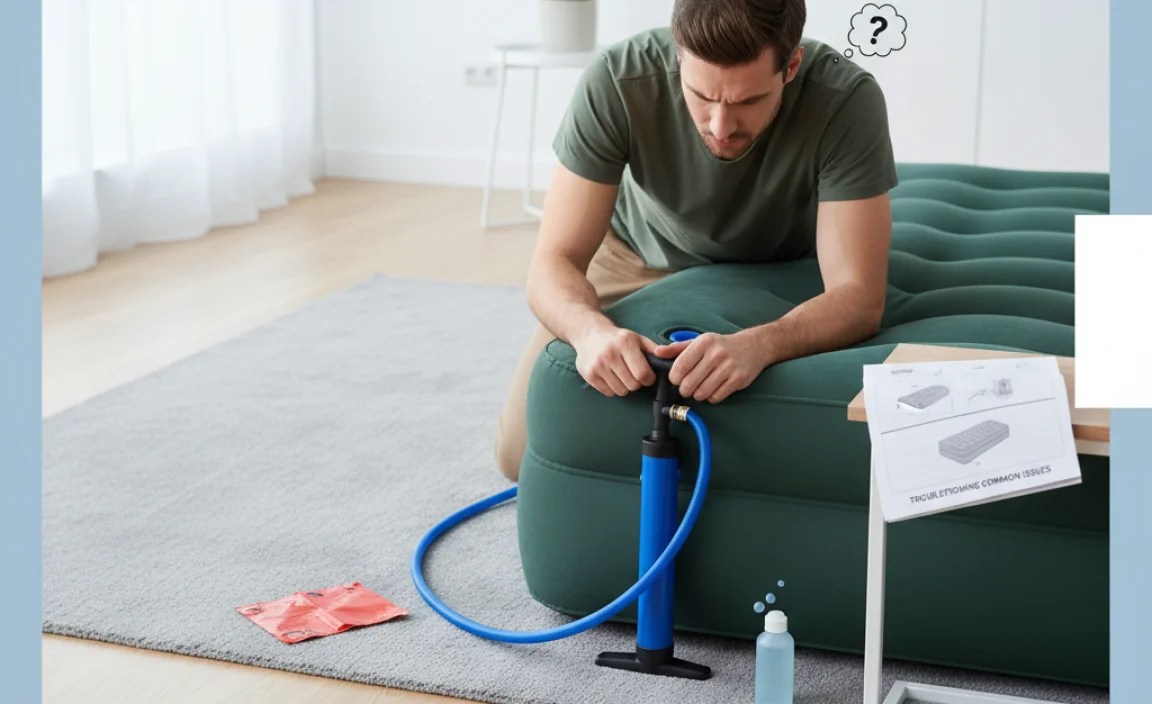
Even with the best technique, you might encounter some issues during the inflation process. Here are a few common problems and how to solve them.
Air Leaking from the Valve
If you notice air leaking from the valve while pumping, it could be due to a poorly fitted nozzle or a damaged valve. Try a different nozzle or check the valve for any cracks or tears. If the valve is damaged, you may need to repair or replace the air mattress.
Pump Not Pumping Air
If the pump isn’t pumping air, check the connection between the nozzle and the pump. Make sure the nozzle is securely attached and not blocked. Also, check the pump’s internal components for any damage or obstructions. Sometimes, the pump’s seals can dry out or crack, preventing it from creating suction. In this case, you might need to lubricate the seals or replace the pump.
Air Mattress Not Inflating Fully
If the air mattress is taking a long time to inflate or isn’t inflating fully, it could be due to a slow pump, a leak in the mattress, or insufficient pumping effort. Try using a double-action pump for faster inflation. Inspect the mattress for any leaks and repair them if necessary. Ensure you’re using your body weight and core muscles to maximize pumping power.
Maximizing Efficiency and Speed
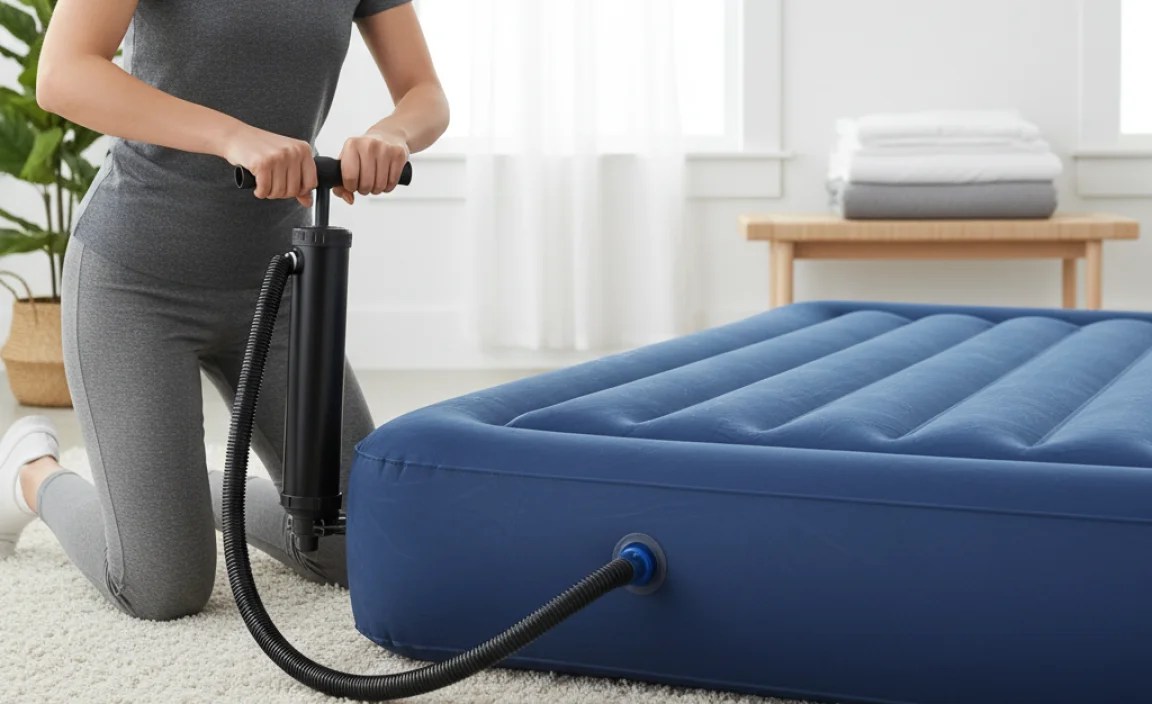
Want to inflate your air mattress even faster? Here are some advanced tips and techniques.
Using Your Body Weight Effectively
Instead of relying solely on your arm strength, use your body weight to push down on the pump handle. This will generate more force and inflate the mattress faster. Stand with your feet shoulder-width apart and lean into the pump with your upper body. Engage your core muscles for added stability and power.
Optimizing Pumping Rhythm
Maintain a smooth, consistent pumping rhythm. Avoid jerky or rushed movements. A steady rhythm will maximize air flow and reduce fatigue. Experiment with different pumping speeds to find what works best for you. Generally, a moderate pace is more efficient than a fast, frantic pace.
Taking Breaks Strategically
If you’re inflating a large air mattress, take short breaks to avoid exhaustion. Pumping continuously for long periods can lead to fatigue and reduced efficiency. Take a 30-second break every few minutes to rest your arms and back. This will allow you to maintain a consistent pumping effort over a longer period.
Hand Pump vs. Electric Pump: A Comparison
While hand pumps are a reliable option, electric pumps offer convenience and speed. Here’s a comparison to help you decide which is best for you.
| Feature | Hand Pump | Electric Pump |
|---|---|---|
| Speed | Slower | Faster |
| Effort | Requires manual effort | Requires minimal effort |
| Portability | Highly portable | Requires power source |
| Noise Level | Quiet | Noisy |
| Cost | Less expensive | More expensive |
| Reliability | Highly reliable (no batteries or power needed) | Can be unreliable (battery or power issues) |
As you can see, both types of pumps have their pros and cons. Hand pumps are great for situations where portability and reliability are paramount, while electric pumps excel in speed and convenience.
Maintaining Your Hand Pump for Longevity
To ensure your hand pump lasts for years, proper maintenance is essential. Here are some tips to keep your pump in top condition.
- Clean Regularly: Wipe down the pump with a clean cloth after each use to remove dirt and debris.
- Lubricate Moving Parts: Periodically lubricate the pump’s moving parts with a silicone-based lubricant. This will keep the pump operating smoothly and prevent wear and tear.
- Store Properly: Store the pump in a dry, cool place away from direct sunlight. This will prevent the pump’s seals from drying out and cracking.
- Inspect Regularly: Check the pump for any signs of damage, such as cracks, leaks, or loose connections. Repair or replace any damaged parts promptly.
Alternative Inflation Methods
What if you don’t have a hand pump? Don’t worry, there are a few alternative methods you can try.
- Vacuum Cleaner (with caution): Some vacuum cleaners can be used to inflate air mattresses. Attach the hose to the exhaust port and use a nozzle adapter to connect it to the air mattress valve. Be careful not to overheat the vacuum cleaner or over-inflate the mattress.
- Hair Dryer (on cool setting): A hair dryer on the cool setting can also be used to inflate an air mattress. Use a nozzle adapter to connect the hair dryer to the air mattress valve. This method is slower than using a pump, but it can work in a pinch.
- Improvised Bellows: You can create a makeshift bellows using a large plastic bag or garbage bag. Seal the bag around the air mattress valve and then squeeze the bag to force air into the mattress. This method is not very efficient, but it can be used in an emergency.
Safety Precautions
While inflating an air mattress is generally safe, it’s important to take a few precautions to prevent accidents or injuries.
- Avoid Over-Inflation: Over-inflating an air mattress can cause it to burst, especially in hot weather. Always monitor the firmness of the mattress and stop pumping when it feels firm but still has some give.
- Protect Your Back: Use proper lifting techniques when moving or positioning the air mattress. Avoid bending at the waist and lift with your legs.
- Keep Away from Sharp Objects: Keep the air mattress away from sharp objects that could puncture it. Inspect the area before inflating the mattress and remove any potential hazards.
- Supervise Children: Do not allow children to play on or around the air mattress while it’s being inflated. They could get injured by the pump or the inflating mattress.
FAQ: Your Air Mattress Inflation Questions Answered
Here are some frequently asked questions about inflating air mattresses with hand pumps.
How long should it take to inflate an air mattress with a hand pump?
It depends on the size of the mattress and the type of pump, but typically it takes between 5 and 15 minutes.
Can I use a bicycle pump to inflate an air mattress?
Yes, if you have a nozzle adapter that fits both the bicycle pump and the air mattress valve.
What if my hand pump doesn’t have the right nozzle?
You can purchase a universal nozzle adapter kit online or at most sporting goods stores.
How do I know if my air mattress is over-inflated?
The mattress will feel very firm and rigid, with little or no give when you press on it.
Can I use an electric pump and a hand pump together?
Yes, you can use an electric pump to inflate the mattress most of the way and then use a hand pump to fine-tune the firmness.
Is it okay to leave an air mattress inflated all the time?
It’s generally not recommended, as the mattress can stretch and lose its shape over time.
How do I deflate an air mattress quickly?
Open the valve fully and press down on the mattress to force the air out. Some mattresses have a two-way valve that allows for faster deflation.
Conclusion
Inflating an air mattress with a hand pump doesn’t have to be a daunting task. By following these steps and tips, you can quickly and efficiently prepare your air mattress for a comfortable night’s sleep. Remember to choose the right nozzle, use your body weight effectively, and maintain your pump for longevity. With a little practice, you’ll become a pro at air mattress inflation!


