
How to Pump Bike Tyre Fast Manually: Easy Guide

Quick Summary: To pump your bike tire fast manually, make sure your pump head is securely attached to the valve. Use smooth, full strokes, engaging your body weight. Check the pressure frequently with the gauge on your pump. Aim for the recommended PSI on your tire’s sidewall. Proper technique and a quality pump will make the process quick and efficient.
Is your bike tire flat and you’re itching to get back on the road or trail? Pumping a bike tire manually can seem like a chore, but with the right technique, it’s surprisingly quick and easy. Many cyclists struggle with slow pumping, leaky valves, or not reaching the correct pressure. Don’t worry! This guide breaks down each step, from choosing the right pump to mastering the pumping motion. You’ll learn how to inflate your tires quickly, efficiently, and accurately, so you can spend more time riding and less time fiddling with your pump.
Choosing the Right Bike Pump

The first step to fast and efficient tire inflation is selecting the right pump. There are two main types of manual bike pumps: floor pumps and hand pumps. Each has its pros and cons, depending on your needs and riding style.
Floor Pumps
Floor pumps, also known as track pumps, are designed for home use and offer the most efficient way to inflate your tires. They provide greater leverage and volume per stroke, making it easier to reach higher pressures quickly.
- Pros:
- High volume output for fast inflation.
- Built-in pressure gauge for accurate inflation.
- Stable base for easy use.
- Ergonomic handle for comfortable grip.
- Cons:
- Larger and heavier, not ideal for carrying on rides.
- More expensive than hand pumps.
Hand Pumps
Hand pumps are compact and lightweight, making them perfect for carrying on your bike during rides. While they require more effort to reach higher pressures, they are essential for fixing flats on the go.
- Pros:
- Portable and lightweight.
- Affordable and easy to store.
- Cons:
- Lower volume output, requiring more strokes.
- Can be tiring to use for high-pressure tires.
- Pressure gauges are less common and accurate.
Mini Pumps
Mini pumps are a type of hand pump, often even smaller and lighter for maximum portability. They’re great for emergency repairs but typically require even more effort than standard hand pumps.
CO2 Inflators
While not technically a manual pump, CO2 inflators offer the fastest way to inflate a tire. They use compressed CO2 cartridges to fill the tire in seconds. However, they require purchasing cartridges and don’t allow for precise pressure adjustments.
Understanding Valve Types
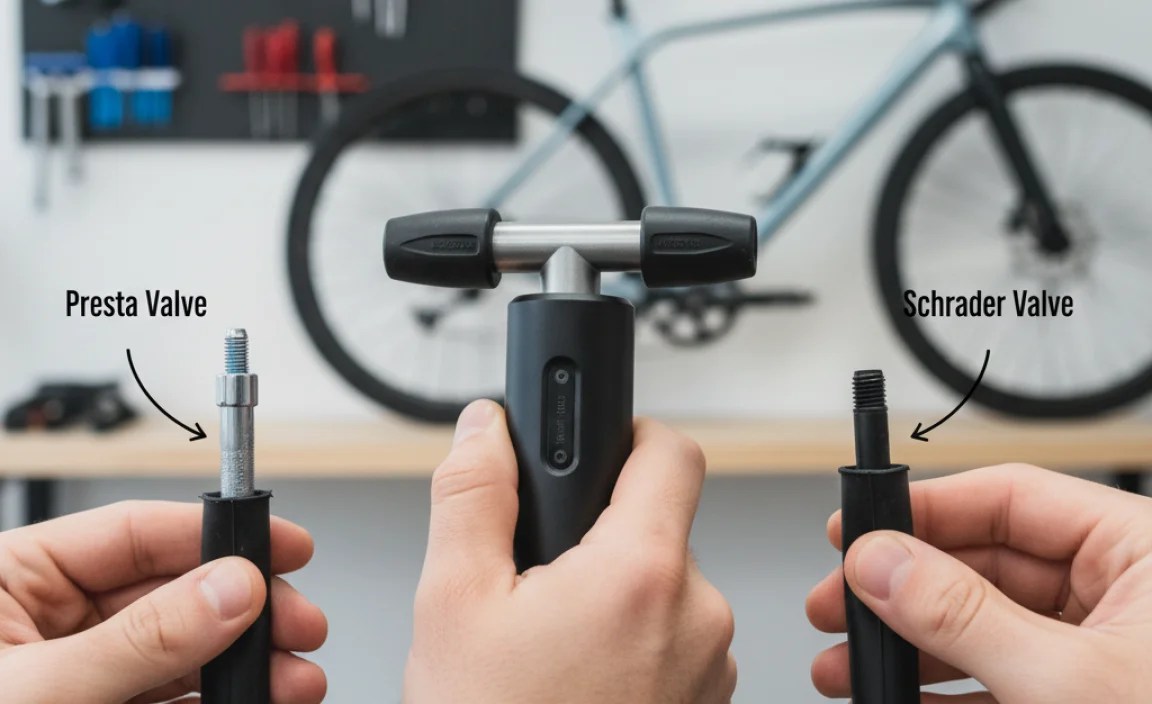
Before you start pumping, it’s essential to identify the type of valve on your bike’s inner tube. There are two common types: Presta and Schrader.
Presta Valves
Presta valves are commonly found on road bikes and high-performance bicycles. They are narrower than Schrader valves and have a locking nut at the tip.
- Features:
- Narrower design, suitable for narrow rims.
- Locking nut to seal air.
- Requires unlocking before inflation and deflation.
Schrader Valves
Schrader valves are the same type used on car tires and are commonly found on mountain bikes, hybrid bikes, and some entry-level road bikes.
- Features:
- Wider design, more robust.
- Spring-loaded valve core.
- Easier to inflate at gas stations if needed.
Most floor pumps come with a dual-head that can accommodate both Presta and Schrader valves. Hand pumps may require switching internal parts to fit the valve type. Always check your pump head to ensure it is set up correctly for your valve type.
Step-by-Step Guide to Pumping Your Bike Tire Fast Manually

Now, let’s get to the heart of the matter: pumping your bike tire quickly and efficiently. Follow these steps for optimal results.
Step 1: Prepare Your Bike and Pump
First, make sure your bike is stable. You can lean it against a wall or use a bike stand. Position the valve stem at the bottom, near the ground. This makes it easier to attach the pump head.
Inspect your pump. Ensure the hose is in good condition and the pump head is set to the correct valve type (Presta or Schrader). Many pumps have a switch or rotating collar to change between valve types.
Step 2: Attach the Pump Head to the Valve
For Presta valves:
- Remove the valve cap.
- Loosen the locking nut at the tip of the valve by turning it counterclockwise.
- Press the valve tip briefly to release any remaining air.
- Firmly press the pump head onto the valve, ensuring a tight seal. Some pump heads have a lever to lock them in place.
For Schrader valves:
- Remove the valve cap.
- Firmly press the pump head onto the valve, ensuring a tight seal. Some pump heads have a lever to lock them in place.
A secure connection is crucial to prevent air leakage. If you hear air escaping, readjust the pump head until the seal is tight.
Step 3: Begin Pumping
Now comes the pumping action. Use these techniques for maximum efficiency:
- Use Your Body Weight: For floor pumps, stand with one foot on the base for stability. Lean over the pump and use your body weight to push down on the handle.
- Smooth, Full Strokes: Avoid short, jerky motions. Use long, smooth strokes to maximize the amount of air pumped with each push.
- Engage Your Core: Engage your core muscles for added power and stability. This will help you maintain a consistent rhythm.
- Keep Your Arms Straight: Keep your arms relatively straight and use your back and shoulder muscles to drive the pumping motion.
For hand pumps, grip the pump firmly with both hands. Place the pump head against a solid surface, like the ground or your leg, for added leverage. Use short, rapid strokes, focusing on pushing air into the tire.
Step 4: Monitor the Pressure
Most floor pumps have a built-in pressure gauge. Keep an eye on the gauge as you pump to avoid over- or under-inflating your tires.
The recommended tire pressure (PSI or BAR) is usually printed on the sidewall of your tire. Use this as a guide, but adjust based on your weight, riding conditions, and personal preference. Lower pressures provide more comfort and grip, while higher pressures offer lower rolling resistance.
If using a hand pump without a gauge, periodically check the tire pressure by squeezing the tire. It should feel firm but not rock hard. You can also purchase a separate digital pressure gauge for more accurate readings.
Step 5: Detach the Pump Head
Once you reach the desired pressure, carefully detach the pump head from the valve.
For Presta valves:
- If your pump head has a locking lever, release it.
- Gently pull the pump head straight off the valve.
- Tighten the locking nut on the valve stem.
- Replace the valve cap.
For Schrader valves:
- If your pump head has a locking lever, release it.
- Gently pull the pump head straight off the valve.
- Replace the valve cap.
After detaching the pump head, double-check the tire pressure to ensure it is still within the recommended range.
Troubleshooting Common Pumping Problems
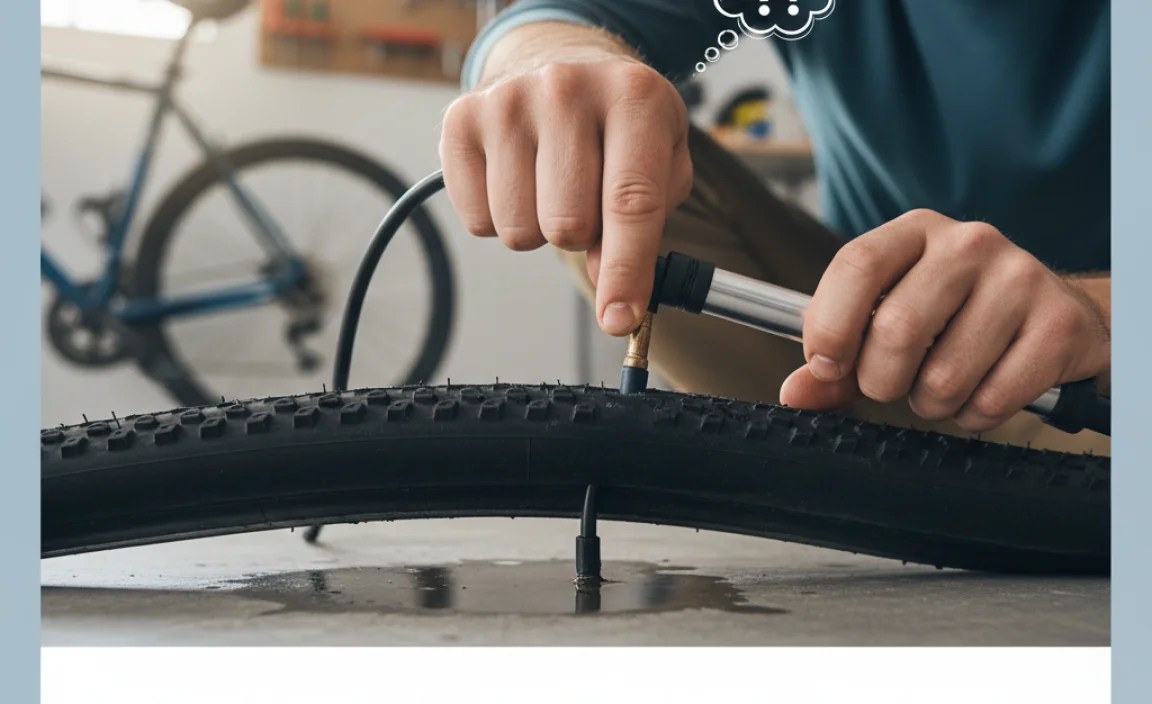
Even with the best technique, you may encounter some common pumping problems. Here’s how to troubleshoot them:
| Problem | Possible Cause | Solution |
|---|---|---|
| Air Leaking Around Valve | Loose pump head connection. | Readjust the pump head, ensuring a tight seal. Check if the pump head is compatible with the valve type. |
| Difficulty Pumping | Clogged valve or damaged pump. | Clean the valve stem with a cloth. Inspect the pump for damage or debris. |
| Pump Not Building Pressure | Worn-out pump seals or damaged hose. | Replace the pump seals or hose. Consider purchasing a new pump if the damage is extensive. |
| Incorrect Pressure Reading | Faulty pressure gauge. | Use a separate digital pressure gauge to verify the reading. Replace the pump if the gauge is consistently inaccurate. |
| Valve Stem Bending or Breaking | Excessive force or worn-out valve. | Use gentle, controlled movements when attaching and detaching the pump head. Replace the inner tube if the valve stem is damaged. |
Tips for Faster and More Efficient Pumping
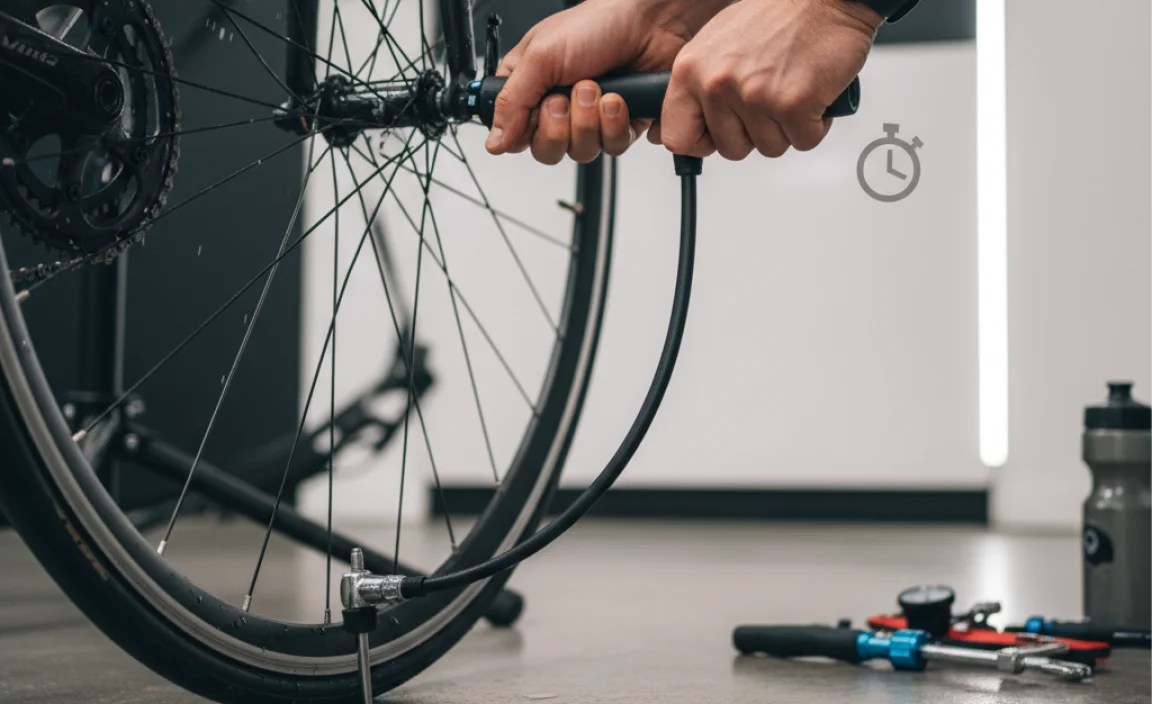
Here are some additional tips to help you pump your bike tires even faster and more efficiently:
- Maintain Your Pump: Regularly clean and lubricate your pump to ensure smooth operation. Replace worn-out parts, such as seals and hoses, as needed.
- Use a Tire Lever: When changing a flat tire, use tire levers to remove and install the tire. This will prevent damage to the rim and tire bead.
- Practice Makes Perfect: The more you practice pumping your tires, the faster and more efficient you will become. Experiment with different techniques to find what works best for you.
- Check Tire Pressure Regularly: Check your tire pressure before each ride to ensure optimal performance and prevent flats.
- Consider Tubeless Tires: Tubeless tires can be run at lower pressures, providing more comfort and grip. They also reduce the risk of pinch flats.
Recommended Tire Pressure Guidelines
Finding the right tire pressure is crucial for a comfortable and efficient ride. Here’s a general guideline, but always refer to the recommendations on your tire’s sidewall:
| Bike Type | Tire Width | Recommended Pressure (PSI) |
|---|---|---|
| Road Bike | 23-25mm | 100-120 PSI |
| Road Bike | 28-32mm | 80-100 PSI |
| Mountain Bike | 2.0-2.4″ | 25-35 PSI |
| Gravel Bike | 35-45mm | 30-50 PSI |
| Hybrid Bike | 32-40mm | 50-70 PSI |
These are just general guidelines. Adjust the pressure based on your weight, riding conditions, and personal preference. Heavier riders may need to increase the pressure, while lighter riders can decrease it. Rougher terrain may benefit from lower pressures for added grip and comfort.
FAQ: Pumping Bike Tires
Here are some frequently asked questions about pumping bike tires:
1. How often should I pump my bike tires?
Ideally, you should check and pump your bike tires before every ride. Tires lose pressure over time, and maintaining the correct pressure ensures optimal performance and reduces the risk of flats.
2. What happens if I over-inflate my bike tires?
Over-inflating your bike tires can lead to a harsh ride, reduced grip, and an increased risk of tire blowouts. Always stay within the recommended pressure range printed on the tire’s sidewall.
3. What happens if I under-inflate my bike tires?
Under-inflating your bike tires can result in a sluggish ride, increased rolling resistance, and a higher risk of pinch flats (snakebites). It can also damage your rims.
4. Can I use a car tire pump to inflate my bike tires?
You can use a car tire pump with a Schrader valve, but be cautious not to over-inflate the tire. Car pumps typically deliver a high volume of air quickly, so monitor the pressure closely. It’s generally not possible to use a car pump with a Presta valve without an adapter.
5. Why does my tire keep losing air?
A tire may lose air due to a slow leak in the inner tube, a faulty valve, or a poor seal between the tire and rim. Inspect the tire and tube for punctures or damage. Ensure the valve is properly tightened and the rim is clean.
6. What is the difference between PSI and BAR?
PSI (pounds per square inch) and BAR are both units of pressure measurement. 1 BAR is approximately equal to 14.5 PSI. Most bike pumps have gauges that display both units.
7. How do I know if my pump head is compatible with my valve type?
Most floor pumps come with a dual-head that can accommodate both Presta and Schrader valves. The pump head will have two openings, one for each valve type. Some pump heads require switching internal parts to fit the valve type. Check the pump manufacturer’s instructions for details.
Essential Tools for Bike Tire Maintenance
Having the right tools on hand makes bike tire maintenance much easier. Here are some essentials:
- Floor Pump: For efficient and accurate inflation at home.
- Hand Pump or CO2 Inflator: For on-the-go repairs.
- Tire Levers: For removing and installing tires.
- Patch Kit or Spare Tube: For fixing flats.
- Multi-Tool: With essential Allen wrenches and screwdrivers for basic adjustments.
- Digital Pressure Gauge: For accurate pressure readings.
Investing in quality tools will save you time and frustration in the long run.
Conclusion
Pumping your bike tire fast manually is a skill that every cyclist should master. By choosing the right pump, understanding your valve type, and using proper technique, you can inflate your tires quickly, efficiently, and accurately. Remember to maintain your pump, monitor the pressure, and troubleshoot common problems. With a little practice, you’ll be back on the road or trail in no time, enjoying a smooth and comfortable ride. Now get out there and pump it up!


