
How to Use CO2 Inflator and Hand Pump Combo: Easy Guide

Quick Summary: Using a CO2 inflator and hand pump combo gives you the best of both worlds! The hand pump is great for topping off tires and making small pressure adjustments. The CO2 inflator lets you quickly inflate a tire on the road after a flat. To use them together, start with the CO2 for rapid inflation, then fine-tune the pressure with the hand pump for a perfect ride.
Dealing with flat tires is part of cycling, but it doesn’t have to ruin your ride! Carrying both a CO2 inflator and a hand pump might seem like overkill, but it’s actually a smart way to stay prepared. Hand pumps are reliable but can take time and effort. CO2 inflators are fast and easy, but you only get one shot per cartridge. Combining these tools gives you speed and precision.
In this guide, I’ll walk you through how to effectively use a CO2 inflator and hand pump combo. You’ll learn the best situations for each tool, how to use them correctly, and some tips to make your roadside repairs smooth and quick. Let’s get started and turn those frustrating flats into minor inconveniences!
Why Use a CO2 Inflator and Hand Pump Combo?

Combining a CO2 inflator and a hand pump offers several advantages, making it a smart choice for cyclists who want to be prepared for anything. Here’s a breakdown of the benefits:
- Speed and Efficiency: CO2 inflators rapidly inflate tires, getting you back on the road much faster than a hand pump alone.
- Precision: Hand pumps allow you to fine-tune tire pressure, ensuring optimal performance and comfort.
- Reliability: Having both options means you’re covered if one fails. A hand pump can be a lifesaver if your CO2 cartridge is empty or malfunctions.
- Cost-Effective: Using a hand pump for minor adjustments saves you from wasting CO2 cartridges.
- Peace of Mind: Knowing you have multiple solutions for inflation issues reduces stress during rides.
Understanding Your Tools
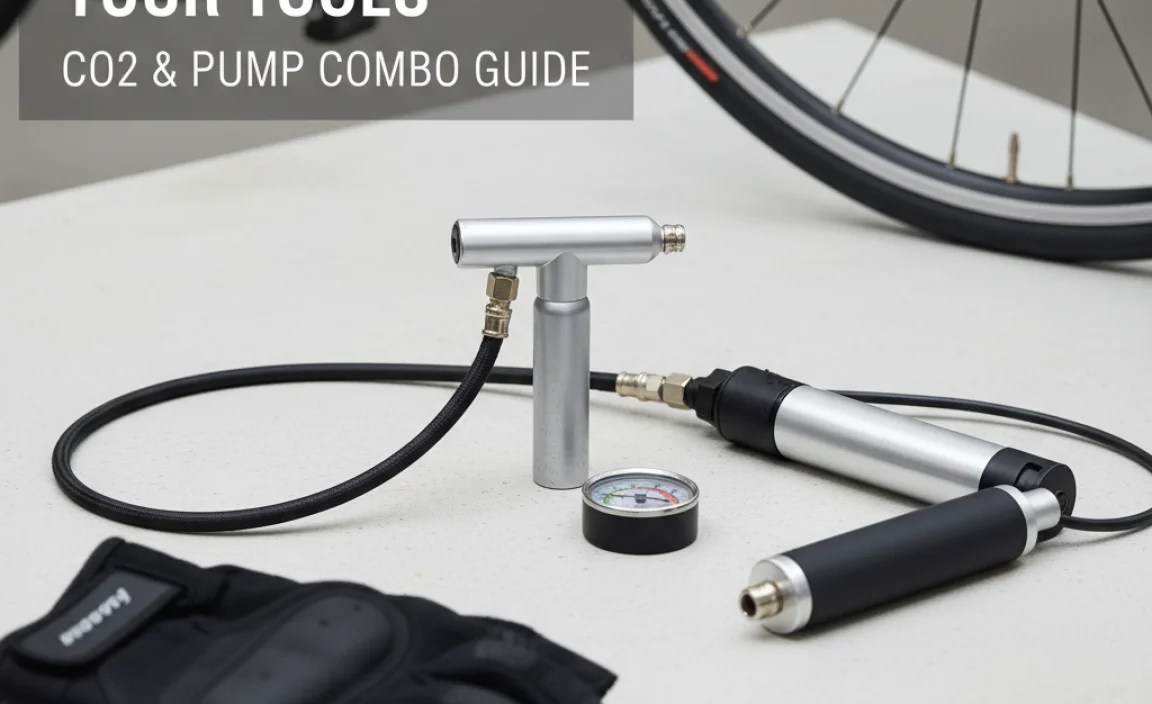
CO2 Inflators: The Quick Fix
CO2 inflators use compressed carbon dioxide to quickly fill your tires. They are compact, lightweight, and perfect for rapid inflation during a ride. Here’s what you need to know:
- Components: A CO2 inflator typically consists of a head unit and a CO2 cartridge. Some have built-in pressure gauges.
- Types: There are threaded and non-threaded cartridges. Make sure your inflator matches the cartridge type.
- Pros: Extremely fast inflation, lightweight and compact.
- Cons: Single-use cartridges, can be wasteful, and can over-inflate if not careful.
Hand Pumps: The Reliable Standby
Hand pumps are manual devices that allow you to inflate your tires using physical effort. They are reliable, reusable, and great for topping off pressure. Here’s what to consider:
- Types: Frame-mounted pumps, mini-pumps, and floor pumps (for home use) are common.
- Features: Look for pumps with pressure gauges for accurate inflation.
- Pros: Reusable, reliable, allows for precise pressure adjustments.
- Cons: Slower than CO2 inflators, requires physical effort.
Step-by-Step Guide: Using a CO2 Inflator and Hand Pump Combo

Step 1: Assess the Situation
First, determine the extent of the tire deflation. If it’s a minor pressure loss, a hand pump might suffice. If the tire is completely flat, start with the CO2 inflator.
Step 2: Prepare the CO2 Inflator
Follow these steps to prepare your CO2 inflator:
- Check the Cartridge: Ensure the CO2 cartridge is full and properly threaded (if applicable).
- Attach the Inflator Head: Screw the inflator head onto the cartridge until it’s snug. Be careful not to puncture the cartridge yet.
- Prepare the Valve: Make sure your tire valve is compatible with the inflator head (Presta or Schrader).
Step 3: Inflate with CO2
Follow these steps to inflate your tire with CO2:
- Attach to Valve: Firmly press the inflator head onto the tire valve. For Presta valves, unlock the valve by unscrewing the top nut.
- Inflate: Activate the inflator by pressing the head or twisting the cartridge (depending on the model). The tire should inflate rapidly.
- Control Inflation: Be cautious not to over-inflate. Use short bursts if possible to maintain control.
- Remove Carefully: Once the tire is mostly inflated, carefully remove the inflator head from the valve.
Step 4: Fine-Tune with the Hand Pump
After the initial CO2 inflation, use the hand pump to achieve the precise pressure you need:
- Attach the Pump Head: Securely attach the hand pump head to the tire valve.
- Inflate: Begin pumping until you reach the desired pressure. Use the pressure gauge on the pump (if available) to monitor the pressure.
- Check Pressure: Periodically check the tire pressure to ensure it’s within the recommended range (printed on the tire sidewall).
- Detach Carefully: Once you’ve reached the correct pressure, carefully detach the pump head from the valve.
Step 5: Verify and Ride
Before you ride, double-check the tire pressure and ensure the tire is properly seated on the rim. Spin the wheel to check for wobbles and ensure everything is aligned.
Tips for Using a CO2 Inflator and Hand Pump Combo

- Practice: Practice using both tools at home before you need them on the road.
- Carry Extra: Always carry extra CO2 cartridges and a patch kit.
- Check Compatibility: Ensure your inflator head is compatible with both Presta and Schrader valves.
- Use Gloves: CO2 cartridges can get very cold during inflation. Wear gloves to protect your hands.
- Monitor Pressure: Pay close attention to tire pressure to avoid over-inflation.
- Proper Disposal: Dispose of used CO2 cartridges responsibly.
Choosing the Right Gear

CO2 Inflator Recommendations
When selecting a CO2 inflator, consider these features:
- Threaded vs. Non-Threaded: Choose the type that matches your cartridges.
- Control Mechanism: Look for models with controlled release to avoid over-inflation.
- Compact Size: Opt for a lightweight and compact design for easy storage.
Hand Pump Recommendations
When selecting a hand pump, consider these features:
- Pressure Gauge: A built-in gauge ensures accurate inflation.
- Valve Compatibility: Ensure it works with both Presta and Schrader valves.
- Mounting Options: Choose a pump that can be easily mounted on your bike frame.
- Pumping Efficiency: Look for pumps that deliver a good amount of air per stroke.
CO2 Inflator and Hand Pump Combo: Comparison Table
Here’s a comparison table to help you decide when to use each tool:
| Feature | CO2 Inflator | Hand Pump |
|---|---|---|
| Speed | Very Fast | Slower |
| Ease of Use | Easy | Requires more effort |
| Reusability | Single-Use Cartridges | Reusable |
| Pressure Control | Less Precise | More Precise |
| Cost | Ongoing cost of cartridges | One-time purchase |
| Reliability | Dependent on cartridge | Highly Reliable |
Troubleshooting Common Issues
CO2 Inflator Problems
- Inflator Won’t Release CO2: Ensure the cartridge is fully threaded and the release mechanism is functioning.
- Tire Over-Inflates: Use short bursts and check pressure frequently.
- Frozen Inflator Head: Wear gloves to protect your hands from the cold.
Hand Pump Problems
- Pump Won’t Attach: Ensure the pump head is compatible with your valve type.
- Difficulty Pumping: Check for leaks and ensure the pump is properly lubricated.
- Pressure Gauge Inaccurate: Replace the pump or use a separate pressure gauge.
Maintaining Your Inflation Tools
CO2 Inflator Maintenance
- Inspect Regularly: Check for damage or corrosion on the inflator head.
- Clean Threads: Keep the threads clean for a secure connection.
- Store Properly: Store cartridges in a cool, dry place.
Hand Pump Maintenance
- Lubricate: Periodically lubricate the pump piston for smooth operation.
- Check for Leaks: Inspect the hose and seals for leaks.
- Clean: Clean the pump exterior to remove dirt and grime.
Safety Tips
- Eye Protection: Wear safety glasses when using a CO2 inflator.
- Hand Protection: Use gloves to protect your hands from the cold CO2.
- Proper Disposal: Dispose of used CO2 cartridges responsibly.
- Avoid Over-Inflation: Always monitor tire pressure to prevent blowouts.
- Check Tire Condition: Inspect your tires for wear and damage before inflating.
Alternative Inflation Methods
Using a Mini Floor Pump
A mini floor pump is a compact version of a traditional floor pump. It provides more leverage and efficiency than a hand pump but is still portable enough to carry on rides.
Using a Tubeless Tire Repair Kit
If you’re running tubeless tires, a repair kit with plugs can quickly seal punctures without needing to remove the tire. These kits often include a small CO2 inflator for re-inflation.
Bicycling.com offers a great overview of various repair kits and methods.
FAQ: CO2 Inflator and Hand Pump Combo
What’s the best way to store CO2 cartridges?
Store CO2 cartridges in a cool, dry place away from direct sunlight and extreme temperatures. This prevents corrosion and ensures they’re ready when you need them.
Can I use a CO2 inflator on tubeless tires?
Yes, CO2 inflators work on tubeless tires. However, be aware that CO2 can cause sealant to dry out faster. It’s a good idea to add fresh sealant after using CO2.
How do I know if my CO2 cartridge is empty?
An empty CO2 cartridge will feel very light and won’t produce any hissing sound when punctured. Always carry spare cartridges to avoid getting stranded.
What tire pressure should I aim for?
Check the sidewall of your tire for the recommended pressure range. Use a hand pump with a gauge to fine-tune the pressure for optimal performance and comfort.
Is it safe to use CO2 inflators?
Yes, CO2 inflators are safe if used correctly. Wear gloves to protect your hands from the cold, avoid over-inflation, and dispose of used cartridges responsibly.
Can I reuse a CO2 cartridge?
No, CO2 cartridges are single-use only. Once punctured, they cannot be refilled or reused.
What’s the difference between Presta and Schrader valves?
Presta valves are narrow and have a locking nut at the tip. Schrader valves are wider and similar to those on car tires. Ensure your pump and inflator are compatible with your valve type.
Conclusion
Using a CO2 inflator and hand pump combo is a smart way to stay prepared for any inflation situation on the road. The CO2 inflator offers rapid inflation for quick fixes, while the hand pump allows for precise pressure adjustments and serves as a reliable backup. By understanding how to use these tools effectively and following the tips outlined in this guide, you can confidently handle flat tires and keep your rides smooth and enjoyable. Happy cycling!


