
How to Use Hose with Tire Plug Kit: Easy Guide

Quick Summary: Using a hose with a tire plug kit helps you fix a flat tire quickly and easily. First, find the hole in your tire. Then, use the reamer tool to clean and widen the hole. Next, insert the plug into the insertion tool, and push it into the tire. Remove the tool, and trim any excess plug. Finally, inflate your tire with a hose connected to your pump or CO2 inflator. This gets you back on the road or trail fast!
Getting a flat tire is a pain, especially when you’re out on a ride. It can be frustrating and time-consuming, but with a tire plug kit and a hose, you can quickly repair the tire and get back to enjoying your ride. No need to call for a ride or spend ages changing the tube!
This guide will walk you through each step, showing you exactly how to use a hose with your tire plug kit. We’ll cover everything from finding the puncture to inflating the tire, so you can confidently fix flats on the go. Let’s get started and turn that flat into a distant memory!
What You’ll Need

Before you start, make sure you have everything you need. Here’s a quick checklist:
- Tire Plug Kit: A reliable kit with plugs, a reamer tool, and an insertion tool.
- Hose: A hose that connects to your bike pump or CO2 inflator.
- Bike Pump or CO2 Inflator: To inflate the tire after plugging.
- Knife or Scissors: To trim the excess plug.
- Pliers or Grippers (Optional): To remove the object that caused the puncture.
- Gloves (Optional): To keep your hands clean.
Step-by-Step Guide: Using a Hose with a Tire Plug Kit

Step 1: Locate the Puncture
First, you need to find the hole in your tire. Here’s how:
- Visually Inspect: Look closely at the tire for any obvious punctures, like a nail or piece of glass.
- Listen for Air: If you can’t see the puncture, listen for a hissing sound. This will help you pinpoint the location.
- Use Water (If Necessary): If you still can’t find it, pour a little water over the tire. Bubbles will form where the air is escaping.
Once you find the puncture, mark it with your finger or a pen so you don’t lose it.
Step 2: Remove the Object
If there’s an object stuck in your tire, like a nail or piece of glass, remove it carefully.
- Use Pliers: Grip the object with pliers and gently pull it straight out. Try not to wiggle it too much, as this can make the hole bigger.
- Be Careful: Watch your fingers and hands. The object may be sharp.
Removing the object is important because it clears the way for the tire plug.
Step 3: Prepare the Hole
Now, you need to prepare the hole so the plug can be inserted properly. This is where the reamer tool comes in.
- Insert the Reamer: Push the reamer tool into the hole.
- Ream the Hole: Move the reamer in and out and around the hole. This cleans the area and makes it slightly larger, which helps the plug stick.
- Be Firm: Apply firm pressure, but don’t force it too hard. You want to clean the hole, not damage the tire further.
Reaming the hole is a critical step for a successful repair.
Step 4: Insert the Plug
With the hole prepared, it’s time to insert the tire plug.
- Thread the Plug: Take a tire plug and thread it through the eye of the insertion tool. Make sure the plug is centered.
- Insert the Tool: Push the insertion tool into the hole with the plug. Push it in firmly until about half an inch of the plug is inside the tire.
- Quickly Remove: Hold the tool steady and quickly pull it straight out. The plug should stay in the tire.
Inserting the plug correctly ensures a good seal.
Step 5: Trim the Excess Plug
After inserting the plug, you’ll have some excess rubber sticking out. You need to trim this.
- Use a Knife or Scissors: Carefully cut the excess plug, leaving about ¼ inch sticking out.
- Be Precise: Trim it neatly so it doesn’t interfere with the tire rolling.
Trimming the plug makes sure it doesn’t rub against anything as you ride.
Step 6: Inflate the Tire with a Hose
Now that the plug is in place, it’s time to inflate the tire. This is where your hose comes in handy.
- Attach the Hose: Connect the hose to your bike pump or CO2 inflator.
- Connect to Valve: Attach the other end of the hose to the tire valve. Make sure it’s secure to prevent air leaks.
- Inflate: Start pumping or using the CO2 inflator to fill the tire to the recommended pressure. Check the sidewall of your tire for the correct PSI.
- Check the Plug: As you inflate, watch the plug to make sure it’s holding and no air is leaking around it.
Inflating the tire tests the plug and gets you ready to ride.
Step 7: Check for Leaks
After inflating the tire, double-check for any leaks around the plug.
- Listen for Hissing: Listen closely to the plug area. If you hear hissing, air is escaping.
- Use Soapy Water: If you’re not sure, put a little soapy water on the plug. If bubbles form, there’s a leak.
If you find a leak, you may need to insert another plug or consider replacing the tube.
Step 8: Ride Carefully
Once you’ve plugged the tire and inflated it, you’re good to go, but ride carefully.
- Avoid Hard Riding: Don’t do any aggressive riding or hard cornering right away. Give the plug some time to fully seat.
- Check Again: After a short ride, check the plug again to make sure it’s still holding.
Remember, a tire plug is a temporary fix. It’s best to replace the tire as soon as possible.
Essential Tips for Using a Tire Plug Kit
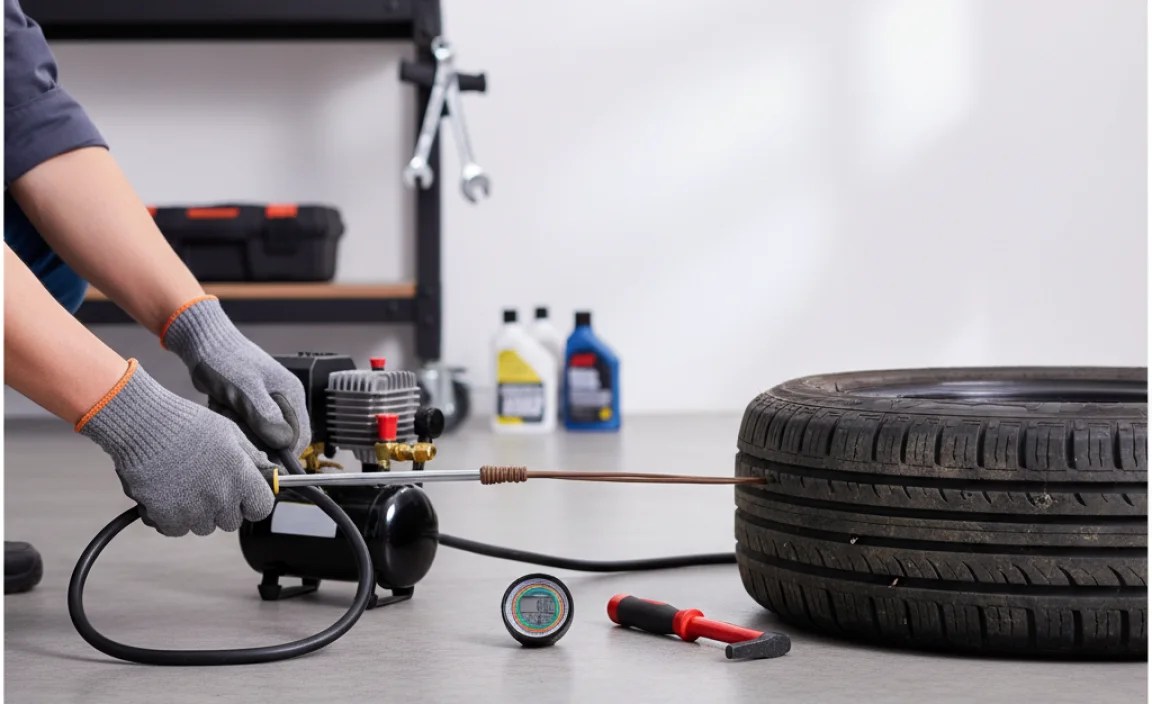
Here are some extra tips to help you get the most out of your tire plug kit:
- Practice Makes Perfect: Try using the kit at home before you need it on the road. This will give you confidence and make the process smoother.
- Carry Extra Plugs: Always carry extra plugs in your kit. You never know when you might need them.
- Check Your Kit Regularly: Make sure your kit is complete and the tools are in good condition. Replace anything that’s worn or damaged.
- Consider Tubeless-Specific Plugs: If you’re running tubeless tires, use plugs designed for tubeless systems. These are often stickier and provide a better seal.
Pros and Cons of Using a Tire Plug Kit

Using a tire plug kit has several advantages, but it’s also important to be aware of the drawbacks.
| Pros | Cons |
|---|---|
| Quick and Easy: Fix a flat tire in minutes without removing the wheel. | Temporary Fix: Plugs are not a permanent solution and the tire should be replaced. |
| Convenient: Small and lightweight, easy to carry in your cycling bag. | Can Fail: Plugs may not always hold, especially with larger punctures. |
| Cost-Effective: Cheaper than replacing a tube or tire every time you get a flat. | Requires Practice: Can be tricky to use effectively without practice. |
| Works on Tubeless and Tubed Tires: Versatile for different types of bikes. | Limited Use: Only works for certain types of punctures (small to medium holes). |
Choosing the Right Tire Plug Kit

Not all tire plug kits are created equal. Here’s what to look for when choosing a kit:
- Quality of Tools: Make sure the reamer and insertion tools are made from strong, durable materials.
- Plug Material: Look for plugs made from high-quality rubber or butyl that will create a good seal.
- Kit Contents: Ensure the kit includes everything you need, such as plugs, reamer, insertion tool, and a small knife or blade.
- Case or Container: A good case will keep your kit organized and protect the tools from damage.
Here’s a quick comparison table of popular tire plug kits:
| Kit Name | Key Features | Pros | Cons |
|---|---|---|---|
| Genuine Innovations Tire Repair Kit | Compact, includes CO2 inflator | Easy to carry, inflates tire quickly | CO2 cartridges can be expensive |
| Dynaplug Micro Pro | High-quality tools, durable plugs | Reliable, long-lasting | More expensive than other kits |
| Lezyne Tubeless Kit | Includes storage for plugs, integrated reamer/insertion tool | Organized, convenient | Tools may be smaller and harder to grip |
| Park Tool Tubeless Tire Repair Kit | Ergonomic design, sturdy construction | Comfortable to use, durable | Slightly bulkier than other kits |
Troubleshooting Common Issues
Sometimes, things don’t go as planned. Here are some common issues and how to fix them:
- Plug Won’t Stay In:
- Problem: The plug keeps coming out of the hole.
- Solution: Ream the hole again to make it slightly larger and rougher. Use a thicker plug or try doubling up the plugs.
- Air Leaks Around Plug:
- Problem: Air is leaking around the plug even after insertion.
- Solution: Make sure the plug is fully inserted. Try adding a second plug to create a tighter seal. You can also try using a tire sealant in addition to the plug.
- Insertion Tool Breaks:
- Problem: The insertion tool breaks during use.
- Solution: Use a higher-quality insertion tool made from stronger materials. Apply steady, even pressure when inserting the plug.
- Can’t Find the Puncture:
- Problem: You can’t locate the puncture in the tire.
- Solution: Inflate the tire slightly and listen for a hissing sound. If you still can’t find it, submerge the tire in water to look for bubbles.
FAQ: Using a Hose with a Tire Plug Kit
Here are some frequently asked questions about using a hose with a tire plug kit:
- Can I use any hose with my tire plug kit?
- No, you need a hose that is compatible with your bike pump or CO2 inflator and has a secure connection to the tire valve. Make sure the hose is in good condition to avoid leaks.
- How long does a tire plug last?
- A tire plug is a temporary fix and can last for a few rides. However, it’s best to replace the tire as soon as possible to ensure safety and reliability.
- Can I reuse a tire plug?
- No, tire plugs are designed for single use only. Once a plug has been inserted and used, it should not be removed and reused.
- Will a tire plug work on any type of puncture?
- Tire plugs work best on small to medium-sized punctures caused by nails, glass, or thorns. They may not be effective on large cuts or sidewall damage.
- Do I need to remove the tire from the wheel to use a tire plug kit?
- No, one of the main advantages of using a tire plug kit is that you can repair the tire without removing it from the wheel. This makes it a quick and convenient solution on the road or trail.
- Is it safe to ride long distances with a tire plug?
- While a tire plug can get you home or to a repair shop, it’s not recommended to ride long distances with it. Replace the tire as soon as possible for optimal safety.
- What should I do if the tire plug doesn’t hold?
- If the tire plug doesn’t hold, try reaming the hole again and inserting a new plug. If it still doesn’t work, you may need to replace the tube or tire.
Conclusion
Using a hose with a tire plug kit is a simple and effective way to fix a flat tire and get back to riding. By following these steps and tips, you can confidently repair punctures on the go and avoid being stranded. Remember to choose the right kit, practice using it, and always prioritize safety. Happy cycling!


