
How Often Should a Shallow Well Pump Cycle? A Simple Guide

Quick Summary: A shallow well pump should ideally cycle 6-12 times per hour when water is being used. More frequent cycling can indicate problems like a leak in the system, a waterlogged pressure tank, or a failing pump. Less frequent cycling might mean you’re not using much water, but it could also point to a larger issue requiring investigation. Monitoring your pump’s cycles helps ensure efficient operation and prevents costly repairs.
Is your shallow well pump cycling too often? It’s a common worry for homeowners who rely on well water. A pump that turns on and off constantly can drive up energy bills and signal underlying issues. But don’t worry! Understanding the ideal cycling frequency and knowing what to look for can save you headaches and money. In this guide, we’ll walk through everything you need to know to keep your well pump running smoothly. Let’s dive in and get your water system in tip-top shape!
Understanding Shallow Well Pump Cycling

Before we get into how often your pump should cycle, let’s define what we mean by “cycling.” Cycling refers to the pump turning on to refill the pressure tank and then turning off once the desired pressure is reached. This process repeats as you use water.
What is a Shallow Well Pump?
A shallow well pump is designed to draw water from wells that are 25 feet deep or less. These pumps use suction to lift water to the surface. They are typically installed above ground and are common in areas where the water table is high.
Why Cycling Frequency Matters
The frequency with which your shallow well pump cycles is a key indicator of its health and efficiency. Too many cycles can lead to:
- Increased Energy Consumption: More cycles mean the pump is running more often, using more electricity.
- Pump Wear and Tear: Frequent starts and stops put extra stress on the pump motor and components, shortening its lifespan.
- Potential for Overheating: Excessive cycling can cause the pump to overheat, leading to premature failure.
Conversely, too few cycles might suggest other problems, such as a significant leak or a pump struggling to maintain pressure.
Ideal Cycling Frequency for a Shallow Well Pump

So, how often should your shallow well pump cycle? The general rule of thumb is that a healthy shallow well pump should cycle between 6 and 12 times per hour when water is being used. This range allows for efficient water delivery without overworking the pump.
Here’s a breakdown:
- Normal Usage: During periods of normal water use (showers, laundry, dishwashing), the pump should cycle within the 6-12 times per hour range.
- Low Usage: When water usage is minimal (e.g., only occasional faucet use), the pump may cycle less frequently.
- No Usage: With no water being used, the pump should not cycle at all. If it does, there’s likely a leak or pressure issue.
Factors Affecting Cycling Frequency

Several factors can influence how often your shallow well pump cycles. Understanding these factors can help you diagnose potential problems.
1. Pressure Tank Size and Condition
The pressure tank stores water under pressure, providing a reserve that reduces the need for the pump to cycle on every time you turn on a faucet. A properly sized and functioning pressure tank is crucial for maintaining optimal cycling frequency.
- Tank Size: A larger tank stores more water, reducing the number of pump cycles.
- Air Charge: The pressure tank uses a cushion of air to compress the water. If the air charge is too low or lost, the tank becomes waterlogged, causing the pump to cycle more frequently. According to the University of Minnesota Extension, maintaining proper air pressure in your tank is crucial for efficient well system operation.
- Tank Leaks: A leak in the pressure tank will cause a loss of pressure, leading to more frequent cycling.
2. Water Usage
The amount of water your household uses directly affects the pump’s cycling frequency. High water usage will naturally cause the pump to cycle more often.
- Peak Demand: During peak usage times (e.g., morning showers, watering the lawn), expect more frequent cycling.
- Consistent Usage: A running toilet or dripping faucet can lead to constant, unnecessary pump cycling.
3. Well Water Level and Recharge Rate
The water level in your well and how quickly it replenishes (recharge rate) can also impact pump cycling.
- Low Water Level: If the water level in the well is low, the pump may struggle to draw water, leading to more frequent, shorter cycles.
- Slow Recharge: A well with a slow recharge rate may not be able to keep up with demand, causing the pump to work harder and cycle more often.
4. Leaks in the Plumbing System
Leaks in your plumbing system are a common cause of excessive pump cycling. Even small leaks can lead to a significant loss of pressure over time.
- Toilet Leaks: A running toilet is a frequent culprit.
- Faucet Drips: Even a slow drip can waste a surprising amount of water.
- Underground Leaks: Leaks in buried pipes can be harder to detect but can cause significant water loss and pump cycling.
5. Pump Condition and Performance
The condition of your shallow well pump itself can affect its cycling frequency.
- Worn Impeller: A worn or damaged impeller reduces the pump’s efficiency, causing it to work harder to deliver water.
- Clogged Intake: A clogged intake can restrict water flow, leading to more frequent cycling.
- Pump Age: As pumps age, their performance naturally declines, which can result in increased cycling.
Troubleshooting Excessive Pump Cycling

If your shallow well pump is cycling more frequently than the ideal 6-12 times per hour, it’s time to investigate. Here’s a step-by-step troubleshooting guide:
Step 1: Check for Leaks
Start by checking for obvious leaks in your plumbing system.
- Toilets: Add food coloring to the toilet tank. If the color appears in the bowl without flushing, you have a leak.
- Faucets: Check for dripping faucets and repair them promptly.
- Visible Pipes: Inspect exposed pipes for signs of leaks or corrosion.
Step 2: Inspect the Pressure Tank
The pressure tank is a common source of cycling problems.
- Check Air Charge: Use a tire pressure gauge to check the air pressure in the tank. It should be 2 PSI below the pump’s cut-in pressure (typically 28 PSI for a 30/50 switch).
- Test for Waterlogging: Tap on the side of the tank. If it sounds full of water from top to bottom, it may be waterlogged.
- Inspect for Leaks: Look for signs of water around the base of the tank, which could indicate a leak.
Step 3: Monitor Water Usage
Keep track of your water usage patterns to see if any unusual activities are causing the pump to cycle more often.
- Track Usage: Note when the pump cycles and what activities are occurring at those times.
- Identify Patterns: Look for patterns that might indicate a specific cause of the excessive cycling.
Step 4: Check the Well Water Level
If you suspect a low water level, you can try to determine the water level in your well.
- Consult Well Records: Check your well records for information on the well depth and static water level.
- Listen for Air: If the pump is making unusual noises or sputtering, it could be drawing air due to a low water level.
Step 5: Inspect the Pump
Visually inspect the pump for any signs of damage or wear.
- Check for Clogs: Examine the pump intake for any debris or obstructions.
- Listen for Noises: Unusual noises, such as grinding or squealing, could indicate a problem with the pump motor or impeller.
Corrective Actions
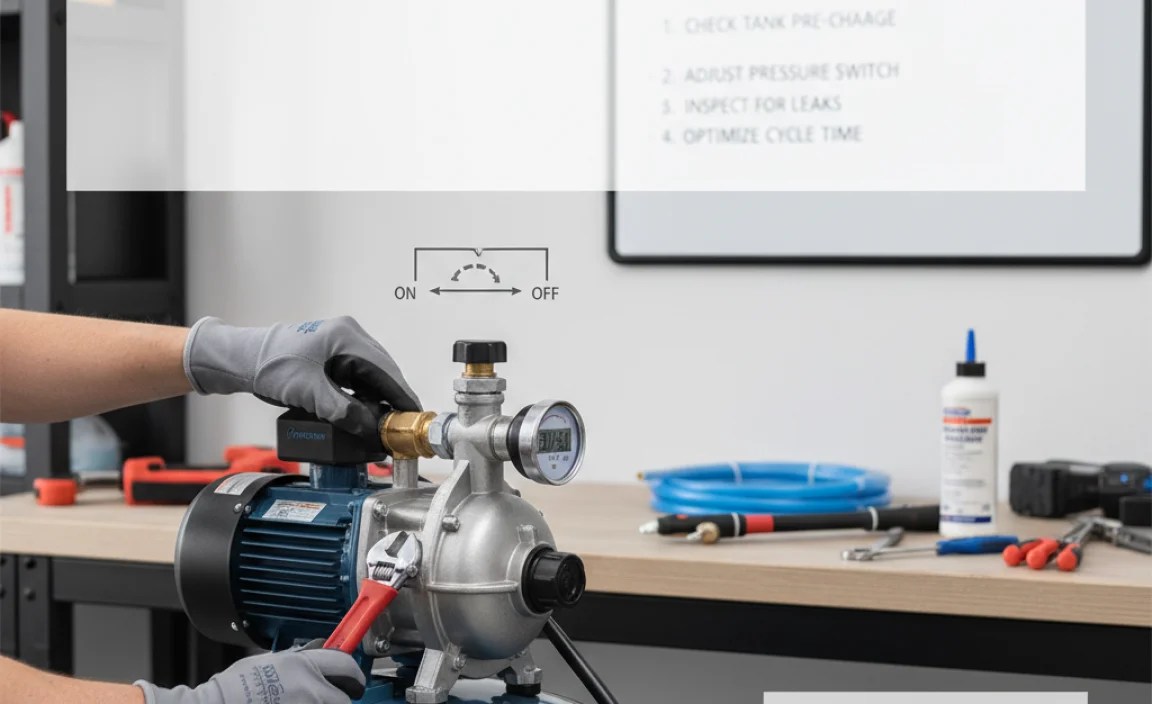
Once you’ve identified the cause of the excessive pump cycling, you can take steps to correct the problem.
Repairing Leaks
Fixing leaks is often the easiest and most cost-effective solution.
- Replace Toilet Flapper: A worn toilet flapper is a common cause of leaks.
- Repair Faucets: Replace worn washers or O-rings in dripping faucets.
- Seal Pipe Leaks: Use pipe sealant or replace damaged sections of pipe.
Adjusting or Replacing the Pressure Tank
Properly maintaining or replacing the pressure tank can significantly improve pump cycling.
- Recharge Air Pressure: Add air to the tank using an air compressor until it reaches the correct pressure (2 PSI below the cut-in pressure).
- Replace Tank: If the tank is waterlogged or leaking, it may need to be replaced.
Optimizing Water Usage
Being mindful of your water usage can help reduce pump cycling.
- Use Water-Efficient Appliances: Install low-flow showerheads, toilets, and faucets.
- Conserve Water: Avoid running water unnecessarily and fix leaks promptly.
Well Maintenance
Regular well maintenance can help ensure a consistent water supply.
- Well Cleaning: Periodically clean the well to remove sediment and debris.
- Professional Inspection: Have your well professionally inspected to identify any potential problems.
Pump Repair or Replacement
If the pump is old or damaged, it may need to be repaired or replaced.
- Repair: Replace worn parts, such as the impeller or motor bearings.
- Replace: If the pump is beyond repair, replace it with a new, energy-efficient model.
Preventative Measures
Preventing excessive pump cycling is always better than having to fix it. Here are some preventative measures you can take:
- Regular Inspections: Periodically inspect your plumbing system and well components for signs of leaks or wear.
- Maintain Pressure Tank: Check the air pressure in the pressure tank regularly and recharge as needed.
- Monitor Water Usage: Be mindful of your water usage and take steps to conserve water.
- Professional Maintenance: Schedule regular professional maintenance for your well and pump system.
Understanding Pressure Switch Settings
The pressure switch controls when your well pump turns on and off. Common settings include 30/50 and 40/60. The first number is the cut-in pressure (when the pump turns on), and the second number is the cut-out pressure (when the pump turns off).
Here’s a simple breakdown:
| Pressure Switch Setting | Cut-In Pressure (PSI) | Cut-Out Pressure (PSI) |
|---|---|---|
| 30/50 | 30 | 50 |
| 40/60 | 40 | 60 |
Ensure your pressure switch is set correctly for your system. Incorrect settings can lead to improper cycling and potential damage. Consult your pump’s manual or a professional for guidance.
Shallow Well Pump Cycling Too Fast? Quick Checklist
Here’s a quick checklist to help you diagnose why your shallow well pump might be cycling too fast:
- Check for Leaks: Toilets, faucets, and visible pipes.
- Inspect Pressure Tank: Air charge, waterlogging, and leaks.
- Monitor Water Usage: Identify unusual patterns.
- Check Well Water Level: Consult records and listen for air.
- Inspect Pump: Clogs and unusual noises.
Addressing these points can often resolve the issue quickly and efficiently.
When to Call a Professional
While many pump cycling issues can be resolved with DIY troubleshooting, some situations require professional help.
- Persistent Cycling: If you’ve tried the troubleshooting steps and the pump continues to cycle excessively.
- Complex Repairs: If you’re not comfortable working with electrical components or plumbing.
- Well Issues: If you suspect a problem with the well itself, such as a low water level or contamination.
- Pump Failure: If the pump is making loud noises, not pumping water, or showing signs of electrical problems.
A qualified well pump technician can diagnose and repair complex issues, ensuring your water system operates safely and efficiently.
FAQ: Shallow Well Pump Cycling
1. Why is my shallow well pump cycling on and off so frequently?
Frequent cycling is often caused by leaks in the plumbing, a waterlogged pressure tank, or a low water level in the well. Check for running toilets, dripping faucets, and inspect your pressure tank.
2. How do I check the air pressure in my pressure tank?
Turn off the pump and drain the water from the tank. Use a tire pressure gauge to check the air pressure at the Schrader valve (usually located at the top of the tank). The pressure should be 2 PSI below the pump’s cut-in pressure.
3. What is a waterlogged pressure tank?
A waterlogged pressure tank is one that has lost its air charge, causing it to fill completely with water. This leads to frequent pump cycling and reduced water pressure. It usually requires recharging or replacement of the tank.
4. Can a running toilet cause my well pump to cycle frequently?
Yes, even a small leak in the toilet can waste a significant amount of water over time, causing the pump to cycle more often than necessary.
5. How long should a shallow well pump last?
With proper maintenance, a shallow well pump can last 10-15 years. However, factors such as water quality, usage, and the quality of the pump itself can affect its lifespan.
6. What are the signs of a failing shallow well pump?
Signs of a failing pump include reduced water pressure, frequent cycling, unusual noises, and the pump not turning on at all. If you notice any of these signs, it’s time to have the pump inspected.
7. Is it normal for my well pump to cycle when no water is being used?
No, if your well pump is cycling when no water is being used, it indicates a problem such as a leak in the system or a faulty check valve. Investigate immediately to prevent further issues.
Conclusion
Understanding how often your shallow well pump should cycle is crucial for maintaining a healthy and efficient water system. By monitoring your pump’s cycling frequency, troubleshooting potential problems, and taking preventative measures, you can ensure a reliable water supply and avoid costly repairs. Remember, if you’re unsure about any aspect of well pump maintenance, don’t hesitate to consult a professional. Keeping your well system in good condition will provide you with clean, reliable water for years to come.
“`


