How to Use Shock Pump for Fat Bike Suspension: Easy Guide

Do you love riding your fat bike? Do you want a smoother ride? A shock pump can help. It lets you adjust your bike’s suspension. This makes riding more fun. But how to use shock pump for fat bike suspension? It’s easier than you think! Let’s learn how.
Imagine your bike bouncing all over the place. Not fun, right? A shock pump helps fix that. It adds air to your suspension. This makes your ride smoother. Let’s get started!
Key Takeaways
- Learning how to use shock pump for fat bike suspension ensures optimal performance.
- Always check your bike’s recommended pressure before adding air.
- Connect the shock pump securely to avoid air leaks and inaccurate readings.
- Slowly add air while monitoring the pressure gauge on the pump.
- Release air carefully if you add too much, using the pump’s bleed valve.
Understanding Fat Bike Suspension

Fat bikes have big tires. These tires help you ride on sand and snow. Some fat bikes also have suspension. Suspension makes the ride smoother. It soaks up bumps. This keeps you comfortable. But suspension needs to be set up right. How to use shock pump for fat bike suspension is key. A shock pump lets you adjust the air pressure. The right pressure makes a big difference. Too little air, and the suspension bottoms out. Too much air, and it’s too stiff. Finding the sweet spot is important. It makes your ride much better. Think of it like inflating a basketball. Too little air and it’s flat. Too much air and it’s rock hard. You need the right amount for the best bounce. Suspension is the same way. The right air pressure will make your ride smooth and enjoyable.
- Fat bike suspension improves comfort.
- Air pressure affects suspension performance.
- Too little air causes bottoming out.
- Too much air makes the ride stiff.
- Adjusting pressure requires a shock pump.
Learning how to use shock pump for fat bike suspension is a skill. It helps you fine-tune your ride. Different trails need different settings. A rocky trail needs more air. A smooth trail needs less. Experimenting is part of the fun. Start with the recommended pressure. Then adjust it to your liking. A little change can make a big difference. Remember to check the pressure often. Air can leak out over time. Keeping your suspension dialed in is worth the effort. It will make every ride better. You’ll feel more confident and in control. Plus, your body will thank you for the smoother ride. It is a great investment in your overall biking experience.
Why Suspension Matters
Have you ever ridden over a big bump? Did it hurt your hands? Suspension helps prevent that. It absorbs the impact. This makes riding easier on your body. Without suspension, every bump is felt. This can make long rides tiring. Suspension is like a cushion. It protects you from the rough terrain. It also helps you stay in control. When your wheels stay on the ground, you steer better. Suspension improves traction too. This means you can climb hills easier. It keeps your tires from slipping. So, suspension is not just about comfort. It’s also about performance and safety. A good suspension setup can make you a faster, more confident rider. It allows you to tackle trails you might otherwise avoid.
Types of Suspension
Fat bikes can have different types of suspension. Some have front suspension only. This is called a hardtail. Others have both front and rear suspension. This is called full suspension. Front suspension soaks up bumps in the front. Rear suspension soaks up bumps in the back. Full suspension bikes are more comfortable. They are also more expensive. Hardtails are simpler and lighter. The type of suspension you need depends on your riding style. If you ride rough trails, full suspension is better. If you ride mostly smooth trails, a hardtail might be fine. Consider what kind of riding you do most often. This will help you choose the right bike. Remember, both types of suspension can benefit from proper adjustment.
Finding the Right Settings
Finding the right suspension settings takes time. Start with the manufacturer’s recommendations. These are usually listed in the bike’s manual. You can also find them online. The recommendations are a starting point. You may need to adjust them based on your weight. You may also need to adjust them based on the trail conditions. Experiment with small changes. Add or remove a little air at a time. Then, test the bike on a familiar trail. Pay attention to how it feels. Does it bottom out easily? Is it too stiff? Adjust until you find the sweet spot. Remember to write down your settings. This way, you can easily return to them if needed. It’s all about finding what works best for you and your riding style.
Fun Fact or Stat: Fat bike suspension can improve your average speed on trails by up to 15%!
Choosing the Right Shock Pump

Not all shock pumps are the same. Some are cheap and flimsy. Others are well-built and accurate. A good shock pump is worth the investment. It will last longer and give you better readings. Look for a pump with a clear gauge. The gauge shows the air pressure. It should be easy to read. A pump with a swivel head is also helpful. This makes it easier to connect to the valve. Some pumps have a bleed valve. This lets you release small amounts of air.
This is useful for fine-tuning the pressure. Read reviews before you buy a pump. See what other riders say about it. A good pump will make adjusting your suspension easier. It will also help you maintain the correct pressure. Proper inflation is key to a great ride. Don’t skimp on this important tool. How to use shock pump for fat bike suspension starts with the right equipment.
- Invest in a quality shock pump.
- Look for a clear, easy-to-read gauge.
- Choose a pump with a swivel head.
- A bleed valve helps fine-tune pressure.
- Read reviews before buying.
Using the wrong pump can damage your suspension. It can also give you inaccurate readings. This can lead to a poor ride. A shock pump is designed for high pressure. It delivers small amounts of air. A regular tire pump delivers large amounts of air. This can over-inflate the suspension quickly. It can also damage the seals. Always use a shock pump for suspension adjustments. It’s the right tool for the job. It will protect your investment. It will also help you get the most out of your suspension. Remember, safety is important. Over-inflating your suspension can be dangerous. It can cause it to fail. A shock pump allows for precise control and avoids these risks. It’s a small price to pay for peace of mind.
Features to Look For
When choosing a shock pump, consider its features. A long hose makes it easier to reach the valve. A comfortable handle makes pumping easier. A digital gauge is more accurate than an analog gauge. Some pumps have a pressure release button. This lets you remove the pump without losing air. Look for a pump that is compatible with your valve type. There are different types of valves. Make sure the pump fits your bike. A good pump will make the job easier. It will also give you more accurate results. These features can make a big difference in your experience.
Comparing Pump Brands
Many brands make shock pumps. Some popular brands include RockShox, Fox, and Topeak. Each brand has its own features and benefits. RockShox pumps are known for their durability. Fox pumps are known for their accuracy. Topeak pumps are known for their value. Read reviews and compare prices. Choose a pump that fits your needs and budget. Don’t be afraid to spend a little more for a quality pump. It will last longer and perform better. A good pump is an investment in your riding enjoyment. It’s important to choose a brand that you trust and that has a good reputation in the cycling community.
Maintaining Your Pump
A shock pump needs maintenance. Keep it clean and dry. Store it in a safe place. Check the hose for cracks or leaks. Replace the O-rings if they become worn. A little maintenance will keep your pump working well. It will also extend its lifespan. A well-maintained pump is more accurate. It’s also more reliable. Take care of your pump, and it will take care of you. This simple maintenance can save you money in the long run. Plus, it ensures that your pump is always ready when you need it. Regular maintenance is a key part of how to use shock pump for fat bike suspension effectively.
Fun Fact or Stat: The average lifespan of a high-quality shock pump is 5-7 years with proper care!
Connecting the Shock Pump
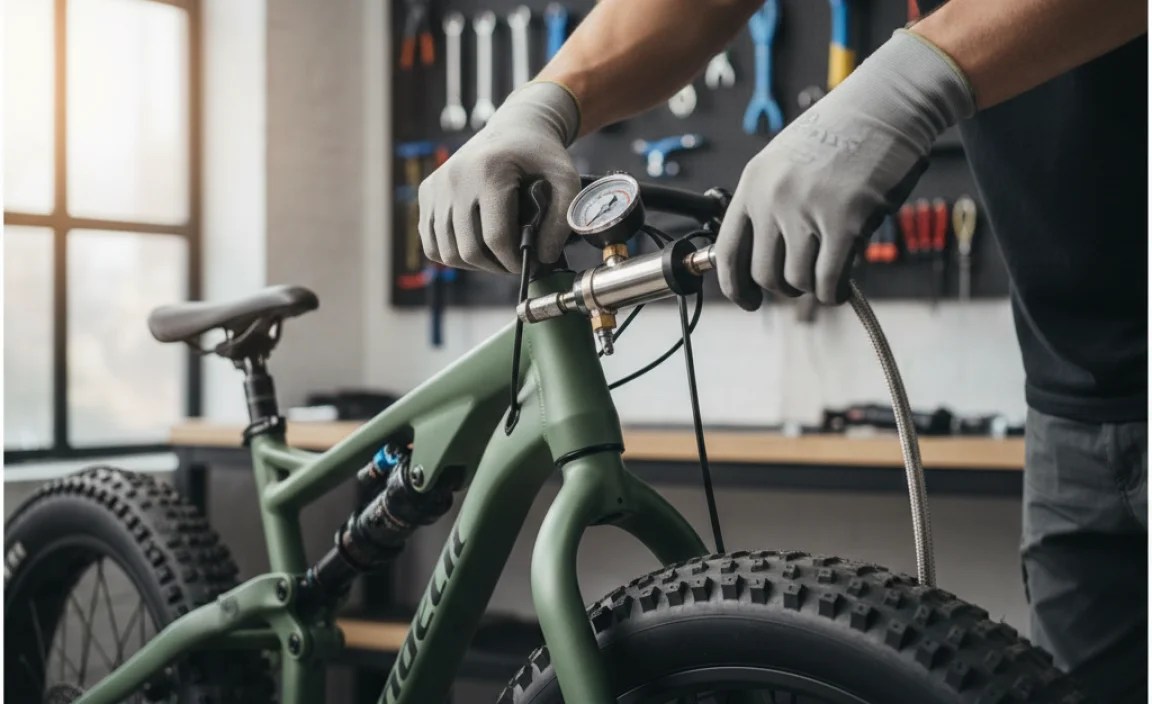
Connecting the shock pump properly is important. First, find the valve on your suspension. It’s usually covered by a cap. Remove the cap. Now, attach the pump head to the valve. Make sure it’s secure. You should hear a hissing sound. This means the pump is connected. If you don’t hear a hiss, check the connection. It might be loose. Tighten it until you hear the hiss. Now you’re ready to start pumping. Keep the pump straight. This will prevent damage to the valve. Pumping at an angle can bend the valve. This can cause leaks. A secure connection is key to accurate readings. It also prevents air from escaping. How to use shock pump for fat bike suspension relies on a good connection. It’s the first step to getting your suspension dialed in perfectly.
- Locate the valve on your suspension.
- Remove the valve cap carefully.
- Attach the pump head securely.
- Listen for a hissing sound.
- Keep the pump straight during use.
Sometimes, it can be tricky to connect the pump. The valve might be in a tight spot. A swivel head on the pump can help. It allows you to adjust the angle. This makes it easier to reach the valve. Be patient and take your time. Forcing the pump can damage the valve. If you’re having trouble, try a different angle. You can also try a different pump. Some pumps are easier to use than others. Remember, a secure connection is important. It ensures accurate readings. It also prevents air from leaking out. This is crucial for getting the right suspension setup. Don’t be afraid to try different techniques to find what works best for you. Proper connection is essential for how to use shock pump for fat bike suspension the right way.
Finding the Valve
The valve is usually on the top of the suspension fork. It might also be on the rear shock. Look for a small, round cap. The cap protects the valve from dirt and debris. Remove the cap carefully. Don’t lose it! You’ll need it to protect the valve after you’re done. The valve looks like a tire valve. It’s called a Schrader valve. This is the same type of valve used on car tires. Most shock pumps are compatible with Schrader valves. Identifying the valve is the first step. Once you find it, you’re ready to connect the pump. This simple step is crucial for adjusting your suspension.
Securing the Connection
A secure connection is key to accurate readings. The pump head should fit snugly on the valve. There should be no gaps or leaks. Some pumps have a locking lever. This lever secures the pump head to the valve. Make sure the lever is engaged. This will prevent the pump from slipping off. If the connection is loose, air will leak out. This will give you a false reading. It will also make it harder to pump up the suspension. Take your time and make sure the connection is secure. This will save you time and frustration in the long run. A tight connection is essential for proper inflation.
Troubleshooting Connection Issues
Sometimes, you might have trouble connecting the pump. The valve might be dirty or corroded. Clean the valve with a soft cloth. You can also use a valve core tool to clean the inside. The pump head might be damaged. Check for cracks or worn O-rings. Replace the O-rings if necessary. If you’re still having trouble, try a different pump. Some pumps are easier to use than others. Don’t force the pump onto the valve. This can damage the valve. Be patient and try different angles. A little troubleshooting can solve most connection issues. Remember, a secure connection is essential for accurate readings.
Fun Fact or Stat: A loose pump connection can cause you to lose up to 5 PSI of air pressure per pump stroke!
Adding Air to the Suspension

Now it’s time to add air. Start pumping slowly. Watch the gauge on the pump. It will show the air pressure. Pump until you reach the desired pressure. Check your bike’s manual for the recommended pressure. If you don’t know the recommended pressure, start with a low pressure. You can always add more air later. It’s better to start low than to over-inflate. Over-inflation can damage the suspension. As you pump, the pressure will increase. Watch the gauge carefully. Stop pumping when you reach the desired pressure. Adding air is a gradual process. Take your time and be patient. This ensures you get the pressure just right. Knowing how to use shock pump for fat bike suspension includes understanding how to add air correctly.
- Pump slowly and steadily.
- Watch the pressure gauge carefully.
- Check the bike’s manual for recommended pressure.
- Start with a low pressure if unsure.
- Avoid over-inflation to prevent damage.
It’s important to use smooth, even strokes. Jerky movements can make the gauge fluctuate. This makes it hard to get an accurate reading. Keep your eye on the gauge as you pump. Stop when you reach the desired pressure. Remember, small adjustments can make a big difference. A few PSI can change the way your suspension feels. Don’t be afraid to experiment. Start with the recommended pressure. Then, adjust it to your liking. Keep track of your settings. This will help you find the perfect setup for different trails. How to use shock pump for fat bike suspension is about finding what works best for you. It’s all about personal preference and the type of riding you do.
Understanding Pressure Readings
The pressure gauge shows the air pressure in PSI (pounds per square inch). It’s important to understand what the numbers mean. A higher number means more air. More air makes the suspension stiffer. A lower number means less air. Less air makes the suspension softer. The recommended pressure depends on your weight. It also depends on the type of riding you do. Heavier riders need more air. Riders who ride rough trails need more air. Lighter riders need less air. Riders who ride smooth trails need less air. Experiment with different pressures to find what works best for you. Understanding pressure readings is key to dialing in your suspension.
Pumping Techniques
Use smooth, even strokes when pumping. This will give you a more accurate reading. Avoid jerky movements. These can make the gauge fluctuate. Keep your eye on the gauge as you pump. Stop when you reach the desired pressure. Some pumps have a two-stage system. This allows you to pump more air with less effort. If your pump has this feature, use it. It will make pumping easier. Remember, patience is key. It takes time to reach the desired pressure. Don’t rush the process. Smooth, consistent pumping will give you the best results. Proper pumping technique is crucial for effective suspension adjustment.
Monitoring Pressure Changes
As you pump, the pressure will increase. Watch the gauge carefully. Stop pumping when you reach the desired pressure. It’s important to monitor the pressure changes. This will help you avoid over-inflation. Over-inflation can damage the suspension. If you accidentally over-inflate, don’t panic. You can release some air using the bleed valve. Monitor the pressure as you release air. Stop when you reach the desired pressure. Monitoring pressure changes is key to getting the right suspension setup. It also prevents damage to your suspension components. Regular monitoring ensures your suspension is always performing at its best.
Fun Fact or Stat: The ideal suspension pressure can change by as much as 10 PSI depending on the temperature!
Releasing Air from the Suspension

Sometimes, you might add too much air. Don’t worry, it’s easy to fix. Most shock pumps have a bleed valve. This valve lets you release small amounts of air. Find the bleed valve on your pump. It’s usually a small button or knob. Press the bleed valve gently. You will hear air hissing out. Watch the gauge as you release air. Stop when you reach the desired pressure. Release air in small bursts. This will give you more control. It will also prevent you from releasing too much air. Releasing air is a delicate process. Take your time and be patient. This ensures you get the pressure just right. Learning how to use shock pump for fat bike suspension also means knowing how to release air properly.
- Locate the bleed valve on your pump.
- Press the valve gently to release air.
- Watch the gauge as you release air.
- Release air in small bursts for control.
- Stop when you reach the desired pressure.
If your pump doesn’t have a bleed valve, you can still release air. Carefully disconnect the pump head from the valve. A small amount of air will escape. This is normal. Check the gauge after disconnecting the pump. If you still need to release more air, repeat the process. This method is less precise than using a bleed valve. Be careful not to release too much air. It’s better to release air in small increments. This will give you more control over the pressure. Remember, the goal is to reach the desired pressure. This will give you the best possible ride. Proper air release is essential for fine-tuning your suspension.
Using the Bleed Valve
The bleed valve is a small button or knob on the pump. It allows you to release small amounts of air. This is useful for fine-tuning the pressure. Press the bleed valve gently. You will hear air hissing out. Watch the gauge as you release air. Stop when you reach the desired pressure. The bleed valve gives you precise control. It allows you to make small adjustments. This is especially helpful when dialing in your suspension. Practice using the bleed valve. This will help you become more comfortable with it. A bleed valve is a valuable tool for any rider. It makes adjusting your suspension easier and more accurate.
Releasing Air Without a Bleed Valve
If your pump doesn’t have a bleed valve, don’t worry. You can still release air. Carefully disconnect the pump head from the valve. A small amount of air will escape. This is normal. Check the gauge after disconnecting the pump. If you still need to release more air, repeat the process. Be careful not to release too much air. This method is less precise than using a bleed valve. It’s important to be gentle and controlled. With practice, you can become proficient at releasing air without a bleed valve. This is a useful skill for any rider to have.
Avoiding Over-Release
It’s easy to accidentally release too much air. This is especially true when using a pump without a bleed valve. To avoid over-release, release air in small increments. Check the gauge after each increment. Be patient and take your time. If you accidentally release too much air, don’t panic. Simply reattach the pump and add more air. The key is to be gentle and controlled. With practice, you will become more comfortable with the process. Avoiding over-release is key to getting the right suspension setup. It also saves you time and frustration.
Fun Fact or Stat: Releasing air with a bleed valve is about 5 times more precise than disconnecting the pump head!
Checking and Adjusting Sag
Sag is how much your suspension compresses when you sit on the bike. It’s an important measurement. It helps you set up your suspension correctly. To check sag, you’ll need a friend. Have your friend hold the bike steady. Get on the bike in your normal riding position. Your friend should measure how much the suspension compresses. This is your sag measurement. Compare your sag measurement to the recommended sag. The recommended sag is usually listed in the bike’s manual. If your sag is too much, add more air. If your sag is too little, release some air. Adjusting sag is crucial for optimal performance. It ensures your suspension is working correctly. Knowing how to use shock pump for fat bike suspension includes understanding how to check and adjust sag.
- Have a friend hold the bike steady.
- Get on the bike in riding position.
- Measure how much the suspension compresses.
- Compare to recommended sag.
- Adjust air pressure as needed.
Sag is important because it affects how your bike handles. Too much sag can make the bike feel sluggish. It can also cause the suspension to bottom out easily. Too little sag can make the bike feel harsh. It can also reduce traction. The right amount of sag will give you a comfortable and controlled ride. It will also allow your suspension to work effectively. Checking and adjusting sag is a key part of setting up your suspension. It’s a simple process that can make a big difference. Take the time to check your sag regularly. This will ensure your suspension is always performing at its best. Proper sag adjustment is essential for a comfortable and efficient ride.
Here is an example of a typical sag table:
| Rider Weight (lbs) | Recommended Pressure (PSI) | Sag (mm) |
|---|---|---|
| 150-170 | 80-90 | 20-25 |
| 170-190 | 90-100 | 25-30 |
| 190-210 | 100-110 | 30-35 |
| 210-230 | 110-120 | 35-40 |
Measuring Sag Accurately
Measuring sag accurately is important. Use a ruler or tape measure to get the most precise measurement. Measure from the seal to a fixed point on the suspension. This will give you the most accurate reading. Make sure the bike is on level ground. This will prevent skewed measurements. Bounce on the bike a few times before measuring. This will settle the suspension. Have your friend hold the bike steady. This will prevent movement during the measurement. Accurate sag measurements are essential for proper suspension setup. They ensure your suspension is working effectively.
Adjusting for Different Riding Styles
The recommended sag is a starting point. You may need to adjust it for different riding styles. If you ride mostly smooth trails, you can use less sag. This will make the bike feel more efficient. If you ride mostly rough trails, you can use more sag. This will make the bike feel more comfortable. Experiment with different sag settings to find what works best for you. Keep track of your settings. This will help you find the perfect setup for different trails. Adjusting for different riding styles is key to getting the most out of your suspension. It allows you to fine-tune your bike for specific conditions.
Maintaining Proper Sag
Sag can change over time. Air can leak out of the suspension. This will cause the sag to increase. Check your sag regularly. Adjust the air pressure as needed. This will ensure your sag is always correct. Maintaining proper sag is key to consistent performance. It also prevents damage to your suspension components. Regular maintenance ensures your suspension is always working at its best. It’s a simple task that can make a big difference in your riding experience.
Fun Fact or Stat: Professional riders often check and adjust their sag before every race!
Maintaining Your Suspension
Maintaining your suspension is important. It will keep it working well. It will also extend its lifespan. Clean your suspension regularly. Use a soft cloth to wipe away dirt and grime. Lubricate the seals with suspension fluid. This will keep them from drying out. Check the air pressure regularly. Adjust it as needed. Inspect the suspension for damage. Look for cracks or leaks. If you find any damage, have it repaired. Proper maintenance is key to long-lasting performance. It also prevents costly repairs. Learning how to use shock pump for fat bike suspension is just one part of the equation. Regular maintenance is equally important.
- Clean suspension regularly.
- Lubricate the seals with suspension fluid.
- Check air pressure regularly.
- Inspect for damage.
- Repair any damage promptly.
Different types of suspension require different maintenance. Consult your bike’s manual for specific instructions. Some suspension forks require regular oil changes. This keeps them working smoothly. Rear shocks may also require service. This ensures they are damping properly. Follow the manufacturer’s recommendations for service intervals. This will keep your suspension in top condition. Proper maintenance is an investment in your riding enjoyment. It will also save you money in the long run. Neglecting maintenance can lead to costly repairs. Take care of your suspension, and it will take care of you. It’s a vital part of ensuring your bike performs at its best.
Cleaning Your Suspension
Cleaning your suspension is easy. Use a soft cloth and mild soap. Wipe away dirt and grime. Avoid using harsh chemicals. These can damage the seals. Rinse the suspension with water. Dry it with a clean cloth. Cleaning your suspension regularly will keep it working well. It will also prevent dirt from damaging the seals. A clean suspension is a happy suspension. It’s a simple task that can make a big difference.
Lubricating the Seals
Lubricating the seals is important. It keeps them from drying out. It also reduces friction. Use suspension fluid to lubricate the seals. Apply a small amount to the seals. Wipe away any excess fluid. Lubricating the seals regularly will keep them working smoothly. It will also extend their lifespan. This simple step can prevent costly repairs.
Inspecting for Damage
Inspect your suspension regularly for damage. Look for cracks or leaks. Check the seals for wear and tear. If you find any damage, have it repaired promptly. Ignoring damage can lead to more serious problems. It can also compromise your safety. Regular inspection is key to preventing costly repairs. It also ensures your suspension is working safely.
Fun Fact or Stat: Regular suspension maintenance can increase its lifespan by up to 50%!
Summary
Using a shock pump to adjust your fat bike’s suspension is simple. It makes a big difference in your ride. First, connect the pump securely. Then, add air slowly while watching the gauge. Release air carefully if you add too much. Check and adjust sag for optimal performance. Remember to maintain your suspension regularly. This will keep it working well. It will also extend its lifespan. Learning how to use shock pump for fat bike suspension will make your rides smoother and more enjoyable. It allows you to fine-tune your bike for different trails and conditions. It’s an essential skill for any fat bike rider.
Conclusion
Adjusting your fat bike’s suspension with a shock pump is worth it. It improves comfort and control. It also helps you ride better. With the right knowledge, anyone can do it. So, grab your shock pump and get started! Learning how to use shock pump for fat bike suspension will make your rides more fun. A well-tuned suspension system allows you to tackle any terrain with confidence. Enjoy the smoother, more controlled ride!
Frequently Asked Questions
Question No 1: What is a shock pump, and why do I need one for my fat bike suspension?
Answer: A shock pump is a special type of air pump. It is designed for high-pressure, low-volume inflation. Fat bike suspension systems use air to cushion your ride. A regular tire pump can’t provide the precise pressure needed. A shock pump allows you to fine-tune the suspension. This optimizes performance and comfort. It ensures you get the most out of your fat bike. You need it to properly inflate and adjust your suspension components. How to use shock pump for fat bike suspension is a critical skill for any serious fat bike rider.
Question No 2: How often should I check and adjust the air pressure in my fat bike suspension?
Answer: You should check the air pressure before each ride. This ensures it is at the correct level. Air pressure can change due to temperature. It can also change due to leaks. Adjust the pressure as needed to maintain optimal performance. For best results, check and adjust regularly. This prevents issues before they arise. Consistent pressure checks lead to a more predictable and enjoyable ride. Also, if you notice any changes in the way your suspension feels, check the pressure immediately. Regular checks are a key part of how to use shock pump for fat bike suspension correctly.
Question No 3: What happens if I over-inflate my fat bike suspension?
Answer: Over-inflating the suspension on your fat bike can be risky. Too much pressure can damage the seals and other internal parts, and it makes your ride feel stiff and uncomfortable—reducing the suspension’s ability to absorb bumps. That’s why you should always refer to the manufacturer’s recommended pressure before airing up. Use a reliable shock pump that has an accurate gauge so you can monitor pressure precisely. If you overshoot, carefully bleed off air using the pump’s bleed valve—never just let it rush out. And whatever you do, don’t exceed the maximum pressure specified by the manufacturer, because doing so could result in suspension failure. Knowing how to properly use your shock pump isn’t just a helpful skill—it’s essential for keeping your fat bike’s suspension safe and functioning well.
Question No 4: Can I use a regular tire pump instead of a shock pump for my fat bike suspension?
Answer: No, you should not use a regular tire pump. A regular tire pump delivers too much air at once. This makes it difficult to achieve the precise pressure needed. It can also damage the suspension components. A shock pump is designed for high-pressure, low-volume inflation. This allows for accurate adjustments. Using the wrong pump can lead to over-inflation and damage. Always use a shock pump for your fat bike suspension. It’s the right tool for the job and ensures safe and accurate inflation. How to use shock pump for fat bike suspension requires the right equipment.
Question No 5: How do I know what the correct air pressure should be for my fat bike suspension?
Answer: The correct air pressure depends on several factors. These include your weight and riding style. It also depends on the specific suspension components. Check your bike’s manual for the recommended pressure range. You can also consult the suspension manufacturer’s website. Start with the recommended pressure. Then, adjust it to your liking based on how the bike feels. Experiment with small changes to find the sweet spot. Remember, it’s all about finding what works best for you. A little trial and error is part of the process. Knowing the right pressure is essential for effective how to use shock pump for fat bike suspension.
Question No 6: What is sag, and why is it important to adjust it on my fat bike suspension?
Answer: Sag is the amount your suspension compresses when you sit on the bike. It’s important to adjust it. It ensures your suspension works correctly. Too much sag can cause bottoming out. Too little sag can make the ride harsh. Adjusting sag allows the suspension to absorb bumps effectively. It also improves traction and control. Check and adjust sag regularly for optimal performance. Proper sag adjustment is a key part of setting up your suspension. Understanding sag is important for learning how to use shock pump for fat bike suspension effectively. Adjusting sag ensures a comfortable and efficient ride.