
Heat Pump Floor Heating: The Smart Comfort Secret

Have you ever walked on a cold floor in winter? It’s not fun! Imagine having warm floors all the time. That’s what heat pump floor heating can do. It keeps your feet cozy.
Heat pump floor heating is a way to warm your house. It uses pipes under the floor. Warm water flows through them. This makes the floor warm. Then the warm floor heats the whole room. It’s like a giant, gentle radiator under your feet.
Is heat pump floor heating a good idea for your home? Keep reading to find out! It might be the perfect way to stay warm. Plus, it can save you money. Let’s explore how it works.
Key Takeaways
- Heat pump floor heating offers consistent and comfortable warmth in your home.
- These systems are energy-efficient and can lower your heating bills.
- Installation costs are higher, but long-term savings can make it worthwhile.
- Regular maintenance ensures the system runs efficiently for many years.
- It works by circulating warm water through pipes under your floor.
Understanding Heat Pump Floor Heating

Heat pump floor heating is a type of radiant heating. It uses a heat pump to warm water. This warm water flows through pipes under your floor. The floor then radiates heat into the room. This heats the room from the ground up. It’s different from traditional heating systems. Those systems use vents or radiators. Heat pump floor heating provides even warmth. It avoids hot and cold spots. This makes your home more comfortable. Plus, it can be more energy-efficient. You use less energy to heat your home. This can save you money on your energy bills. Many people like it because it is quiet. There are no noisy fans blowing air. It’s a gentle and efficient way to heat your home.
- It uses a heat pump to heat water.
- Warm water flows through pipes.
- The floor radiates heat evenly.
- It avoids hot and cold spots.
- It can save energy and money.
- It is a quiet heating system.
Think of a time you sat near a campfire. The heat from the fire warms you directly. Heat pump floor heating works in a similar way. The warm floor radiates heat. This heat warms you and the objects in the room. It doesn’t just heat the air. This makes it feel more comfortable. The warmth is gentle and consistent. It’s like having a warm hug from the floor. This type of heating is great for people with allergies. It doesn’t blow dust around like traditional systems. This can help you breathe easier. Many new homes are now using heat pump floor heating. People are discovering its benefits. It’s a cozy and smart way to heat your home.
Fun Fact or Stat: The Romans used underfloor heating systems over 2,000 years ago!
How Does a Heat Pump Work?
Have you ever wondered how a refrigerator keeps food cold? A heat pump works a bit like a refrigerator in reverse. It moves heat from one place to another. In the winter, it takes heat from the outside air or ground. It then transfers this heat inside your home. Even when it feels cold outside, there is still some heat available. The heat pump uses a special refrigerant. This refrigerant absorbs the heat. It then compresses the refrigerant. This makes it even hotter. The hot refrigerant releases its heat inside your home. In the summer, the heat pump can work in reverse. It removes heat from your home and releases it outside. This cools your home. So, a heat pump can both heat and cool. It’s a very efficient way to control the temperature in your home.
What Are the Benefits of Radiant Heating?
Radiant heating has many benefits. One big benefit is comfort. It provides even warmth. There are no cold spots. Traditional systems can create drafts. Radiant heating avoids this. It heats objects and people directly. This feels more natural. Another benefit is energy efficiency. Radiant heating can save you money. It uses less energy than traditional systems. This is because it heats the floor, which then heats the room. You don’t need to overheat the air. This can be especially helpful in large rooms. Radiant heating is also quiet. You don’t hear the noise of a fan. It is also cleaner. It doesn’t blow dust around. This can improve air quality. Many people with allergies prefer radiant heating. It’s a comfortable, efficient, and healthy way to heat your home.
Is It Suitable for All Types of Flooring?
Not all types of flooring work well with radiant heating. Some materials are better at conducting heat. Tile and stone are excellent choices. They heat up quickly and retain heat well. This makes them very efficient. Carpet can also be used. But it can reduce the efficiency of the system. Thick carpets act as insulation. This means they block some of the heat. Wood flooring can also be used. But you need to choose the right type. Engineered wood is better than solid wood. Solid wood can expand and contract. This can cause problems. Vinyl flooring is another option. But it’s important to choose a type that is designed for radiant heating. Always check with a flooring expert. They can help you choose the best material for your heat pump floor heating system.
Installing a Heat Pump Floor Heating System
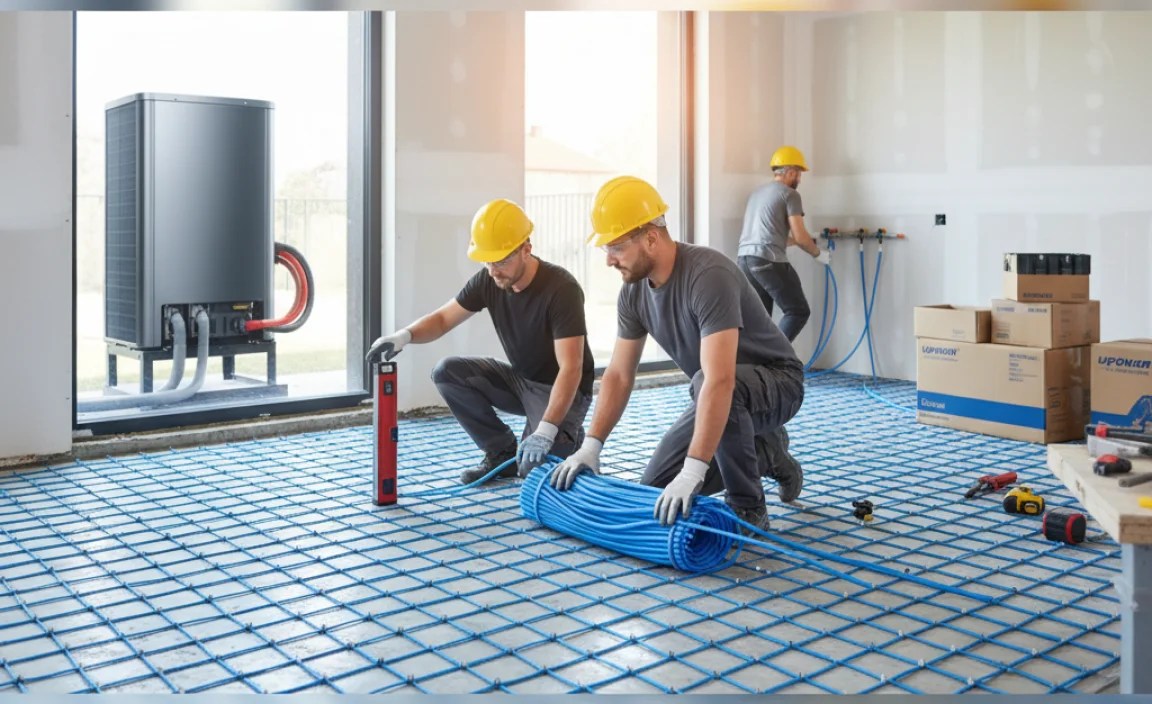
Installing heat pump floor heating is a big project. It’s best to do it when building a new house. You can also install it during a renovation. The process involves several steps. First, you need to install the pipes. These pipes are placed under the floor. They are usually embedded in concrete. Then, you connect the pipes to the heat pump. The heat pump will heat the water. The warm water flows through the pipes. This warms the floor. It is important to have a professional do the installation. They will make sure everything is done correctly. A good installation will ensure the system works efficiently. It will also prevent problems later on. Consider the long-term benefits. A properly installed system can save you money and keep you comfortable for years.
- Install pipes under the floor.
- Connect pipes to the heat pump.
- Embed pipes in concrete.
- Hire a professional installer.
- Ensure correct installation for efficiency.
- Consider long-term savings.
Imagine you are building a new Lego house. You need to plan where everything will go. Installing heat pump floor heating is similar. You need to plan carefully. The pipes need to be placed in the right spots. The heat pump needs to be sized correctly. A professional installer can help with this. They will consider the size of your house. They will also consider your climate. This will help them choose the right equipment. They will also make sure the system is installed safely. A good installation is important for your safety. It will also ensure the system works well. Take the time to find a qualified installer. It will be worth it in the long run. You’ll have a warm and comfortable home for many years to come.
Fun Fact or Stat: The cost to install radiant floor heating can range from $8 to $15 per square foot.
What Is Involved in the Installation Process?
The installation process starts with planning. A professional will assess your home. They will determine the best way to install the system. This includes choosing the right type of pipes. It also includes choosing the right size heat pump. Next, the pipes are installed. This usually involves embedding them in concrete. The concrete provides a stable base. It also helps to distribute the heat evenly. After the pipes are installed, they are connected to the heat pump. The heat pump is then connected to your electrical system. Finally, the system is tested. This ensures it is working correctly. The whole process can take several days. It depends on the size of your home. It’s important to hire a qualified installer. They will make sure everything is done safely and correctly.
How Long Does Installation Typically Take?
The time it takes to install heat pump floor heating varies. It depends on several factors. The size of your home is one factor. The complexity of the installation is another. Installing the system in a new home is usually faster. This is because the floors are not yet installed. Retrofitting an existing home takes longer. This involves removing the existing flooring. Then, the pipes are installed. Finally, the new flooring is installed. A typical installation can take anywhere from three to seven days. It’s important to get an estimate from a professional. They can give you a more accurate timeline. They will consider all the factors involved. This will help you plan accordingly. Remember, a good installation is worth the wait.
What Are the Key Considerations Before Installation?
Before installing heat pump floor heating, consider a few key things. First, think about your budget. Installation can be expensive. But it can save you money in the long run. Next, consider the type of flooring you want. Some materials work better than others. Also, think about the size of your home. This will help you choose the right size heat pump. Finally, consider the climate you live in. This will also affect the size of the heat pump. A professional installer can help you with these considerations. They can assess your home. They can provide expert advice. They will help you make the best decisions for your needs. Careful planning will ensure a successful installation.
The Cost of Heat Pump Floor Heating

The cost of heat pump floor heating can vary. It depends on several factors. These factors include the size of your home. They also include the type of flooring you choose. The cost of the heat pump is another factor. Installation costs also play a role. Generally, the initial cost is higher than traditional heating systems. However, heat pump floor heating can save you money in the long run. It is more energy-efficient. This means you use less energy to heat your home. Over time, these savings can add up. You’ll spend less on your energy bills. Consider the long-term benefits when evaluating the cost. A comfortable and efficient home is a valuable investment.
- Initial cost is higher than traditional systems.
- Saves money on energy bills.
- Cost depends on home size and flooring.
- Heat pump cost affects total price.
- Installation costs also vary.
- Long-term savings are significant.
Imagine you are buying a new bicycle. A basic bike might cost less upfront. But it might break down often. A higher-quality bike might cost more at first. But it will last longer and require less maintenance. Heat pump floor heating is similar. The initial cost might be higher. But it will provide more comfort and save you money over time. You’ll have fewer repairs. You’ll also enjoy lower energy bills. This makes it a smart investment. Think about the long-term value. A comfortable and efficient home is worth the investment. You’ll enjoy the benefits for many years to come. Plus, you’ll be helping the environment by using less energy.
Fun Fact or Stat: Heat pumps can be up to 4 times more efficient than traditional furnaces!
What Are the Initial Investment Costs?
The initial investment costs include several things. The cost of the heat pump is a major factor. Heat pumps range in price. The size and efficiency of the heat pump affect the cost. The cost of the pipes is another factor. The type of pipes and the amount needed will vary. Installation costs also contribute to the initial investment. Labor costs can vary depending on the installer. You also need to factor in the cost of flooring. Some flooring materials are more expensive than others. Overall, the initial investment can be significant. But it’s important to consider the long-term savings. These savings can offset the initial costs over time.
What Are the Long-Term Savings?
The long-term savings of heat pump floor heating are substantial. The biggest savings come from reduced energy bills. Heat pumps are very efficient. They use less energy than traditional heating systems. This can save you a lot of money each month. Another source of savings is reduced maintenance costs. Heat pump floor heating systems are very reliable. They require less maintenance than traditional systems. This means you’ll spend less on repairs. Over time, these savings can add up. You’ll save a significant amount of money. This makes heat pump floor heating a smart investment. It’s good for your wallet and the environment.
Are There Any Rebates or Incentives Available?
Yes, there are often rebates and incentives available. Many governments and utility companies offer these programs. They want to encourage people to use energy-efficient technologies. Heat pumps are considered energy-efficient. This means you may be eligible for rebates. These rebates can help offset the initial cost. Check with your local utility company. Also, check with your state government. They can provide information on available programs. These programs can make heat pump floor heating more affordable. Take advantage of these opportunities. They can save you money and help the environment.
Benefits of Using Heat Pump Floor Heating

There are many benefits to using heat pump floor heating. One of the biggest benefits is comfort. It provides even warmth throughout the room. There are no cold spots. It heats the room from the floor up. This feels very comfortable. Another benefit is energy efficiency. Heat pumps use less energy than traditional heating systems. This can save you money on your energy bills. It’s also good for the environment. You’ll be using less energy. This reduces your carbon footprint. Heat pump floor heating is also quiet. There are no noisy fans blowing air. It’s a gentle and efficient way to heat your home. Many people appreciate these benefits. It makes their homes more comfortable and affordable.
- Provides even warmth.
- Eliminates cold spots.
- Saves money on energy bills.
- Reduces your carbon footprint.
- Operates quietly.
- Increases home comfort.
Imagine you are walking on a warm beach. The sand is warm and comfortable under your feet. Heat pump floor heating feels similar. The warm floor radiates heat. This heat warms you and the objects in the room. It’s a gentle and consistent warmth. It’s like having a warm hug from the floor. This type of heating is great for people with allergies. It doesn’t blow dust around like traditional systems. This can help you breathe easier. Plus, it can add value to your home. Many buyers are looking for energy-efficient features. Heat pump floor heating is a great selling point. It’s a smart and comfortable way to heat your home.
Fun Fact or Stat: Radiant floor heating can improve indoor air quality by reducing dust and allergens!
How Does It Improve Comfort?
Heat pump floor heating improves comfort in several ways. It provides even warmth. Traditional systems can create hot and cold spots. Heat pump floor heating eliminates this problem. It heats the room from the floor up. This feels more natural and comfortable. The warmth is gentle and consistent. It doesn’t dry out the air like forced-air systems. This can help prevent dry skin and other issues. It also reduces drafts. Forced-air systems can create drafts. Heat pump floor heating avoids this. The result is a more comfortable and healthy home. You’ll feel warmer and more relaxed. It’s a great way to improve your quality of life.
What Are the Environmental Benefits?
The environmental benefits of heat pump floor heating are significant. Heat pumps are very energy-efficient. They use less energy than traditional heating systems. This reduces your carbon footprint. You’ll be using less fossil fuels. This helps to protect the environment. It also reduces air pollution. Traditional heating systems can release pollutants into the air. Heat pump floor heating is cleaner. It doesn’t produce these pollutants. This helps to improve air quality. By choosing heat pump floor heating, you’re making a positive impact. You’re helping to protect the planet for future generations. It’s a responsible and sustainable choice.
Does It Increase Home Value?
Yes, heat pump floor heating can increase home value. Many buyers are looking for energy-efficient features. They want to save money on their energy bills. Heat pump floor heating is a great selling point. It shows that your home is energy-efficient. It also shows that you care about the environment. This can make your home more attractive to buyers. It can also increase the resale value. Buyers are willing to pay more for a home with these features. Heat pump floor heating is a smart investment. It can increase your home’s value and make it more appealing to potential buyers. It’s a win-win situation.
Comparing Heat Pump Floor Heating to Other Systems

Heat pump floor heating is different from other heating systems. Traditional systems use forced air or radiators. Forced air systems blow warm air through vents. Radiators heat the air around them. Heat pump floor heating radiates heat from the floor. This is more efficient. It also provides more even warmth. Forced air systems can create drafts. Radiators can create hot spots. Heat pump floor heating avoids these problems. It’s a more comfortable and efficient way to heat your home. It also has environmental benefits. Heat pumps use less energy than traditional systems. This reduces your carbon footprint. Consider these differences when choosing a heating system. Heat pump floor heating might be the best option for your needs.
- Different from forced air and radiators.
- More efficient and provides even warmth.
- Avoids drafts and hot spots.
- Has environmental benefits.
- Uses less energy than traditional systems.
- Reduces carbon footprint.
Think of different ways to cook food. You can use a microwave, an oven, or a stovetop. Each method has its own advantages and disadvantages. Heating systems are similar. Forced air systems are like microwaves. They heat things up quickly but can be uneven. Radiators are like stovetops. They provide consistent heat but can be slow. Heat pump floor heating is like an oven. It provides even and consistent heat. It might take a little longer to heat up. But it’s more comfortable and efficient in the long run. It’s important to choose the right method for your needs. Consider the pros and cons of each system before making a decision.
Fun Fact or Stat: Radiant floor heating can save you up to 30% on your energy bills compared to traditional heating systems!
How Does It Compare to Forced Air Systems?
Heat pump floor heating and forced air systems are very different. Forced air systems use ducts and vents. They blow warm air into the room. This can create drafts and hot spots. Heat pump floor heating radiates heat from the floor. This is more even and comfortable. Forced air systems can also spread dust and allergens. This can be a problem for people with allergies. Heat pump floor heating doesn’t blow dust around. It’s a cleaner and healthier option. Forced air systems are often cheaper to install. But they are less energy-efficient. Heat pump floor heating is more expensive to install. But it can save you money on your energy bills. Consider these factors when choosing a heating system.
How Does It Compare to Radiator Systems?
Radiator systems use hot water or steam. They heat the air around them. This can create hot spots near the radiator. Heat pump floor heating radiates heat from the floor. This is more even and comfortable. Radiators can also be bulky and take up space. Heat pump floor heating is hidden under the floor. It doesn’t take up any visible space. Radiators can also be dangerous for children. They can get very hot. Heat pump floor heating is safer. The floor is warm but not too hot to touch. Radiator systems are often cheaper to install. But they are less energy-efficient. Heat pump floor heating is more expensive to install. But it can save you money on your energy bills. Consider these factors when choosing a heating system.
What Are the Pros and Cons of Each System?
Each heating system has its own pros and cons. Forced air systems are cheap to install. But they are less energy-efficient and can create drafts. Radiator systems are also relatively cheap to install. But they can create hot spots and take up space. Heat pump floor heating is more expensive to install. But it’s more energy-efficient and provides even warmth. It also doesn’t create drafts or hot spots. Consider your needs and budget when choosing a system. Think about the long-term benefits. Heat pump floor heating might be the best option for comfort and energy savings.
| Heating System | Pros | Cons |
|---|---|---|
| Forced Air | Cheap to install | Drafts, uneven heat, spreads dust |
| Radiator | Relatively cheap to install | Hot spots, takes up space |
| Heat Pump Floor Heating | Even heat, energy-efficient, quiet | More expensive to install |
| Electric Resistance | Easy install in small areas | Expensive to run, uneven heat |
Maintaining Your Heat Pump Floor Heating
Maintaining your heat pump floor heating is important. It will keep your system running efficiently. Regular maintenance can prevent problems. It can also extend the life of your system. One important task is to check the water pressure. Low water pressure can reduce efficiency. You should also check for leaks. Leaks can damage your floors and walls. Have a professional inspect your system regularly. They can identify potential problems. They can also perform necessary maintenance tasks. Proper maintenance will ensure your system works well for many years. It will also save you money on repairs. A little maintenance goes a long way.
- Check water pressure regularly.
- Inspect for leaks.
- Have a professional inspect the system.
- Clean the heat pump regularly.
- Replace filters as needed.
- Keep the area around the heat pump clear.
Imagine you have a pet. You need to feed it, groom it, and take it to the vet. This keeps your pet healthy and happy. Heat pump floor heating is similar. It needs regular care and attention. This will keep it running smoothly. Check the water pressure. Look for leaks. Have a professional inspect it. These simple steps can prevent problems. They can also extend the life of your system. Think of it as an investment in your home. Proper maintenance will protect your investment. You’ll enjoy a warm and comfortable home for many years to come.
Fun Fact or Stat: Regular maintenance can extend the lifespan of your radiant floor heating system by several years!
How Often Should You Schedule Maintenance?
You should schedule maintenance at least once a year. A professional can inspect your system. They can identify potential problems. They can also perform necessary maintenance tasks. This includes cleaning the heat pump. It also includes checking the water pressure. They can also look for leaks. Regular maintenance can prevent major problems. It can also extend the life of your system. Consider scheduling maintenance in the fall. This will ensure your system is ready for winter. It’s a small investment that can save you money in the long run. You’ll also have peace of mind knowing your system is working properly.
What Are the Common Maintenance Tasks?
Common maintenance tasks include several things. Checking the water pressure is important. Low water pressure can reduce efficiency. Inspecting for leaks is also important. Leaks can damage your floors and walls. Cleaning the heat pump is another task. Dust and debris can reduce efficiency. Replacing filters is also necessary. Dirty filters can restrict airflow. You should also keep the area around the heat pump clear. This will ensure proper ventilation. These simple tasks can keep your system running smoothly. They can also prevent major problems. Make sure to perform these tasks regularly.
Can You Do Any Maintenance Yourself?
Yes, you can do some maintenance yourself. Checking the water pressure is something you can do. You can also inspect for leaks. Keeping the area around the heat pump clear is another task. However, some tasks are best left to professionals. Cleaning the heat pump can be complicated. Replacing filters can also be tricky. It’s important to know your limits. Don’t attempt repairs if you’re not qualified. Hiring a professional can prevent costly mistakes. It’s always better to be safe than sorry. If in doubt, call a professional.
Troubleshooting Common Issues
Sometimes, heat pump floor heating systems can have problems. It’s important to know how to troubleshoot common issues. One common issue is uneven heating. This can be caused by air in the pipes. Another issue is low water pressure. This can reduce efficiency. Sometimes, the heat pump might not be working properly. This can be due to a faulty component. If you experience any of these problems, don’t panic. There are usually simple solutions. Check the water pressure. Bleed the air from the pipes. If the problem persists, call a professional. They can diagnose the issue and provide a solution. Quick troubleshooting can prevent further damage.
- Uneven heating can be caused by air.
- Low water pressure reduces efficiency.
- Heat pump might not be working.
- Check water pressure and bleed pipes.
- Call a professional for complex issues.
- Quick troubleshooting prevents damage.
Imagine your favorite toy stops working. You might try replacing the batteries. You might also check to see if it’s turned on. Troubleshooting heat pump floor heating is similar. You start with the simple things. Check the water pressure. Make sure the heat pump is turned on. If those things don’t work, you might need help. Call a professional. They have the tools and knowledge to fix the problem. Don’t try to fix things yourself if you’re not sure what you’re doing. You could make the problem worse. It’s always better to be safe than sorry. A professional can get your system back up and running quickly.
Fun Fact or Stat: Air in the radiant floor heating pipes is a common issue that can lead to uneven heating.
What Causes Uneven Heating?
Uneven heating can be caused by several things. Air in the pipes is a common cause. Air can block the flow of water. This can prevent the floor from heating evenly. Another cause is low water pressure. Low water pressure can reduce the flow of water. This can also lead to uneven heating. Sometimes, the pipes might be blocked. Debris can accumulate in the pipes over time. This can restrict the flow of water. A professional can diagnose the cause of uneven heating. They can also provide a solution. They might need to bleed the air from the pipes. They might also need to flush the system. These steps can restore even heating.
What Should You Do If the Heat Pump Isn’t Working?
If the heat pump isn’t working, there are a few things you can try. First, check the power supply. Make sure the heat pump is plugged in. Also, check the circuit breaker. Make sure it hasn’t tripped. Next, check the thermostat settings. Make sure the thermostat is set to heat. Also, make sure the temperature is set high enough. If those things don’t work, try resetting the heat pump. There is usually a reset button on the unit. If none of these things work, call a professional. There might be a more serious problem. They can diagnose the issue and provide a solution. Don’t try to repair the heat pump yourself. This can be dangerous.
How Can You Prevent These Issues?
You can prevent these issues with regular maintenance. Check the water pressure regularly. Inspect for leaks. Have a professional inspect the system annually. These steps can identify potential problems. They can also prevent major issues. Bleed the air from the pipes regularly. This will prevent uneven heating. Keep the area around the heat pump clear. This will ensure proper ventilation. Replace filters as needed. This will prevent the heat pump from overheating. By following these tips, you can keep your system running smoothly. You’ll also prevent costly repairs. Regular maintenance is the key to a long-lasting system.
Summary
Heat pump floor heating is an efficient way to warm your home. It uses a heat pump to heat water. This warm water flows through pipes under your floor. The floor then radiates heat, warming the room evenly. This system offers several benefits. It provides consistent warmth and eliminates cold spots. It is also energy-efficient, saving you money on energy bills. While the initial installation cost may be higher, the long-term savings and increased comfort make it a worthwhile investment. Regular maintenance ensures the system runs smoothly. It also extends its lifespan. Consider heat pump floor heating for a comfortable and energy-efficient home.
Conclusion
Heat pump floor heating is a great way to heat your home. It offers many benefits over traditional systems. It provides even warmth and saves energy. While it requires careful installation and regular maintenance, the long-term rewards are worth it. You’ll enjoy a comfortable and efficient home. Heat pump floor heating is a smart choice for a modern and sustainable lifestyle. It’s a great way to keep your feet warm all winter long.
Frequently Asked Questions
Question No 1: How does heat pump floor heating work?
Answer: Heat pump floor heating works by circulating warm water through pipes. These pipes are installed under your floor. A heat pump heats the water. As the warm water flows, it warms the floor. The warm floor then radiates heat into the room. This provides even and comfortable warmth. It’s like having a giant, gentle radiator under your feet. The system is very efficient. It uses less energy than traditional heating systems. This can save you money on your energy bills. It’s a smart and comfortable way to heat your home.
Question No 2: Is heat pump floor heating expensive to install?
Answer: The initial cost of installing heat pump floor heating can be higher. It is more expensive than traditional heating systems. This is because it requires special equipment. It also requires professional installation. However, it’s important to consider the long-term savings. Heat pump floor heating is very energy-efficient. This means you’ll save money on your energy bills. Over time, these savings can offset the initial cost. Also, consider the increased comfort. Many people find the even warmth worth the investment. It’s a smart choice for a comfortable and efficient home.
Question No 3: What type of flooring is best for heat pump floor heating?
Answer: Some types of flooring work better than others. Tile and stone are excellent choices. They heat up quickly and retain heat well. This makes them very efficient. Carpet can also be used. But it can reduce the efficiency of the system. Thick carpets act as insulation. This means they block some of the heat. Wood flooring can also be used. But you need to choose the right type. Engineered wood is better than solid wood. Solid wood can expand and contract. This can cause problems. Always check with a flooring expert. They can help you choose the best material for your system.
Question No 4: How often should I have my heat pump floor heating system serviced?
Answer: You should have your system serviced at least once a year. A professional can inspect your system. They can identify potential problems. They can also perform necessary maintenance tasks. This includes cleaning the heat pump. It also includes checking the water pressure. They can also look for leaks. Regular maintenance can prevent major problems. It can also extend the life of your system. Consider scheduling maintenance in the fall. This will ensure your system is ready for winter. It’s a small investment that can save you money in the long run.
Question No 5: Can I install heat pump floor heating in an existing home?
Answer: Yes, you can install heat pump floor heating in an existing home. This is called retrofitting. However, it can be more complicated than installing it in a new home. It involves removing the existing flooring. Then, the pipes are installed. Finally, the new flooring is installed. It’s important to hire a qualified installer. They can assess your home. They can determine the best way to install the system. They will also make sure everything is done safely and correctly. Retrofitting can be a great way to improve the comfort of your home.
Question No 6: Is heat pump floor heating environmentally friendly?
Answer: Yes, heat pump floor heating is environmentally friendly. Heat pumps are very energy-efficient. They use less energy than traditional heating systems. This reduces your carbon footprint. You’ll be using less fossil fuels. This helps to protect the environment. It also reduces air pollution. Traditional heating systems can release pollutants into the air. Heat pump floor heating is cleaner. It doesn’t produce these pollutants. This helps to improve air quality. By choosing heat pump floor heating, you’re making a positive impact. You’re helping to protect the planet.


