
How Heat Pump Defrost Cycle Works: A Simple Guide

Quick Summary: The defrost cycle on a heat pump melts ice that forms on the outdoor coil during heating mode. It temporarily reverses the heat pump, using warm refrigerant to heat the coil and melt the ice. This process usually lasts a few minutes, and you might notice a brief period of cooler air indoors. Don’t worry, it’s normal! Understanding this cycle helps you troubleshoot issues and keep your heat pump running efficiently.
Is your heat pump making strange noises or blowing cool air in the winter? Don’t panic! It might just be going through its defrost cycle. Many homeowners get concerned when they notice ice on their outdoor unit or feel a temporary blast of cold air. But this is a normal and necessary process for heat pumps to work efficiently in cold weather. This guide will walk you through exactly how the defrost cycle works, why it’s important, and what to do if you suspect a problem. Let’s dive in and keep your home warm and cozy!
What is the Defrost Cycle?

The defrost cycle is an automatic process that removes ice buildup on the outdoor coil of a heat pump during heating mode. When the outdoor temperature drops below freezing (around 32°F or 0°C) and the humidity is high, moisture in the air can freeze on the coil. This ice reduces the heat pump’s ability to extract heat from the outside air, making it less efficient. The defrost cycle melts this ice, allowing the heat pump to function properly.
Why is Defrosting Necessary?
Ice buildup on the outdoor coil acts as an insulator, preventing the heat pump from efficiently absorbing heat from the outside air. This can lead to:
- Reduced heating capacity
- Increased energy consumption
- Potential damage to the heat pump components
- Higher energy bills
The defrost cycle ensures that the heat pump operates efficiently and reliably, even in cold weather conditions.
How the Defrost Cycle Works: A Step-by-Step Guide

The defrost cycle is a clever piece of engineering that temporarily reverses the heat pump’s operation to melt the ice. Here’s a breakdown of the process:
- Ice Detection: The heat pump uses sensors to monitor the outdoor coil temperature. When the temperature drops below a certain threshold (usually around 32°F or 0°C) and other conditions are met (like run time), the defrost cycle is initiated. Some systems also use a timer that initiates the cycle at regular intervals.
- Reversing Valve Activation: The reversing valve switches the flow of refrigerant, causing the heat pump to temporarily operate in cooling mode. This means that the outdoor coil becomes hot, and the indoor coil becomes cold.
- Outdoor Fan Shut-Off: The outdoor fan is turned off to prevent the hot air from being blown away, allowing it to concentrate on melting the ice.
- Hot Refrigerant Flow: Hot refrigerant is redirected to the outdoor coil, raising its temperature and melting the ice. This process may produce steam or water runoff.
- Defrost Termination: The defrost cycle continues until the ice is melted, which is typically determined by a temperature sensor or a timer. Once the coil is clear of ice, the reversing valve switches back to heating mode, and the outdoor fan restarts.
- Return to Normal Operation: The heat pump resumes its normal heating operation, drawing heat from the outside air and transferring it indoors.
Signs Your Heat Pump is Defrosting

Knowing what to look for can help you understand if your heat pump is working correctly. Here are some common signs that your heat pump is in defrost mode:
- Visible Ice: Ice buildup on the outdoor coil is a clear indicator that a defrost cycle is needed.
- Steam or Water: You might see steam or water running off the outdoor unit as the ice melts.
- Outdoor Fan Stops: The outdoor fan will temporarily stop running during the defrost cycle.
- Cool Air Indoors: Because the heat pump is temporarily in cooling mode, you might feel a brief blast of cool air coming from your vents.
- Noises: You might hear hissing or gurgling sounds as the refrigerant reverses and the ice melts.
Factors Affecting Defrost Cycle Frequency

The frequency of defrost cycles depends on several factors, including:
- Outdoor Temperature: Lower temperatures increase the likelihood of ice formation, leading to more frequent defrost cycles.
- Humidity: High humidity levels mean more moisture in the air, which can freeze on the coil.
- Heat Pump Model: Different models have varying defrost control strategies and sensor sensitivity.
- Airflow: Poor airflow around the outdoor unit can exacerbate ice buildup.
In general, you can expect your heat pump to defrost more frequently during periods of cold, humid weather.
Troubleshooting Defrost Cycle Issues
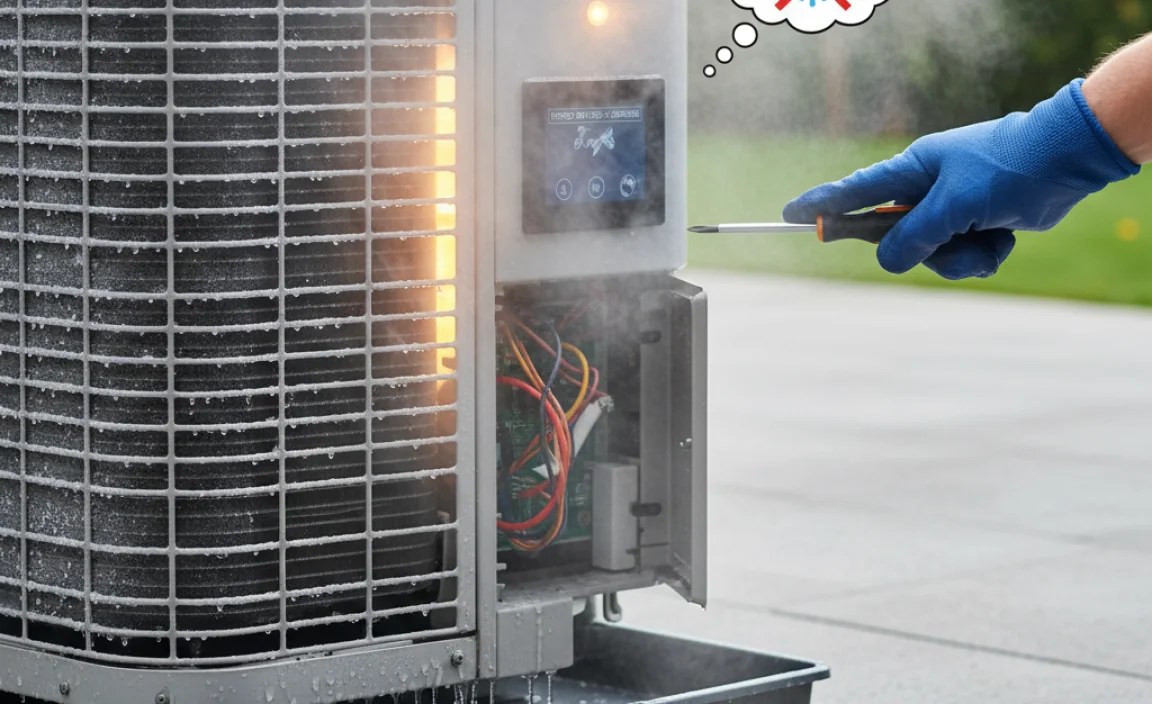
While the defrost cycle is a normal part of heat pump operation, sometimes things can go wrong. Here are some common issues and how to address them:
Problem 1: Excessive Ice Buildup
Symptoms: Thick ice buildup on the outdoor coil that doesn’t melt during the defrost cycle.
Possible Causes:
- Refrigerant Leak: Low refrigerant levels can reduce the heat pump’s ability to transfer heat, leading to excessive ice buildup.
- Faulty Defrost Sensor: A malfunctioning sensor might not detect the ice properly, preventing the defrost cycle from initiating.
- Stuck Reversing Valve: If the reversing valve is stuck, the heat pump might not be able to switch to defrost mode.
Solutions:
- Call a Professional: Contact a qualified HVAC technician to diagnose and repair refrigerant leaks or faulty components.
Problem 2: Frequent or Continuous Defrosting
Symptoms: The heat pump goes into defrost mode very frequently or stays in defrost mode for an extended period.
Possible Causes:
- Faulty Defrost Timer: A malfunctioning timer might trigger the defrost cycle too often.
- Airflow Issues: Restricted airflow around the outdoor unit can cause the coil to ice up more quickly.
- Sensor Problems: Defective sensors can provide inaccurate readings, leading to unnecessary defrost cycles.
Solutions:
- Check Airflow: Ensure that the outdoor unit is free of obstructions like snow, leaves, or debris.
- Call a Professional: Have an HVAC technician inspect the defrost timer and sensors.
Problem 3: No Defrost Cycle
Symptoms: Ice buildup on the outdoor coil that never melts, even in cold weather.
Possible Causes:
- Faulty Defrost Control Board: The control board might not be sending the signal to initiate the defrost cycle.
- Defective Reversing Valve: A broken reversing valve can prevent the heat pump from switching to defrost mode.
- Wiring Issues: Loose or damaged wiring can disrupt the defrost cycle.
Solutions:
- Call a Professional: Contact an HVAC technician to diagnose and repair the control board, reversing valve, or wiring.
Tips for Maintaining Your Heat Pump
Regular maintenance can help prevent defrost cycle issues and keep your heat pump running efficiently. Here are some tips:
- Keep the Outdoor Unit Clear: Remove any snow, leaves, or debris that could obstruct airflow around the outdoor unit.
- Clean the Coils: Periodically clean the outdoor coil with a garden hose to remove dirt and grime. Be gentle to avoid damaging the fins.
- Change Air Filters: Replace your indoor air filters regularly (every 1-3 months) to ensure proper airflow and prevent strain on the system.
- Schedule Professional Maintenance: Have a qualified HVAC technician inspect and service your heat pump annually.
Heat Pump Efficiency and the Defrost Cycle
The defrost cycle can impact your heat pump’s overall efficiency. While it’s a necessary process, it does consume energy and can temporarily reduce heating output. Here’s how to minimize the impact:
- Proper Installation: Ensure that your heat pump is properly sized and installed for your home.
- Regular Maintenance: Keep your heat pump well-maintained to prevent issues that could lead to more frequent or longer defrost cycles.
- Smart Thermostat: Consider using a smart thermostat that can optimize your heat pump’s operation and minimize defrost cycles.
Table: Common Heat Pump Defrost Problems and Solutions
| Problem | Possible Cause | Solution |
|---|---|---|
| Excessive Ice Buildup | Refrigerant Leak, Faulty Defrost Sensor, Stuck Reversing Valve | Call a Professional HVAC Technician |
| Frequent Defrosting | Faulty Defrost Timer, Airflow Issues, Sensor Problems | Check Airflow, Call a Professional HVAC Technician |
| No Defrost Cycle | Faulty Defrost Control Board, Defective Reversing Valve, Wiring Issues | Call a Professional HVAC Technician |
Table: Comparing Defrost Methods in Heat Pumps
| Defrost Method | Description | Pros | Cons |
|---|---|---|---|
| Time/Temperature | Defrost cycle initiated based on time and coil temperature. | Simple, inexpensive. | Can be inefficient if defrosting isn’t needed. |
| Demand Defrost | Defrost cycle initiated only when ice buildup is detected by sensors. | More efficient, reduces unnecessary defrosting. | More complex, potentially higher initial cost. |
External Resources
For more in-depth information on heat pumps and their defrost cycles, check out these resources:
- U.S. Department of Energy – Heat Pump Systems
- Air-Conditioning, Heating, and Refrigeration Institute (AHRI)
FAQ: Understanding Heat Pump Defrost Cycles
Here are some frequently asked questions about heat pump defrost cycles:
Why does my heat pump blow cold air during the winter?
This is likely due to the defrost cycle. The heat pump temporarily switches to cooling mode to melt ice on the outdoor coil, which can result in a brief period of cool air indoors.
How long does a defrost cycle last?
A typical defrost cycle lasts between 5 and 15 minutes.
Is it normal to see steam coming from my heat pump in the winter?
Yes, this is normal. The steam is produced when the ice on the outdoor coil melts during the defrost cycle.
Can I manually defrost my heat pump?
While you can try to clear snow or debris from around the unit, it’s not recommended to manually defrost the coil. Doing so could damage the unit. Let the automatic defrost cycle do its job.
How can I improve my heat pump’s efficiency in cold weather?
Ensure the outdoor unit is clear of obstructions, change your air filters regularly, and schedule annual maintenance with a qualified HVAC technician.
What should I do if my heat pump is constantly defrosting?
If your heat pump is defrosting too frequently, there may be an underlying issue. Contact a qualified HVAC technician to diagnose and repair the problem.
Will the auxillary heat come on during defrost mode?
Yes, during the defrost cycle, your heat pump might activate the auxiliary heat (electric resistance heat) to compensate for the temporary cooling and maintain a comfortable indoor temperature. This is normal operation.
Conclusion
Understanding how the heat pump defrost cycle works can alleviate concerns and help you maintain a comfortable home environment. Remember, the defrost cycle is a normal and necessary function that ensures your heat pump operates efficiently in cold weather. By keeping the outdoor unit clear, changing your filters regularly, and scheduling professional maintenance, you can minimize defrost cycle issues and enjoy reliable heating performance. If you suspect any problems, don’t hesitate to contact a qualified HVAC technician for assistance. Stay warm!


