
Air Pump for Harley Shocks: Ride Smoother Now!

Quick Summary:
To adjust your Harley Davidson shock absorbers, you’ll need a hand-operated air pump specifically designed for this purpose. Connect the pump to the Schrader valve on your shocks, typically found near the swingarm or frame. Add or release air in small increments, consulting your motorcycle’s manual for the recommended pressure range. Regularly check the pressure with an accurate gauge to ensure optimal ride comfort and handling.
Ever feel like your Harley is bouncing all over the road, or maybe it’s so stiff you feel every pebble? It’s likely your shocks need a little air adjustment. Harley Davidson shocks use air pressure to fine-tune your ride, but getting it just right can be tricky. Don’t worry! It’s easier than you think.
This guide breaks down the process step-by-step. We’ll cover everything from choosing the right pump to finding the sweet spot for your air pressure. Soon, you’ll be cruising in comfort, feeling confident and in control.
What You’ll Need

Before you start, gather these essential tools:
- Harley Davidson Shock Pump: A high-pressure, low-volume hand pump designed for motorcycle air shocks.
- Rag or Cloth: For cleaning the area around the Schrader valve.
- Motorcycle Owner’s Manual: This is crucial for finding the recommended air pressure range for your specific model.
- Optional: Tire pressure gauge (if your pump doesn’t have one or you want a separate reading).
Choosing the Right Air Pump for Your Harley Shocks

Not all air pumps are created equal. Using the wrong one can damage your shocks or give you inaccurate readings. Here’s what to look for:
- High-Pressure, Low-Volume: Harley shocks need small amounts of air at high pressure. Standard tire pumps deliver too much volume, making fine-tuning impossible.
- Integrated Gauge: A built-in gauge lets you monitor the pressure as you pump. Digital gauges are generally more accurate than analog ones.
- No-Loss Connector: This type of connector minimizes air loss when you disconnect the pump, ensuring precise adjustments.
- Durable Construction: Look for a pump made from quality materials that can withstand regular use.
Recommended Pumps
Here are a few popular and reliable options:
- Progressive Suspension Air Pump: A well-regarded pump known for its accuracy and durability.
- Accu-Gage Motorcycle Air Shock Pump: Offers precise pressure readings and a comfortable grip.
- Drag Specialties Air Shock Pump: A cost-effective option that still provides reliable performance.
Pro Tip: Read reviews and compare features before making a purchase. Consider factors like gauge accuracy, ease of use, and overall build quality.
Step-by-Step Guide to Adjusting Your Harley Shocks

Follow these steps to safely and effectively adjust the air pressure in your Harley Davidson shocks:
Step 1: Prepare Your Motorcycle
- Park on a Level Surface: This ensures accurate pressure readings and prevents accidental tipping.
- Locate the Schrader Valve: This is the valve where you’ll connect the air pump. It’s usually found near the swingarm or frame, close to the shocks. Refer to your owner’s manual if you’re unsure.
- Clean the Area: Use a rag to wipe away any dirt or debris around the Schrader valve. This prevents contaminants from entering the shock.
Step 2: Connect the Air Pump
- Attach the Pump Head: Carefully screw the pump head onto the Schrader valve. Make sure it’s snug but not overtightened.
- Check the Connection: Ensure there are no air leaks. If you hear hissing, tighten the connection or reposition the pump head.
Step 3: Add or Release Air
- Consult Your Owner’s Manual: Find the recommended air pressure range for your specific motorcycle model and riding conditions. This is crucial for optimal performance and safety.
- Add Air in Small Increments: Pump a few strokes at a time, then check the pressure gauge. Avoid overfilling, as this can damage the shocks.
- Release Air if Necessary: If the pressure is too high, gently depress the release valve on the pump. Again, make small adjustments and check the gauge frequently.
Step 4: Fine-Tune and Test Ride
- Adjust for Rider Weight and Load: The recommended air pressure is usually for a rider of average weight. If you’re heavier or carrying a passenger, you may need to add more air.
- Test Ride: After making adjustments, take your bike for a short ride. Pay attention to how it feels over bumps and during turns.
- Repeat as Needed: Continue making small adjustments until you achieve the desired ride comfort and handling.
Understanding Air Pressure and Its Impact

The air pressure in your Harley shocks directly affects ride quality and handling. Here’s a quick overview:
- Too Little Air: The ride will feel soft and mushy, and the bike may bottom out over bumps. Handling can also be compromised, especially during cornering.
- Too Much Air: The ride will be harsh and uncomfortable, and you’ll feel every imperfection in the road. This can also reduce traction and make the bike harder to control.
- Correct Air Pressure: The ride will be smooth and controlled, and the bike will handle predictably in all conditions.
Important Note: Always stay within the air pressure range specified in your owner’s manual. Exceeding the maximum pressure can damage the shocks and create a safety hazard.
Air Pressure Chart Example
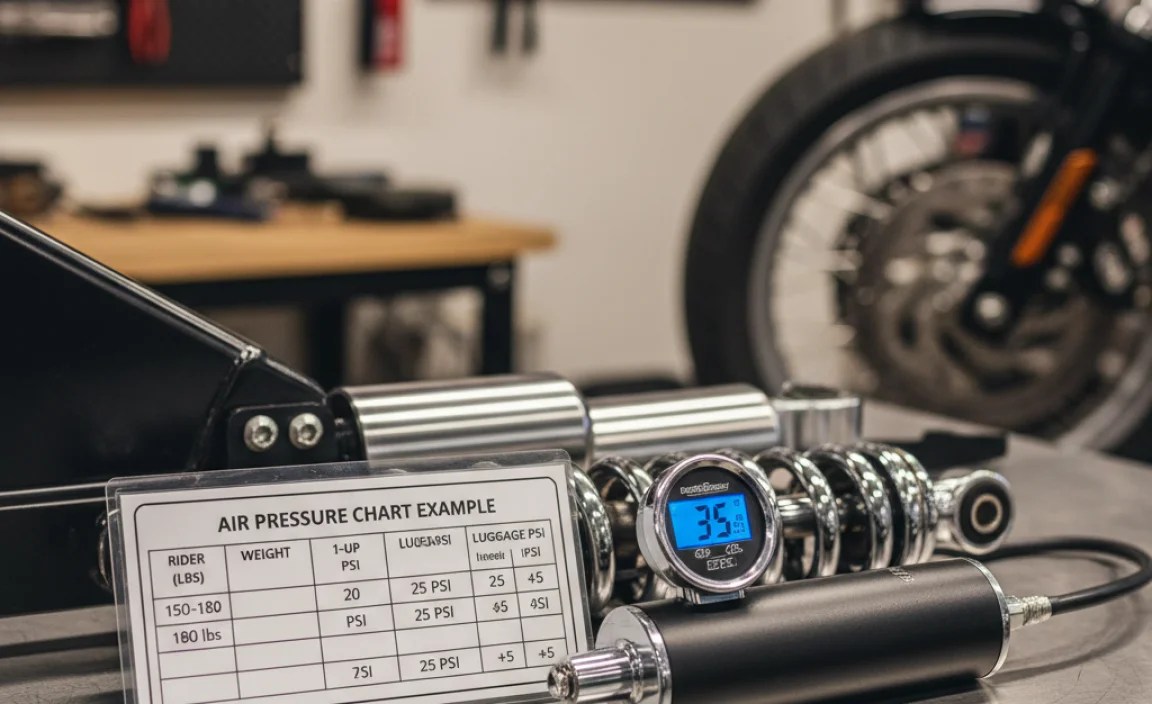
Disclaimer: Always refer to your motorcycle’s manual for accurate information. This is just an example.
| Motorcycle Model | Rider Weight (lbs) | Recommended Air Pressure (PSI) |
|---|---|---|
| Sportster 1200 | 150-180 | 15-20 |
| Sportster 1200 | 180-220 | 20-25 |
| Sportster 1200 | 220+ | 25-30 |
| Dyna Super Glide | 150-180 | 20-25 |
| Dyna Super Glide | 180-220 | 25-30 |
| Dyna Super Glide | 220+ | 30-35 |
Troubleshooting Common Issues
Even with the right tools and instructions, you might encounter some problems. Here’s how to troubleshoot them:
- Air Leaks: If you hear hissing or the pressure drops quickly, check the connection between the pump and the Schrader valve. Make sure the valve core is tight and in good condition. If the leak persists, you may need to replace the valve core.
- Inaccurate Gauge Readings: If you suspect your pump’s gauge is inaccurate, compare it to a separate, reliable tire pressure gauge. If there’s a significant difference, replace the pump.
- Difficulty Connecting the Pump: If you’re having trouble attaching the pump head to the Schrader valve, make sure the valve is clean and free of debris. You may also need to try a different pump head with a better seal.
Maintaining Your Air Pump
To keep your air pump in good working condition, follow these maintenance tips:
- Clean the Pump Regularly: Wipe down the pump body and hose with a clean cloth to remove dirt and grime.
- Lubricate the Piston: Apply a small amount of silicone lubricant to the pump piston periodically to keep it moving smoothly.
- Store the Pump Properly: Store the pump in a clean, dry place to protect it from the elements.
- Check the Hose for Cracks: Inspect the hose regularly for cracks or damage. Replace it if necessary.
Safety Precautions
Always prioritize safety when working on your motorcycle. Keep these precautions in mind:
- Wear Eye Protection: Protect your eyes from flying debris by wearing safety glasses or goggles.
- Work in a Well-Ventilated Area: Avoid working in enclosed spaces where fumes can accumulate.
- Disconnect the Battery: Disconnect the negative battery cable before working on any electrical components.
- Consult a Professional: If you’re not comfortable performing any of these steps, take your bike to a qualified mechanic.
Air Pump Comparison
This table offers a general comparison of air pump types suitable for Harley Davidson shocks.
| Pump Type | Pros | Cons | Typical Use Case |
|---|---|---|---|
| Hand-Operated Shock Pump |
|
|
|
| Digital Shock Pump |
|
|
|
FAQ About Air Pump for Harley Davidson Shocks
Here are some frequently asked questions about adjusting air pressure in Harley Davidson shocks:
1. Can I use a regular tire pump for my Harley shocks?
No, you shouldn’t. Regular tire pumps deliver too much air volume, making it difficult to make small, precise adjustments to your shocks. Use a high-pressure, low-volume pump specifically designed for motorcycle air shocks.
2. How do I know what air pressure to put in my shocks?
Refer to your motorcycle’s owner’s manual for the recommended air pressure range. This range depends on your specific model and riding conditions. Consider your weight and any additional load (passenger, luggage) when making adjustments.
3. What happens if I put too much air in my shocks?
Overinflating your shocks can create a harsh, uncomfortable ride. It can also reduce traction and make the bike harder to control. In extreme cases, it can damage the shocks.
4. How often should I check the air pressure in my shocks?
Check the air pressure before each ride, especially if you’re planning a long trip or carrying a passenger. Air pressure can fluctuate with temperature changes, so it’s good to monitor it regularly.
5. What is a Schrader valve?
A Schrader valve is a type of valve used on many pneumatic tires and vehicle suspension systems. On Harley Davidson shocks, it’s the small valve where you connect your air pump to add or release air.
6. My air pump doesn’t have a gauge. Can I still use it?
It’s not recommended. A gauge is essential for monitoring the air pressure and making precise adjustments. Without a gauge, you risk overinflating or underinflating the shocks, which can affect ride quality and safety.
7. Can I adjust my shocks while the bike is running?
No, never adjust your shocks while the bike is running. Turn off the engine and ensure the bike is parked on a level surface before making any adjustments.
Conclusion
Adjusting your Harley Davidson shocks is a simple yet crucial task for maintaining optimal ride comfort and handling. By using the right air pump, following the steps outlined in this guide, and consulting your owner’s manual, you can fine-tune your suspension to suit your individual needs and riding conditions. Remember to always prioritize safety and make small, incremental adjustments. With a little practice, you’ll be able to dial in your shocks and enjoy a smoother, more controlled ride on your Harley.


