
Easy Guide to Inflating Different Valve Types

Inflating your bike tires properly is key for a smooth and safe ride. This guide simplifies the process for Schrader, Presta, and Dunlop valves. You’ll learn to identify each type, grab the right pump, and inflate your tires to the correct pressure. No more flat tires ruining your day!
Ever struggled to pump up your bike tires? You’re not alone! Many cyclists find the different valve types confusing. It can be frustrating to figure out which pump to use and how to get the right pressure. But don’t worry, inflating your tires is easier than you think.
This guide will walk you through each valve type step-by-step. You’ll learn how to identify Schrader, Presta, and Dunlop valves. I’ll show you the right tools and techniques to inflate them quickly and correctly. Get ready to say goodbye to flat tires and hello to smooth rides!
Understanding Bike Valve Types

Before you start pumping, you need to know which type of valve your bike has. The three main types are Schrader, Presta, and Dunlop. Each one looks different and needs a slightly different approach.
Schrader Valves
Schrader valves are the most common type, especially on mountain bikes, hybrid bikes, and kids’ bikes. They’re the same type you find on car tires, so they are easy to recognize.
Characteristics of Schrader Valves:
- Short, sturdy, and surrounded by a threaded metal casing.
- Feature a spring-loaded pin in the center.
- Compatible with most gas station air compressors.
Presta Valves
Presta valves are usually found on road bikes and high-performance bikes. They are narrower and longer than Schrader valves.
Characteristics of Presta Valves:
- Slim and elegant design.
- Have a lock ring at the top that you need to unscrew before inflating.
- Require a pump with a Presta-compatible head.
Dunlop Valves
Dunlop valves, also known as Woods valves, are common in some European countries and older bikes. They are less common in the US.
Characteristics of Dunlop Valves:
- Similar in width to Schrader valves but with a Presta-like inner mechanism.
- Often have a rubber tube inside that can be replaced.
- Can be inflated with a standard pump, but sometimes require a special adapter.
Tools You’ll Need
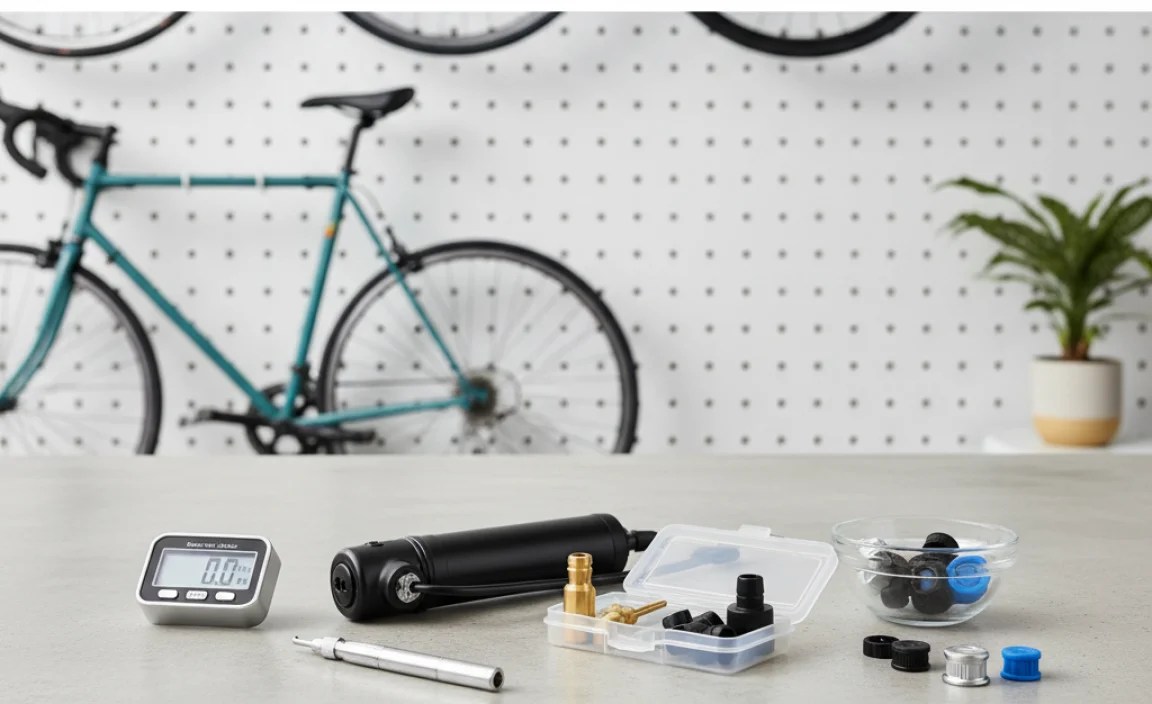
Having the right tools makes inflating your tires much easier. Here’s a list of essential items:
- Bike Pump: Choose a pump that matches your valve type. Some pumps have dual heads for both Schrader and Presta valves.
- Floor Pump: A floor pump is great for home use. It provides more leverage and usually has a built-in pressure gauge.
- Hand Pump: A hand pump is perfect for taking on rides. It’s small and lightweight but requires more effort to use.
- pressure Gauge: A pressure gauge ensures you inflate your tires to the correct PSI (pounds per square inch) or BAR (metric unit of pressure).
- Valve Adapter: If needed, a valve adapter can help you inflate different valve types with the same pump.
Step-by-Step Guide to Inflating Different Valve Types

Now, let’s get into the specific steps for each valve type.
Inflating Schrader Valves
- Remove the Valve Cap: Unscrew the plastic or metal cap from the valve.
- Attach the Pump: Press the pump head firmly onto the valve. Make sure it’s straight to avoid air leaks.
- Engage the Lever: If your pump has a lever, flip it to lock the pump head onto the valve.
- Inflate the Tire: Pump until you reach the recommended pressure. Check the pressure gauge on the pump or use a separate gauge.
- Remove the Pump: Flip the lever (if applicable) and carefully remove the pump head.
- Replace the Valve Cap: Screw the valve cap back on to protect the valve from dirt and debris.
Inflating Presta Valves
- Unscrew the Valve Nut: Unscrew the small nut at the top of the valve by turning it counterclockwise.
- Tap the Valve: Gently tap the valve to release any trapped air.
- Attach the Pump: Press the pump head onto the valve. Make sure it’s securely attached.
- Engage the Lever: Flip the lever to lock the pump head onto the valve.
- Inflate the Tire: Pump until you reach the recommended pressure. Keep an eye on the pressure gauge.
- Remove the Pump: Flip the lever and carefully remove the pump head.
- Tighten the Valve Nut: Screw the valve nut back on until it’s snug.
- Replace the Valve Cap: Screw the valve cap back on.
Inflating Dunlop Valves
- Remove the Valve Cap: Unscrew the valve cap.
- Loosen the Valve Nut: Slightly loosen the nut at the top of the valve. Be careful not to remove it completely.
- Attach the Pump: Press the pump head onto the valve. Ensure it’s a snug fit.
- Inflate the Tire: Pump until you reach the desired pressure. Since Dunlop valves often lack a pressure gauge, you may need to estimate or use a separate gauge.
- Tighten the Valve Nut: Tighten the nut to prevent air leaks.
- Replace the Valve Cap: Screw the valve cap back on.
Troubleshooting Common Issues
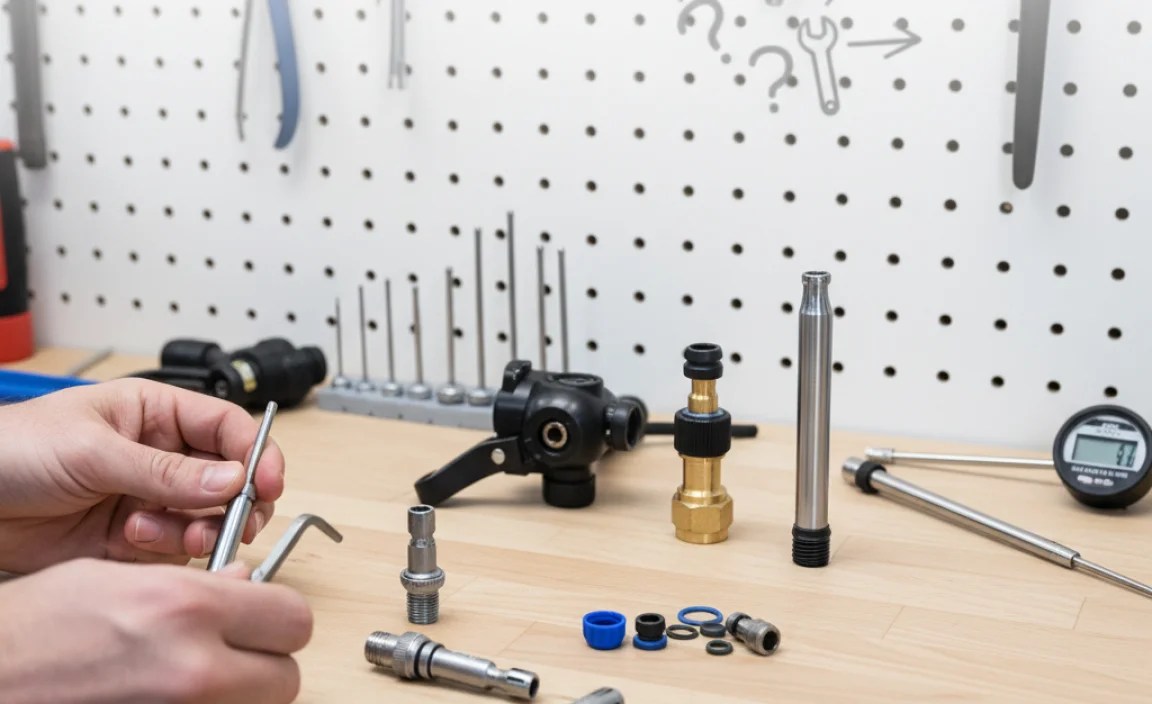
Sometimes, you might run into problems while inflating your tires. Here are some common issues and how to fix them.
Air Leaking
Problem: Air leaks around the valve while pumping.
Solution:
- Make sure the pump head is securely attached.
- Check the rubber seal inside the pump head. Replace it if it’s worn out.
- For Presta valves, ensure the valve nut is tightened properly.
Pump Not Attaching
Problem: The pump head won’t fit onto the valve.
Solution:
- Ensure you’re using the correct pump head for the valve type.
- Try a different pump or an adapter.
- Make sure the valve isn’t bent or damaged.
Tire Not Inflating
Problem: The tire isn’t holding air, even while pumping.
Solution:
- Check for punctures in the tire or tube.
- Make sure the valve core is tight.
- Replace the tube if necessary.
Understanding Tire Pressure

Inflating your tires to the correct pressure is crucial for performance, comfort, and safety. The recommended pressure is usually printed on the sidewall of the tire.
Reading Tire Pressure
Tire pressure is usually measured in PSI (pounds per square inch) or BAR (a metric unit). The recommended range is often printed as a minimum and maximum value, such as “50-80 PSI.”
Factors Affecting Tire Pressure
- Rider Weight: Heavier riders may need to inflate their tires to a higher pressure.
- Tire Width: Wider tires can be run at lower pressures for better comfort and traction.
- Terrain: Riding on rough terrain may require lower pressures to absorb bumps.
- Weather: In wet conditions, slightly lower pressures can improve grip.
Optimal Tire Pressure Chart
| Rider Weight (lbs) | Tire Width (mm) | Recommended Pressure (PSI) |
|---|---|---|
| 120-150 | 23-25 | 90-100 |
| 150-180 | 25-28 | 80-90 |
| 180-220 | 28-32 | 70-80 |
| 220+ | 32+ | 60-70 |
Note: Always check the manufacturer’s recommended pressure range on your tire sidewall. This chart is a general guideline.
Choosing the Right Pump
Selecting the right pump can make a big difference in your experience. Here’s what to consider:
Floor Pumps
Floor pumps are ideal for home use. They offer high volume and pressure, making it easy to inflate tires quickly. Look for a pump with a built-in pressure gauge for accuracy.
Hand Pumps
Hand pumps are portable and great for emergencies on the road or trail. They require more effort than floor pumps but are essential for any cyclist.
CO2 Inflators
CO2 inflators use cartridges of compressed carbon dioxide to quickly inflate tires. They are lightweight and fast but require you to carry cartridges and a regulator.
Pump Features to Consider
- Dual Head: A pump head that works with both Schrader and Presta valves.
- Pressure Gauge: A built-in gauge for accurate inflation.
- Ergonomic Handle: A comfortable handle for easy pumping.
- Durable Construction: A pump made from high-quality materials for long-lasting use.
Maintaining Your Valves
Proper valve maintenance can prevent leaks and extend the life of your tires.
Cleaning Valves
Regularly clean your valves with a damp cloth to remove dirt and debris. This helps ensure a good seal with the pump head.
Checking Valve Cores
Periodically check the valve cores for tightness. Loose valve cores can cause air leaks. Use a valve core tool to tighten them if needed.
Replacing Valve Cores
If a valve core is damaged or leaking, replace it. Valve cores are inexpensive and easy to replace with the right tool. You can purchase valve core replacement kits at most bike shops or online retailers like Amazon (Amazon.com).
Tips for Easier Inflation
Here are some extra tips to make inflating your tires even easier:
- Lube the Valve: Apply a small amount of silicone-based lubricant to the valve stem to help the pump head slide on and off smoothly.
- Use Two Hands: When using a hand pump, use both hands for better leverage and control.
- Take Breaks: If you’re struggling to reach the desired pressure, take short breaks to avoid overheating the pump.
- Practice: Practice inflating your tires at home before you need to do it on the road.
FAQ
What is the difference between Schrader and Presta valves?
Schrader valves are wider and shorter, like those on car tires. Presta valves are narrower and longer, often found on road bikes. Presta valves also have a lock ring at the tip that needs to be unscrewed before inflation.
Can I use a car pump to inflate my bike tires?
Yes, you can use a car pump on Schrader valves because they are the same type. However, you’ll need an adapter to use a car pump on Presta valves.
How do I know what PSI to inflate my tires to?
The recommended PSI range is printed on the sidewall of your tire. It’s usually a range, like “50-80 PSI.” Consider your weight, riding style, and terrain to determine the best pressure within that range.
What if my pump doesn’t fit my valve?
Make sure you are using the correct pump head for your valve type. Some pumps have dual heads that can switch between Schrader and Presta. If not, you may need a valve adapter.
Why is my tire losing air quickly?
Check for punctures in the tire or tube. Also, make sure the valve core is tight and the valve isn’t damaged. If the tire continues to lose air, you may need to replace the tube.
How often should I check my tire pressure?
It’s a good idea to check your tire pressure before every ride, especially if you haven’t ridden in a few days. Tires can lose air over time, so regular checks ensure optimal performance and safety.
What is a Dunlop valve?
A Dunlop valve, also known as a Woods valve, is commonly found on older bikes and in some European countries. It is similar in width to a Schrader valve but has an inner mechanism more like a Presta valve. They can often be inflated with a standard pump, though adaptors might be needed.
Conclusion
Inflating your bike tires might seem tricky at first, but with a little practice, it becomes second nature. Knowing the difference between Schrader, Presta, and Dunlop valves is the first step. With the right tools and techniques, you can keep your tires properly inflated for a smooth, safe and enjoyable ride.
Remember to check your tire pressure regularly and maintain your valves to prevent problems. Whether you’re a casual rider or a serious cyclist, mastering this skill will keep you rolling smoothly. Happy riding!


