
How to Choose Shock Pump Pressure Range for Heavy Riders: Smart Guide

Do you love riding your bike? Do you ever feel like your bike’s suspension is too soft? This can be a big problem for heavy riders. You might wonder how to choose shock pump pressure range for heavy riders. Getting it right helps you enjoy your ride more. Let’s learn how to make your bike feel just right.
Have you ever seen a bouncy car? That’s what happens when your bike’s suspension isn’t set up for you. It’s important to get the right pressure. This keeps you safe and comfortable. We’ll show you easy steps to find the perfect pressure. Get ready to ride like a pro!
Key Takeaways
- Finding the correct shock pump pressure improves bike handling and control.
- Start with the manufacturer’s pressure recommendations for your bike and weight.
- Use a quality shock pump with a precise gauge for accurate pressure readings.
- Adjust pressure in small increments and test the suspension after each change.
- Understanding how to choose shock pump pressure range for heavy riders is crucial for performance.
Understanding Shock Pump Pressure for Riders

Understanding how to choose shock pump pressure range for heavy riders starts with knowing what a shock pump does. A shock pump is a special air pump. It is made for bike suspensions. These pumps have gauges. Gauges help you see how much air you’re putting in. This is important because too much or too little air can make your ride bad. Heavy riders need to pay close attention. If you’re heavier, you need more air. This helps the suspension work right. The right pressure keeps your bike from bottoming out. Bottoming out is when the suspension hits the end of its travel. This can be uncomfortable and even dangerous. So, knowing how to use a shock pump is key for a good ride. Always check your bike’s manual for the best starting point.
- A shock pump adds air to your bike’s suspension.
- Gauges show the exact air pressure.
- Heavy riders need higher pressure.
- Proper pressure prevents bottoming out.
- Always check your bike’s manual.
Setting your shock pump pressure is like tuning an instrument. Imagine a guitar string. Too loose, it sounds floppy. Too tight, it might break. Bike suspension is the same. The right pressure makes your ride smooth. Too little, and you’ll feel every bump. Too much, and it’s like riding a stiff board. Heavy riders often need to add more air than lighter riders. This is because they put more force on the suspension. Adjusting the pressure in small amounts is best. After each adjustment, take a short ride. See how it feels. A little change can make a big difference. The goal is to find that sweet spot where your bike feels balanced and controlled.
Fun Fact or Stat: Shock pumps can measure pressure up to 300 PSI (pounds per square inch)!
Why Weight Matters for Air Pressure
Why does weight matter? Think of it like this: You are sitting on a chair. If you are light, the chair doesn’t sink much. If you are heavy, it sinks more. Your bike’s suspension is like that chair. Your weight pushes down on it. If you are a heavy rider, you push down harder. This means you need more air in the suspension. The air helps hold you up. It keeps the suspension from sinking too much. If you don’t have enough air, the suspension will bottom out. This is not comfortable. It can also damage your bike. That’s why how to choose shock pump pressure range for heavy riders involves knowing your weight.
Finding the Right Starting Point
Finding the right starting point for air pressure is like following a recipe. The recipe tells you how much of each ingredient to use. For your bike, the manufacturer’s guide is your recipe. It tells you how much air to start with. This is usually based on your weight. Look up your bike model online. Find the guide on the company’s website. The guide will give you a range of pressures. Start in the middle of the range. Then, you can adjust up or down from there. Remember, this is just a starting point. You might need to add or remove air to get it just right. But the guide is a good place to begin.
Testing and Adjusting Your Pressure
Testing and adjusting pressure is like trying on clothes. You might need to try on a few sizes to find the perfect fit. With your bike, you need to test the suspension. After you set the pressure, go for a short ride. Find a bumpy road or trail. Pay attention to how the bike feels. Does it feel too soft? Does it bottom out easily? If so, add a little air. Does it feel too stiff? Do you feel every bump? If so, let out a little air. Make small adjustments each time. Test the bike again after each adjustment. Keep doing this until it feels just right. This process might take a few tries. But it’s worth it to get the perfect ride.
Using a Shock Pump Correctly
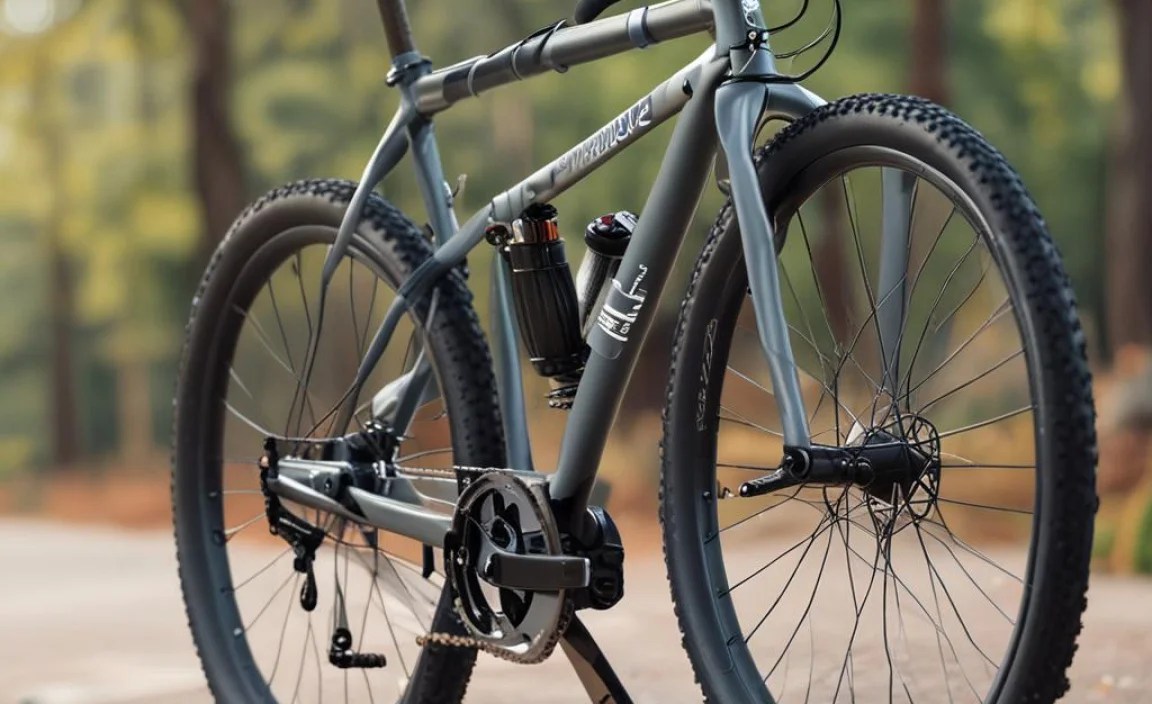
Using a shock pump correctly is very important. If you don’t use it right, you might not get the right pressure. First, make sure the pump is clean. Dirt can damage the valve on your bike. Next, screw the pump onto the valve. Make sure it’s on tight. If it’s loose, air will leak out. Now, start pumping. Watch the gauge. Pump until you reach the pressure you want. When you’re done, unscrew the pump carefully. Some air might escape when you unscrew it. That’s normal. Don’t worry about it. Always double-check the pressure after you remove the pump. Using a shock pump right helps you get the best performance from your bike. It also keeps your suspension in good shape. For heavy riders, accuracy is key to ensure safety and comfort.
- Clean the shock pump before use.
- Screw the pump onto the valve tightly.
- Watch the gauge while pumping.
- Unscrew the pump carefully.
- Double-check the pressure after removing the pump.
Think of using a shock pump like inflating a balloon. If you do it too fast, the balloon might pop. If you do it too slow, it takes forever. With a shock pump, you want to be steady. Pump in a smooth, even motion. Watch the gauge rise. Avoid quick, jerky pumps. These can make the gauge jump around. They can also make it hard to get an accurate reading. When you unscrew the pump, do it gently. Don’t yank it off. This can damage the valve. A little air will escape, but that’s okay. The key is to be careful and patient. This will help you get the right pressure every time. It will also keep your pump and your bike in good condition.
Fun Fact or Stat: Some professional riders check their shock pressure before every ride!
Attaching the Pump Securely
Attaching the pump securely is like putting on your seatbelt. If it’s not on tight, it won’t protect you. The same goes for the shock pump. Make sure it’s screwed on all the way. If it’s loose, air will leak out. This can give you a false reading. You might think you have enough air, but you don’t. This can make your suspension not work right. Before you start pumping, wiggle the pump a little. If it moves, tighten it more. You should feel a good seal. No air should be escaping. A secure connection is key to getting an accurate pressure reading.
Reading the Pressure Gauge Accurately
Reading the pressure gauge accurately is like reading a clock. You need to look closely to see the right time. The gauge on a shock pump has numbers. These numbers tell you the air pressure. Look straight at the gauge. Don’t look at it from an angle. This can make it hard to see the right number. The needle on the gauge points to the pressure. Make sure you know what units the gauge uses. It might be PSI or BAR. PSI is more common in the United States. BAR is used in other countries. Knowing the units helps you set the right pressure.
Avoiding Air Leaks During Inflation
Avoiding air leaks during inflation is like plugging a hole in a tire. You need to stop the air from getting out. With a shock pump, leaks can happen where the pump connects to the valve. Make sure the connection is tight. If you hear air hissing, tighten it more. Sometimes, the valve on your bike can leak. If this happens, you might need to replace the valve. Another trick is to pump quickly and smoothly. This helps get the air in before it has a chance to leak out. Check the pressure right after you pump. This will tell you if any air leaked out.
Finding the Right Sag for Heavy Riders

Finding the right sag is super important for heavy riders. Sag is how much your suspension compresses when you sit on the bike. It’s like when you sit on a couch, and it sinks a little. The right sag helps your bike handle better. It also makes your ride more comfortable. Heavy riders often need to adjust their sag more than lighter riders. This is because they put more weight on the bike. To measure sag, you need a friend. Have your friend hold the bike while you sit on it. Then, measure how much the suspension has compressed. Compare this to the total travel of the suspension. The right sag is usually about 20-30% of the total travel. Adjust the air pressure until you get the right sag.
- Sag is how much your suspension compresses.
- It affects handling and comfort.
- Heavy riders need to pay close attention to sag.
- Measure sag with a friend’s help.
- Adjust air pressure to get the right sag percentage.
Think of sag as the foundation of your bike’s setup. If the foundation is off, everything else will be too. Too little sag, and your bike will feel harsh and unforgiving. It will bounce off bumps instead of absorbing them. Too much sag, and your bike will feel mushy and unstable. It will wallow in corners and bottom out easily. The right sag gives you a balanced feel. It allows the suspension to soak up bumps while still providing support. This is especially important for heavy riders. They need that extra support to prevent bottoming out. Adjusting sag is an iterative process. Make small changes and test the bike. Over time, you’ll find the perfect sag for your weight and riding style.
Fun Fact or Stat: Some professional mechanics use digital sag meters for ultra-precise measurements!
What is Sag and Why is it Important?
What is sag? Imagine you’re sitting on a swing. The swing dips down a little when you sit on it. That dip is like sag on your bike. Sag is how much your suspension compresses when you’re just sitting there. It’s important because it sets the starting point for your suspension. If you have too much sag, your suspension will use up too much travel just holding you up. This means it won’t have as much travel left to absorb bumps. If you don’t have enough sag, your suspension will be too stiff. It won’t absorb small bumps well. The right amount of sag makes your bike feel balanced and responsive.
How to Measure Sag Accurately
How to measure sag accurately? You need a friend, a tape measure, and a way to mark the suspension. First, put a zip tie around the stanchion (the shiny part that slides in and out). Push the zip tie all the way down to the seal. Then, get on your bike in your normal riding position. Have your friend hold the bike steady. Now, get off the bike carefully. Measure the distance between the zip tie and the seal. This is your sag measurement. Compare this measurement to the total travel of your suspension. Divide the sag measurement by the total travel to get the sag percentage.
Adjusting Air Pressure to Achieve Correct Sag
Adjusting air pressure is the key to achieving correct sag. If you have too much sag, you need to add air. This will make the suspension stiffer. If you don’t have enough sag, you need to let out air. This will make the suspension softer. Make small adjustments each time. After each adjustment, measure the sag again. Keep adjusting until you get the sag percentage you want. Remember, the right sag percentage depends on your bike and your riding style. Check your bike’s manual for recommendations. You can also ask other riders what works for them.
Considering Bike Type and Riding Style

Considering bike type and riding style is important. Different bikes need different suspension setups. A mountain bike needs more travel than a road bike. This is because mountain bikes ride on rougher terrain. A downhill bike needs even more travel. This is because downhill courses are very steep and bumpy. Your riding style also matters. If you ride aggressively, you might want a stiffer suspension. This will give you more support when you’re hitting jumps and drops. If you ride more smoothly, you might want a softer suspension. This will make your ride more comfortable. Heavy riders should think about bike type and riding style. They might need to add more air than lighter riders to get the right feel. Knowing how to choose shock pump pressure range for heavy riders means thinking about these things.
- Mountain bikes need more travel than road bikes.
- Downhill bikes need the most travel.
- Aggressive riders might want stiffer suspension.
- Smooth riders might want softer suspension.
- Heavy riders need to adjust for bike type and style.
Imagine you’re choosing shoes for different activities. You wouldn’t wear sandals to play basketball. You wouldn’t wear hiking boots to go swimming. Bikes are similar. A road bike is like running shoes. It’s designed for speed and efficiency on smooth surfaces. A mountain bike is like hiking boots. It’s designed for rough terrain and challenging conditions. A downhill bike is like ski boots. It’s designed for extreme speeds and big impacts. Your riding style is like your personal preference. Some people like to run fast. Others like to stroll. Some people like to climb mountains. Others like to relax by the lake. Choosing the right suspension setup is like choosing the right gear for your adventure.
Fun Fact or Stat: Some professional mountain bikers have multiple bikes, each set up for a specific type of trail!
Matching Suspension to Bike Category
Matching suspension to bike category is very important. A road bike typically has little to no suspension. This is because roads are usually smooth. A cross-country mountain bike has moderate suspension. This helps absorb bumps on trails. An enduro bike has more suspension. This is for riding steep, technical terrain. A downhill bike has the most suspension. This is for riding the gnarliest downhill courses. Make sure your suspension matches the type of bike you have. Don’t try to put a downhill fork on a road bike. It won’t work well.
Adjusting for Aggressive vs. Mellow Riding
Adjusting for aggressive versus mellow riding makes a big difference. If you ride aggressively, you need more support. This means you might want to add air pressure. This will make your suspension stiffer. If you ride mellow, you might want more comfort. This means you might want to let out air pressure. This will make your suspension softer. Think about how you like to ride. Do you like to jump and drop? Or do you prefer to cruise and explore? Your riding style will help you decide how to set up your suspension.
Considering Terrain: Smooth vs. Rough Trails
Considering terrain is key. Smooth trails don’t need much suspension. You can run higher air pressure. This will make your bike feel fast and efficient. Rough trails need more suspension. You should run lower air pressure. This will help absorb bumps and keep you in control. Think about where you ride most often. Are the trails smooth and flowy? Or are they rocky and rooty? The type of terrain will help you decide how to set up your suspension. If you ride a mix of terrains, you might need to adjust your suspension each time you ride.
Maintaining Your Shock Pump and Suspension

Maintaining your shock pump and suspension is like taking care of your teeth. If you don’t brush them, they’ll get cavities. If you don’t maintain your shock pump and suspension, they’ll break down. Keep your shock pump clean. Dirt can damage the seals. Check the hose for cracks. Replace it if needed. For your suspension, clean it after every ride. Use a soft cloth to wipe off dirt and mud. Check the stanchions for scratches. Scratches can damage the seals. Lube the seals regularly. This will keep them working smoothly. Also, get your suspension serviced regularly. A professional can clean and inspect it. They can also replace worn parts. Taking care of your equipment will help it last longer. It will also keep you safe on the trail.
- Keep your shock pump clean.
- Check the pump hose for cracks.
- Clean your suspension after every ride.
- Lube the seals regularly.
- Get your suspension serviced by a professional.
Think of your shock pump as a precision tool. It’s not just a regular air pump. It’s designed to deliver air at very specific pressures. Treat it with care. Don’t throw it in your toolbox. Keep it in a safe place where it won’t get damaged. When you’re using it, be gentle. Don’t force anything. If something feels wrong, stop and check it. Your suspension is also a complex piece of equipment. It’s designed to absorb impacts and keep you in control. It needs regular care to function properly. Neglecting your suspension can lead to poor performance and even dangerous situations. A little maintenance goes a long way. It will keep your bike riding smoothly for years to come.
Fun Fact or Stat: Some professional teams disassemble and rebuild their suspension after every race!
Cleaning and Storing Your Shock Pump
Cleaning and storing your shock pump is easy. After using it, wipe it down with a clean cloth. This will remove any dirt or grime. Check the hose for cracks. If you see any, replace the hose. Store your shock pump in a dry place. Don’t leave it out in the sun or rain. This can damage the seals and the gauge. A good place to store it is in your toolbox or bike bag. This will keep it protected.
Inspecting Suspension Components Regularly
Inspecting suspension components regularly is very important. Check the stanchions for scratches. Scratches can damage the seals. Check the seals for leaks. If you see any oil leaking, you need to get it fixed. Check the bolts and fasteners. Make sure they are tight. Loose bolts can cause problems. Also, check the air pressure regularly. Make sure it’s where you want it. Regular inspections will help you catch problems early.
Following Manufacturer’s Service Intervals
Following manufacturer’s service intervals is like following the instructions on a medicine bottle. The manufacturer knows best how to take care of their product. They will tell you how often to service your suspension. Follow their recommendations. This will help keep your suspension working properly. It will also prevent costly repairs. If you’re not comfortable servicing your suspension yourself, take it to a professional. They can do it for you.
Troubleshooting Common Suspension Issues
Troubleshooting common suspension issues can save you time and money. One common problem is bottoming out. This happens when your suspension uses all of its travel. It feels like a hard hit. To fix this, add air pressure. Another problem is feeling too stiff. This happens when your suspension doesn’t absorb small bumps. To fix this, let out air pressure. Sometimes, suspension can make noise. This could be a sign of a loose bolt. Check all the bolts and tighten them. If the noise continues, take it to a professional. They can diagnose the problem and fix it. Knowing how to choose shock pump pressure range for heavy riders can help avoid problems.
- Bottoming out means you need more air.
- Feeling too stiff means you need less air.
- Noises can mean loose bolts.
- Check all bolts and tighten them.
- Take it to a professional if problems continue.
Imagine your bike is like a car. If your car makes a weird noise, you want to figure out what’s wrong. You wouldn’t just ignore it. Your bike is the same. If your suspension feels funny or makes a strange noise, pay attention. Don’t just keep riding. Try to figure out what’s going on. Is it too soft? Is it too stiff? Is something loose? The sooner you identify the problem, the easier it will be to fix. Sometimes, the solution is simple. You might just need to add or remove some air. Other times, the problem is more complex. You might need to take it to a mechanic. But by being proactive, you can keep your bike running smoothly.
Fun Fact or Stat: Professional mechanics use special tools to diagnose suspension problems!
Identifying and Addressing Bottoming Out
Identifying and addressing bottoming out is crucial. Bottoming out happens when your suspension uses all its travel. This feels like a harsh thud. It can damage your suspension. To identify bottoming out, look at the zip tie on your stanchion. If the zip tie is pushed all the way to the top, you bottomed out. To address bottoming out, add air pressure. Add a little at a time. Test the bike after each adjustment. Keep adding air until you no longer bottom out.
Resolving Excessive Stiffness or Harshness
Resolving excessive stiffness or harshness is important for comfort. If your suspension feels too stiff, it won’t absorb small bumps. This can make your ride uncomfortable. To resolve this, let out air pressure. Let out a little at a time. Test the bike after each adjustment. Keep letting out air until the suspension feels smooth. You might also need to adjust the rebound damping. This controls how quickly the suspension returns after it compresses.
Dealing with Suspension Noise and Leaks
Dealing with suspension noise and leaks is essential. Suspension noise can be a sign of a problem. Check all the bolts and fasteners. Make sure they are tight. If the noise continues, take it to a professional. Leaks are also a sign of a problem. If you see oil leaking from your suspension, you need to get it fixed. Leaks can damage your suspension. They can also make it not work properly. A professional can replace the seals and get your suspension working like new.
Advanced Suspension Tuning Tips for Experts
Advanced suspension tuning tips are for riders who really want to dial in their bikes. These tips go beyond basic air pressure and sag adjustments. One tip is to experiment with volume spacers. Volume spacers change the way the suspension feels at the end of its travel. Adding volume spacers makes the suspension feel more progressive. This means it gets stiffer as it compresses. Another tip is to adjust the compression damping. Compression damping controls how quickly the suspension compresses. Increasing compression damping makes the suspension feel firmer. Decreasing compression damping makes it feel softer. You can also adjust the rebound damping. Rebound damping controls how quickly the suspension returns after it compresses. Experiment with these settings to find what works best for you.
| Adjustment | Effect | When to Use |
|---|---|---|
| Air Pressure | Changes sag and overall stiffness | For basic weight and riding style adjustments |
| Volume Spacers | Changes end-stroke feel | For preventing bottoming out |
| Compression Damping | Controls compression speed | For fine-tuning bump absorption |
| Rebound Damping | Controls rebound speed | For controlling how quickly the suspension returns |
- Experiment with volume spacers.
- Adjust compression damping.
- Adjust rebound damping.
- Keep detailed notes of your settings.
- Make small adjustments and test.
Think of advanced suspension tuning like fine-tuning a race car. You’re not just making basic adjustments. You’re tweaking every setting to get the most performance possible. This takes time and patience. It also takes a good understanding of how suspension works. Before you start making advanced adjustments, make sure you have the basics dialed in. Get your air pressure and sag set correctly. Then, start experimenting with volume spacers and damping adjustments. Keep detailed notes of your settings. This will help you remember what you’ve tried. It will also help you learn what works best for you. Remember, there’s no one-size-fits-all solution. The best suspension setup is the one that feels best for you.
Fun Fact or Stat: Some professional racers spend hours testing different suspension setups before a race!
Understanding Volume Spacers and Their Impact
Understanding volume spacers is key for advanced tuning. Volume spacers are small plastic pieces that you add inside your suspension. They take up space inside the air chamber. This makes the suspension feel more progressive. This means it gets stiffer as it compresses. Volume spacers are great for preventing bottoming out. They’re also good for riders who like to ride aggressively. Experiment with different numbers of volume spacers. See how they affect the feel of your suspension.
Fine-Tuning Compression and Rebound Damping
Fine-tuning compression and rebound damping can make a big difference. Compression damping controls how quickly the suspension compresses. Rebound damping controls how quickly it returns. If your suspension feels too harsh, decrease the compression damping. If it feels too bouncy, increase the rebound damping. Make small adjustments and test. It takes time to find the perfect settings.
Documenting and Learning from Adjustments
Documenting and learning from adjustments is crucial. Keep a notebook or use a spreadsheet. Write down every change you make to your suspension. Note how the change affects the feel of your bike. This will help you learn what works best for you. It will also help you troubleshoot problems in the future. The more you experiment and document, the better you’ll become at tuning your suspension.
Summary
Choosing the right shock pump pressure range is vital for heavy riders. Correct pressure ensures optimal suspension performance. It improves handling, comfort, and safety. Start with manufacturer recommendations. Use a quality shock pump. Adjust pressure in small increments. Test sag and ride quality. Consider bike type, riding style, and terrain. Maintain your shock pump and suspension regularly. Troubleshooting common issues can prevent bigger problems. Advanced tuning, like volume spacers and damping adjustments, can further enhance performance. Understanding how to choose shock pump pressure range for heavy riders makes a big difference.
Conclusion
Finding the right shock pump pressure takes time. It also takes some effort. But it’s worth it. A well-tuned suspension transforms your ride. It makes it smoother and more controlled. Heavy riders benefit greatly from precise adjustments. They can customize their suspension to their weight and style. So, grab your shock pump and experiment! You’ll be amazed at how much better your bike can feel. With the right knowledge, how to choose shock pump pressure range for heavy riders becomes easy.
Frequently Asked Questions
Question No 1: Why is it important for heavy riders to choose the correct shock pump pressure?
It is important for heavy riders to choose the correct shock pump pressure because their weight puts more stress on the bike’s suspension. If the pressure is too low, the suspension will bottom out easily, leading to discomfort and potential damage to the bike. If the pressure is too high, the suspension will be too stiff, making the ride harsh and reducing traction. The correct pressure ensures optimal performance, comfort, and safety. Therefore, how to choose shock pump pressure range for heavy riders can be a key factor in the quality and safety of every ride.
Question No 2: How do I find the recommended shock pump pressure for my weight?
Start by consulting your bike’s owner’s manual or the manufacturer’s website. They usually provide a chart or guideline that recommends pressure ranges based on rider weight. If you can’t find specific recommendations, a general rule is to start with about half your body weight in PSI for the rear shock. For example, if you weigh 200 pounds, start with 100 PSI. Then, adjust from there based on sag and ride feel. Remember to always use a shock pump with an accurate gauge to ensure precise adjustments. Properly understanding these concepts helps in how to choose shock pump pressure range for heavy riders.
Question No 3: What is sag, and how does it relate to shock pump pressure?
Sag is the amount the suspension compresses when you are sitting on the bike in your normal riding position. It’s a critical factor in setting up your suspension correctly. Proper sag ensures that the suspension can effectively absorb bumps and maintain traction. Shock pump pressure directly affects sag. Higher pressure reduces sag, making the suspension stiffer. Lower pressure increases sag, making the suspension softer. Aim for a sag of about 20-30% of the total suspension travel. This will give you a good balance of comfort and control.
Question No 4: How often should I check and adjust my shock pump pressure?
You should check your shock pump pressure before every ride, especially if you’re a heavy rider. Air can slowly leak out over time, affecting suspension performance. Adjust the pressure as needed to maintain the correct sag and ride feel. Also, check the pressure after significant changes in temperature, as temperature affects air pressure. Regular checks and adjustments ensure consistent performance and safety. For heavy riders, knowing how to choose shock pump pressure range for heavy riders and then maintaining it is very important.
Question No 5: What are some common signs that my shock pump pressure is not correct?
Common signs include bottoming out easily on bumps, feeling a harsh ride even on small bumps, or the bike feeling unstable in corners. If you’re bottoming out, the pressure is likely too low. If the ride is harsh, the pressure is likely too high. Instability in corners can be caused by either too much or too little pressure. Experiment with small adjustments until you find the sweet spot. These symptoms underscore the importance of knowing how to choose shock pump pressure range for heavy riders.
Question No 6: Can I use a regular tire pump to inflate my bike’s suspension?
No, you should not use a regular tire pump to inflate your bike’s suspension. Regular tire pumps don’t have the precision needed for suspension adjustments. They also deliver a high volume of air, which can easily over-inflate the suspension and damage it. Shock pumps are designed specifically for suspension systems. They provide low-volume, high-pressure inflation and have accurate gauges for precise adjustments. Using the right tool is essential for maintaining your suspension. This is key to properly understanding how to choose shock pump pressure range for heavy riders.


