
Pump Gauge Accessory Port: Unlock Hidden Power!

**Quick Summary:** Need to add a pressure gauge to your bike pump or inflate odd items? The accessory port is your friend! It’s a standard threaded opening (often 1/8″ NPT) on many pumps where you can install gauges, adapters, or other tools. This lets you monitor pressure accurately or connect specialized inflation devices, making your pump way more versatile.
Ever felt like your bike pump could do more? Many pumps come with a handy little secret: the accessory port. This unassuming opening is your gateway to adding gauges, inflating odd-sized items, and getting more control over your tire pressure. It’s a simple feature that can seriously upgrade your pumping game. Don’t worry if it sounds complicated; it’s not! This guide will walk you through everything you need to know, step by step.
We’ll cover identifying the port, finding compatible accessories, and even some clever ways to use it. By the end, you’ll be a pump accessory pro, ready to tackle any inflation task. Let’s get started!
Understanding the Pump Gauge Accessory Port

The accessory port on a bike pump is a threaded opening, usually found on the pump’s body or near the gauge. It’s designed to allow you to connect various accessories, most commonly a pressure gauge. Knowing what to look for and its standard sizes is crucial.
Identifying the Accessory Port
The accessory port is usually a small, threaded hole. Look for it near the base of the pump, close to where the hose connects, or around the existing pressure gauge. It often has a small plug or cap protecting the threads.
- Location: Check the pump body, near the hose connection, or around the gauge.
- Appearance: Small, threaded hole, often with a protective plug.
- Size: Most commonly 1/8″ NPT (National Pipe Thread).
Common Sizes and Threads
The most common thread size for accessory ports is 1/8″ NPT (National Pipe Thread). This is a standard tapered thread used for making sealed connections in fluid and gas systems. Knowing this size is crucial for finding compatible accessories.
Other less common sizes exist, so consulting your pump’s manual or contacting the manufacturer is always wise to confirm compatibility. Using the wrong size can damage the threads on your pump.
Here’s a table summarizing common thread types:
| Thread Type | Description | Common Use |
|---|---|---|
| 1/8″ NPT | National Pipe Thread, tapered | Most common for bike pump accessory ports |
| 1/4″ NPT | Larger National Pipe Thread, tapered | Larger pumps or specialized applications |
| Metric Threads | Various metric sizes, straight or tapered | European or Asian pump models |
Why Use an Accessory Port?
The accessory port adds versatility to your bike pump. Here are some benefits:
- Accurate Pressure Readings: Add a high-precision gauge for fine-tuning tire pressure.
- Specialized Inflation: Connect adapters for inflating suspension forks or shocks.
- Custom Setups: Create custom inflation setups for unique needs.
Essential Accessories for the Pump Gauge Port

Now that you know what an accessory port is, let’s explore the most useful accessories you can connect to it. These tools can enhance your pump’s functionality and provide more accurate inflation.
High-Precision Pressure Gauges
One of the most common and useful accessories is a high-precision pressure gauge. Many stock gauges on pumps are not highly accurate. Adding an external gauge allows you to dial in your tire pressure with greater confidence.
- Benefits:
- More accurate pressure readings
- Fine-tune tire pressure for optimal performance
- Consistent inflation for every ride
- Features to look for:
- Digital or analog display
- Pressure range suitable for your tires (road, MTB, etc.)
- Units of measurement (PSI, Bar, kPa)
Adapters for Suspension Forks and Shocks
Many modern bikes have air-sprung suspension forks and shocks that require precise pressure settings. Standard tire pumps often aren’t suitable for this task due to the high pressures and small volumes involved. Adapters designed for suspension components allow you to use your pump for these tasks.
- Benefits:
- Inflate suspension components with your existing pump
- Precise pressure adjustments for optimal suspension performance
- Cost-effective solution compared to dedicated suspension pumps
- Types of Adapters:
- Schrader valve adapters
- Specialized adapters for specific suspension brands (Fox, RockShox, etc.)
Inflation Needles and Nozzles
Beyond bike tires and suspension, you might need to inflate other items like sports balls or inflatable toys. Inflation needles and nozzles connect to the accessory port, turning your bike pump into a versatile inflation tool.
- Benefits:
- Inflate sports balls, air mattresses, and other inflatables
- Convenient all-in-one inflation solution
- Types of Needles and Nozzles:
- Standard ball inflation needles
- Tapered nozzles for various inflatable items
Quick-Connect Fittings
Quick-connect fittings make swapping accessories fast and easy. Instead of threading and unthreading each accessory, you can simply snap them on and off. This is particularly useful if you frequently switch between different accessories.
- Benefits:
- Fast and easy accessory changes
- Reduces wear and tear on threads
- Convenient for frequent accessory swaps
- Types of Fittings:
- Push-to-connect fittings
- Cam-lock fittings
Step-by-Step Guide to Installing Accessories

Installing accessories on your pump’s accessory port is usually straightforward. Follow these steps to ensure a secure and leak-free connection.
Step 1: Identify the Accessory Port
Locate the accessory port on your pump. It’s usually a small, threaded hole near the gauge or hose connection. Remove any protective cap or plug.
Step 2: Choose the Right Accessory
Select the accessory you want to install. Make sure it has the correct thread size and type (usually 1/8″ NPT). If you’re unsure, consult your pump’s manual or the accessory’s documentation.
Step 3: Apply Thread Sealant (if needed)
For a leak-free connection, apply thread sealant tape (Teflon tape) to the accessory’s threads. Wrap the tape clockwise around the threads, overlapping each layer slightly. Two or three wraps should be sufficient.
Thread sealant isn’t always necessary, especially if the accessory has a rubber O-ring. However, it’s a good precaution to ensure a tight seal.
Step 4: Thread the Accessory into the Port
Carefully thread the accessory into the port. Turn it clockwise until it’s snug. Avoid overtightening, which can damage the threads. If you encounter resistance, stop and check the alignment. Never force the accessory.
Step 5: Test the Connection
Once the accessory is installed, test the connection for leaks. Inflate your tire or another item and listen for any hissing sounds. If you hear a leak, tighten the connection slightly or reapply thread sealant.
Troubleshooting Leaks
If you encounter leaks, here are some common causes and solutions:
- Loose Connection: Tighten the accessory slightly.
- Insufficient Thread Sealant: Remove the accessory, apply more thread sealant, and reinstall.
- Damaged Threads: Inspect the threads on both the accessory and the port. If they’re damaged, you may need to replace the accessory or repair the port.
- Incorrect Thread Size: Ensure the accessory has the correct thread size for your pump’s accessory port.
Advanced Uses and Customizations
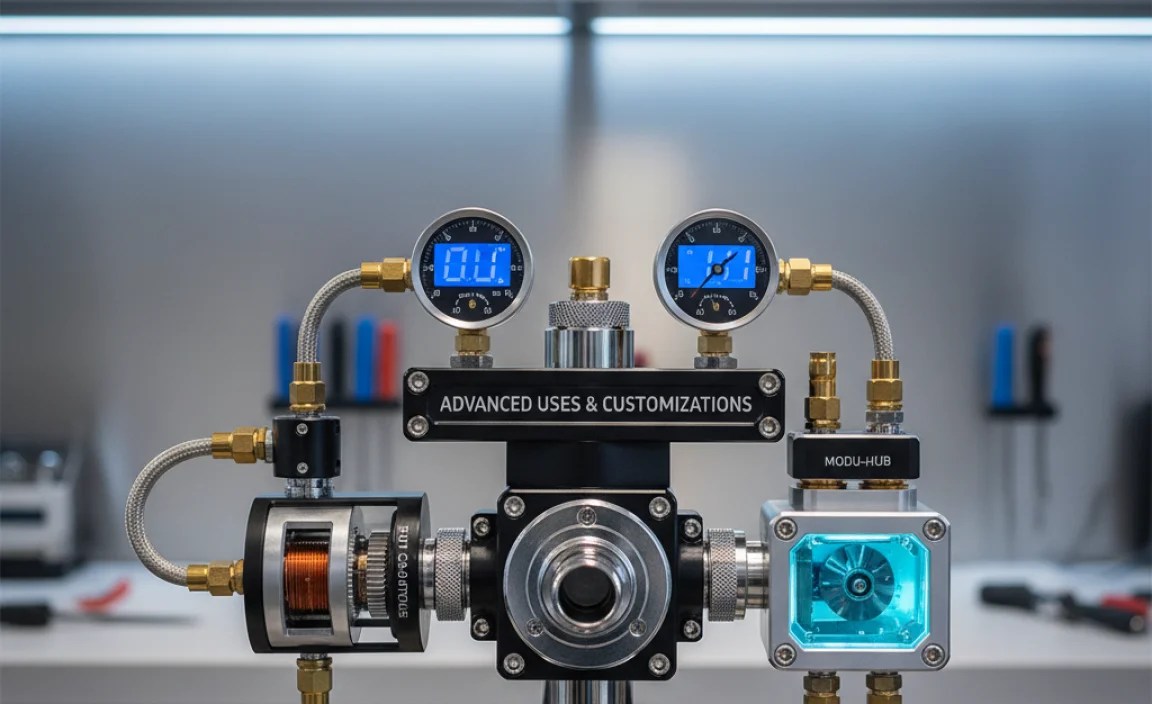
Once you’re comfortable with the basics, you can explore more advanced uses for the accessory port. These customizations can further enhance your pump’s functionality and versatility.
Creating a Custom Inflation Station
With a few accessories, you can create a custom inflation station tailored to your specific needs. This might include a high-precision gauge, quick-connect fittings, and adapters for various inflation tasks.
- Components:
- High-precision pressure gauge
- Quick-connect fittings
- Adapters for suspension, sports balls, and other items
- Storage for accessories
- Benefits:
- Streamlined inflation process
- All essential tools in one place
- Customized to your specific needs
Adding a Bleed Valve for Precise Pressure Adjustments
A bleed valve allows you to release small amounts of air for precise pressure adjustments. This is particularly useful for fine-tuning tire pressure or suspension settings.
- Benefits:
- Precise pressure adjustments
- Fine-tune tire pressure for optimal performance
- Useful for suspension tuning
- Installation:
- Install a T-fitting on the accessory port
- Connect the bleed valve to one side of the T-fitting
- Connect the pressure gauge or adapter to the other side
Integrating a Digital Pressure Sensor
For the ultimate in accuracy and convenience, consider integrating a digital pressure sensor into your pump setup. These sensors provide real-time pressure readings on a digital display.
- Benefits:
- Highly accurate pressure readings
- Real-time display
- Data logging capabilities (on some models)
- Installation:
- Install the sensor on the accessory port
- Connect the sensor to a digital display unit
- Calibrate the sensor according to the manufacturer’s instructions
Maintenance and Care for Accessory Ports and Accessories

To ensure your accessory port and accessories remain in good working order, regular maintenance and care are essential. This includes cleaning, inspection, and proper storage.
Cleaning and Inspection
Regularly clean the accessory port and accessories to remove dirt, debris, and moisture. Use a clean cloth or brush to remove any contaminants. Inspect the threads for damage or wear.
- Cleaning:
- Use a clean cloth or brush
- Remove dirt, debris, and moisture
- Inspection:
- Check threads for damage or wear
- Look for leaks or corrosion
Proper Storage
Store accessories in a clean, dry place to prevent corrosion and damage. Use a storage case or bag to protect them from dust and impacts.
- Storage Tips:
- Store in a clean, dry place
- Use a storage case or bag
- Protect from dust and impacts
Replacing Worn or Damaged Parts
If you notice any worn or damaged parts, replace them immediately. This includes O-rings, threads, and valve cores. Using damaged parts can compromise the performance and safety of your pump.
Pump Gauge Accessory Port: FAQs
What is the standard size for a bike pump accessory port?
The most common size is 1/8″ NPT (National Pipe Thread). However, some pumps may use different sizes, so always check your pump’s manual or contact the manufacturer.
Do I need thread sealant for all accessories?
Not always. If the accessory has a rubber O-ring, thread sealant may not be necessary. However, it’s a good precaution to ensure a tight, leak-free seal.
Can I use any pressure gauge with my pump’s accessory port?
No, you need to use a pressure gauge with the correct thread size and type (usually 1/8″ NPT). Using the wrong size can damage the threads on your pump.
How do I prevent leaks when using accessories?
Ensure the accessory is properly tightened, use thread sealant if necessary, and check for damaged threads. If leaks persist, try replacing the O-rings or the accessory itself.
What are some common accessories for the pump gauge port?
Common accessories include high-precision pressure gauges, adapters for suspension forks and shocks, inflation needles and nozzles, and quick-connect fittings.
Can I use the accessory port to inflate car tires?
While possible, it’s not recommended. Bike pumps are designed for lower volumes and higher pressures compared to car tires. It would take a very long time and be quite strenuous. Use a car tire inflator instead.
How often should I clean the accessory port?
Clean the accessory port whenever you notice dirt or debris. Regular cleaning (every few months) will help prevent corrosion and ensure a good seal.
Conclusion
The accessory port on your bike pump is a small but mighty feature that unlocks a world of possibilities. By understanding its function, choosing the right accessories, and following proper installation and maintenance procedures, you can greatly enhance your pump’s versatility and accuracy. Whether you’re fine-tuning tire pressure, inflating suspension components, or creating a custom inflation station, the accessory port empowers you to take control of your inflation needs. So go ahead, explore the possibilities, and get the most out of your bike pump!


