
Double Action Bike Pump: Get Inflated Faster!

Using a double action bike pump is easy! These pumps inflate tires on both the push and pull, cutting your pumping time in half. To use one, connect the pump head firmly to your tire valve, lock it in place, and pump steadily until you reach your desired tire pressure. Check the pressure with a gauge for accuracy.
Have you ever felt like you were pumping forever just to get your bike tires to the right pressure? It’s a common frustration for cyclists, especially when you’re eager to hit the road or trail. Traditional bike pumps only inflate on the push stroke, making the process take longer. But there’s a better way! Double action bike pumps inflate on both the push and pull, making inflating your tires faster and easier.
In this guide, I’ll walk you through how to use a double action bike pump like a pro. We’ll cover everything from connecting the pump to your tire valve to achieving the perfect tire pressure. Get ready to spend less time pumping and more time riding!
Understanding Double Action Bike Pumps

Double action bike pumps are designed to inflate tires more efficiently than single action pumps. Here’s what makes them special:
- Dual Inflation: They pump air into the tire on both the upstroke (pull) and the downstroke (push).
- Faster Inflation: Because they pump air twice per cycle, they inflate tires much faster.
- Versatility: Many models come with adapters to fit both Presta and Schrader valves.
- Efficiency: They require less effort to achieve the desired tire pressure.
These pumps are great for cyclists who want to save time and energy when inflating their tires. Whether you’re a commuter, a road cyclist, or a mountain biker, a double action pump can make your life easier.
Types of Double Action Bike Pumps

Double action bike pumps come in various shapes and sizes. Here are some common types:
- Floor Pumps: These are larger pumps with a stable base and a long handle, designed for home use. They often have built-in pressure gauges.
- Mini Pumps: These are compact and lightweight, perfect for carrying on rides. They may not have a gauge, so you might need a separate pressure gauge.
- Hybrid Pumps: These combine features of both floor and mini pumps, offering a balance of portability and efficiency.
Choosing the right type depends on your needs. If you primarily inflate tires at home, a floor pump is a great choice. If you need a pump for on-the-go repairs, a mini pump is more suitable.
Essential Parts of a Double Action Bike Pump

Before you start using a double action bike pump, it’s helpful to know its parts:
- Handle: The part you grip and move to pump air.
- Barrel: The main cylinder where air is compressed.
- Base: Provides stability for floor pumps.
- Hose: Connects the pump to the tire valve.
- Pump Head: Attaches to the tire valve and allows air to flow in.
- Valve Adapter: Allows the pump to fit different valve types (Presta and Schrader).
- Pressure Gauge: Displays the current tire pressure (usually found on floor pumps).
Knowing these parts will help you understand how the pump works and troubleshoot any issues you might encounter.
Step-by-Step Guide: Using a Double Action Bike Pump
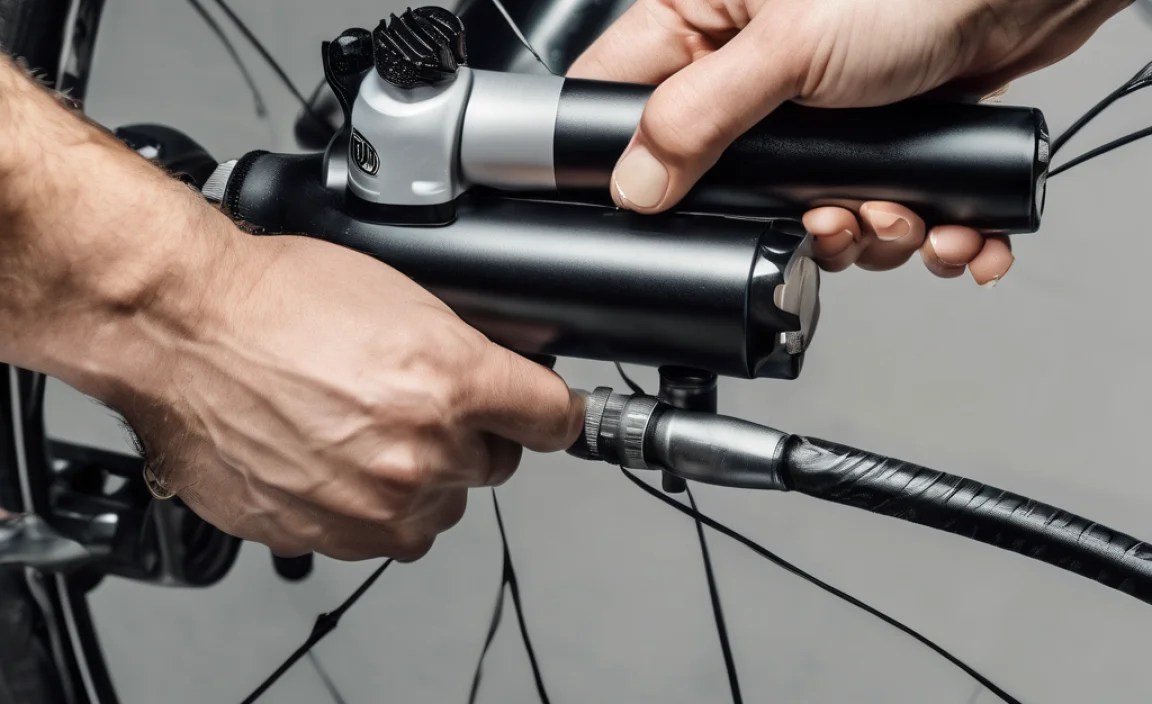
Now, let’s get to the main part: how to use a double action bike pump. Follow these steps for efficient and accurate tire inflation.
Step 1: Prepare Your Bike and Pump
Before you start, make sure your bike is stable and your pump is within easy reach. Clear any obstacles around your bike to give yourself room to work.
- Check the Tire Pressure: Look at the sidewall of your tire for the recommended pressure range (usually in PSI).
- Inspect the Pump: Make sure the pump hose is not cracked or damaged and that the pump head is clean.
Step 2: Choose the Correct Valve Adapter
Most double action pumps come with adapters for both Presta and Schrader valves. Make sure you’re using the correct adapter for your tire valve.
- Presta Valves: These are narrow valves with a small locking nut at the tip.
- Schrader Valves: These are wider valves, similar to those found on car tires.
To switch adapters, unscrew the pump head and flip or replace the internal components as needed. The pump’s manual should have specific instructions.
Step 3: Connect the Pump Head to the Valve
This is a crucial step to ensure a good seal and prevent air leaks.
- For Presta Valves: Unscrew the locking nut at the tip of the valve. Press the valve briefly to release any built-up pressure.
- For Schrader Valves: Remove the valve cap.
- Attach the Pump Head: Firmly press the pump head onto the valve. Make sure it’s fully seated.
- Lock the Pump Head: Most pump heads have a lever or clamp to lock them onto the valve. Engage this lever to create a secure seal.
Step 4: Start Pumping
Now it’s time to inflate your tire. Use smooth, steady strokes to pump air into the tire.
- Grip the Handle: Place your hands comfortably on the handle.
- Use Your Body Weight: For floor pumps, use your body weight to push down on the handle.
- Pump Steadily: Maintain a consistent rhythm to ensure a continuous flow of air.
- Watch the Gauge: If your pump has a pressure gauge, keep an eye on it to avoid over-inflating the tire.
Step 5: Monitor the Tire Pressure
It’s important to inflate your tires to the correct pressure. Over-inflating can lead to a blowout, while under-inflating can cause a flat or damage your rims. Always refer to the recommended pressure range on your tire’s sidewall.
Use the pressure gauge on your pump, if available. If not, use a separate handheld pressure gauge to check the pressure periodically.
Step 6: Disconnect the Pump Head
Once you’ve reached the desired pressure, carefully disconnect the pump head from the valve.
- Unlock the Pump Head: Disengage the lever or clamp that locks the pump head onto the valve.
- Remove the Pump Head: Gently pull the pump head straight off the valve.
- For Presta Valves: Screw the locking nut back onto the valve.
- For Schrader Valves: Replace the valve cap.
Step 7: Check Your Work
Give your tires a quick inspection to make sure they’re properly inflated and that there are no leaks. Bounce the tire on the ground to check for firmness.
Troubleshooting Common Issues
Even with the best equipment, you might encounter some issues while using a double action bike pump. Here are some common problems and how to fix them:
| Issue | Possible Cause | Solution |
|---|---|---|
| Air Leaks | Loose pump head, damaged valve | Ensure the pump head is securely attached and locked. Check the valve for damage and replace if necessary. |
| Difficulty Pumping | Clogged valve, damaged pump | Clean the valve with a small brush. Inspect the pump for damage and lubricate the moving parts. |
| Incorrect Pressure Reading | Faulty gauge | Use a separate pressure gauge to verify the reading. Replace the gauge if it’s inaccurate. |
| Pump Head Won’t Attach | Incorrect adapter, damaged pump head | Make sure you’re using the correct adapter for your valve type. Inspect the pump head for damage and replace if necessary. |
Tips for Maintaining Your Double Action Bike Pump
To keep your double action bike pump in good working condition, follow these maintenance tips:
- Clean Regularly: Wipe down the pump with a clean cloth to remove dirt and debris.
- Lubricate Moving Parts: Apply a small amount of lubricant to the handle and other moving parts to keep them working smoothly.
- Store Properly: Store the pump in a dry place to prevent rust and corrosion.
- Inspect Regularly: Check the hose, pump head, and valve adapters for damage and replace them as needed.
Choosing the Right Double Action Bike Pump
With so many options available, choosing the right double action bike pump can be overwhelming. Here are some factors to consider:
- Type of Bike: Consider the type of bike you have (road, mountain, hybrid) and the tire pressure requirements.
- Valve Type: Make sure the pump is compatible with your bike’s valve type (Presta or Schrader).
- Portability: If you need a pump for on-the-go repairs, choose a compact and lightweight model.
- Features: Look for features like a built-in pressure gauge, ergonomic handle, and durable construction.
- Budget: Double action bike pumps range in price from affordable to high-end. Set a budget and choose a pump that meets your needs without breaking the bank.
Here’s a comparison table of different types of double action bike pumps:
| Type | Pros | Cons | Best For |
|---|---|---|---|
| Floor Pump | Stable, efficient, accurate pressure gauge | Less portable, takes up more storage space | Home use, frequent tire inflation |
| Mini Pump | Compact, lightweight, portable | Less efficient, may not have a gauge | On-the-go repairs, emergency inflation |
| Hybrid Pump | Balance of portability and efficiency | May be more expensive than other types | Versatile use, both home and on the road |
Double Action vs. Single Action Bike Pumps
What’s the real difference? Here’s a breakdown of double action vs. single action bike pumps:
| Feature | Double Action Pump | Single Action Pump |
|---|---|---|
| Inflation | Inflates on both push and pull strokes | Inflates only on the push stroke |
| Efficiency | More efficient, faster inflation | Less efficient, slower inflation |
| Effort | Requires less effort per inflation cycle | Requires more effort per inflation cycle |
| Price | Generally more expensive | Generally less expensive |
While single action pumps may be cheaper, double action pumps offer superior efficiency and save you time and effort. The investment can be well worth it for regular cyclists.
Safety Tips
Safety should always be a priority when using a bike pump. Here are some safety tips to keep in mind:
- Wear Eye Protection: Consider wearing safety glasses to protect your eyes from debris or accidental air blasts.
- Don’t Over-Inflate: Always stay within the recommended pressure range on your tire’s sidewall to prevent blowouts.
- Check for Wear: Regularly check your tires for wear and tear, such as cuts, bulges, or excessive wear. Replace them as needed.
- Use in a Safe Area: Inflate your tires in a safe, well-lit area away from traffic and other hazards.
FAQ About Double Action Bike Pumps
Here are some frequently asked questions about double action bike pumps:
What is a double action bike pump?
A double action bike pump is a type of pump that inflates tires on both the push and pull strokes, making it more efficient than a single action pump.
How do I know if I have a Presta or Schrader valve?
Presta valves are narrow with a small locking nut at the tip, while Schrader valves are wider and similar to those found on car tires. Check the valve stem carefully.
Can I use a double action pump on any bike?
Yes, most double action pumps come with adapters to fit both Presta and Schrader valves, so they can be used on any bike.
How do I switch between Presta and Schrader valves on my pump?
Unscrew the pump head and flip or replace the internal components as needed. Refer to your pump’s manual for specific instructions.
How often should I inflate my tires?
Check your tire pressure before each ride and inflate as needed to maintain the recommended pressure range on your tire’s sidewall. Proper tire pressure is essential for a smooth ride.
What is the ideal tire pressure for my bike?
The ideal tire pressure depends on the type of bike, tire size, and rider weight. Refer to the recommended pressure range on your tire’s sidewall for guidance.
How do I maintain my double action bike pump?
Clean the pump regularly, lubricate moving parts, store it in a dry place, and inspect it for damage. Replace any worn or damaged parts as needed.
Conclusion
Using a double action bike pump is a simple yet effective way to keep your tires properly inflated and enjoy a smooth, safe ride. By following the steps outlined in this guide, you can confidently inflate your tires and maintain your pump for years to come. So, grab your double action pump, hit the road or trail, and experience the joy of cycling with perfectly inflated tires!


