
Ultimate Pump for E-Bike Tires: Ride Worry-Free!

Quick Summary: To inflate e-bike tires properly, use a floor pump with a pressure gauge. Ensure the pump head fits your valve type (Presta or Schrader), inflate to the recommended PSI (printed on the tire sidewall), and check pressure regularly for optimal performance and safety. A portable pump is also useful for on-the-go adjustments.
E-bikes offer a fantastic blend of fitness and convenience, but keeping those tires properly inflated is crucial. Underinflated tires can lead to sluggish performance, reduced range, and even damage to your rims. Many riders struggle to find the right pump and pressure. Don’t worry! This guide will walk you through everything you need to know about choosing and using a pump for your e-bike tires. We’ll cover valve types, pressure settings, and step-by-step instructions to keep you rolling smoothly.
Understanding E-Bike Tire Inflation

Proper tire inflation is essential for any bike, but it’s especially important for e-bikes. E-bikes are heavier than regular bicycles, and the added weight and speed put more stress on the tires. Correct inflation ensures efficient energy transfer from the motor, comfortable rides, and prevents flats.
Why Proper Inflation Matters
Here’s a breakdown of why maintaining the correct tire pressure is so important:
- Efficiency: Properly inflated tires roll more efficiently, allowing you to cover more distance with less effort and less battery drain.
- Handling: Correct pressure provides optimal grip and control, especially when cornering or riding on uneven surfaces.
- Comfort: The right pressure absorbs bumps and vibrations, resulting in a smoother, more comfortable ride.
- Puncture Resistance: Underinflated tires are more susceptible to pinch flats (snakebites), where the tire gets pinched between the rim and the road.
- Tire Longevity: Proper inflation prevents premature wear and tear, extending the life of your tires.
Understanding Tire Pressure
Tire pressure is measured in PSI (pounds per square inch) or BAR (a metric unit of pressure). The recommended pressure range for your tires is printed on the tire sidewall. It’s crucial to stay within this range. Never exceed the maximum pressure listed.
Factors that influence optimal tire pressure include:
- Rider Weight: Heavier riders need higher pressure.
- Terrain: Rougher terrain may benefit from slightly lower pressure for better comfort and grip.
- Tire Width: Wider tires can generally be run at lower pressures.
- Riding Style: Aggressive riders may prefer higher pressure for better cornering stability.
Choosing the Right Pump
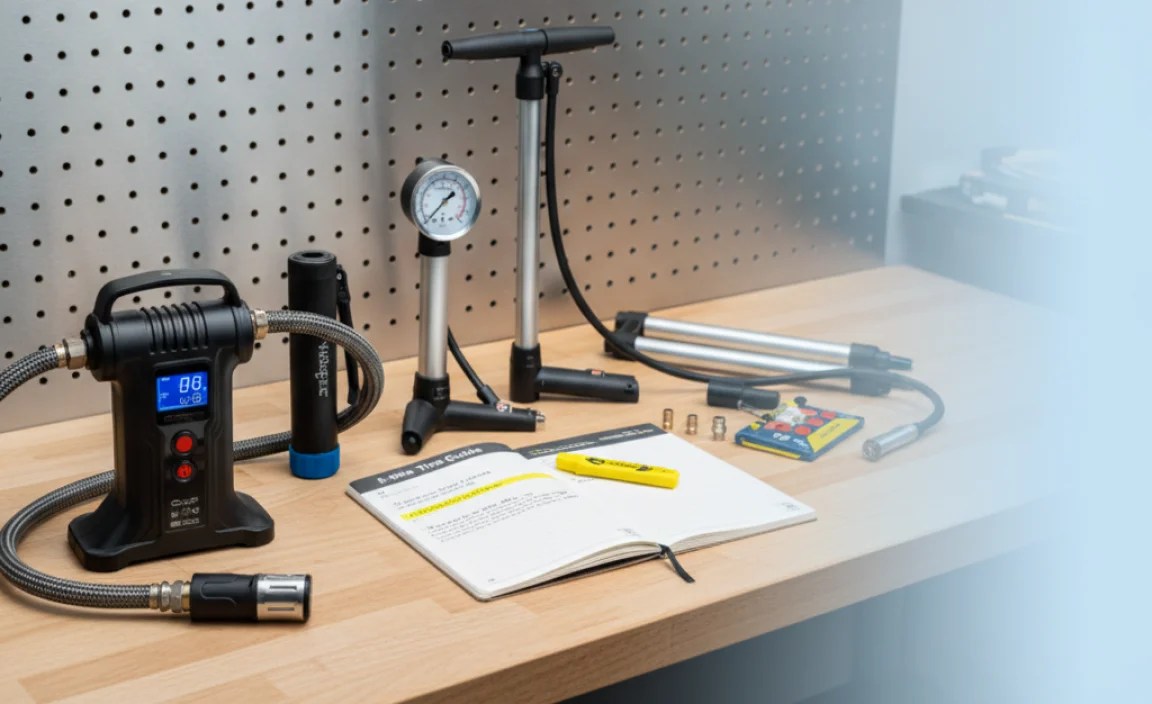
Selecting the correct pump is the first step in maintaining your e-bike tires. There are two main types of pumps commonly used for bicycles: floor pumps and portable pumps.
Floor Pumps
Floor pumps are designed for home use and offer the most efficient and accurate inflation. They feature a large air chamber, a long hose, and a pressure gauge for precise inflation.
Pros of Floor Pumps:
- Efficiency: Inflates tires quickly and easily.
- Accuracy: Built-in pressure gauge allows for precise inflation.
- Durability: Generally more durable than portable pumps.
- Comfort: Ergonomic design makes them comfortable to use.
Cons of Floor Pumps:
- Size: Bulky and not suitable for carrying on rides.
- Cost: Generally more expensive than portable pumps.
Portable Pumps
Portable pumps are compact and lightweight, designed to be carried on rides for emergency inflation. They are less efficient than floor pumps but essential for on-the-go repairs.
Pros of Portable Pumps:
- Portability: Small and lightweight, easy to carry in a backpack or mount on the bike frame.
- Affordability: Generally less expensive than floor pumps.
Cons of Portable Pumps:
- Efficiency: Requires more effort and time to inflate tires.
- Accuracy: Many models lack a pressure gauge or have an inaccurate one.
- Durability: Generally less durable than floor pumps.
Pump Head Compatibility: Presta vs. Schrader Valves
Before choosing a pump, it’s crucial to know what type of valve your e-bike tires use. There are two main types: Presta and Schrader.
- Presta Valves: Narrower and typically found on higher-end bikes. They have a small valve core that needs to be unscrewed before inflation.
- Schrader Valves: Wider and similar to those found on car tires. They have a spring-loaded valve core that opens when the pump head is attached.
Most floor pumps come with a dual-head that can accommodate both Presta and Schrader valves. Some portable pumps may require you to switch internal parts to change between valve types.
| Feature | Presta Valve | Schrader Valve |
|---|---|---|
| Width | Narrow | Wide |
| Typical Bike Type | Road, hybrid, and some mountain bikes | Mountain, commuter, and kids’ bikes |
| Inflation | Requires unscrewing valve core | No need to unscrew |
| Pressure Retention | Seals better at high pressure | Reliable at lower pressures |
Step-by-Step Guide to Inflating E-Bike Tires

Now that you know about pumps and valve types, let’s get to the actual inflation process. Here’s a step-by-step guide to inflating your e-bike tires using a floor pump:
Step 1: Prepare Your Bike and Pump
- Place your e-bike on a stable surface.
- Locate the valve on your tire.
- Ensure your floor pump’s head is compatible with your valve type (Presta or Schrader). Adjust if necessary.
Step 2: Connect the Pump Head to the Valve
For Presta Valves:
- Unscrew the valve core by turning it counterclockwise.
- Press the valve core briefly to release any remaining air.
- Place the pump head onto the valve, ensuring a secure fit.
- Flip the locking lever on the pump head (if applicable).
For Schrader Valves:
- Remove the valve cap.
- Place the pump head onto the valve, ensuring a secure fit.
- Flip the locking lever on the pump head (if applicable).
Step 3: Inflate the Tire
- Hold the pump handle firmly and begin pumping in a smooth, consistent motion.
- Watch the pressure gauge on the pump.
- Inflate the tire to the recommended pressure range printed on the tire sidewall.
Step 4: Remove the Pump Head
For Presta Valves:
- Flip the locking lever on the pump head (if applicable).
- Carefully remove the pump head from the valve.
- Screw the valve core back in clockwise until snug.
For Schrader Valves:
- Flip the locking lever on the pump head (if applicable).
- Carefully remove the pump head from the valve.
Step 5: Check the Pressure
- Use a separate pressure gauge to double-check the tire pressure, especially if your pump’s gauge seems inaccurate.
- Adjust the pressure as needed.
- Replace the valve cap.
Tips for Accurate Inflation
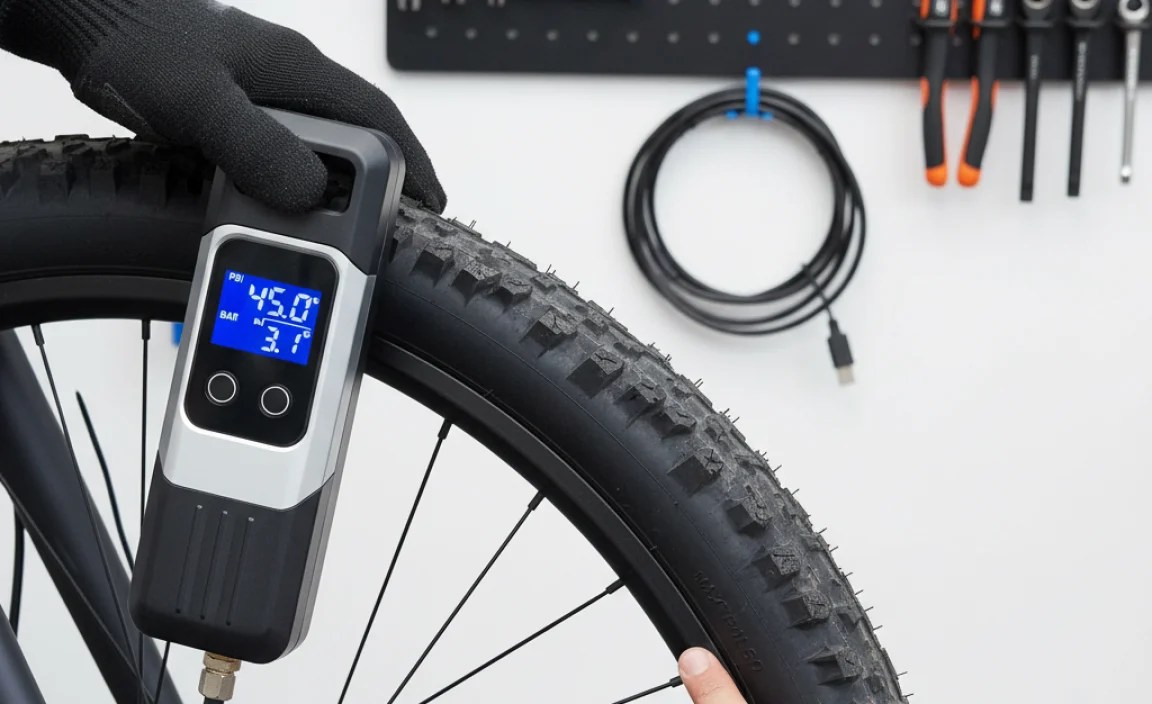
Achieving accurate tire inflation is essential for optimal performance and safety. Here are some tips to help you get it right:
- Use a Reliable Gauge: Invest in a high-quality floor pump with an accurate pressure gauge. A separate digital gauge can also be useful for double-checking.
- Check Regularly: Tire pressure decreases over time, so check your tires before each ride or at least once a week.
- Consider the Temperature: Tire pressure increases in hot weather and decreases in cold weather. Adjust accordingly.
- Don’t Rely on Feel: Squeezing the tire to gauge pressure is not accurate. Always use a pressure gauge.
- Start Low, Add Air: If you’re unsure of the correct pressure, start with a lower pressure and gradually add air until you reach the desired level.
Maintaining Your Pump
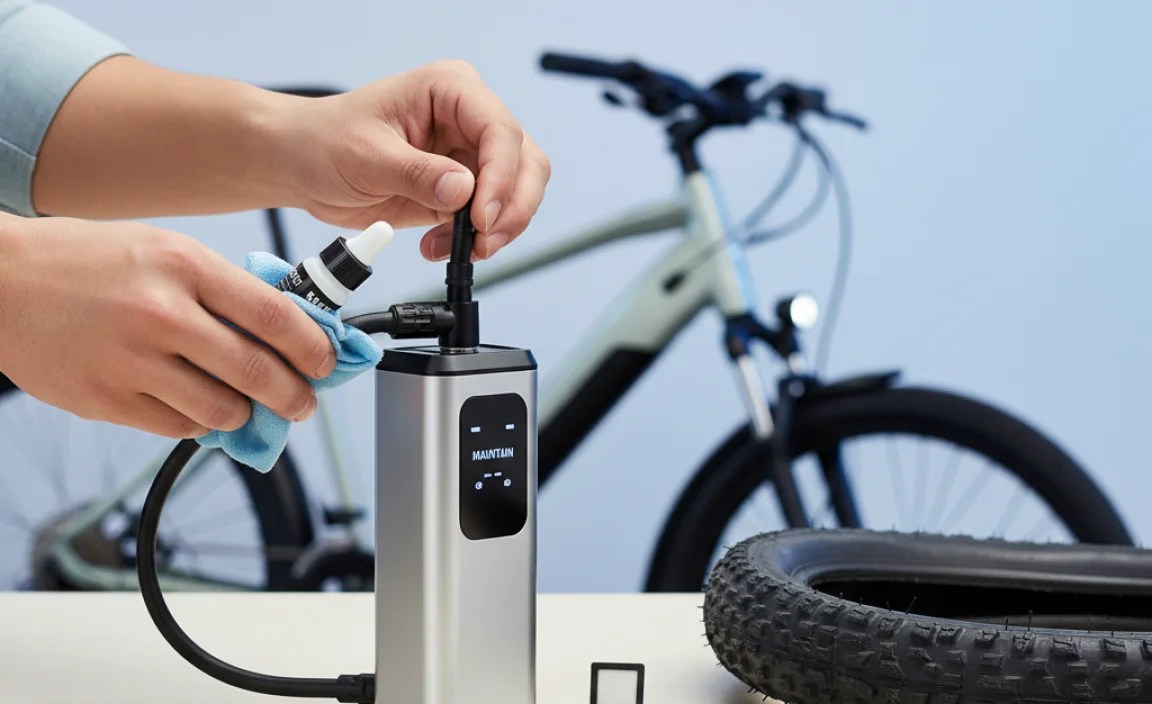
Like any tool, your bike pump requires occasional maintenance to keep it in good working order. Here are some tips for maintaining your floor pump and portable pump:
Floor Pump Maintenance
- Check the Hose: Inspect the hose for cracks or leaks. Replace if necessary.
- Lubricate the Piston: Periodically lubricate the piston with a silicone-based lubricant to ensure smooth operation.
- Clean the Head: Clean the pump head regularly to remove dirt and debris that can interfere with the valve seal.
- Store Properly: Store your floor pump in a dry place to prevent rust and corrosion.
Portable Pump Maintenance
- Clean Regularly: Clean the pump after each use to remove dirt and grime.
- Lubricate Moving Parts: Lubricate the moving parts with a light oil or silicone-based lubricant.
- Check the Seal: Inspect the valve seal for wear and tear. Replace if necessary.
- Store Properly: Store your portable pump in a protective case or bag to prevent damage.
Troubleshooting Common Inflation Problems
Even with the best equipment and techniques, you may encounter problems when inflating your e-bike tires. Here are some common issues and how to troubleshoot them:
| Problem | Possible Cause | Solution |
|---|---|---|
| Pump won’t attach to valve | Incorrect pump head setting or damaged valve | Ensure the pump head is set to the correct valve type (Presta or Schrader). Check the valve for damage. |
| Air leaks around the valve | Loose connection or damaged valve core | Ensure the pump head is securely attached to the valve. Tighten or replace the valve core. |
| Tire won’t inflate | Puncture, blocked valve, or faulty pump | Check the tire for punctures. Ensure the valve is not blocked. Test the pump on another tire. |
| Pressure gauge is inaccurate | Faulty gauge | Use a separate pressure gauge to verify the reading. Replace the pump or gauge. |
Recommended Pumps for E-Bikes
Here are a few highly-rated pump recommendations suitable for e-bike tires:
- For Floor Pumps:
- Topeak Joe Blow Sport III: A reliable and affordable floor pump with a durable steel barrel and an accurate pressure gauge.
- Lezyne Classic Floor Drive: A high-quality floor pump with a stylish design and a precise digital gauge.
- For Portable Pumps:
- Lezyne Micro Floor Drive HP: A compact and lightweight portable pump with a footpad for added stability.
- Crankbrothers Sterling S: A versatile portable pump with a reversible head for Presta and Schrader valves.
External Resources
For more in-depth information on bike maintenance and tire inflation, check out these resources:
- Park Tool Repair Help: A comprehensive resource for bike repair and maintenance information.
- BicycleTutor.com: Offers videos and tutorials on various bike maintenance topics.
- Sheldon Brown’s Website: A wealth of information on all things cycling, including tire inflation and maintenance.
FAQ About E-Bike Tire Inflation
Here are some frequently asked questions about inflating e-bike tires:
1. How often should I inflate my e-bike tires?
Check your tire pressure before each ride or at least once a week. Tires lose pressure over time, so regular checks are essential for optimal performance and safety.
2. What PSI should my e-bike tires be?
The recommended PSI range is printed on the tire sidewall. Stay within this range. Factors like rider weight and terrain can influence the ideal pressure.
3. Can I use a car tire pump for my e-bike?
Yes, if your e-bike tires have Schrader valves. However, car tire pumps can sometimes overinflate bicycle tires quickly, so be careful and check the pressure frequently.
4. What’s the difference between Presta and Schrader valves?
Presta valves are narrow and typically found on higher-end bikes. Schrader valves are wider and similar to those found on car tires. Most pumps can accommodate both types with an adapter.
5. What happens if my e-bike tires are underinflated?
Underinflated tires can lead to sluggish performance, reduced range, increased risk of flats, and damage to your rims.
6. What happens if my e-bike tires are overinflated?
Overinflated tires can result in a harsh ride, reduced grip, and an increased risk of tire blowout.
7. Do I need a special pump for e-bike tires?
No, any pump that can reach the required pressure and is compatible with your valve type will work. A floor pump with a gauge is highly recommended for accurate inflation.
Conclusion
Maintaining proper tire pressure on your e-bike is a simple yet crucial aspect of bike ownership. By understanding valve types, choosing the right pump, and following the steps outlined in this guide, you can ensure a safe, efficient, and enjoyable riding experience. Remember to check your tire pressure regularly, invest in a reliable pump, and don’t hesitate to consult with your local bike shop for further assistance. Happy riding!


