
How to Use a Mini Pump on a Presta Valve: Easy Guide

Using a mini pump on a Presta valve is simple! First, unscrew the valve’s tip. Then, firmly press the pump head onto the valve, ensuring a tight seal. Lock the pump head lever (if present). Start pumping, using your body weight for leverage. Once inflated, unlock the lever, carefully remove the pump head, and screw the valve tip closed. Now you’re ready to ride!
Ever been stranded with a flat tire and a mini pump, staring at that tiny Presta valve, wondering how to make it all work? It’s a common frustration for cyclists. Presta valves, with their slender design, can seem intimidating, especially when you’re used to Schrader valves. But don’t worry! Using a mini pump on a Presta valve is easier than you think.
This guide will walk you through each step, ensuring you get back on the road quickly and confidently. We’ll cover everything from prepping the valve to mastering the pumping technique. Let’s get started and turn that roadside frustration into a feeling of “I got this!”
Understanding Presta Valves and Mini Pumps

Before we dive into the how-to, let’s quickly cover the basics of Presta valves and mini pumps. Knowing what you’re working with makes the process smoother and prevents potential damage.
What is a Presta Valve?
A Presta valve is a type of bicycle tire valve that’s commonly found on higher-end bikes, especially road bikes and some mountain bikes. Here’s what makes them unique:
- Slender Design: Presta valves are narrower than Schrader valves (the type you find on car tires).
- Locking Nut: They have a small nut at the tip that you need to unscrew to allow air to flow in or out.
- Higher Pressure: Presta valves are generally better at handling higher tire pressures.
- Potential for Finer Pressure Adjustment: You can slightly depress the valve core to release small amounts of air.
Types of Mini Pumps
Mini pumps are compact, portable pumps designed for on-the-go inflation. They come in various designs, but most share these features:
- Compact Size: Easy to carry in a backpack, saddlebag, or mounted on your bike frame.
- Manual Operation: They require you to pump air by hand.
- Dual Action (Optional): Some pumps inflate on both the push and pull strokes, increasing efficiency.
- Presta/Schrader Compatibility: Many mini pumps can work with both Presta and Schrader valves, often requiring a simple internal adjustment.
Here’s a quick comparison table:
| Feature | Presta Valve | Schrader Valve |
|---|---|---|
| Diameter | Narrower | Wider |
| Locking Mechanism | Locking nut at the tip | Spring-loaded core |
| Typical Usage | Road bikes, high-performance bikes | Mountain bikes, car tires |
| Pressure Handling | Generally better for high pressure | Suitable for lower to mid pressure |
Step-by-Step Guide: Using a Mini Pump on a Presta Valve

Now, let’s get to the heart of the matter. Follow these steps to inflate your tires with a mini pump and a Presta valve:
Step 1: Prepare the Valve
Before attaching the pump, you need to prepare the Presta valve:
- Locate the Valve Nut: Find the small nut at the very tip of the valve.
- Unscrew the Nut: Turn the nut counter-clockwise until it’s completely loose. Don’t remove it entirely; just loosen it.
- Depress the Valve Core: Gently push the valve core down a couple of times. This ensures that the valve isn’t stuck and allows air to flow freely. You might hear a small puff of air escaping.
Step 2: Attach the Pump Head
Attaching the pump head correctly is crucial for a good seal:
- Identify the Correct Nozzle: Most mini pumps have a dual-head or an adjustable head for Presta and Schrader valves. Make sure you’re using the Presta side. Some pumps require you to unscrew a cap and flip an internal piece to switch between valve types. Refer to your pump’s instructions if you’re unsure.
- Position the Pump Head: Place the pump head directly over the Presta valve.
- Press Firmly: Push the pump head straight onto the valve. You should feel a snug fit.
- Engage the Lever (If Applicable): Many mini pumps have a lever that you need to flip to create an airtight seal. Flip the lever to the locked position. This lever is usually located on the pump head itself.
Step 3: Inflate the Tire
Now comes the pumping action:
- Position Yourself: Find a stable position. You can kneel, stand, or sit, depending on what’s comfortable and provides the best leverage.
- Grip the Pump: Hold the pump firmly with both hands. Place one hand on the pump body and the other on the handle.
- Start Pumping: Begin pumping in a smooth, consistent motion. Use your body weight to help push the pump handle down. Avoid jerky, rapid movements, as this can damage the valve.
- Monitor the Tire Pressure: If your pump has a gauge, keep an eye on the pressure. If not, periodically squeeze the tire to get a sense of its firmness.
Step 4: Detach the Pump Head
Removing the pump head carefully prevents air loss:
- Disengage the Lever (If Applicable): Flip the lever on the pump head back to the unlocked position.
- Pull Straight Off: Gently pull the pump head straight off the Presta valve. Avoid bending or twisting the valve.
Step 5: Secure the Valve
Finishing touches to protect your valve:
- Tighten the Valve Nut: Screw the nut at the tip of the Presta valve clockwise until it’s snug. Don’t overtighten it, as this could damage the valve core.
- Check the Tire Pressure: Give the tire a final squeeze to ensure it feels firm and properly inflated.
Tips and Tricks for Using a Mini Pump Effectively
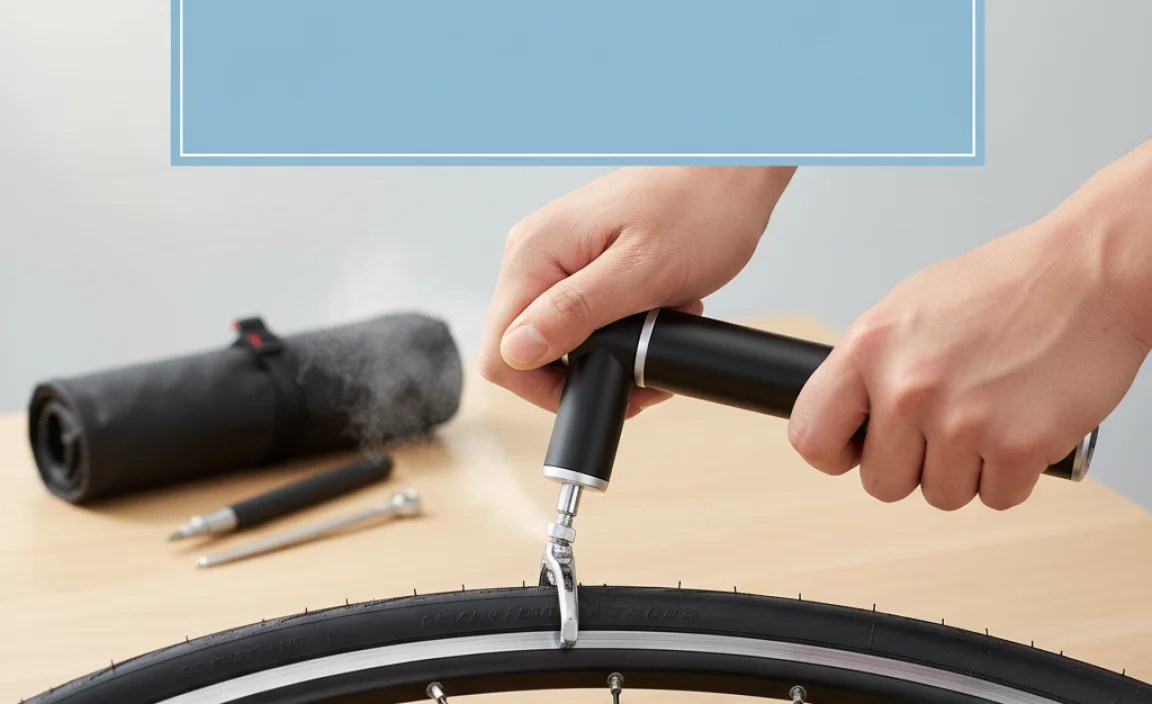
Here are some extra tips to make your mini-pump experience even better:
- Use Your Body Weight: Leverage your body weight when pumping. This makes the process much easier, especially when reaching higher pressures.
- Short, Quick Strokes vs. Long, Smooth Strokes: Experiment to see what works best for your pump and your strength. Generally, longer, smoother strokes are more efficient.
- Listen for Air Leaks: If you hear air escaping around the pump head, readjust its position and make sure the lever (if present) is fully engaged.
- Carry a Spare Tube: A mini pump is useless if your tube is beyond repair. Always carry a spare tube and tire levers.
- Practice at Home: Before you need to use your mini pump on the road, practice using it at home to get comfortable with the process.
Troubleshooting Common Issues
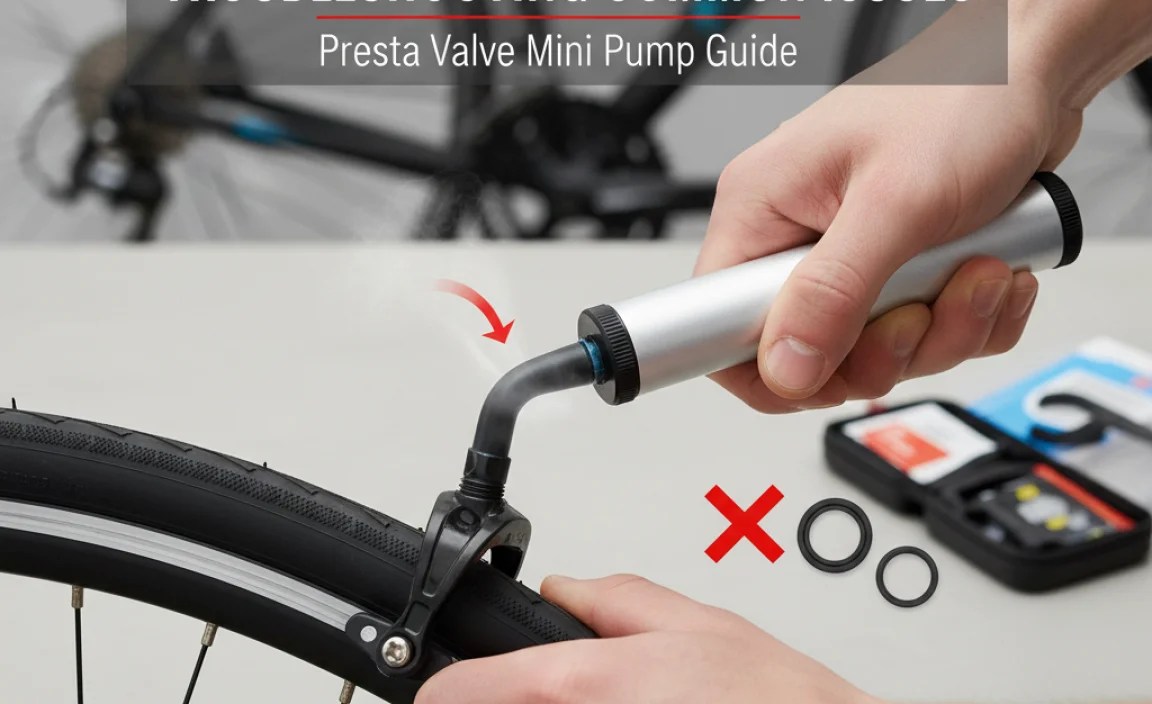
Sometimes, things don’t go as planned. Here are some common problems and how to solve them:
- Problem: Air leaking around the pump head.
- Solution: Ensure the pump head is fully seated on the valve and the lever (if present) is engaged. Try repositioning the pump head and applying more pressure.
- Problem: Can’t get the tire to inflate to the desired pressure.
- Solution: Mini pumps are designed for portability, not high-volume inflation. It may take a while to reach higher pressures. Make sure you’re using proper technique and consider a frame-mounted pump for faster inflation.
- Problem: Valve core seems stuck.
- Solution: Gently depress the valve core a few times with a small tool or the pump head to loosen it.
- Problem: Breaking a valve while pumping
- Solution: Be gentle and consistent. Avoid excessive force or bending the valve.
Mini Pump Recommendations
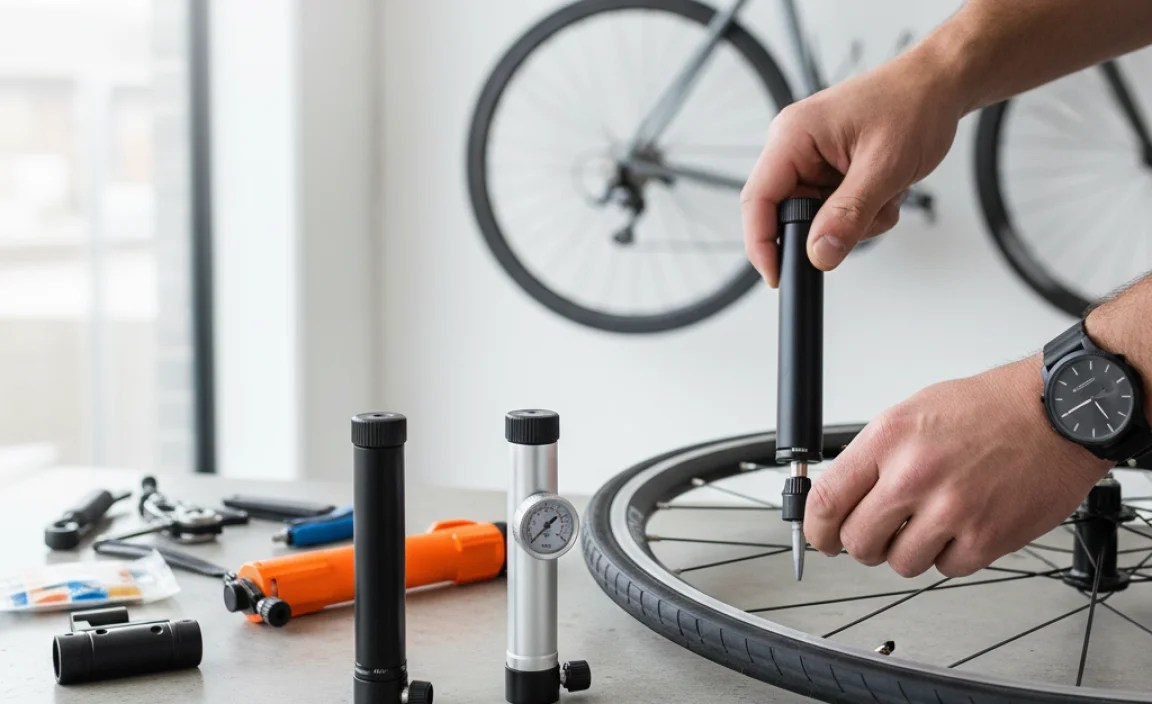
Choosing the right mini pump can make a big difference. Here are a few highly-rated options:
| Pump | Features | Pros | Cons |
|---|---|---|---|
| Lezyne Micro Floor Drive HP | Floor pump design, integrated foot peg, ABS chuck | Efficient, easy to use, reaches high pressures | Slightly larger than some mini pumps |
| Topeak RaceRocket HP | Lightweight, high-pressure design, integrated hose | Compact, efficient, easy to attach to valve | Can be tiring at very high pressures |
| Crankbrothers Sterling LG | High-volume/high-pressure switch, integrated CO2 inflator | Versatile, inflates quickly, CO2 option | CO2 cartridges are an additional expense |
When choosing a mini pump, consider these factors:
- Pressure Rating: Make sure the pump can reach the maximum pressure recommended for your tires.
- Valve Compatibility: Ensure it works with both Presta and Schrader valves (if needed).
- Size and Weight: Choose a pump that’s easy to carry and won’t weigh you down.
- Features: Look for features like an integrated gauge, hose, or CO2 inflator compatibility.
For example, the Lezyne Micro Floor Drive HP is highly recommended because of its floor pump design, but if you value light weight above all else, the Topeak RaceRocket HP might be a better choice.
Maintaining Your Mini Pump
A little maintenance goes a long way in keeping your mini pump working smoothly:
- Clean the Pump Head: Regularly clean the pump head to remove dirt and debris that can interfere with the seal.
- Lubricate Moving Parts: Apply a small amount of lubricant (like silicone spray) to the pump’s moving parts to keep them operating smoothly.
- Store Properly: Store your mini pump in a dry place to prevent rust and corrosion.
- Check for Wear and Tear: Inspect the pump regularly for signs of wear and tear, such as cracks or damaged seals. Replace parts as needed.
FAQ: Mini Pumps and Presta Valves
Here are some frequently asked questions about using mini pumps with Presta valves:
Can I use a mini pump on a Schrader valve?
Many mini pumps are designed to work with both Presta and Schrader valves. Check your pump’s instructions to see if it’s compatible and how to switch between valve types.
How much pressure can I get with a mini pump?
It depends on the pump and your effort, but most mini pumps can reach pressures of 80-100 PSI. Some high-pressure models can go even higher.
Why is it so hard to pump with a mini pump?
Mini pumps are designed for portability, not efficiency. They require more effort than floor pumps. Using your body weight and proper technique can help.
Do I need a special adapter for Presta valves?
No, you don’t need a separate adapter. Most mini pumps have a built-in Presta-compatible nozzle.
How do I know if my tire is inflated enough?
Check the recommended pressure range printed on the sidewall of your tire. If your pump has a gauge, inflate to the appropriate pressure. If not, squeeze the tire – it should feel firm but not rock hard. You can also buy a separate tire pressure gauge for more accuracy. A floor pump with a gauge, like those from REI, is your best bet for getting the tire pressure exactly right at home.
What if the Presta valve breaks off while pumping?
This is rare but can happen if you’re applying too much force or bending the valve. Be gentle and use smooth, consistent pumping motions. If the valve breaks, you’ll need to replace the inner tube.
Why does air leak when I try to attach the pump?
This usually means the pump head isn’t properly sealed on the valve. Make sure it’s fully seated and the lever (if present) is engaged. Also, check the pump head for any damage or debris.
Conclusion
Using a mini pump on a Presta valve might seem tricky at first, but with a little practice, it becomes second nature. Remember to prepare the valve, attach the pump head securely, use smooth pumping motions, and double-check the pressure. With the right technique and a reliable mini pump, you’ll be well-prepared for any roadside flat tire situation. So, get out there, enjoy your ride, and pump with confidence!


