
Which Cycle Pump is Best? Find the Perfect Fit for Your Ride

The best cycle pump depends on your bike, your riding style, and where you plan to use it. For home use, a floor pump with a gauge is ideal for quickly and accurately inflating tires. If you need a pump on the go, consider a mini pump or CO2 inflator. Tubeless tire users might prefer a pump with a pressure chamber.
Choosing the right bike pump can feel overwhelming. There are so many options, from tiny pocket-sized pumps to big, sturdy floor models. Do you need a gauge? What about tubeless tires? Getting the right pump makes keeping your tires properly inflated much easier, giving you a smoother, safer, and faster ride.
In this guide, I’ll walk you through the different types of cycle pumps available. I’ll explain their features, benefits, and drawbacks, so you can confidently choose the best pump for your needs. Let’s get started!
Understanding the Different Types of Cycle Pumps

There are several main types of cycle pumps, each designed for specific purposes. Here’s a breakdown:
Floor Pumps
Floor pumps, also known as track pumps, are designed for home use. They offer high volume and pressure, making tire inflation quick and easy. Most floor pumps include a gauge to accurately measure tire pressure.
Pros:
- Efficient and fast inflation
- Stable base for easy use
- Usually includes a pressure gauge for accurate inflation
- Durable and long-lasting
Cons:
- Not portable
- Takes up storage space
Mini Pumps
Mini pumps are compact and lightweight, making them ideal for carrying on rides. They’re designed for emergency inflation when you’re away from home.
Pros:
- Highly portable
- Lightweight
- Affordable
Cons:
- Requires more effort to inflate tires
- Lower volume compared to floor pumps
- May not have a pressure gauge
CO2 Inflators
CO2 inflators use compressed carbon dioxide cartridges to quickly inflate tires. They are very fast and lightweight, perfect for racing or situations where speed is essential.
Pros:
- Extremely fast inflation
- Very lightweight and compact
- Easy to carry
Cons:
- Requires CO2 cartridge replacements
- Can be expensive over time
- Difficult to control pressure
- One time use per cartridge
Frame-Mounted Pumps
Frame-mounted pumps attach directly to your bike frame, offering a convenient and accessible inflation solution. They are typically longer than mini-pumps, allowing for more efficient inflation.
Pros:
- Always available on your bike
- More efficient than mini pumps
Cons:
- Can be bulky
- May not fit all bike frames
- Can be exposed to the elements
Tubeless Tire Inflators
Tubeless tire inflators are designed to quickly seat tubeless tires onto the rim. They feature a large air chamber that releases a high volume of air in one go.
Pros:
- Essential for seating tubeless tires
- Can also be used as a regular floor pump
Cons:
- More expensive than standard floor pumps
- Not necessary for bikes with tube tires
Key Features to Consider When Choosing a Cycle Pump
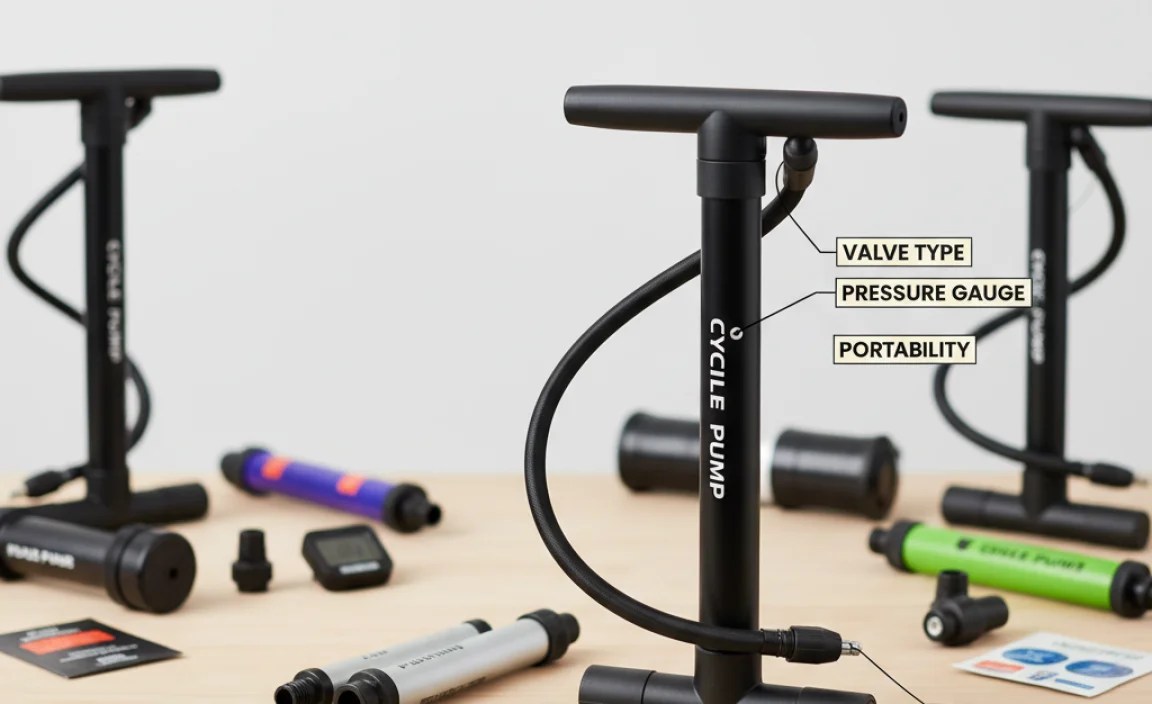
When selecting a cycle pump, consider these important features:
Pressure Gauge
A pressure gauge allows you to accurately inflate your tires to the recommended pressure. This is crucial for optimal performance, comfort, and safety. Analog gauges are reliable and easy to read, while digital gauges offer precise measurements.
Valve Compatibility
Most cycle pumps are designed to work with both Presta and Schrader valves. Some pumps have dual heads that can accommodate both valve types, while others require you to switch internal parts. Make sure the pump you choose is compatible with your bike’s valves.
Inflation Volume and Pressure
Inflation volume refers to the amount of air a pump can deliver with each stroke. High-volume pumps are ideal for mountain bike tires, while high-pressure pumps are better suited for road bike tires. Consider the type of tires you’ll be inflating most often.
Material and Durability
The material of the pump affects its durability and lifespan. Aluminum and steel pumps are more durable than plastic pumps. Look for pumps with sturdy construction and high-quality components.
Ergonomics and Comfort
A comfortable handle and stable base make pumping easier and more efficient. Look for pumps with ergonomic designs that minimize strain on your hands and back.
Top Cycle Pump Recommendations
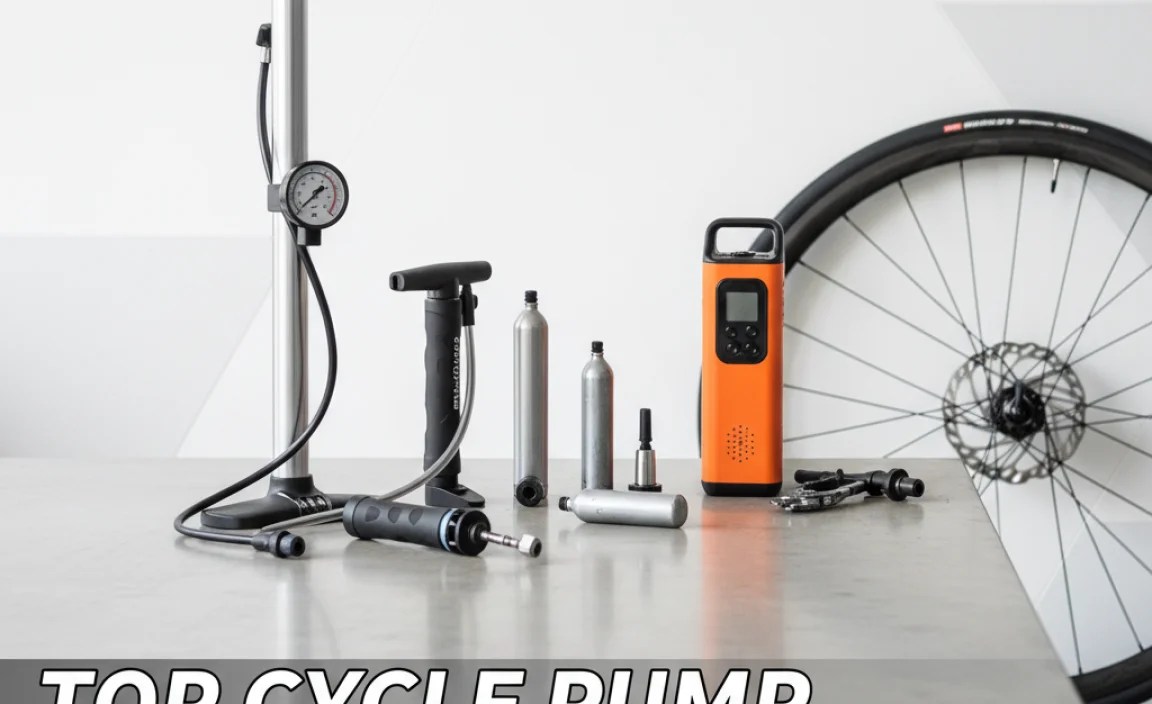
Here are some of my top recommendations for cycle pumps, based on different needs and budgets:
Best Floor Pump: Lezyne Classic Floor Drive
The Lezyne Classic Floor Drive is a high-quality floor pump that offers excellent performance and durability. It features a steel barrel and piston, an accurate gauge, and a comfortable wooden handle. It’s designed to inflate tires quickly and easily, making it a great choice for home use.
Best Mini Pump: Topeak Mini Rocket IGlow
The Topeak Mini Rocket IGlow is a compact and lightweight mini pump that’s perfect for carrying on rides. It features an integrated gauge and a built-in light for added visibility. Its small size and efficient design make it a reliable option for emergency inflation.
Best CO2 Inflator: Genuine Innovations Ultraflate CO2 Inflator
The Genuine Innovations Ultraflate CO2 Inflator is a simple and reliable CO2 inflator that’s easy to use. It features a push-to-inflate design and is compatible with both Presta and Schrader valves. It’s a great choice for racers and riders who need to quickly inflate tires on the go.
Best Tubeless Inflator: Bontrager TLR Flash Charger Floor Pump
The Bontrager TLR Flash Charger Floor Pump is designed specifically for seating tubeless tires. It features a large air chamber that releases a high volume of air in one go, making it easy to seat even the most stubborn tubeless tires. It can also be used as a regular floor pump.
Step-by-Step Guide: How to Use a Floor Pump
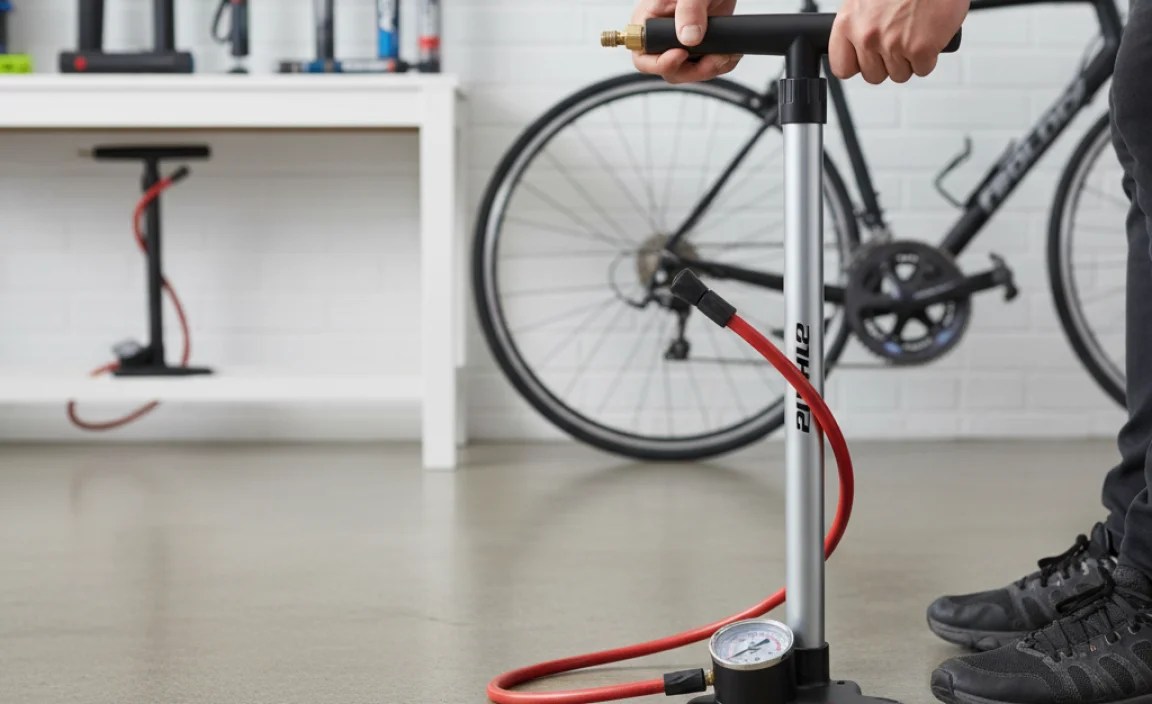
Using a floor pump is straightforward. Follow these steps for efficient and accurate inflation:
- Connect the Pump Head: Attach the pump head to your tire’s valve. Make sure it’s securely connected to prevent air leakage.
- Lock the Lever: If your pump has a lever, lock it to secure the pump head to the valve.
- Inflate the Tire: Stand with one foot on the pump’s base for stability. Grip the handle with both hands and pump up and down in a smooth, steady motion.
- Monitor the Pressure: Watch the pressure gauge as you pump. Inflate the tire to the recommended pressure, which is usually printed on the tire’s sidewall.
- Release and Remove: Once the tire is inflated to the correct pressure, unlock the lever and carefully remove the pump head from the valve.
Step-by-Step Guide: How to Use a Mini Pump
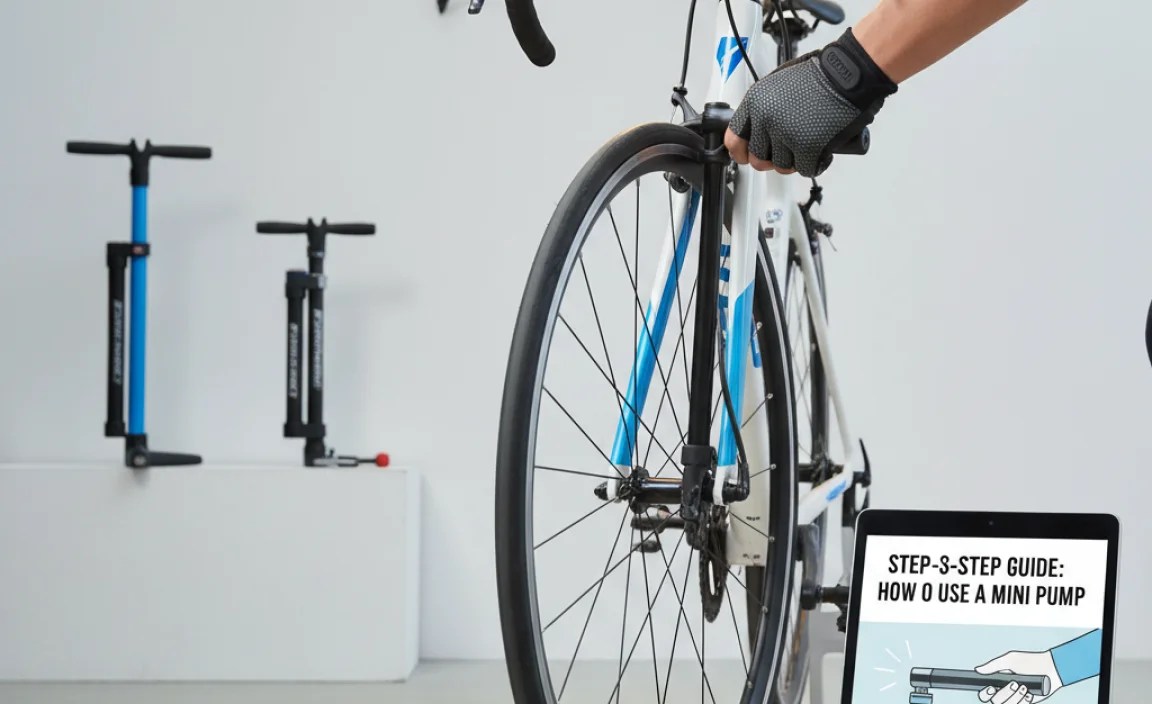
Using a mini pump requires more effort than a floor pump, but it’s still a manageable task. Here’s how:
- Connect the Pump Head: Attach the pump head to your tire’s valve. Ensure a secure connection to minimize air loss.
- Secure the Pump: Place the pump’s base against a stable surface or use your body to stabilize it.
- Inflate the Tire: Grip the pump handle and pump up and down. Use short, quick strokes to inflate the tire.
- Check the Pressure: If your pump has a gauge, monitor the pressure as you pump. If not, periodically squeeze the tire to gauge its firmness.
- Release and Remove: Once the tire is firm enough to ride, carefully remove the pump head from the valve.
Step-by-Step Guide: How to Use a CO2 Inflator
CO2 inflators are quick and easy to use, but it’s important to follow the instructions carefully:
- Prepare the Inflator: Screw the CO2 cartridge into the inflator head, but don’t pierce it yet.
- Connect to Valve: Attach the inflator head to your tire’s valve.
- Inflate the Tire: Push the inflator head to pierce the CO2 cartridge and release the gas. Inflate the tire to the desired pressure.
- Remove and Dispose: Carefully remove the inflator head from the valve. Dispose of the empty CO2 cartridge properly.
Cycle Pump Maintenance Tips
To keep your cycle pump in good working condition, follow these maintenance tips:
- Clean the Pump Head: Regularly clean the pump head to remove dirt and debris that can interfere with the valve seal.
- Lubricate Moving Parts: Apply a small amount of lubricant to the pump’s moving parts to keep them operating smoothly.
- Check for Leaks: Inspect the pump for air leaks. Tighten any loose connections or replace worn-out seals.
- Store Properly: Store your pump in a dry place to prevent rust and corrosion.
Troubleshooting Common Cycle Pump Issues
Here are some common cycle pump issues and how to resolve them:
- Pump Not Inflating: Check the pump head connection and make sure it’s securely attached to the valve. Also, check for any air leaks in the hose or pump body.
- Gauge Not Working: If the gauge isn’t working, it may be damaged or faulty. Replace the gauge or consider purchasing a new pump.
- Difficulty Pumping: If you’re having difficulty pumping, the pump may be dry or need lubrication. Apply a small amount of lubricant to the moving parts.
Cycle Pump Comparison Table
Here’s a comparison table summarizing the different types of cycle pumps:
| Type of Pump | Pros | Cons | Best Use |
|---|---|---|---|
| Floor Pump | Efficient, accurate, durable | Not portable, takes up space | Home use, accurate inflation |
| Mini Pump | Portable, lightweight, affordable | Requires effort, lower volume | Emergency inflation on rides |
| CO2 Inflator | Fast inflation, lightweight | Requires cartridges, expensive | Racing, quick inflation |
| Frame-Mounted Pump | Always available, efficient | Can be bulky, may not fit all frames | Convenient on-bike inflation |
| Tubeless Inflator | Seats tubeless tires, can be used as floor pump | More expensive, not needed for tube tires | Seating tubeless tires |
Pressure Conversion Table
Use this table to convert between PSI and Bar pressure measurements:
| PSI | Bar |
|---|---|
| 30 | 2.1 |
| 40 | 2.8 |
| 50 | 3.4 |
| 60 | 4.1 |
| 70 | 4.8 |
| 80 | 5.5 |
| 90 | 6.2 |
| 100 | 6.9 |
| 110 | 7.6 |
| 120 | 8.3 |
FAQ About Cycle Pumps
Here are some frequently asked questions about cycle pumps:
- What is the difference between Presta and Schrader valves?
- Presta valves are narrow and have a locking nut at the top, commonly found on road bikes. Schrader valves are wider and similar to those on car tires, often used on mountain and hybrid bikes.
- How do I know what tire pressure to use?
- The recommended tire pressure is usually printed on the sidewall of your tire. Use a pump with a gauge to inflate your tires to this pressure.
- Can I use a car tire pump on my bike?
- Yes, if you have a Schrader valve. However, car tire pumps often deliver too much air too quickly, making it difficult to achieve precise pressure. It’s better to use a pump designed for bicycles.
- How often should I inflate my tires?
- Check and inflate your tires before every ride. Tires lose pressure over time, so regular inflation ensures optimal performance and safety.
- What is a tubeless tire inflator, and do I need one?
- A tubeless tire inflator is designed to quickly seat tubeless tires onto the rim by delivering a large volume of air in one go. You only need one if you’re using tubeless tires.
- Why is my pump not working on my Presta valve?
- Make sure the Presta valve’s locking nut is fully open. Also, ensure the pump head is securely attached to the valve and not leaking air.
- How do I convert from PSI to Bar?
- To convert from PSI to Bar, divide the PSI value by 14.5. For example, 60 PSI is approximately 4.1 Bar.
Conclusion
Choosing the right cycle pump is essential for maintaining your bike’s performance and ensuring a safe and enjoyable ride. Whether you need a floor pump for home use, a mini pump for on-the-go inflation, or a CO2 inflator for quick fixes, understanding the different types and features will help you make the best choice. Remember to consider valve compatibility, pressure gauge accuracy, and pump durability. With the right pump, you’ll be able to keep your tires properly inflated and enjoy every mile of your cycling adventures.
“`


