
What Makes a Well Pump Short Cycle? A Simple Guide

Quick Summary: A well pump short cycles when it turns on and off too frequently, often within minutes. This is usually due to a waterlogged pressure tank, a faulty pressure switch, a leak in the system, or a well that can’t keep up with demand. Addressing these issues promptly prevents pump burnout and ensures a consistent water supply.
Is your well pump acting up? Does it switch on and off more than it used to? This annoying issue, called short cycling, isn’t just a nuisance – it can seriously damage your well pump. A pump that starts and stops too often wears out much faster, costing you money and leaving you without water. Don’t worry, figuring out the cause and fixing it is often something you can handle yourself. We’ll walk you through the common reasons for short cycling and give you simple steps to get your water system back on track. Let’s get started!
Understanding Well Pump Short Cycling

Short cycling is when your well pump turns on and off rapidly, much more frequently than it should. Ideally, a well pump should run for a reasonable amount of time to fill the pressure tank and then shut off until more water is needed. When short cycling occurs, the pump might turn on for just a few seconds or minutes, then shut off, only to start again shortly after. This puts a lot of stress on the pump motor and can lead to premature failure. Think of it like repeatedly starting and stopping your car – it wears down the engine much faster.
Why is Short Cycling Bad?
Short cycling isn’t just annoying; it’s bad for your well pump and your wallet. Here’s why:
- Reduced Pump Lifespan: The constant starting and stopping creates excessive wear and tear on the pump motor, significantly shortening its lifespan.
- Increased Energy Consumption: Each start-up of the pump requires a surge of energy. Short cycling means more start-ups, which translates to higher electricity bills.
- Overheated Motor: Frequent starts can cause the pump motor to overheat, leading to damage and potential burnout.
- Water Pressure Fluctuations: Short cycling can cause inconsistent water pressure in your home, making showers less enjoyable and affecting the performance of appliances like dishwashers and washing machines.
Common Causes of Well Pump Short Cycling

Several factors can cause a well pump to short cycle. Let’s look at the most common culprits:
1. Waterlogged Pressure Tank
The most frequent cause of short cycling is a waterlogged pressure tank. A pressure tank stores water under pressure, providing a buffer between the pump and your household water usage. It contains a bladder or diaphragm that separates the water from compressed air. Over time, the air charge can leak out, causing the tank to become filled with water. When this happens, the pump has to work harder and cycle more frequently to maintain pressure.
How to Check for a Waterlogged Tank:
- Tap the Tank: Gently tap on the side of the tank. A hollow sound usually indicates air, while a solid, full sound suggests it’s waterlogged.
- Check the Air Valve: Locate the air valve (Schrader valve) on top of the tank, similar to a tire valve. Press the valve stem. If water comes out instead of air, the bladder is likely ruptured and the tank needs replacement.
Fixing a Waterlogged Tank:
If the tank is simply low on air, you can try recharging it. Here’s how:
- Turn off the pump: Locate the breaker for the well pump and switch it off.
- Drain the tank: Open a faucet in the house until all the water drains out and the pressure gauge reads zero.
- Check the air pressure: Use a tire pressure gauge to check the air pressure at the Schrader valve. It should be 2 PSI below the pump’s cut-in pressure (usually 30 PSI).
- Add air: If the pressure is low, use an air compressor to add air until it reaches the correct pressure.
- Turn the pump back on: Close the faucet and turn the breaker back on to restart the pump.
- Monitor: Observe the pump’s cycling behavior. If it still short cycles, the bladder may be damaged, requiring tank replacement.
2. Faulty Pressure Switch
The pressure switch is a crucial component that senses the water pressure in the tank and tells the pump when to turn on and off. If the pressure switch is faulty, it may not accurately sense the pressure, causing the pump to cycle erratically.
Symptoms of a Faulty Pressure Switch:
- Pump cycles very rapidly.
- Pump doesn’t turn on at all.
- Pump runs continuously.
- Erratic pressure readings.
Testing the Pressure Switch:
- Turn off the power: Switch off the breaker for the well pump.
- Inspect the switch: Look for signs of corrosion, damage, or loose wires.
- Clean the nipple: The pressure switch is connected to the plumbing via a small nipple. This can become clogged with sediment, preventing accurate pressure readings. Carefully remove the switch and clean the nipple with a small brush or wire.
- Test with a multimeter: Use a multimeter to test the continuity of the switch. You should have continuity when the pressure is below the cut-in pressure and no continuity when it’s above the cut-out pressure.
Replacing the Pressure Switch:
- Turn off the power and water: Switch off the breaker and close the shut-off valve to the tank.
- Disconnect the wiring: Carefully disconnect the wires from the old switch, noting their positions.
- Unscrew the old switch: Unscrew the old pressure switch from the fitting.
- Install the new switch: Apply Teflon tape to the threads of the new switch and screw it into the fitting.
- Reconnect the wiring: Reconnect the wires to the new switch, matching the positions you noted earlier.
- Turn on the power and water: Open the shut-off valve and turn the breaker back on.
- Adjust the pressure settings: If necessary, adjust the pressure settings on the new switch according to the manufacturer’s instructions.
3. Leaks in the System
Leaks, whether in the well piping, the pressure tank, or the household plumbing, can cause a drop in pressure, triggering the pump to cycle more frequently. Even small leaks can add up over time and lead to short cycling.
Identifying Leaks:
- Check visible pipes: Inspect all visible pipes and fittings for signs of leaks, such as drips, moisture, or corrosion.
- Listen for running water: Turn off all faucets and appliances and listen for the sound of running water, which could indicate a hidden leak.
- Check the well casing: Inspect the well casing for cracks or damage that could allow water to leak out.
- Toilet leaks: Often overlooked, a running toilet can cause pressure fluctuations. Add food coloring to the tank; if it appears in the bowl without flushing, you have a leak.
Fixing Leaks:
- Tighten fittings: Tighten any loose fittings with a wrench.
- Replace damaged pipes: Replace any damaged or corroded pipes.
- Repair toilet leaks: Replace the flapper or fill valve in the toilet tank.
- Call a professional: For leaks in the well casing or underground piping, it’s best to call a qualified well technician.
4. Low Well Yield
If your well’s water production (yield) is low, the pump may struggle to keep up with demand, causing it to cycle frequently. This is more common in older wells or during periods of drought.
Determining Well Yield:
- Check well records: Review your well records to see the original well yield.
- Perform a drawdown test: A drawdown test involves measuring the water level in the well over time while the pump is running. This can help determine the well’s recovery rate and sustainable yield. This is best done by a professional.
Addressing Low Well Yield:
- Conserve water: Reduce water usage by fixing leaks, installing low-flow fixtures, and being mindful of your water consumption.
- Deepen the well: In some cases, deepening the well can increase its yield. This is a significant undertaking that requires professional assessment.
- Consider a storage tank: A storage tank can provide a buffer of water, allowing the well pump to run less frequently.
- Hydrofracking: This controversial method can sometimes improve well yield by fracturing surrounding rock to improve water flow. Consult with a qualified professional.
5. Incorrectly Sized Pressure Tank
If your pressure tank is too small for your household’s water demands, the pump will cycle more frequently to maintain pressure. The size of the tank should be matched to the pump’s capacity and your household’s water usage patterns.
Determining the Correct Tank Size:
A general rule of thumb is that a typical household needs at least a 20-30 gallon pressure tank. However, the ideal size depends on factors like the pump’s flow rate (gallons per minute), the number of people in the household, and peak water usage times.
Consult a well pump professional or use an online calculator to determine the appropriate tank size for your specific needs. Here’s a table to give you a general idea:
| Household Size (People) | Recommended Tank Size (Gallons) |
|---|---|
| 1-2 | 20-40 |
| 3-4 | 40-60 |
| 5-6 | 60-80 |
| 7+ | 80+ |
Replacing the Pressure Tank:
- Turn off the power and water: Switch off the breaker and close the shut-off valve to the tank.
- Drain the system: Open a faucet to relieve pressure and drain the existing tank.
- Disconnect the old tank: Disconnect the plumbing connections to the old tank.
- Install the new tank: Connect the new tank to the plumbing, ensuring proper fittings and seals.
- Charge the tank: Pre-charge the tank to the correct pressure (usually 2 PSI below the pump’s cut-in pressure).
- Turn on the power and water: Open the shut-off valve and turn the breaker back on.
Step-by-Step Troubleshooting Guide
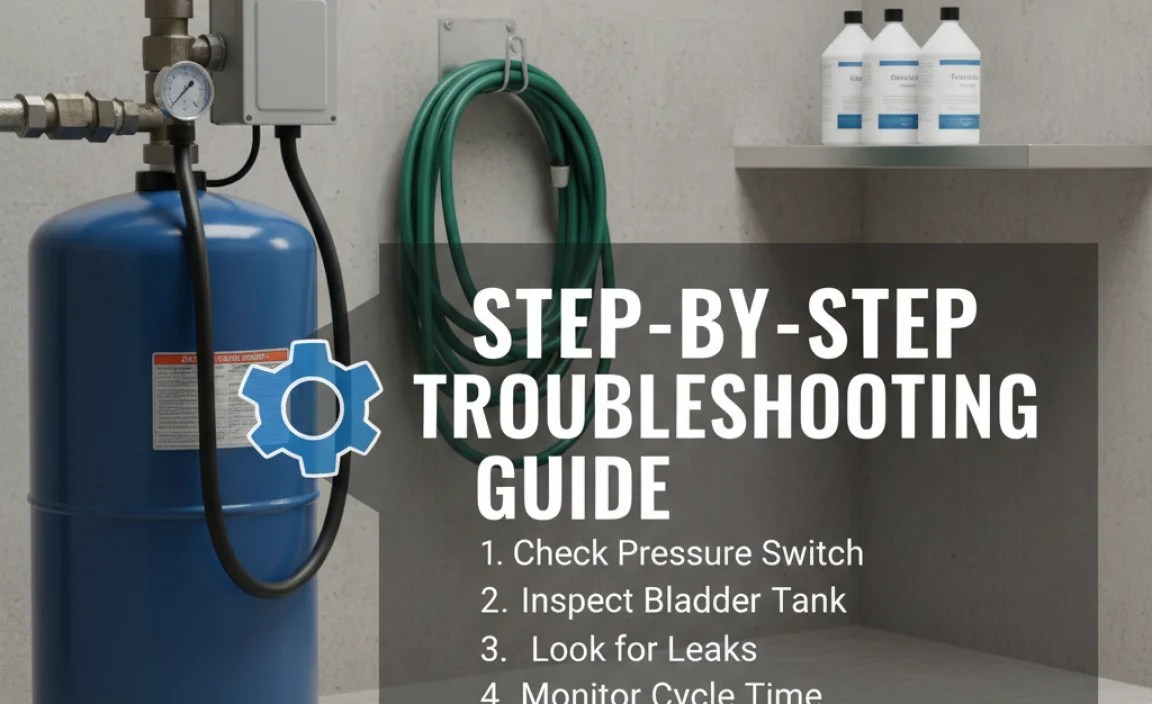
Here’s a systematic approach to troubleshooting well pump short cycling:
- Check the Pressure Tank: Perform the “tap test” and check the air valve. Recharge the tank if necessary.
- Inspect the Pressure Switch: Look for signs of damage or corrosion. Clean the nipple and test the switch with a multimeter.
- Look for Leaks: Inspect all visible pipes and fittings for leaks. Check for running toilets.
- Assess Well Yield: If you suspect a low well yield, consider conserving water and consult with a professional about testing the well.
- Evaluate Tank Size: Determine if your pressure tank is appropriately sized for your household’s water demands.
Tools You Might Need

Having these tools on hand can make troubleshooting and fixing short cycling easier:
- Wrenches: For tightening or loosening fittings.
- Screwdrivers: For electrical connections and switch adjustments.
- Multimeter: For testing the pressure switch.
- Tire Pressure Gauge: For checking and adjusting air pressure in the tank.
- Air Compressor: For adding air to the pressure tank.
- Teflon Tape: For sealing pipe threads.
- Bucket: For catching water during draining.
Preventing Short Cycling

Preventing short cycling is always better than fixing it. Here are some tips to keep your well pump system running smoothly:
- Regular Tank Maintenance: Check the air pressure in your pressure tank at least once a year.
- Prompt Leak Repair: Fix any leaks as soon as you notice them.
- Water Conservation: Be mindful of your water usage and conserve water whenever possible.
- Professional Inspections: Have your well system inspected by a qualified technician every few years.
When to Call a Professional
While many causes of short cycling can be addressed with DIY solutions, there are times when it’s best to call a professional:
- You’re not comfortable working with electricity or plumbing.
- You suspect a leak in the well casing or underground piping.
- You’re unable to diagnose the cause of the short cycling.
- You need help with a complex repair, such as replacing a well pump or deepening the well.
A qualified well technician has the expertise and equipment to accurately diagnose and repair well system problems, ensuring the safety and reliability of your water supply.
FAQ About Well Pump Short Cycling
What is the ideal run time for a well pump?
Ideally, a well pump should run for at least one to two minutes to properly fill the pressure tank. Shorter run times indicate a problem like a waterlogged tank or leak.
Can short cycling damage my appliances?
Yes, short cycling can cause inconsistent water pressure, which can negatively affect appliances like dishwashers, washing machines, and even your water heater.
How often should I replace my pressure tank?
A well-maintained pressure tank can last 10-15 years. However, if you notice signs of rust, leaks, or frequent waterlogging, it’s time to replace it.
Is it safe to drink water from a well that is short cycling?
While short cycling itself doesn’t directly contaminate the water, it can be a sign of other issues, like a failing pump or leaks, which could potentially compromise water quality. It’s always a good idea to have your water tested regularly, especially if you notice changes in your well system’s behavior.
How much does it cost to fix short cycling?
The cost to fix short cycling varies depending on the cause. A simple fix like recharging the pressure tank is free. Replacing a pressure switch might cost $50-$100. Replacing a pressure tank can range from $200-$600, including professional installation. More complex issues like well deepening can cost thousands.
Can cold weather cause short cycling?
Yes, freezing temperatures can cause pipes to burst or develop small leaks, leading to a drop in water pressure and causing the pump to short cycle. Insulating your pipes can help prevent this.
What size pressure tank do I need for a 1 HP well pump?
For a 1 HP well pump, a 20-40 gallon pressure tank is generally recommended for a small household (1-2 people). Larger households will need a bigger tank. Always consult with a professional to determine the best size for your specific needs.
Conclusion
Dealing with a short cycling well pump can be frustrating, but understanding the common causes and knowing how to troubleshoot them can save you time and money. By regularly checking your pressure tank, inspecting for leaks, and being mindful of your water usage, you can keep your well system running smoothly for years to come. Remember, if you’re ever unsure about a repair or encounter a complex problem, don’t hesitate to call a qualified well technician. A healthy well system means a reliable water supply for you and your family!
“`


