
How to Stop Your Well Pump from Short Cycling: A Step-by-Step Guide

Quick Summary: Short cycling happens when your well pump turns on and off too frequently. To fix it, first check your pressure tank’s air charge. If it’s low, recharge it to the correct PSI (usually 2 PSI below the pump’s cut-in pressure). Also, inspect the pressure switch, water lines, and well for leaks or blockages. Replacing a faulty pressure switch or adding a Cycle Stop Valve may be necessary to stabilize water pressure.
Is your well pump driving you crazy by turning on and off every few seconds? This annoying issue, called short cycling, not only wastes energy but can also seriously damage your pump over time. Don’t worry, you’re not alone! Many homeowners face this problem, and luckily, it’s often fixable with a few simple steps.
In this guide, I’ll walk you through the most common causes of short cycling and provide clear, easy-to-follow instructions for troubleshooting and fixing the problem. Let’s get started and get your water system running smoothly again!
Understanding Well Pump Short Cycling

Before diving into solutions, let’s understand what short cycling is and why it’s bad news for your well pump.
What is Short Cycling?
Short cycling refers to a well pump turning on and off too frequently in a short period. Instead of running for a longer cycle to fill the pressure tank and then shutting off for an extended period, the pump rapidly starts and stops.
Why is Short Cycling Bad?
Here’s why you should address short cycling promptly:
- Pump Damage: Frequent starts and stops put extra strain on the pump motor, leading to premature wear and potential burnout.
- Increased Energy Consumption: Each start-up requires a surge of energy, wasting electricity and increasing your utility bills.
- Water Pressure Fluctuations: Short cycling causes inconsistent water pressure in your home, resulting in annoying surges and drops in water flow.
- Reduced Pump Lifespan: A pump that short cycles will likely need replacement much sooner than a pump that operates normally.
Common Causes of Well Pump Short Cycling

Several factors can cause a well pump to short cycle. Here’s a breakdown of the most common culprits:
- Low Air Charge in the Pressure Tank: This is the most frequent cause. The air cushion in the tank helps maintain consistent pressure. When the air charge is low, the pump cycles on and off rapidly.
- Waterlogged Pressure Tank: Over time, the pressure tank can become waterlogged, losing its air cushion.
- Faulty Pressure Switch: The pressure switch controls the pump’s on/off cycles. If it’s malfunctioning, it may trigger short cycling.
- Leaks in the Plumbing System: Leaks, even small ones, can cause a drop in pressure, prompting the pump to turn on frequently.
- Clogged or Restricted Well Intake: A blockage in the well can reduce water flow, leading to short cycling.
- Incorrect Pump Size: If the pump is too powerful for your well’s recovery rate, it may cycle rapidly.
- Well is Running Dry: When a well cannot supply the water demand, it can cause the pump to cycle on and off as it tries to keep up.
Step-by-Step Guide to Fixing Well Pump Short Cycling

Now, let’s get into the practical steps you can take to diagnose and fix the short cycling problem.
Step 1: Check the Pressure Tank’s Air Charge
This is the most common fix, so start here:
- Turn off the Pump: Locate the breaker for your well pump in the electrical panel and switch it off. This prevents the pump from running while you’re working on the system.
- Drain the Tank: Open a faucet in your house and let the water run until the pressure tank is completely empty. This ensures an accurate air pressure reading.
- Check the Air Charge: Locate the Schrader valve (like a tire valve) on top of the pressure tank. Use a tire pressure gauge to check the air pressure.
- Recharge the Tank (If Needed): The correct air pressure should be about 2 PSI below the pump’s cut-in pressure (the pressure at which the pump turns on). For example, if your pump turns on at 40 PSI, the air charge should be 38 PSI. Use a bicycle pump or air compressor to add air to the tank until it reaches the correct pressure.
- Turn the Pump Back On: Close the faucet and turn the well pump breaker back on. Observe the pump’s behavior. If the short cycling is resolved, you’re done!
Raymond’s Tip: Check the air pressure in your pressure tank every 3-6 months to prevent short cycling before it starts.
Step 2: Inspect the Pressure Switch
If the air charge is correct and the pump is still short cycling, the pressure switch might be the problem:
- Turn off the Pump: As before, switch off the well pump breaker.
- Locate the Pressure Switch: The pressure switch is usually located near the pressure tank and has wires connected to it.
- Inspect for Damage: Look for any signs of corrosion, water damage, or loose wires.
- Clean the Switch Contacts: Carefully remove the cover of the pressure switch. You might find debris or mineral buildup on the contacts. Use a small brush or electrical contact cleaner to clean them.
- Adjust the Pressure Settings (If Necessary): Some pressure switches have adjustable settings. Refer to your pump’s manual for the correct pressure settings. Caution: Incorrect adjustments can damage your pump.
- Replace the Switch (If Faulty): If the pressure switch is severely damaged or cleaning doesn’t help, replace it with a new one. Be sure to match the voltage and pressure ratings of the old switch.
- Turn the Pump Back On: After inspecting or replacing the pressure switch, turn the breaker back on and observe the pump’s behavior.
Step 3: Check for Leaks in the Plumbing System
Even small leaks can cause pressure drops and trigger short cycling:
- Inspect Pipes and Fittings: Carefully examine all visible pipes, fittings, and connections for signs of leaks. Look for drips, wet spots, or mineral buildup.
- Check Faucets and Toilets: Make sure all faucets are tightly closed and toilets aren’t running continuously.
- Check Underground Pipes: If you suspect a leak in an underground pipe, you may need to call a professional plumber to locate and repair it.
- Repair Leaks: Repair any leaks you find by tightening connections, replacing damaged pipes or fittings, or repairing leaky faucets and toilets.
Raymond’s Tip: A drop in water pressure when no fixtures are in use is a sign of a leak somewhere in your system.
Step 4: Inspect the Well and Intake
A clogged or restricted well intake can also cause short cycling:
- Check the Well Casing: Inspect the well casing for any signs of damage or collapse.
- Check for Debris: If possible, look inside the well for any debris or sediment buildup.
- Consider Professional Inspection: If you suspect a blockage in the well, it’s best to call a professional well service company to inspect and clean the well.
Step 5: Consider a Cycle Stop Valve
A Cycle Stop Valve (CSV) is a device that maintains constant water pressure, regardless of flow rate. It can be a good solution for homes with variable water demands:
- Research Cycle Stop Valves: Learn about the different types of Cycle Stop Valves and choose one that’s appropriate for your well pump and plumbing system.
- Professional Installation: It’s generally recommended to have a qualified plumber install a Cycle Stop Valve.
Troubleshooting Table
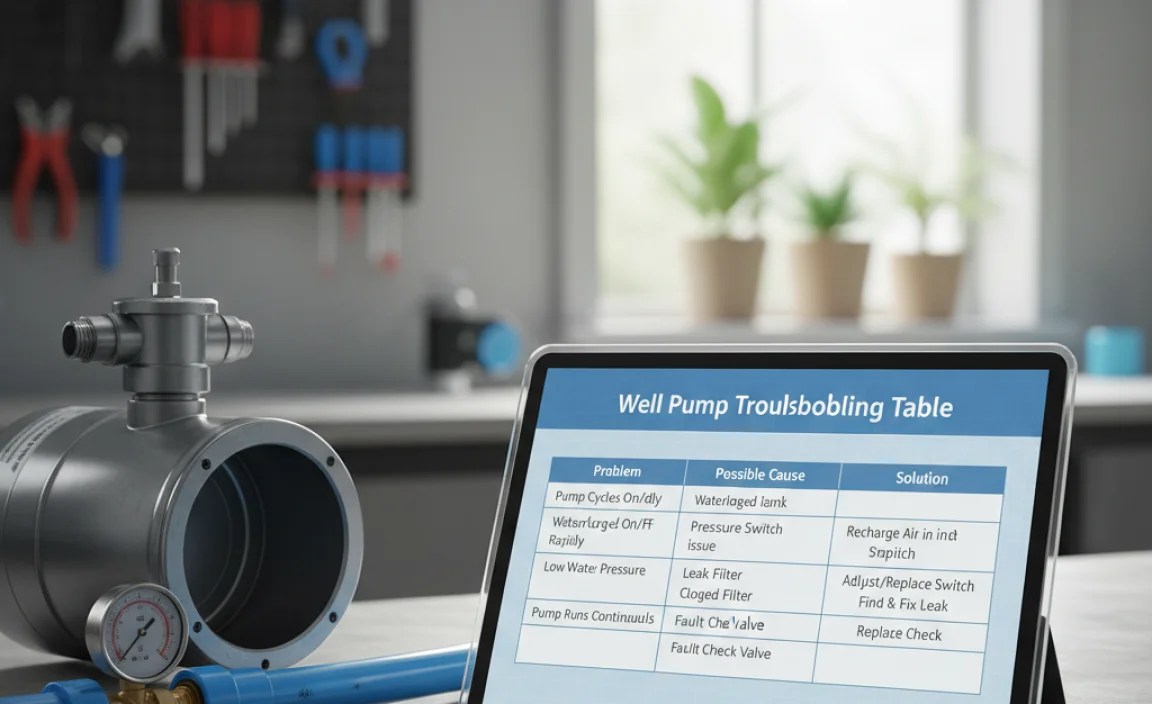
Here’s a quick reference table to help you troubleshoot the most common causes of short cycling:
| Problem | Possible Cause | Solution |
|---|---|---|
| Pump short cycles | Low air charge in pressure tank | Recharge the tank to the correct PSI |
| Pump short cycles | Faulty pressure switch | Inspect, clean, or replace the pressure switch |
| Pump short cycles | Leaks in the plumbing system | Inspect and repair any leaks |
| Pump short cycles | Clogged well intake | Inspect and clean the well (professional help may be needed) |
| Pump short cycles | Waterlogged pressure tank | Replace the pressure tank |
When to Call a Professional

While many short cycling problems can be resolved with DIY troubleshooting, there are situations where it’s best to call a professional:
- You’re uncomfortable working with electricity or plumbing.
- You can’t identify the cause of the short cycling.
- You suspect a problem with the well itself.
- You need to replace major components like the pump or pressure tank.
Preventing Future Short Cycling
Here are some tips to prevent short cycling from happening again:
- Regularly Check the Air Charge: Check the air pressure in your pressure tank every 3-6 months.
- Inspect for Leaks: Periodically inspect your plumbing system for leaks.
- Maintain Your Well: Have your well professionally inspected and cleaned every few years.
- Consider a Water Softener: If you have hard water, a water softener can help prevent mineral buildup in your plumbing system.
Understanding Water Pressure and PSI
PSI stands for “pounds per square inch” and it’s the unit used to measure water pressure. Here’s a quick guide to understanding typical water pressure levels:
| PSI Level | Description | Considerations |
|---|---|---|
| Less than 40 PSI | Low water pressure | May require a booster pump or pressure tank adjustment. |
| 40-60 PSI | Optimal range for most homes | Provides adequate water flow for most fixtures and appliances. |
| Greater than 60 PSI | High water pressure | Can cause damage to pipes and appliances; consider a pressure regulator. EPA Guidelines recommend monitoring your water pressure. |
Raymond’s Tip: Knowing your typical water pressure is key to diagnosing potential problems. A simple pressure gauge attached to an outdoor spigot can provide accurate readings.
FAQ: Well Pump Short Cycling
Here are some frequently asked questions about well pump short cycling:
Why does my well pump keep turning on and off rapidly?
This is called short cycling, and it’s often caused by a low air charge in the pressure tank, a faulty pressure switch, or leaks in your plumbing.
How do I check the air pressure in my pressure tank?
Turn off the pump, drain the tank, and use a tire pressure gauge to check the air pressure at the Schrader valve on top of the tank.
What should the air pressure be in my pressure tank?
The air pressure should be about 2 PSI below the pump’s cut-in pressure (the pressure at which the pump turns on).
Can a leaky toilet cause my well pump to short cycle?
Yes, even a small leak can cause a drop in pressure, prompting the pump to turn on frequently.
How often should I check my pressure tank?
Check the air pressure in your pressure tank every 3-6 months.
Is it safe to drink water from a well that’s short cycling?
While short cycling itself doesn’t directly contaminate the water, it can indicate underlying issues that could affect water quality. It’s always a good idea to have your well water tested regularly, regardless of whether it’s short cycling or not. Contact your local health department for information on water testing services.
When should I replace my well pump?
If your well pump is old (10-15 years or more), frequently short cycling despite your best efforts, or showing other signs of failure (e.g., reduced water pressure, unusual noises), it may be time to replace it.
Conclusion
Fixing a short cycling well pump might seem daunting, but by following these steps, you can often diagnose and resolve the problem yourself. Start with the simple solutions, like checking the air charge in the pressure tank, and work your way through the more complex troubleshooting steps if needed. Remember, if you’re ever unsure or uncomfortable, don’t hesitate to call a qualified professional. With a little effort, you can keep your well pump running smoothly and ensure a reliable water supply for your home. Happy plumbing!
“`


