
How to Fill a Football with a Cycle Pump: A Simple Guide

Quick Summary: Yes, you can use a cycle pump to inflate a football! You’ll need a needle adapter, which usually screws onto the pump’s head. Moisten the needle, gently insert it into the ball’s valve, and start pumping. Keep an eye on the pressure – most footballs need around 7-9 PSI. Remove the needle carefully to avoid damaging the valve. Now you’re ready to play!
Ever found yourself ready for a game, only to discover your football is flat? It’s a common frustration, especially when you don’t have a traditional ball pump handy. But don’t worry! A cycle pump can be a surprisingly effective substitute. Many people don’t realize they already have the tool they need sitting in their garage.
Using a cycle pump to inflate a football is easier than you might think. With a simple needle adapter (the same one you might use for other sports balls), you can get your football game-ready in minutes. This guide will walk you through each step, ensuring you inflate your ball safely and correctly. Let’s get started!
What You’ll Need
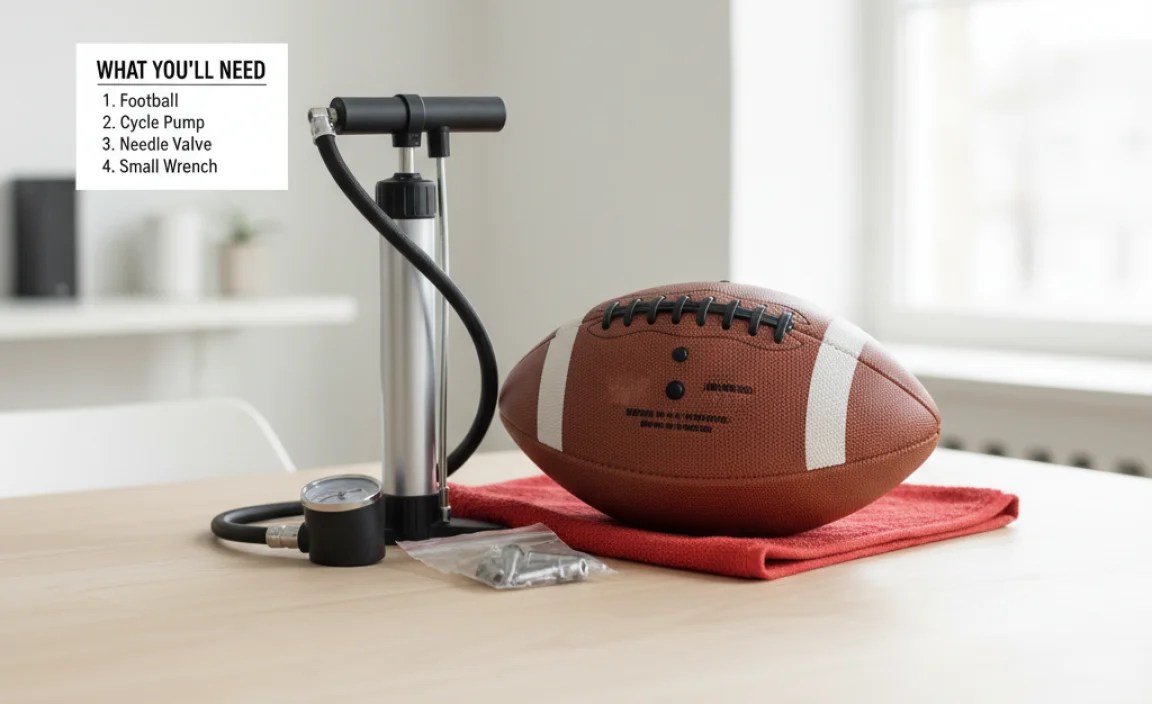
Before you begin, gather these essential items:
- Cycle Pump: Any standard bike pump will work. Floor pumps with a gauge are ideal for accurate inflation.
- Needle Adapter: This screws onto the pump head and allows you to inflate the football. These are widely available online or at sports stores.
- Water or Saliva: To moisten the needle for easier insertion.
- Pressure Gauge (Optional): If your pump doesn’t have one, a separate gauge helps ensure you don’t over-inflate the ball.
Step-by-Step Guide: Inflating Your Football

Follow these steps to inflate your football using a cycle pump:
Step 1: Prepare the Needle Adapter
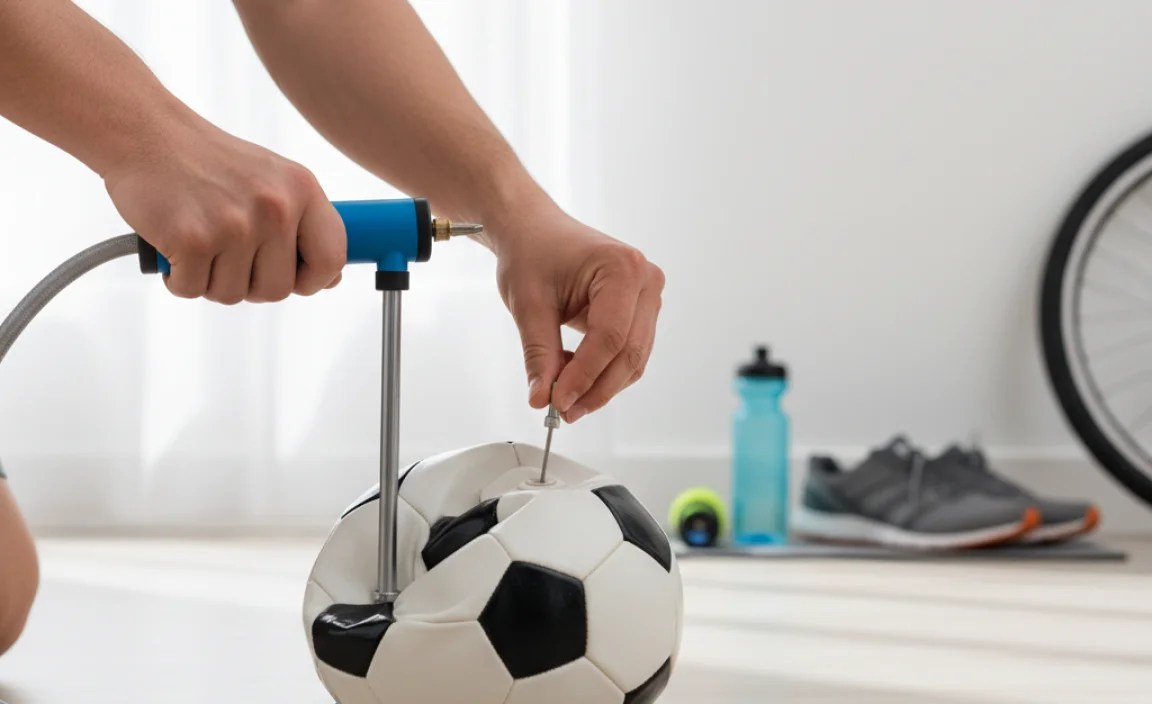
The first step is to attach the needle adapter to your cycle pump. Most adapters screw directly onto the pump head where you would normally attach it to your bike tire valve.
- Locate the Adapter: Find the needle adapter. It’s usually a small, pointed metal pin with a threaded base.
- Attach to Pump: Screw the adapter onto the pump head. Make sure it’s securely attached to prevent air leaks.
Step 2: Prepare the Football
Next, you need to prepare the football valve for inflation. This involves moistening the needle to ensure smooth insertion.
- Locate the Valve: Find the small hole (the valve) on the football.
- Moisten the Needle: Lightly wet the needle with water or saliva. This helps it slide into the valve without damaging it.
Step 3: Insert the Needle
Carefully insert the needle into the football’s valve. This step requires a gentle touch to avoid damaging the valve.
- Align the Needle: Hold the needle straight and align it with the valve opening.
- Insert Gently: Push the needle in gently but firmly. You should feel a slight resistance as it enters the valve. Avoid forcing it.
Step 4: Start Pumping
Now that the needle is inserted, you can start pumping air into the football. Use smooth, steady strokes.
- Position the Pump: Place the pump on a stable surface and ensure the hose is not kinked.
- Begin Pumping: Use a smooth, consistent motion to pump air into the football. If your pump has a gauge, monitor the pressure.
- Check the Pressure: Most footballs require between 7 and 9 PSI (pounds per square inch). Check the ball’s recommended pressure, which is usually printed near the valve.
Step 5: Monitor the Pressure
Keeping an eye on the pressure is crucial to avoid over-inflating the football. Over-inflation can damage the ball and affect its performance.
- Use a Gauge: If your pump has a built-in gauge, monitor the pressure as you pump.
- Stop at the Right PSI: Stop pumping when the gauge reaches the recommended PSI (usually 7-9 PSI).
- If No Gauge: If you don’t have a gauge, pump in short bursts and frequently check the ball’s firmness by hand. The ball should feel firm but not rock hard.
Step 6: Remove the Needle
Once the football is properly inflated, carefully remove the needle. This step is important to prevent air from escaping and to avoid damaging the valve.
- Pull Straight Out: Grip the pump head firmly and pull the needle straight out of the valve. Avoid bending or wiggling the needle.
- Check for Leaks: Listen for any hissing sounds, which indicate an air leak. If you hear a leak, re-insert the needle briefly and then remove it again. Sometimes, this reseats the valve.
Step 7: Test the Football
Finally, test the football to ensure it’s properly inflated and ready for play.
- Check Firmness: Squeeze the ball to check its firmness. It should feel firm and responsive.
- Bounce Test: Bounce the ball a few times to see how it rebounds. It should bounce consistently and predictably.
Troubleshooting Tips
Sometimes, things don’t go as planned. Here are some common issues and how to fix them:
- Air Leak: If you hear air leaking after removing the needle, try moistening the needle again and re-inserting it briefly. This can help reseat the valve. If the leak persists, the valve might be damaged, and you may need to replace the football.
- Needle Won’t Insert: If the needle won’t go in, make sure it’s properly aligned with the valve. Apply a bit more moisture and try again. Avoid forcing it, as this can bend or break the needle.
- Pump Not Inflating: Ensure the needle adapter is securely attached to the pump head. Also, check that the pump is functioning correctly. Sometimes, the pump’s internal seals can wear out, reducing its effectiveness.
Choosing the Right Cycle Pump

While any standard cycle pump can work, some are better suited for inflating footballs than others. Here’s a comparison:
| Type of Pump | Pros | Cons | Best For |
|---|---|---|---|
| Floor Pump | Stable, efficient, often includes a pressure gauge. | Larger, less portable. | Home use, accurate inflation. |
| Hand Pump | Portable, lightweight. | Requires more effort, may not have a gauge. | On-the-go inflation, emergencies. |
| Mini Pump | Very compact, easy to carry. | Less efficient, can be difficult to reach high pressures. | Minimalist cyclists, emergency use only. |
Cycle Pump Maintenance Tips
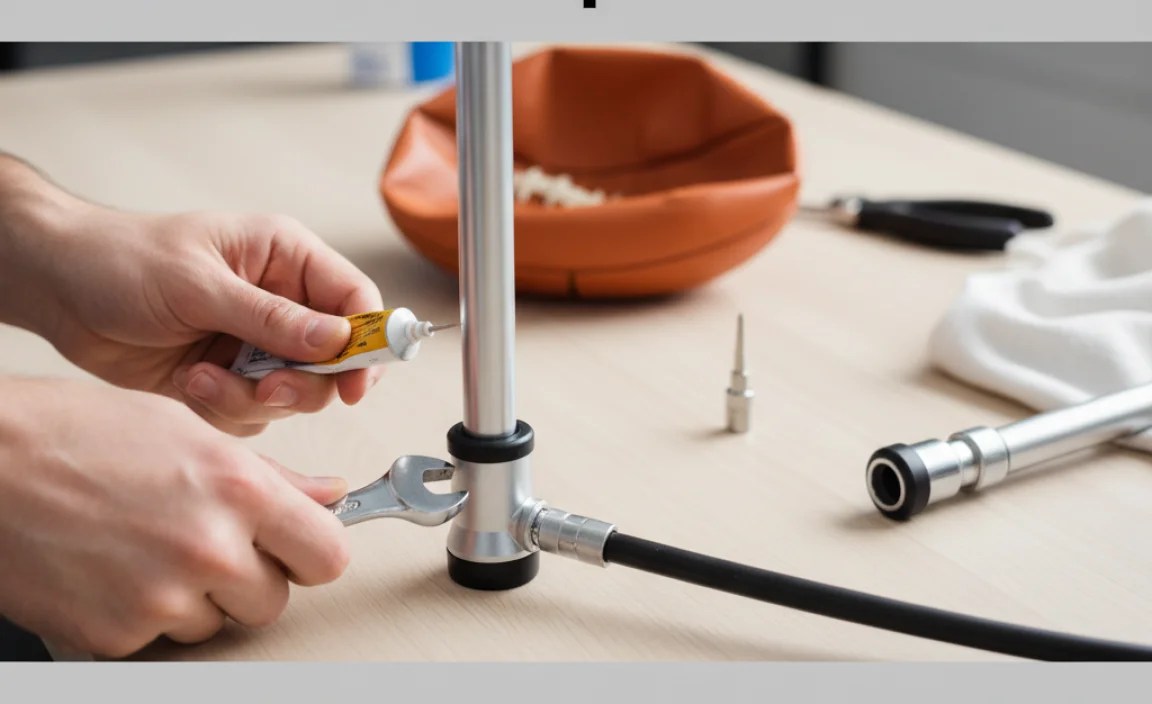
To keep your cycle pump in good working condition, follow these maintenance tips:
- Check for Leaks: Regularly inspect the hose and connections for air leaks. Tighten any loose fittings.
- Lubricate the Piston: Apply a small amount of silicone-based lubricant to the pump’s piston periodically to ensure smooth operation.
- Replace Worn Parts: If your pump starts to lose pressure or becomes difficult to use, replace any worn seals or valves.
- Store Properly: Store your pump in a dry place to prevent rust and corrosion.
Alternative Inflation Methods
If you don’t have a cycle pump or needle adapter, here are a couple of alternative methods for inflating a football:
- Ball Pump: A dedicated ball pump is the most convenient option. These pumps are specifically designed for inflating sports balls and usually come with a built-in needle.
- Air Compressor: An air compressor with an inflation nozzle can also be used. Be very careful not to over-inflate the ball, as compressors can deliver air very quickly. Use short bursts and monitor the pressure closely.
FAQ: Inflating Footballs with Cycle Pumps
Can I use any cycle pump to inflate a football?
Yes, most standard cycle pumps can be used to inflate a football as long as you have a needle adapter. Floor pumps are generally easier to use and often come with a pressure gauge, which is helpful for accurate inflation.
Where can I get a needle adapter?
Needle adapters are widely available at sports stores, online retailers, and some bicycle shops. They are inexpensive and usually come in packs, so you have spares.
How much pressure should I put in my football?
Most footballs require between 7 and 9 PSI (pounds per square inch). Check the ball itself for the recommended pressure, which is usually printed near the valve.
What happens if I over-inflate the football?
Over-inflating a football can damage it, causing it to become too hard and potentially damaging the seams. It can also affect the ball’s performance. Always monitor the pressure and avoid exceeding the recommended PSI.
What if the needle breaks inside the football valve?
If the needle breaks inside the valve, try using a pair of needle-nose pliers to carefully remove it. If you can’t remove it, you may need to replace the valve or, in some cases, the entire football.
How do I know if my football is properly inflated without a gauge?
If you don’t have a gauge, inflate the ball in short bursts and check its firmness frequently. The ball should feel firm but not rock hard. You should be able to press into it slightly with your thumb.
Can I use a car tire inflator to inflate a football?
While technically possible with the right adapter, it’s not recommended. Car tire inflators deliver air very quickly and can easily over-inflate the football, causing damage. It’s better to use a cycle pump or a dedicated ball pump for more control.
Understanding PSI and Ball Inflation
PSI, or pounds per square inch, is the standard unit for measuring air pressure. Knowing the correct PSI for your football is essential for optimal performance and longevity. Here’s a quick guide:
- Check the Ball: The recommended PSI is usually printed near the valve.
- Use a Gauge: A pressure gauge provides an accurate reading of the ball’s inflation level.
- Adjust as Needed: Over time, footballs can lose air. Check the pressure regularly and add air as needed to maintain the correct PSI.
The Science Behind Football Inflation
Understanding the science behind football inflation can help you maintain your equipment better. Here are a few key points:
- Air Pressure: Air pressure affects the ball’s bounce, grip, and overall performance. Proper inflation ensures consistent play.
- Temperature: Temperature can affect air pressure. In colder weather, the air pressure inside the ball may decrease, requiring you to add more air. In warmer weather, the pressure may increase, potentially leading to over-inflation.
- Material: The material of the football also affects its inflation characteristics. Leather footballs, for example, may require more frequent inflation than synthetic ones.
Football Maintenance Best Practices
Maintaining your football properly will extend its life and ensure consistent performance. Here are some best practices:
- Clean Regularly: Wipe down the football with a damp cloth after each use to remove dirt and debris.
- Store Properly: Store the football in a cool, dry place away from direct sunlight.
- Check for Damage: Regularly inspect the football for any signs of wear and tear, such as cuts, abrasions, or loose seams.
- Inflate Properly: Always inflate the football to the recommended PSI and avoid over-inflation.
The Importance of Proper Inflation
Properly inflating your football is crucial for several reasons:
- Performance: A properly inflated football provides the best grip, bounce, and flight characteristics, enhancing your playing experience.
- Safety: An under-inflated or over-inflated football can be difficult to handle and may increase the risk of injury.
- Longevity: Maintaining the correct PSI helps prolong the life of your football by preventing damage from over-inflation or excessive wear from under-inflation.
Conclusion
So, there you have it! Inflating a football with a cycle pump is a straightforward process that can save you time and hassle. By following these simple steps and keeping a few key tips in mind, you can ensure your football is always game-ready. Remember to use a needle adapter, monitor the pressure carefully, and maintain your pump for optimal performance.
Whether you’re a seasoned athlete or just enjoying a casual game with friends, having a properly inflated football is essential. Now that you know how to use a cycle pump for this task, you’re well-equipped to keep your ball in top condition. So grab your pump, adapter, and football, and get ready to play!
“`


