
Does a Heat Pump Use the Refrigeration Cycle? A Beginner’s Guide

Quick Summary: Yes, a heat pump absolutely uses the refrigeration cycle. It’s the core process that allows heat pumps to move heat from one place to another, whether it’s heating your home in the winter or cooling it in the summer. By reversing the flow of refrigerant, heat pumps can either extract heat from the outside air or expel heat from inside your home, making them efficient heating and cooling systems.
Ever wondered how a heat pump can both heat and cool your home? It seems like magic, right? But it’s not magic—it’s science! The secret behind a heat pump’s amazing abilities lies in something called the refrigeration cycle. This cycle is the heart and soul of how a heat pump works. Without it, a heat pump would just be another regular appliance. It’s a bit technical, but don’t worry, we’ll break it down step-by-step. This guide will explain exactly how the refrigeration cycle works inside a heat pump, so you can understand how these amazing devices keep you comfortable year-round. Let’s dive in and explore the fascinating world of heat pumps!
Understanding the Basics of a Heat Pump

Before we jump into the refrigeration cycle, let’s make sure we have a handle on what a heat pump actually *is*. Simply put, a heat pump is a device that transfers heat from one place to another. It doesn’t *create* heat; it *moves* it. Think of it like a pump that moves water from one tank to another – only instead of water, it moves heat.
There are two main types of heat pumps:
- Air-source heat pumps: These pull heat from the outside air (even in cold weather!) and transfer it inside. In the summer, they reverse the process, pulling heat from inside your home and expelling it outside.
- Geothermal heat pumps: These use the constant temperature of the earth to provide heating and cooling. They’re more efficient than air-source heat pumps but also more expensive to install.
No matter the type, all heat pumps rely on the refrigeration cycle to do their job.
The Refrigeration Cycle: The Heart of the Heat Pump

The refrigeration cycle is a process that uses a special chemical called a refrigerant to transfer heat. This cycle has four main parts:
- Evaporation: The refrigerant absorbs heat and turns into a gas.
- Compression: The refrigerant gas is compressed, increasing its temperature and pressure.
- Condensation: The hot, high-pressure refrigerant releases heat and turns back into a liquid.
- Expansion: The liquid refrigerant passes through an expansion valve, reducing its pressure and temperature, ready to start the cycle again.
Let’s look at each of these steps in more detail.
1. Evaporation: Absorbing Heat
The first step in the refrigeration cycle is evaporation. Here, the refrigerant, which is in a liquid state, flows into the evaporator coil. This coil is located either inside your home (when cooling) or outside (when heating). As the refrigerant passes through the evaporator coil, it absorbs heat from the surrounding air. This heat causes the liquid refrigerant to boil and turn into a low-pressure gas. It’s important to note that even in cold outdoor temperatures, there’s still enough heat in the air for the refrigerant to absorb.
Think of it like this: when you sweat, the evaporation of the sweat cools your skin. The refrigerant is doing something similar, but on a much larger scale.
2. Compression: Increasing Temperature and Pressure
Next, the low-pressure refrigerant gas enters the compressor. The compressor is the workhorse of the heat pump system. It squeezes the gas, which increases its pressure and temperature significantly. The now hot, high-pressure refrigerant gas is ready to move to the next stage.
The compressor uses electricity to do this work, which is why heat pumps require electricity to operate. However, the amount of heat energy produced is much greater than the electrical energy consumed, making heat pumps highly efficient.
3. Condensation: Releasing Heat
The hot, high-pressure refrigerant gas now flows into the condenser coil. This coil is located opposite the evaporator coil – outside when cooling, and inside when heating. As the refrigerant passes through the condenser coil, it releases its heat to the surrounding air. This heat is either used to warm your home (in heating mode) or expelled outside (in cooling mode). As the refrigerant releases its heat, it cools down and turns back into a high-pressure liquid.
This process is similar to how a radiator heats a room. The hot refrigerant passes through the radiator, releasing heat into the air.
4. Expansion: Reducing Pressure and Temperature
Finally, the high-pressure liquid refrigerant flows through an expansion valve. This valve restricts the flow of the refrigerant, causing a significant drop in pressure and temperature. The now cold, low-pressure liquid refrigerant is ready to start the cycle all over again in the evaporator coil.
The expansion valve is a critical component of the refrigeration cycle. It ensures that the refrigerant is at the correct temperature and pressure to efficiently absorb heat in the evaporator.
How the Refrigeration Cycle Provides Heating and Cooling

The beauty of a heat pump is its ability to reverse the refrigeration cycle. This allows it to provide both heating and cooling. A reversing valve controls the direction of refrigerant flow. In heating mode, the cycle operates as described above, transferring heat from the outside air into your home. In cooling mode, the reversing valve switches the flow of refrigerant, so the evaporator coil becomes the condenser coil, and vice versa. This means the heat pump now absorbs heat from inside your home and expels it outside.
Here’s a table summarizing how the refrigeration cycle works in both heating and cooling modes:
| Mode | Evaporator Location | Condenser Location | Function |
|---|---|---|---|
| Heating | Outside | Inside | Absorbs heat from outside air and releases it inside. |
| Cooling | Inside | Outside | Absorbs heat from inside air and releases it outside. |
Components That Make the Refrigeration Cycle Possible
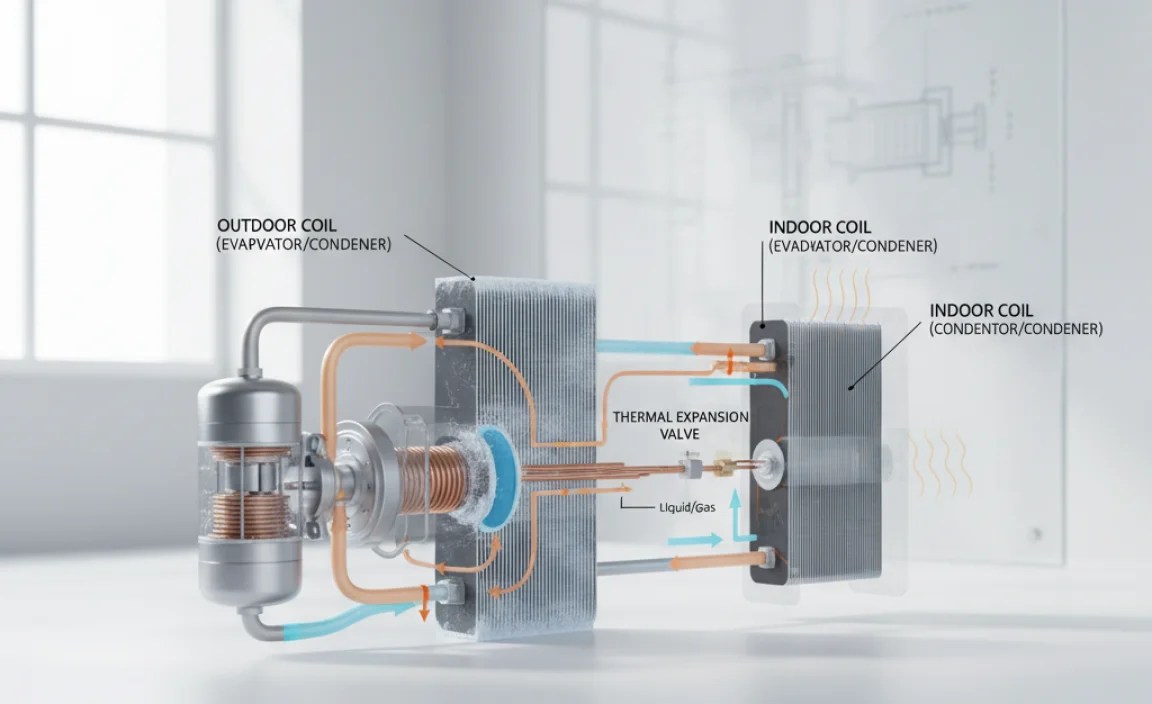
Several key components work together to make the refrigeration cycle possible:
- Refrigerant: The working fluid that absorbs and releases heat.
- Compressor: Compresses the refrigerant gas, increasing its temperature and pressure.
- Condenser Coil: Releases heat from the refrigerant.
- Evaporator Coil: Absorbs heat into the refrigerant.
- Expansion Valve: Reduces the pressure and temperature of the refrigerant.
- Reversing Valve: Controls the direction of refrigerant flow for heating and cooling.
The Importance of Refrigerant

Refrigerant is the lifeblood of the refrigeration cycle. It’s a special chemical compound designed to efficiently absorb and release heat at specific temperatures and pressures. Different types of refrigerants have been used over the years, with ongoing efforts to develop more environmentally friendly options. Older refrigerants, like R-22, have been phased out due to their ozone-depleting potential. Modern heat pumps typically use refrigerants like R-410A or R-32, which have lower environmental impacts. It’s important to note that working with refrigerants requires specialized training and equipment. If you suspect a refrigerant leak or need to service your heat pump’s refrigerant system, it’s best to call a qualified HVAC technician.
Benefits of Using the Refrigeration Cycle in Heat Pumps
Using the refrigeration cycle in heat pumps offers several advantages:
- Energy Efficiency: Heat pumps are much more energy-efficient than traditional heating systems like furnaces or electric resistance heaters. They move heat rather than generating it, using significantly less energy.
- Versatility: Heat pumps can provide both heating and cooling, eliminating the need for separate systems.
- Cost Savings: While the initial cost of a heat pump may be higher, the long-term energy savings can offset the investment.
- Environmental Friendliness: Heat pumps reduce greenhouse gas emissions compared to fossil fuel-based heating systems.
Limitations of Heat Pumps
While heat pumps offer numerous benefits, they also have some limitations:
- Performance in Extreme Cold: Air-source heat pumps can struggle to provide sufficient heat in extremely cold climates. As the outdoor temperature drops, their efficiency decreases.
- Higher Upfront Cost: Heat pumps typically have a higher initial cost compared to traditional heating systems.
- Installation Requirements: Proper installation is crucial for optimal performance. A poorly installed heat pump may not operate efficiently or reliably.
Heat Pump Efficiency Metrics
When comparing heat pumps, it’s essential to understand the key efficiency metrics:
- SEER (Seasonal Energy Efficiency Ratio): Measures cooling efficiency. Higher SEER ratings indicate better energy efficiency during cooling.
- HSPF (Heating Seasonal Performance Factor): Measures heating efficiency. Higher HSPF ratings indicate better energy efficiency during heating.
- COP (Coefficient of Performance): Measures the ratio of heat output to energy input at a specific operating point.
These metrics help you compare different models and choose the most energy-efficient option for your needs.
Tips for Maintaining Your Heat Pump
Proper maintenance is essential for ensuring the efficient and reliable operation of your heat pump. Here are some tips:
- Regularly clean or replace air filters: Dirty filters restrict airflow and reduce efficiency.
- Keep outdoor unit clear of debris: Ensure that the outdoor unit is free from leaves, snow, and other obstructions.
- Schedule annual professional maintenance: A qualified HVAC technician can inspect and tune up your heat pump to ensure it’s operating at peak performance.
- Monitor performance: Pay attention to any unusual noises, smells, or changes in heating or cooling performance.
FAQ: Understanding Heat Pumps and the Refrigeration Cycle
Here are some frequently asked questions about heat pumps and the refrigeration cycle:
- What is the refrigeration cycle?
- The refrigeration cycle is a process that uses a refrigerant to transfer heat from one place to another. It involves evaporation, compression, condensation, and expansion.
- Does a heat pump create heat?
- No, a heat pump doesn’t create heat. It moves heat from one place to another.
- How does a heat pump provide both heating and cooling?
- A heat pump can reverse the flow of refrigerant, allowing it to either absorb heat from outside and release it inside (heating) or absorb heat from inside and release it outside (cooling).
- Are heat pumps energy efficient?
- Yes, heat pumps are generally more energy-efficient than traditional heating and cooling systems because they move heat rather than generate it.
- What is refrigerant?
- Refrigerant is a special chemical compound that is used in the refrigeration cycle to absorb and release heat. It’s essential for the operation of heat pumps.
- Can I install a heat pump myself?
- Installing a heat pump is a complex task that requires specialized knowledge and equipment. It’s best to hire a qualified HVAC technician for installation.
- How often should I service my heat pump?
- It’s generally recommended to schedule annual professional maintenance for your heat pump to ensure it’s operating efficiently and reliably.
Conclusion
So, as we’ve seen, the refrigeration cycle is absolutely fundamental to how a heat pump works. It’s the ingenious process that allows these devices to keep us comfortable all year round, moving heat efficiently and effectively. While there are some limitations to heat pumps, particularly in extremely cold climates, the benefits of energy efficiency, versatility, and reduced environmental impact make them an increasingly popular choice for home heating and cooling. Understanding the refrigeration cycle helps you appreciate the technology behind your heat pump and make informed decisions about its operation and maintenance. By taking good care of your heat pump, you can ensure it continues to provide reliable and efficient comfort for years to come. Now you know how it all works – pretty cool, right?
“`


