
What Thermodynamic Cycle Powers Heat Pumps?

Quick Summary: Heat pumps use the vapor-compression refrigeration cycle. This cycle involves four key components: a compressor, condenser, expansion valve, and evaporator. Refrigerant circulates through these components, absorbing and releasing heat to either warm or cool a space. By reversing the refrigerant flow, a heat pump can switch between heating and cooling modes, making it a versatile climate control system. Understanding this cycle helps in troubleshooting and maintaining heat pump efficiency.
Ever wondered how heat pumps can both heat and cool your home? It’s all thanks to a clever thermodynamic cycle that makes the magic happen. This cycle allows heat pumps to move heat from one place to another, providing efficient heating in the winter and cooling in the summer. Understanding the basics of this cycle can help you appreciate how your heat pump works and potentially save on energy bills. Let’s dive into the details and uncover the secrets of this fascinating process.
Understanding the Vapor-Compression Refrigeration Cycle

The vapor-compression refrigeration cycle is the heart of how heat pumps operate. It’s a thermodynamic cycle that moves heat from a cold space to a hot space, using a refrigerant. This cycle is the same one used in your refrigerator and air conditioner. Let’s break down each component and its role.
Key Components of the Vapor-Compression Cycle
The vapor-compression cycle consists of four main components, each playing a crucial role in the heat transfer process:
- Compressor: Increases the pressure and temperature of the refrigerant.
- Condenser: Rejects heat from the refrigerant, causing it to condense into a liquid.
- Expansion Valve (or Throttling Valve): Reduces the pressure of the refrigerant, causing it to partially vaporize.
- Evaporator: Absorbs heat from the surroundings, causing the refrigerant to fully vaporize.
The Four Stages of the Vapor-Compression Cycle
The refrigerant goes through four distinct stages as it circulates through the heat pump system:
- Compression: The cycle begins with the compressor. Here, the refrigerant, in a low-pressure, low-temperature gaseous state, is compressed. This compression process increases both the pressure and temperature of the refrigerant. High-pressure, high-temperature gas then flows towards the condenser.
- Condensation: In the condenser, the hot, high-pressure refrigerant gas releases heat to the surrounding environment (e.g., outdoor air in cooling mode, indoor air in heating mode). As it releases heat, the refrigerant condenses into a high-pressure, moderate-temperature liquid.
- Expansion: The high-pressure liquid refrigerant then passes through an expansion valve. This valve significantly reduces the pressure of the refrigerant. As the pressure drops, some of the liquid refrigerant vaporizes, resulting in a low-pressure, low-temperature mixture of liquid and gas.
- Evaporation: Finally, the low-pressure, low-temperature refrigerant mixture enters the evaporator. Here, it absorbs heat from the surroundings (e.g., indoor air in cooling mode, outdoor air in heating mode). As it absorbs heat, the remaining liquid refrigerant vaporizes, turning into a low-pressure, low-temperature gas, and the cycle begins again.
Table: Stages of the Vapor-Compression Cycle
| Stage | Component | Refrigerant State | Process |
|---|---|---|---|
| Compression | Compressor | Low-pressure gas to High-pressure gas | Pressure and temperature increase |
| Condensation | Condenser | High-pressure gas to High-pressure liquid | Heat rejection |
| Expansion | Expansion Valve | High-pressure liquid to Low-pressure mixture | Pressure reduction |
| Evaporation | Evaporator | Low-pressure mixture to Low-pressure gas | Heat absorption |
How Heat Pumps Use the Vapor-Compression Cycle for Heating and Cooling

Heat pumps are unique because they can reverse the vapor-compression cycle to provide both heating and cooling. This is achieved by using a reversing valve.
The Role of the Reversing Valve
The reversing valve is a critical component that allows a heat pump to switch between heating and cooling modes. It changes the direction of refrigerant flow, effectively swapping the roles of the evaporator and condenser.
- Heating Mode: In heating mode, the outdoor coil acts as the evaporator, absorbing heat from the outside air (even in cold temperatures). The indoor coil acts as the condenser, releasing heat into your home.
- Cooling Mode: In cooling mode, the reversing valve switches the refrigerant flow. The indoor coil now acts as the evaporator, absorbing heat from your home. The outdoor coil acts as the condenser, releasing heat to the outside air.
Detailed Explanation of Heating Mode
In heating mode, the heat pump extracts heat from the outside air and transfers it inside. Here’s a step-by-step breakdown:
- Evaporation: The cold refrigerant in the outdoor coil absorbs heat from the outside air, causing it to evaporate into a gas.
- Compression: The gaseous refrigerant is compressed, increasing its temperature and pressure.
- Condensation: The hot, high-pressure refrigerant flows to the indoor coil, where it releases heat into your home and condenses into a liquid.
- Expansion: The liquid refrigerant passes through the expansion valve, reducing its pressure and temperature before returning to the outdoor coil to repeat the cycle.
Detailed Explanation of Cooling Mode
In cooling mode, the heat pump extracts heat from inside your home and releases it outside. Here’s how it works:
- Evaporation: The cold refrigerant in the indoor coil absorbs heat from the air inside your home, cooling your living space and turning the refrigerant into a gas.
- Compression: The gaseous refrigerant is compressed, raising its temperature and pressure.
- Condensation: The hot, high-pressure refrigerant flows to the outdoor coil, where it releases heat to the outside air and condenses back into a liquid.
- Expansion: The liquid refrigerant passes through the expansion valve, reducing its pressure and temperature before returning to the indoor coil to repeat the cooling cycle.
Table: Heat Pump Operation in Heating and Cooling Modes
| Mode | Indoor Coil | Outdoor Coil | Refrigerant Flow |
|---|---|---|---|
| Heating | Condenser (Releases Heat) | Evaporator (Absorbs Heat) | Reversed to bring heat inside |
| Cooling | Evaporator (Absorbs Heat) | Condenser (Releases Heat) | Normal flow to remove heat |
Factors Affecting Heat Pump Efficiency
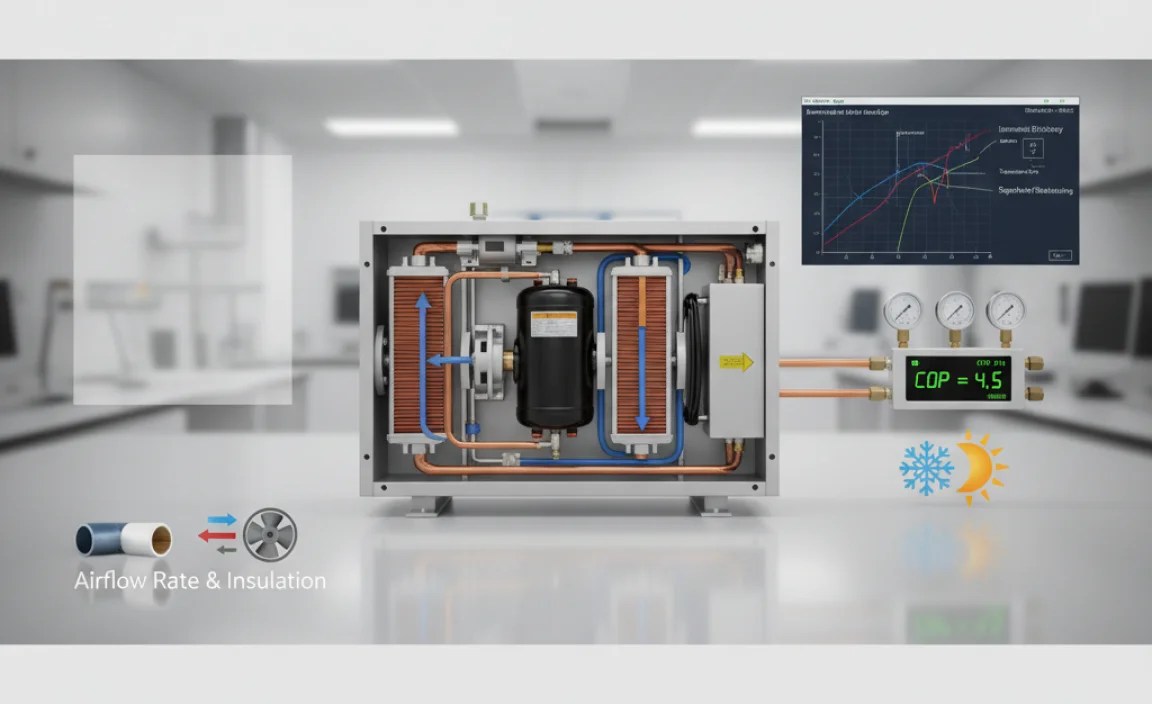
Several factors can influence the efficiency of a heat pump, affecting its performance and energy consumption. Understanding these factors can help you optimize your heat pump’s operation and reduce energy costs.
Refrigerant Type
The type of refrigerant used in a heat pump significantly impacts its efficiency and environmental impact. Older refrigerants, like R-22, are being phased out due to their ozone-depleting properties. Modern refrigerants, such as R-410A and R-32, are more environmentally friendly and offer improved performance. Newer refrigerants like R-454B are gaining popularity for their lower global warming potential EPA.
Temperature Differences
The temperature difference between the heat source (outside air in heating mode, inside air in cooling mode) and the desired temperature significantly affects heat pump efficiency. The larger the temperature difference, the harder the heat pump has to work, reducing its efficiency. Extreme temperature differences can cause the heat pump to operate less effectively.
Maintenance and Condition
Regular maintenance is crucial for maintaining the efficiency of a heat pump. Dirty filters, clogged coils, and refrigerant leaks can all reduce performance. Regular cleaning and inspections can help ensure that the heat pump operates at its optimal efficiency. A well-maintained heat pump will not only perform better but also last longer.
Insulation and Building Envelope
The insulation and overall condition of your home play a significant role in heat pump efficiency. Poor insulation, leaky windows, and drafts can cause heat loss in the winter and heat gain in the summer, forcing the heat pump to work harder to maintain the desired temperature. Improving insulation and sealing air leaks can significantly reduce energy consumption.
Climate Considerations
Heat pumps perform best in moderate climates. In regions with extremely cold winters, heat pumps may require supplemental heating to maintain comfortable indoor temperatures. Understanding your local climate and choosing a heat pump designed for those conditions is essential for optimal performance.
Table: Factors Affecting Heat Pump Efficiency
| Factor | Impact on Efficiency | Mitigation Strategies |
|---|---|---|
| Refrigerant Type | Older refrigerants are less efficient and harmful to the environment. | Upgrade to a heat pump with modern, eco-friendly refrigerants. |
| Temperature Differences | Large temperature differences reduce efficiency. | Use supplemental heating in extreme cold; optimize thermostat settings. |
| Maintenance and Condition | Dirty filters and clogged coils reduce performance. | Regularly clean filters and schedule professional maintenance. |
| Insulation and Building Envelope | Poor insulation leads to heat loss/gain, increasing energy consumption. | Improve insulation, seal air leaks, and upgrade windows. |
| Climate Considerations | Extreme climates can strain heat pump performance. | Choose a heat pump designed for your local climate; use supplemental heating when needed. |
Common Issues and Troubleshooting in Heat Pumps

Like any mechanical system, heat pumps can experience problems. Recognizing common issues can help you troubleshoot and maintain your heat pump effectively.
Refrigerant Leaks
Refrigerant leaks are a common issue that can significantly reduce heat pump efficiency. Symptoms include reduced heating or cooling performance, ice buildup on the coils, and unusual noises. A professional HVAC technician should address refrigerant leaks to ensure proper repair and refrigerant levels. According to AHRI, regular inspections can prevent major issues related to refrigerant.
Dirty Filters
Dirty filters restrict airflow, causing the heat pump to work harder and reducing its efficiency. This can lead to overheating, reduced performance, and increased energy consumption. Regularly replacing or cleaning the filters is a simple but essential maintenance task. Most manufacturers recommend changing filters every 1-3 months, depending on usage and air quality.
Frozen Coils
Frozen coils can occur in heating mode when the outdoor temperature is very low, or airflow is restricted. Ice buildup prevents the coil from absorbing heat effectively. Ensure proper airflow by cleaning the coils and replacing filters. If the problem persists, a malfunctioning defrost cycle or low refrigerant levels may be the cause.
Compressor Problems
The compressor is the heart of the heat pump, and any issues with it can cause significant problems. Common compressor issues include overheating, electrical problems, and mechanical failures. Compressor problems often require professional repair or replacement.
Fan Motor Issues
The fan motor circulates air over the coils, facilitating heat transfer. Fan motor problems can reduce airflow and decrease heat pump efficiency. Symptoms include unusual noises, reduced airflow, or a fan that doesn’t turn on. Replacing a faulty fan motor can restore proper airflow and improve performance.
Table: Common Heat Pump Problems and Solutions
| Problem | Symptoms | Possible Solutions |
|---|---|---|
| Refrigerant Leaks | Reduced performance, ice buildup, unusual noises | Professional repair and refrigerant recharge |
| Dirty Filters | Reduced airflow, overheating, increased energy consumption | Regularly replace or clean filters |
| Frozen Coils | Ice buildup on coils, reduced heating performance | Ensure proper airflow, check defrost cycle, check refrigerant levels |
| Compressor Problems | Overheating, electrical issues, mechanical failures | Professional repair or replacement |
| Fan Motor Issues | Unusual noises, reduced airflow, fan not turning on | Replace faulty fan motor |
FAQ About Heat Pump Thermodynamic Cycles
Here are some frequently asked questions to help you better understand the thermodynamic cycles in heat pumps:
- What is the main thermodynamic cycle used in heat pumps?
- The vapor-compression refrigeration cycle is the primary thermodynamic cycle used in heat pumps. This cycle allows the heat pump to transfer heat from one place to another, providing both heating and cooling.
- How does a heat pump switch between heating and cooling modes?
- A reversing valve changes the direction of refrigerant flow, swapping the roles of the evaporator and condenser. This allows the heat pump to either absorb heat from the outside and release it inside (heating mode) or absorb heat from the inside and release it outside (cooling mode).
- What are the four main components of the vapor-compression cycle?
- The four main components are the compressor, condenser, expansion valve (or throttling valve), and evaporator. Each component plays a crucial role in the heat transfer process.
- Why is refrigerant important in a heat pump?
- Refrigerant is the working fluid that absorbs and releases heat as it cycles through the heat pump. Its properties allow it to efficiently transfer heat between the indoor and outdoor environments.
- What can I do to improve the efficiency of my heat pump?
- Regular maintenance, such as cleaning or replacing filters, ensuring proper insulation in your home, and using the heat pump in moderate temperature ranges, can improve its efficiency. Also, consider upgrading to a more efficient model with modern refrigerants.
- Can heat pumps work in very cold climates?
- While heat pumps are most efficient in moderate climates, they can still work in colder regions. However, their efficiency decreases as the temperature drops, and they may require supplemental heating to maintain comfortable indoor temperatures.
- How often should I service my heat pump?
- It’s generally recommended to have your heat pump serviced by a professional HVAC technician at least once a year. Regular maintenance can help identify and address potential issues before they become major problems.
Conclusion
Understanding the vapor-compression refrigeration cycle is key to appreciating how heat pumps provide efficient heating and cooling. By grasping the roles of each component and the flow of refrigerant, you can better maintain your system and troubleshoot common issues. Regular maintenance, coupled with an understanding of the factors affecting efficiency, will help you maximize the performance and lifespan of your heat pump, keeping your home comfortable year-round.
“`


