
Pump for Trailer Wheels: Ultimate Guide

Quick Summary: Getting the right pump for your trailer wheels is crucial for safe and easy inflation. You’ll want a pump that can handle the higher pressures (PSI) often required by trailer tires. Consider a portable air compressor, a high-pressure floor pump, or even a 12V pump that plugs into your car. Check your tire’s PSI rating, and always inflate gradually to avoid overinflation.
Ever struggled to inflate your trailer tires with a regular bike pump? It’s a common problem! Trailer tires often need much higher pressure than car or bike tires, making a standard pump nearly useless. Don’t worry, you’re not alone. Many people find themselves frustrated and unsure about which pump is best.
This guide will walk you through choosing the right pump for your trailer wheels, step by step. We’ll cover different types of pumps, PSI requirements, and tips for safe inflation. Get ready to say goodbye to flat tires and hello to smooth travels!
Choosing the Right Pump for Your Trailer Wheels
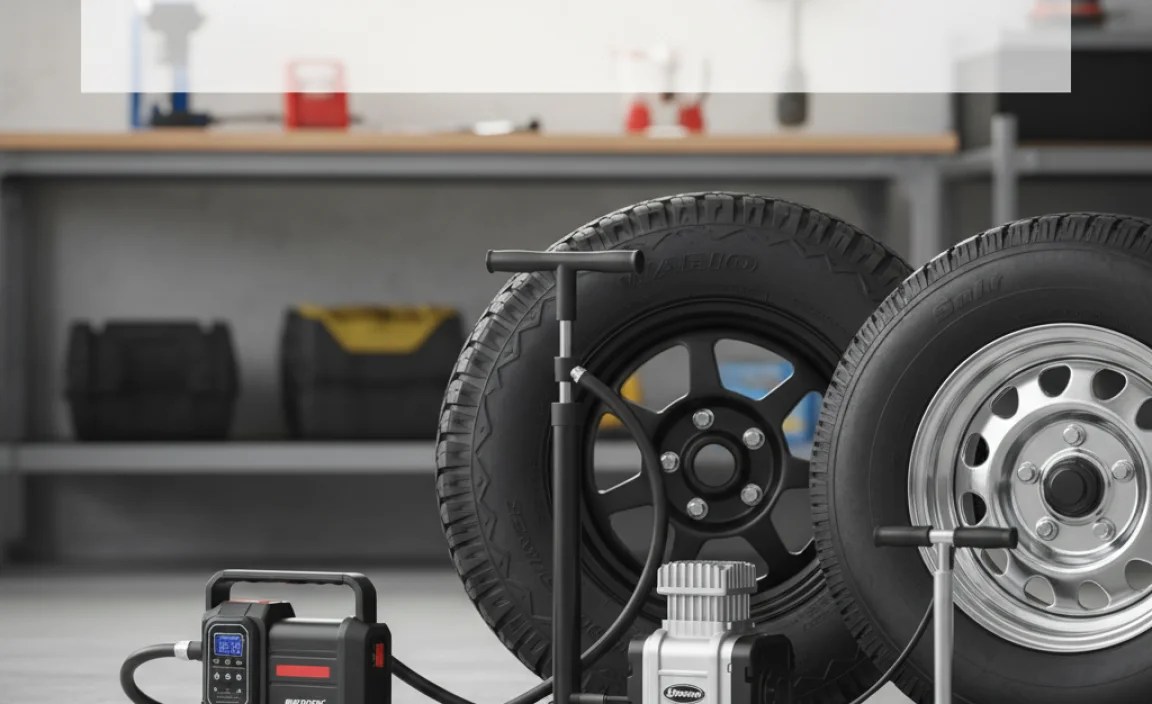
Selecting the correct pump for your trailer wheels is essential for safety and convenience. Trailer tires typically require higher pressure than car tires, so a standard bicycle pump often won’t cut it. Here’s a breakdown of the factors to consider and the best pump types for the job.
Understanding Trailer Tire Pressure
Before you even think about pumps, you need to know the correct PSI (pounds per square inch) for your trailer tires. This information is printed on the tire sidewall. Never exceed the maximum PSI listed on the tire. Underinflation is just as dangerous as overinflation, leading to tire failure, poor handling, and increased fuel consumption. Always check your trailer tire pressure before each trip, and ideally, check it again during long journeys, especially in hot weather.
Types of Pumps for Trailer Wheels
Here are the most common types of pumps suitable for trailer tires:
- Portable Air Compressors: These are often the best choice. They’re powerful, relatively compact, and many models can be powered by your car’s 12V outlet. They typically have a built-in gauge for accurate inflation.
- High-Pressure Floor Pumps: Some floor pumps are designed for high-pressure inflation, suitable for some (but not all) trailer tires. Look for models specifically rated for higher PSI. These require manual effort but are reliable and don’t need electricity.
- 12V Tire Inflators: These plug into your car’s cigarette lighter (12V outlet). They’re generally less powerful than portable air compressors but are more compact and convenient for emergencies.
- Air Tank Inflators: These are less common for on-the-go use but can be useful if you have a home garage setup. They store compressed air, allowing for quick inflation. They require an external air compressor to fill the tank.
Key Features to Look For
When choosing a pump, consider these features:
- PSI Rating: Make sure the pump can reach the required PSI for your trailer tires.
- Gauge Accuracy: A reliable gauge is crucial for avoiding over or underinflation. Digital gauges are generally more accurate than analog ones.
- Power Source: Consider whether you prefer a 12V pump, a battery-powered pump, or a manual pump.
- Portability: If you’ll be using the pump on the road, choose a compact and lightweight model.
- Durability: Look for a pump made from sturdy materials that can withstand regular use.
- Hose Length: Ensure the hose is long enough to reach the tire valve comfortably.
- Nozzle Type: Most pumps come with nozzles that fit standard Schrader valves (the same as car tires).
Step-by-Step Guide to Inflating Trailer Tires
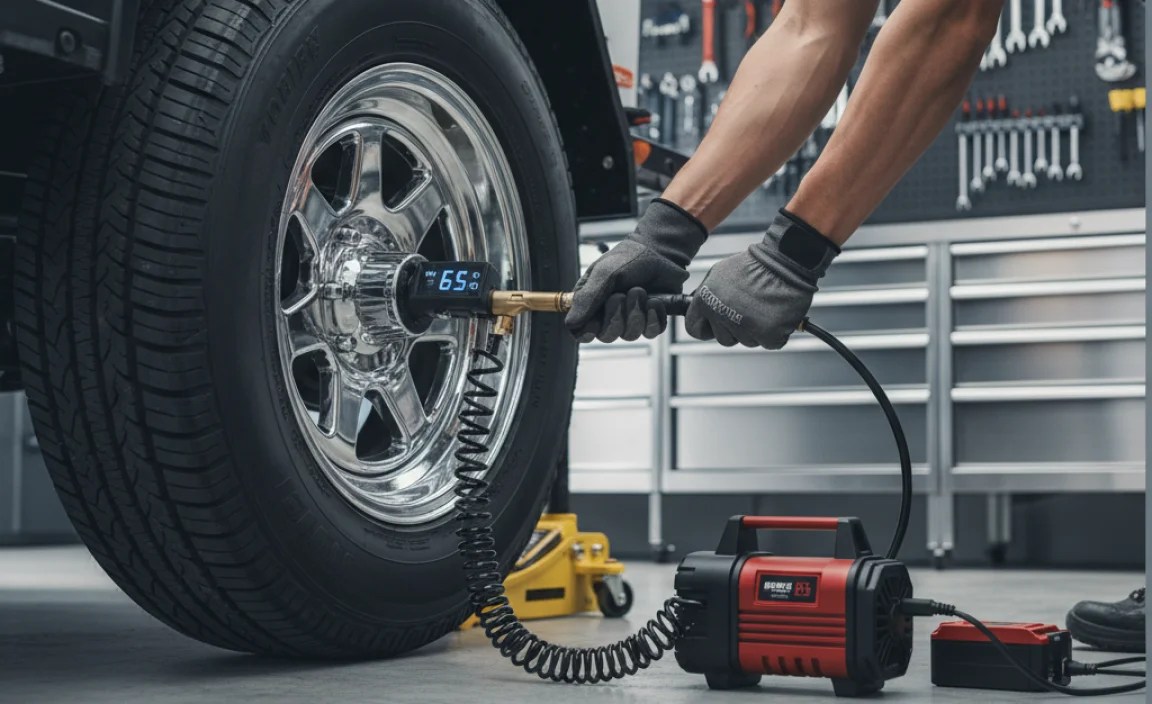
Now that you’ve chosen the right pump, here’s how to inflate your trailer tires safely and effectively:
Step 1: Gather Your Supplies
Before you start, make sure you have everything you need:
- Your chosen pump
- A tire pressure gauge (even if your pump has one, it’s good to double-check)
- Gloves (optional, but they can keep your hands clean)
- The trailer’s owner’s manual (for PSI recommendations)
Step 2: Prepare the Tire
Locate the tire valve. Remove the valve cap and set it aside in a safe place (you don’t want to lose it!). Inspect the valve for any damage or debris.
Step 3: Connect the Pump
Attach the pump nozzle to the tire valve. Make sure it’s securely connected to prevent air leaks. For screw-on nozzles, tighten them until you hear no hissing sound. For lever-style nozzles, ensure the lever is fully engaged.
Step 4: Inflate the Tire
Start inflating the tire. If using a manual pump, use smooth, steady strokes. If using an electric pump, turn it on and let it run until the desired pressure is reached. Keep an eye on the pressure gauge as you inflate.
Step 5: Check the Pressure
Once you reach the desired PSI, turn off the pump and remove the nozzle. Immediately check the tire pressure with your gauge to confirm the reading. If the pressure is too high, gently release some air by pressing the center pin of the valve with a suitable tool (like the back of the tire pressure gauge). If the pressure is too low, continue inflating in short bursts until you reach the correct level.
Step 6: Replace the Valve Cap
Once you’re satisfied with the tire pressure, replace the valve cap. This protects the valve from dirt and debris and helps prevent air leaks.
Step 7: Repeat for All Tires
Repeat the process for all the tires on your trailer. It’s important to inflate all tires to the correct pressure for even weight distribution and safe handling.
Safety Tips for Inflating Trailer Tires
Safety is paramount when dealing with tire inflation:
- Never Exceed the Maximum PSI: Overinflation can lead to tire blowouts, which are extremely dangerous.
- Inflate in a Safe Location: Choose a level surface away from traffic.
- Use Eye Protection: Consider wearing safety glasses to protect your eyes from debris.
- Inspect Tires Regularly: Check your tires for wear, damage, or bulges before each trip.
- Don’t Rely Solely on the Pump Gauge: Always double-check with a separate tire pressure gauge.
Comparing Popular Pump Options
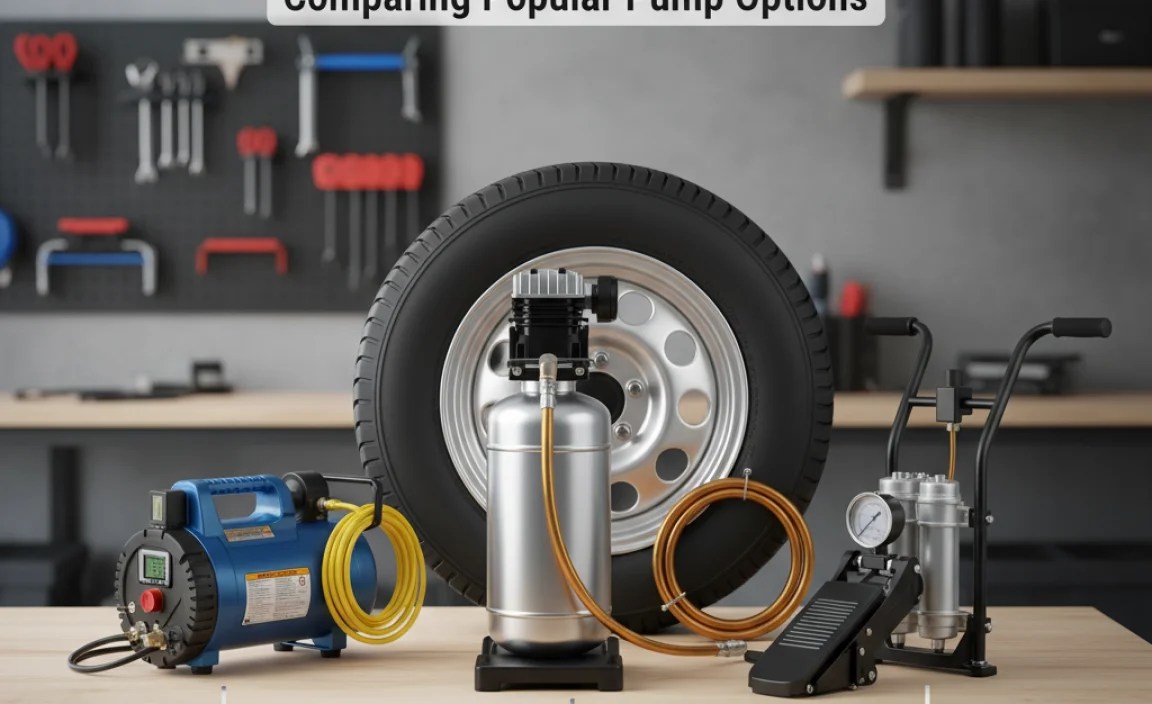
To help you make an informed decision, here’s a comparison of some popular pump options for trailer wheels:
| Pump Type | Pros | Cons | Best For |
|---|---|---|---|
| Portable Air Compressor | Powerful, accurate, often 12V powered | Can be noisy, some models are bulky | Frequent travelers, those needing high PSI |
| High-Pressure Floor Pump | Reliable, no electricity needed, good for home use | Requires manual effort, may not reach very high PSI | Home garages, occasional inflation needs |
| 12V Tire Inflator | Compact, convenient, easy to use | Less powerful, can be slow for large tires | Emergency roadside repairs, topping off pressure |
| Air Tank Inflator | Quick inflation, good for multiple tires | Requires an external compressor, less portable | Home garages with existing air compressor |
Troubleshooting Common Inflation Problems
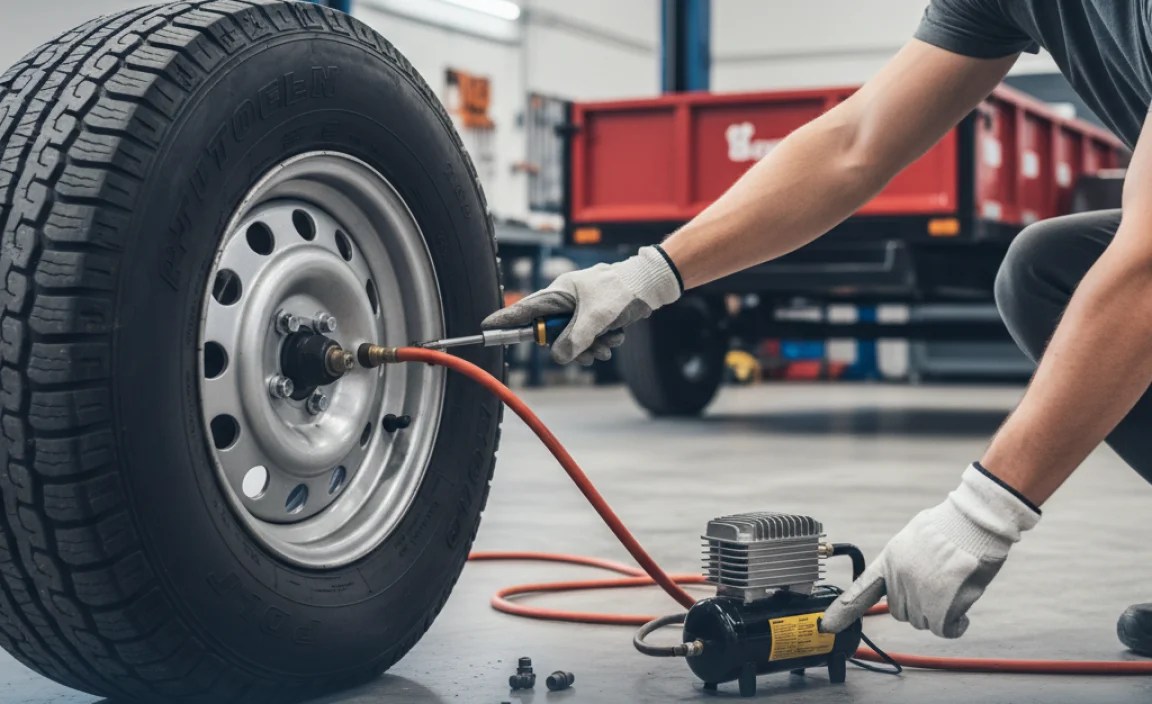
Even with the right pump, you might encounter some issues. Here’s how to troubleshoot them:
Problem: Air Leaking from the Nozzle
- Solution: Make sure the nozzle is securely attached to the valve. Try tightening it or adjusting the lever. Inspect the nozzle for damage or wear. The rubber gasket inside the nozzle may need to be replaced.
Problem: Pump Not Reaching Desired PSI
- Solution: Check the pump’s PSI rating to ensure it’s high enough for your trailer tires. Make sure the pump is functioning correctly. For electric pumps, check the power source and fuse. For manual pumps, ensure you’re using proper technique and applying enough force.
Problem: Inaccurate Gauge Reading
- Solution: Use a separate, reliable tire pressure gauge to verify the reading. If the pump’s gauge is consistently inaccurate, it may need to be recalibrated or replaced.
Problem: Tire Won’t Inflate
- Solution: Check the tire valve for obstructions or damage. Sometimes, the valve core can become stuck. You can try using a valve core tool to loosen it. If the tire is completely flat, the sidewalls may be stuck together, preventing air from entering. Try using a tire spreader or have a professional do it.
Maintaining Your Tire Pump
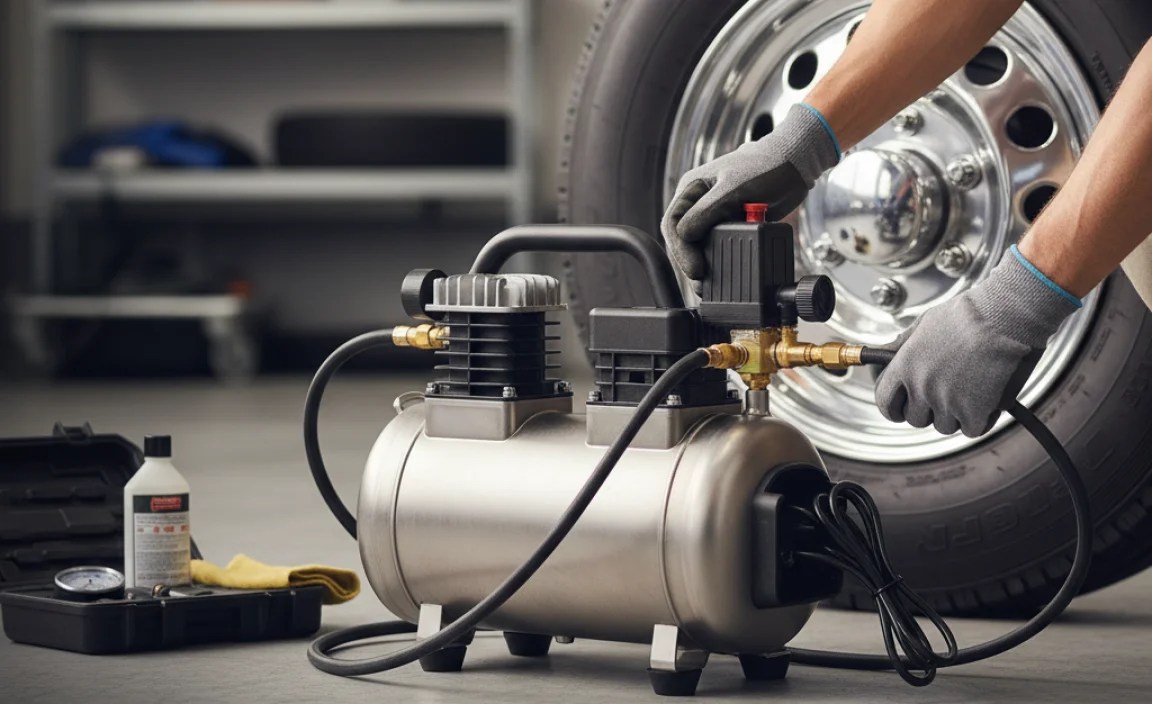
Proper maintenance will extend the life of your tire pump and ensure it’s always ready when you need it.
- Store the pump in a clean, dry place: This will prevent rust and corrosion.
- Inspect the hose and nozzle regularly: Look for cracks, leaks, or damage. Replace any worn parts.
- Clean the air filter (if applicable): A dirty air filter can reduce the pump’s efficiency.
- Lubricate moving parts: Use a silicone-based lubricant to keep the pump working smoothly.
- Check the gauge periodically: Compare the gauge reading to a known accurate gauge to ensure it’s still reliable.
Understanding PSI and Its Importance
PSI, or pounds per square inch, is the unit of measurement for tire pressure. It represents the amount of force exerted by the air inside the tire against each square inch of the tire’s surface. Maintaining the correct PSI is crucial for several reasons:
- Safety: Underinflated tires can overheat and lead to blowouts, while overinflated tires can reduce traction and increase the risk of damage from road hazards.
- Fuel Efficiency: Properly inflated tires reduce rolling resistance, which can improve fuel economy. According to the U.S. Department of Energy, you can improve your gas mileage by up to 3% by keeping your tires inflated to the proper pressure.
- Tire Life: Correct inflation ensures even wear across the tire’s surface, extending its lifespan.
- Handling: Proper tire pressure optimizes handling and stability, making your trailer safer and easier to tow.
Advanced Tips for Tire Inflation
Here are some advanced tips to help you get the most out of your tire inflation process:
- Check Tire Pressure When Tires Are Cold: Tire pressure increases as the tire warms up from driving. For the most accurate reading, check the pressure before you start driving or after the tires have cooled down for at least three hours.
- Use a Tire Pressure Monitoring System (TPMS): A TPMS can provide real-time tire pressure readings, alerting you to any sudden changes that could indicate a problem.
- Consider Nitrogen Inflation: Nitrogen is less susceptible to temperature changes than air, which can help maintain more consistent tire pressure. Some tire shops offer nitrogen inflation services.
- Adjust Tire Pressure for Load: If you’re carrying a particularly heavy load, you may need to increase the tire pressure slightly. Consult your trailer’s owner’s manual for recommendations.
- Use a Tire Inflation Cage: When inflating tires, especially those that are severely underinflated or have been repaired, using a tire inflation cage can provide an extra layer of safety in case of a blowout.
FAQ About Pumps for Trailer Wheels
Here are some frequently asked questions about choosing and using pumps for trailer wheels:
What PSI should my trailer tires be?
Check the sidewall of your trailer tire. The maximum PSI will be printed there. Never exceed this pressure.
Can I use a regular bicycle pump for trailer tires?
Probably not. Trailer tires often require higher PSI than a regular bike pump can deliver. You’ll likely need a portable air compressor or a high-pressure floor pump.
Is it better to overinflate or underinflate trailer tires?
Neither! Both are dangerous. Overinflation can cause blowouts, while underinflation can lead to overheating and tire failure. Always inflate to the recommended PSI.
How often should I check my trailer tire pressure?
Check your tire pressure before each trip, and ideally, check it again during long journeys, especially in hot weather.
What’s the best type of pump for roadside emergencies?
A 12V tire inflator that plugs into your car’s cigarette lighter is a convenient option for roadside emergencies.
Do digital tire pressure gauges work better than analog gauges?
Digital gauges are generally considered more accurate and easier to read than analog gauges.
Can I use fix-a-flat to inflate my trailer tire?
Fix-a-flat is a temporary solution for small punctures. It’s not a substitute for proper inflation. After using fix-a-flat, have the tire repaired or replaced as soon as possible.
Conclusion
Choosing the right pump for your trailer wheels and knowing how to use it properly is essential for safe and trouble-free travels. By understanding PSI requirements, considering different pump types, and following the step-by-step instructions outlined in this guide, you can confidently maintain your trailer tires and avoid costly breakdowns. Remember to always prioritize safety and regularly inspect your tires for wear and damage. With the right tools and knowledge, you can ensure your trailer is always ready for the road ahead. Happy travels!


