
Mini Bike Tire Pump: Ride Easy with This!

Quick Summary:
Need to pump up your mini bike tires? You’ll need a reliable pump! For Schrader valves (the standard type), a regular bike pump or even a gas station air pump will work. For Presta valves (found on some higher-end mini bikes), you’ll need a pump with a Presta adapter. Make sure to inflate to the PSI listed on your tire’s sidewall for optimal performance and safety.
Ever hopped on your mini bike, ready for some fun, only to find your tires are flat? It’s a common frustration! Under-inflated tires make riding harder, slower, and even a bit dangerous. But don’t worry, getting your mini bike tires properly inflated is a simple task you can easily handle at home.
This guide will walk you through everything you need to know about using a mini bike tire pump. We’ll cover the different types of pumps, how to identify your valve type, and step-by-step instructions for inflating your tires correctly. Soon, you’ll be back on the road with perfectly pumped tires! Let’s get started!
Understanding Mini Bike Tire Valves

Before you grab just any pump, it’s essential to understand the type of valve your mini bike tires use. The valve is the small fitting on your inner tube (or tire, if it’s tubeless) that you attach the pump to. There are two main types:
- Schrader Valve: This is the most common type, and it’s the same valve you’ll find on car tires. Schrader valves are wider and sturdier than Presta valves, and they have a spring-loaded pin in the center.
- Presta Valve: Presta valves are narrower and typically found on higher-performance bicycles. They have a small nut at the top that you need to unscrew to inflate, and press to deflate.
Identifying your valve type is easy. Just look at the valve on your tire. If it looks like the one on your car, it’s a Schrader. If it’s thin with a small nut, it’s a Presta.
Choosing the Right Mini Bike Tire Pump

Once you know your valve type, you can choose the right pump. There are several types of pumps available, each with its own pros and cons.
Floor Pumps
Floor pumps are the most efficient and easiest to use for inflating mini bike tires. They have a large barrel and a long handle, which allows you to pump a lot of air with each stroke. Most floor pumps have a built-in pressure gauge, so you can easily see how much air you’re putting into your tires.
- Pros: Efficient, easy to use, built-in pressure gauge.
- Cons: Larger, not portable.
Hand Pumps
Hand pumps are smaller and more portable than floor pumps, making them a good option for carrying with you on rides. However, they require more effort to use and can be tiring for inflating tires to higher pressures.
- Pros: Portable, lightweight.
- Cons: Requires more effort, can be tiring.
CO2 Inflators
CO2 inflators use cartridges of compressed carbon dioxide to quickly inflate tires. They are very compact and easy to carry, making them a popular choice for racers and anyone who wants to quickly fix a flat on the road. However, they can be expensive to use, as you need to replace the CO2 cartridge after each use.
- Pros: Very fast inflation, compact and lightweight.
- Cons: Requires CO2 cartridges, can be expensive.
Mini Pumps
Mini pumps are compact and lightweight, designed for portability. They often come with mounting brackets to attach to your mini bike frame. While convenient, they require more effort than floor pumps, and some models lack pressure gauges.
- Pros: Extremely portable, convenient for on-the-go inflation.
- Cons: Can be difficult to use, may lack pressure gauges.
Pump Features to Consider
When choosing a mini bike tire pump, consider these features:
- Valve Compatibility: Ensure the pump is compatible with both Schrader and Presta valves, or choose one that matches your specific valve type. Some pumps have dual heads or adapters.
- Pressure Gauge: A built-in pressure gauge allows you to accurately inflate your tires to the recommended PSI.
- Inflation Power: Consider the pump’s efficiency and how much effort it requires to inflate tires.
- Size and Weight: If portability is important, choose a compact and lightweight pump.
- Durability: Look for a pump made from high-quality materials that can withstand regular use.
Step-by-Step Guide: Inflating Mini Bike Tires

Now that you have the right pump, let’s get your tires inflated! Follow these steps:
Step 1: Prepare Your Mini Bike and Pump
Park your mini bike on a stable surface. Remove the valve cap from the tire you want to inflate. Make sure your pump is ready to use and the hose is free from kinks.
Step 2: Connect the Pump to the Valve (Schrader Valve)
For Schrader valves, simply press the pump head onto the valve. Make sure it’s securely attached to create a tight seal. You should not hear any air leaking.
Step 3: Connect the Pump to the Valve (Presta Valve)
For Presta valves, first, unscrew the small nut at the top of the valve. Then, press the valve tip to release a small amount of air. This ensures the valve isn’t stuck. Attach the pump head to the valve, making sure it’s secure.
Step 4: Inflate the Tire
Begin pumping the tire. Use smooth, steady strokes. If you’re using a floor pump, place one foot on the base for stability. Watch the pressure gauge (if your pump has one) as you inflate. If you are using a hand pump, you may need to use more force and pump more frequently.
Step 5: Check the Tire Pressure
Refer to the PSI (pounds per square inch) listed on the sidewall of your tire. This is the recommended inflation pressure. Inflate the tire until it reaches this pressure. It’s usually a range, such as 30-35 PSI, so adjust accordingly based on your preference. A tire pressure gauge can be used for more accurate readings if not using a pump gauge.
Step 6: Remove the Pump and Secure the Valve
Once the tire is inflated to the correct pressure, carefully remove the pump head from the valve. For Presta valves, screw the small nut back on. Replace the valve cap on both Schrader and Presta valves to protect them from dirt and debris.
Step 7: Repeat for Other Tires
Repeat the process for any other tires that need inflation. Double-check the pressure of all tires before riding.
Troubleshooting Common Issues
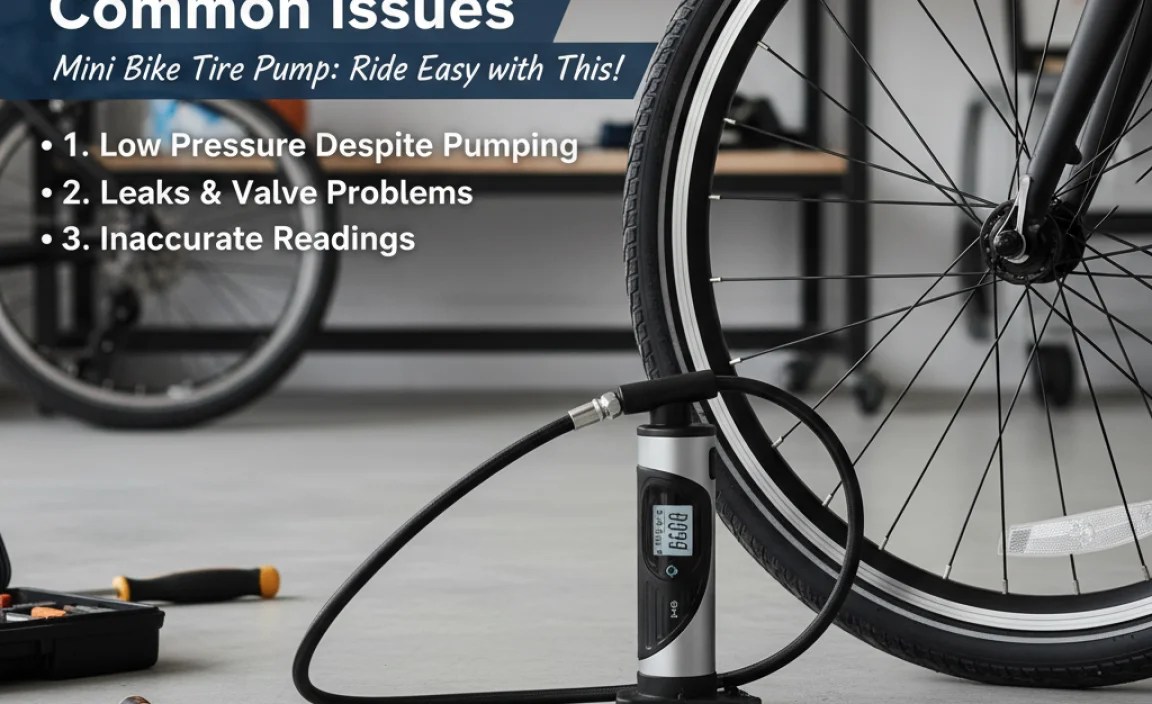
Sometimes, you might encounter problems while inflating your mini bike tires. Here are a few common issues and how to fix them:
- Air Leaking: If you hear air leaking when you attach the pump, make sure the pump head is securely attached to the valve. Try repositioning the pump head or tightening the connection. For Presta valves, ensure the small nut is tightened after inflation.
- Pump Not Inflating: If the pump isn’t inflating the tire, check the pump head to ensure it’s set to the correct valve type (Schrader or Presta). Make sure the pump is functioning properly and that there are no blockages in the hose.
- Difficulty Pumping: If it’s hard to pump, it could be that you’re trying to inflate the tire to too high a pressure. Check the recommended PSI on the tire sidewall and avoid over-inflating.
Maintaining Your Mini Bike Tire Pump

To keep your mini bike tire pump in good working condition, follow these maintenance tips:
- Clean Regularly: Wipe down the pump with a clean cloth to remove dirt and debris.
- Lubricate Moving Parts: Occasionally, lubricate the moving parts of the pump with a light oil to keep them working smoothly.
- Store Properly: Store the pump in a dry place to prevent rust and corrosion.
- Check for Wear and Tear: Regularly inspect the pump for any signs of wear and tear, such as cracks in the hose or a damaged pump head. Replace any worn parts as needed.
Recommended Tire Pressure
Maintaining the correct tire pressure is crucial for performance, safety, and tire longevity. The recommended PSI (pounds per square inch) is usually printed on the tire’s sidewall. Here’s a general guideline, but always refer to your tire’s specific recommendation:
| Tire Type | Recommended PSI |
|---|---|
| Mini Bike Tires (General) | 30-35 PSI |
| High-Performance Tires | Refer to Tire Sidewall (Often higher PSI) |
Note: These are general recommendations. Always check the sidewall of your specific tire for the manufacturer’s recommended PSI.
The Importance of Proper Tire Inflation
Proper tire inflation is essential for several reasons:
- Performance: Properly inflated tires roll more efficiently, making your mini bike faster and easier to ride.
- Safety: Over-inflated or under-inflated tires can be dangerous. Over-inflation can cause the tire to burst, while under-inflation can lead to poor handling and increased risk of punctures.
- Tire Longevity: Maintaining the correct tire pressure helps prevent premature wear and tear, extending the life of your tires.
Essential Tools for Mini Bike Tire Maintenance
Here are some essential tools for mini bike tire maintenance:
- Mini Bike Tire Pump: A reliable pump with a pressure gauge.
- Tire Pressure Gauge: For accurate pressure readings.
- Tire Levers: For removing and installing tires (for tube replacement).
- Patch Kit: For fixing punctures.
- Wrench Set: For tightening axle nuts.
Additional Tips for Mini Bike Tire Care
Here are some additional tips to keep your mini bike tires in top condition:
- Regularly Check Tire Pressure: Check your tire pressure before each ride to ensure it’s within the recommended range.
- Inspect Tires for Damage: Look for cuts, bulges, or other signs of damage. Replace damaged tires immediately.
- Avoid Overloading: Don’t exceed the maximum weight limit for your mini bike, as this can cause tire damage.
- Store Mini Bike Properly: Store your mini bike in a cool, dry place away from direct sunlight to prevent tire degradation.
Understanding PSI and Tire Pressure
PSI, or pounds per square inch, is the unit of measurement for tire pressure. Maintaining the correct PSI is vital for optimal mini bike performance and safety. Here’s why:
- Optimal Performance: Correct PSI ensures the right balance between rolling resistance and grip.
- Enhanced Safety: Proper inflation reduces the risk of blowouts and improves handling.
- Extended Tire Life: Consistent PSI prevents uneven wear and tear on your tires.
Always refer to the tire sidewall for the manufacturer’s recommended PSI range. Use a reliable gauge to ensure accurate inflation.
Best Practices for On-the-Go Inflation
For those times when you need to inflate your mini bike tires while you’re out and about, consider these best practices:
- Carry a Mini Pump or CO2 Inflator: These are compact and easy to transport.
- Know Your Valve Type: Ensure your pump is compatible with your tire valves.
- Practice Inflation: Get familiar with using your portable pump at home before you need it on the road.
- Check Pressure Regularly: Monitor your tire pressure during longer rides to catch any leaks early.
Tips for Avoiding Flat Tires
Flat tires can be a major inconvenience, but there are steps you can take to minimize the risk:
- Maintain Proper Tire Pressure: Under-inflated tires are more prone to punctures.
- Inspect Tires Regularly: Look for embedded objects or signs of wear.
- Use Tire Sealant: Sealant can help seal small punctures automatically.
- Choose Durable Tires: Consider tires with puncture-resistant layers.
- Avoid Hazards: Steer clear of glass, sharp rocks, and other road debris.
FAQ: Mini Bike Tire Pumps
What type of pump do I need for my mini bike tires?
It depends on your valve type. If you have Schrader valves (like car tires), a standard bike pump or even a gas station air pump will work. For Presta valves, you’ll need a pump with a Presta adapter.
How do I know what PSI to inflate my mini bike tires to?
The recommended PSI is printed on the sidewall of your tire. Always inflate to within that range.
Can I use a car tire pump for my mini bike tires?
Yes, if your mini bike has Schrader valves. Just be careful not to over-inflate, as car pumps can deliver air quickly.
What’s the difference between a floor pump and a hand pump?
Floor pumps are larger and easier to use, making them great for home use. Hand pumps are smaller and portable, ideal for taking on rides.
How often should I check my mini bike tire pressure?
Ideally, you should check your tire pressure before each ride. At a minimum, check it once a week.
What do I do if my tire keeps losing air?
Check for punctures or leaks. You can use soapy water to find small leaks. If you find a puncture, you’ll need to patch or replace the tube.
Can I over-inflate my mini bike tires?
Yes, and it’s dangerous. Over-inflating can cause the tire to burst. Always stay within the recommended PSI range.
Conclusion
Inflating your mini bike tires doesn’t have to be a chore. With the right pump, a little know-how, and regular maintenance, you can keep your tires properly inflated for optimal performance and safety. Remember to identify your valve type, choose a suitable pump, and always inflate to the recommended PSI. By following the steps and tips outlined in this guide, you’ll be able to confidently maintain your mini bike tires and enjoy countless hours of riding fun. So, grab your pump, get those tires inflated, and hit the road with confidence!


