
How to Know Correct PSI for Bike Suspension: Easy Guide

Have you ever bounced too hard on your bike? Did you feel like you were losing control? Bike suspension helps keep your ride smooth. It absorbs bumps and helps you stay in control. But how to know correct PSI for bike suspension? Getting it right can be tricky.
Too much air makes your ride stiff. Too little air makes it feel like mush. Let’s learn how to find the perfect balance.
Key Takeaways
- Learning how to know correct PSI for bike suspension boosts your control and comfort.
- Start with the manufacturer’s PSI recommendations for your bike and weight.
- Use a shock pump to add or remove air in small, controlled amounts.
- Pay attention to how your bike feels on different trails and adjust accordingly.
- Regularly check and adjust your suspension to maintain peak performance.
How to Know Correct PSI for Bike Suspension Setup

Setting up your bike suspension can seem hard. But it’s worth it for a better ride. The right PSI makes a big difference. It affects how your bike handles bumps and jumps. If your suspension is too stiff, you will feel every bump. This can be uncomfortable and make it harder to control your bike. If it’s too soft, your bike will sink too much. This can make it feel sluggish and unstable. Finding the right balance is key. You need enough air to support your weight. But you also want the suspension to absorb bumps easily. Start by checking the manufacturer’s recommendations. They usually have a chart based on your weight. Use this as a starting point, but don’t be afraid to experiment. Every rider is different. Every trail is different. What works for one person might not work for you. So, take the time to dial in your suspension. It will make a huge difference in your riding experience.
- Check your bike’s manual for suggested PSI ranges.
- Consider your weight, including gear.
- Use a shock pump for accurate adjustments.
- Test your suspension on a familiar trail.
- Adjust in small increments (2-5 PSI at a time).
Setting up your bike suspension is not a one-time thing. You need to check it regularly. Air can leak out over time. Temperature changes can also affect the PSI. Before each ride, give your suspension a quick check. Make sure it feels right. If you notice a change, add or remove air as needed. Also, remember to service your suspension regularly. This means cleaning and lubricating the parts. This will keep it working smoothly and prevent damage. A well-maintained suspension will last longer and perform better. It will also give you a more comfortable and enjoyable ride. So, take care of your suspension. It’s an important part of your bike.
Why is Proper PSI Important?
Have you ever ridden a bike with flat tires? It feels slow and hard to pedal. The same is true for bike suspension. If the PSI is wrong, it won’t work well. Proper PSI lets your suspension absorb bumps. It keeps your tires on the ground. This gives you more control. It also makes your ride more comfortable. Imagine riding down a bumpy trail. With the right PSI, your suspension soaks up the bumps. You barely feel them. But with the wrong PSI, you feel every bump. It’s like riding a jackhammer. This can be tiring and even painful. So, taking the time to set your PSI correctly is worth it. It will make your ride safer and more fun.
What Happens with Incorrect PSI?
What happens if you put too much air in a basketball? It gets hard and bouncy. What happens if you don’t put enough air? It feels flat and doesn’t bounce well. The same is true for your bike suspension. Too much PSI makes it stiff. It won’t absorb bumps well. Too little PSI makes it feel soft. It might bottom out on big hits. Bottoming out means your suspension uses all of its travel. This can damage your suspension. It can also be dangerous. You could lose control of your bike. So, it’s important to find the right balance. Start with the recommended PSI. Then, adjust it to your liking. Pay attention to how your bike feels on the trail.
How Often Should I Check My PSI?
Imagine you have a pet. You need to feed it and give it water every day. Your bike suspension also needs regular attention. You should check your PSI before every ride. This only takes a few seconds. It can save you a lot of trouble. Air can leak out of your suspension over time. Temperature changes can also affect the PSI. If you don’t check it regularly, you might be riding with the wrong PSI. This can make your ride uncomfortable. It can also damage your suspension. So, make it a habit to check your PSI before every ride. It’s like brushing your teeth. It’s a small thing that makes a big difference.
Fun Fact or Stat: A study showed that 80% of mountain bikers ride with incorrect suspension settings. This can lead to discomfort, reduced control, and increased risk of injury.
Understanding Bike Suspension Components

Bike suspension is made up of different parts. Each part has a job to do. The main parts are the fork and the shock. The fork is on the front of the bike. It absorbs bumps in the front wheel. The shock is on the back of the bike. It absorbs bumps in the back wheel. Both the fork and shock have springs and dampers. The springs absorb the initial impact. The dampers control how quickly the suspension moves. This prevents it from bouncing too much. Some bikes only have front suspension. These are called hardtails. Bikes with both front and rear suspension are called full suspension bikes. Full suspension bikes are more comfortable and offer better control. But they are also more expensive and require more maintenance. Knowing how these parts work helps you understand how to know correct PSI for bike suspension.
- Forks absorb impacts on the front wheel.
- Shocks handle bumps on the rear wheel.
- Springs provide the initial cushion.
- Dampers control suspension movement.
- Hardtails have front suspension only.
- Full suspension bikes have both.
Understanding your bike suspension is like understanding your body. You need to know how it works to take care of it. Just like you need to eat healthy and exercise, your suspension needs regular maintenance. This includes cleaning and lubricating the parts. It also includes checking and adjusting the PSI. When you understand how your suspension works, you can make better decisions about how to set it up. You can also troubleshoot problems more easily. For example, if your suspension feels too stiff, you might need to lower the PSI. If it feels too soft, you might need to add air. By understanding the different components and how they work together, you can keep your suspension working smoothly and efficiently.
What is a Fork?
Imagine your bike’s front legs. That’s the fork! It connects the front wheel to the bike’s frame. The fork has suspension inside it. This suspension helps absorb bumps. It makes your ride smoother. Forks come in different types. Some are simple and only have a spring. Others are more complex and have dampers. Dampers control how the suspension moves. This keeps it from bouncing too much. The fork is important for control. It helps you steer and stay balanced. A good fork can make a big difference. It can make your ride more fun and safer. You need to know how to know correct PSI for bike suspension to set up your fork.
What is a Shock?
Think of the shock as the heart of your rear suspension. It’s a crucial part that absorbs bumps. The shock is usually located in the middle of the bike’s frame. It connects the frame to the rear wheel. Like the fork, the shock has a spring and a damper. The spring absorbs the initial impact. The damper controls the suspension’s movement. Shocks also come in different types. Some are air shocks, which use air pressure to provide suspension. Others are coil shocks, which use a metal spring. Air shocks are lighter and more adjustable. Coil shocks are more durable and offer a smoother ride. Choosing the right shock depends on your riding style and the type of bike you have.
How Do Springs and Dampers Work?
Have you ever jumped on a trampoline? The springs make you bounce up and down. But without something to slow you down, you’d bounce forever. That’s where dampers come in. Springs and dampers work together in your bike suspension. The springs absorb the initial impact from a bump. They store energy and then release it. The dampers control how quickly the springs release that energy. This prevents the suspension from bouncing too much. Dampers use oil to create resistance. When the suspension moves, the oil is forced through small holes. This creates friction and slows down the movement. Without dampers, your suspension would be like a pogo stick. It would be hard to control your bike.
Fun Fact or Stat: The first mountain bikes didn’t have suspension. Riders had to rely on their own bodies to absorb the bumps. Suspension forks and shocks were introduced in the late 1980s and early 1990s.
Using a Shock Pump Correctly
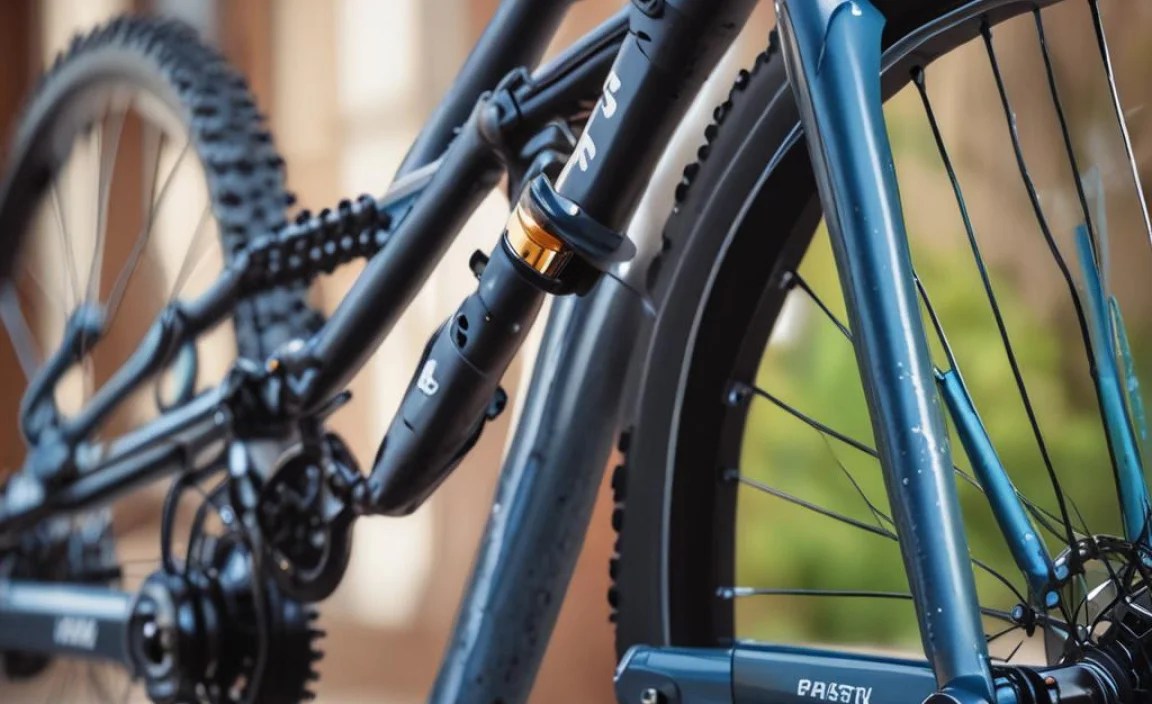
A shock pump is a special tool for adjusting bike suspension. It’s different from a regular tire pump. A shock pump has a small volume. This means it adds air in small amounts. This is important for fine-tuning your suspension. A regular tire pump would add too much air too quickly. This could make it hard to get the PSI just right. A shock pump also has a gauge. This shows you the PSI in your suspension. The gauge is usually very accurate. This helps you make precise adjustments. To use a shock pump, you first need to find the valve on your fork or shock. Remove the valve cap. Then, screw the shock pump onto the valve. Make sure it’s on tight. Otherwise, air will leak out. Then, pump the handle until you reach the desired PSI. When you’re done, carefully remove the shock pump. Put the valve cap back on. Always use a shock pump to adjust your PSI.
- A shock pump adds air in small increments.
- It has an accurate pressure gauge.
- Screw the pump onto the valve tightly.
- Pump until you reach the desired PSI.
- Remove the pump carefully to avoid leaks.
Using a shock pump correctly is like using a measuring cup when baking. You need the right tool to get the right results. If you try to use a regular tire pump, you might overfill your suspension. This can damage it. It can also make your ride uncomfortable. A shock pump lets you add air slowly and accurately. This is important for fine-tuning your suspension. You want to get the PSI just right. This will give you the best performance and comfort. Also, remember to check the gauge on the shock pump regularly. Make sure it’s accurate. If it’s not, you might need to replace the pump. A good shock pump is an investment that will pay off in the long run.
What Makes a Shock Pump Special?
Have you ever tried to fill a balloon with a tiny straw? It’s hard to get the right amount of air. A shock pump is like a special straw for your bike suspension. It’s designed to add small amounts of air. This lets you fine-tune the PSI. Regular pumps push in too much air at once. This can make it hard to get the pressure right. Shock pumps also have a special valve. This valve prevents air from escaping when you remove the pump. This is important because even a little bit of air loss can affect your suspension. A shock pump is an essential tool. It will help you keep your suspension working perfectly.
How Do I Attach the Shock Pump?
Think of attaching the shock pump like connecting a hose to a faucet. You need to make sure it’s on tight. Otherwise, water will leak out. The same is true for your shock pump. To attach it, first find the valve on your fork or shock. It’s usually covered by a small cap. Remove the cap. Then, carefully screw the shock pump onto the valve. Make sure it’s on straight. If it’s crooked, air might leak out. Tighten the pump until it’s snug. You should feel a slight resistance. Don’t overtighten it. You could damage the valve. Once the pump is attached, check the gauge. It should show the current PSI in your suspension. Now you’re ready to add air.
What PSI Should I Aim For?
Imagine you’re trying to hit a target with a dart. You need to aim carefully to get it just right. The same is true for setting your PSI. You need to aim for the right number. Start by checking your bike’s manual. It will have a chart that shows the recommended PSI based on your weight. This is a good starting point. But it’s not the only thing to consider. You also need to think about your riding style. If you ride aggressively, you might want to add a little more air. This will prevent your suspension from bottoming out. If you ride more gently, you might want to reduce the PSI. This will make your ride more comfortable. Experiment and find what works best for you.
Fun Fact or Stat: Shock pumps can measure pressure up to 300 PSI, but most bike suspensions operate between 50 and 200 PSI.
Understanding Sag and Its Importance

Sag is how much your suspension compresses when you sit on your bike. It’s a crucial part of setting up your suspension. Sag helps your wheels stay on the ground. This gives you better traction and control. If you don’t have enough sag, your suspension will be too stiff. It won’t absorb bumps well. If you have too much sag, your suspension will be too soft. It will bottom out easily. To measure sag, you need to put on your riding gear. Then, stand next to your bike. Have a friend hold the bike steady. Carefully sit on the bike in your normal riding position. Don’t bounce or move around too much. Have your friend measure how much the suspension has compressed. Compare this measurement to the total travel of your suspension. Most manufacturers recommend sag to be around 20-30% of the total travel. Adjust your PSI to achieve the correct sag.
- Sag is suspension compression under your weight.
- It improves traction and control.
- Measure sag with your riding gear on.
- Aim for 20-30% of total travel.
- Adjust PSI to achieve correct sag.
Understanding sag is like understanding the foundation of a house. If the foundation is weak, the whole house will be unstable. Sag is the foundation of your suspension setup. If you don’t set it correctly, your bike will handle poorly. It will be uncomfortable to ride. Taking the time to measure and adjust sag is worth it. It will make a big difference in your riding experience. Also, remember to check your sag regularly. It can change over time as your suspension breaks in. You might need to adjust the PSI to maintain the correct sag. Keep your suspension in top condition.
Why is Sag Important for Traction?
Imagine a car driving on a bumpy road. If the tires are too stiff, they’ll bounce over the bumps. They won’t stay in contact with the road. This reduces traction. The same is true for your bike suspension. Sag allows your wheels to follow the contours of the trail. This keeps your tires on the ground. This gives you more traction. More traction means more control. You can corner faster. You can climb steeper hills. You can brake more effectively. Sag is especially important on technical trails. These trails have lots of rocks and roots. Sag helps your wheels absorb these obstacles. This keeps you from losing control. Knowing how to know correct PSI for bike suspension helps ensure you have enough sag.
How Do I Measure Sag Accurately?
Think of measuring sag like measuring your height. You need to stand up straight and have someone help you. To measure sag accurately, you need a friend. You also need a tape measure or ruler. First, put on all your riding gear. This includes your helmet, shoes, and backpack. Stand next to your bike. Have your friend hold the bike steady. Then, carefully sit on the bike in your normal riding position. Don’t bounce or move around too much. Have your friend measure the distance between two points on your suspension. One point should be on the fixed part of the frame. The other point should be on the moving part of the suspension. Measure this distance with you off the bike. Then, measure it again with you on the bike. The difference between these two measurements is your sag.
What Happens if My Sag is Incorrect?
Imagine a seesaw. If one person is much heavier than the other, the seesaw won’t balance. The same is true for your bike suspension. If your sag is incorrect, your bike won’t handle well. If you have too little sag, your suspension will be too stiff. It won’t absorb bumps effectively. This can make your ride uncomfortable. It can also reduce your control. If you have too much sag, your suspension will be too soft. It will bottom out easily. This can damage your suspension. It can also make your bike feel sluggish. Incorrect sag can also affect your bike’s geometry. This can change how it handles. So, it’s important to set your sag correctly. It will make your ride safer and more fun. By understanding how to know correct PSI for bike suspension, you avoid incorrect sag.
Fun Fact or Stat: Some high-end bikes have sag indicators built into the suspension. These make it easier to measure sag accurately.
Trail Conditions and PSI Adjustments

Trail conditions can affect your bike suspension. Different trails require different PSI settings. Smooth trails don’t need as much suspension. Rough trails need more. On smooth trails, you can increase your PSI. This will make your suspension stiffer. This will make your bike feel more efficient. It will also make it easier to pedal. On rough trails, you can decrease your PSI. This will make your suspension softer. This will help it absorb bumps more effectively. It will also give you more traction. It’s important to adjust your PSI to match the trail conditions. This will give you the best performance and comfort. Also, remember to consider the weather. Wet trails can be slippery. You might want to decrease your PSI to improve traction. Dry trails can be dusty. You might want to increase your PSI to make your suspension more efficient.
- Smooth trails need higher PSI for efficiency.
- Rough trails need lower PSI for comfort.
- Wet trails benefit from lower PSI for traction.
- Dry trails can handle higher PSI.
- Adjust PSI based on trail conditions.
Adjusting your PSI based on trail conditions is like choosing the right tires for your car. You wouldn’t use snow tires in the summer. You wouldn’t use racing tires in the winter. You need to choose the right tires for the conditions. The same is true for your suspension. You need to adjust your PSI to match the trail conditions. This will give you the best performance and control. Also, don’t be afraid to experiment. Try different PSI settings on different trails. See what works best for you. Everyone has different preferences. The key is to find the balance that gives you the most confidence and control. Consider how to know correct PSI for bike suspension as an ongoing process.
How Does Terrain Affect PSI Needs?
Imagine riding a bike on a smooth road versus a rocky path. The smooth road is easy. The rocky path is bumpy. The same is true for bike suspension. Different terrain requires different PSI settings. Smooth terrain, like paved roads or flow trails, doesn’t need much suspension. You can increase your PSI to make your bike more efficient. This will help you pedal faster. Rough terrain, like rocky or rooty trails, needs more suspension. You can decrease your PSI to make your suspension more plush. This will help it absorb bumps. It will also give you more traction. Adjust your PSI to match the terrain. This will give you the best ride.
What About Weather Conditions?
Think of rain and mud like slippery banana peels on the trail. They can make it hard to stay in control. The same is true for your bike suspension. Weather conditions can affect your PSI needs. Wet conditions can make the trails slippery. You might want to decrease your PSI to improve traction. This will help your tires grip the trail. Dry conditions can make the trails dusty. You might want to increase your PSI to make your suspension more efficient. This will help you pedal faster. Consider the weather when setting your PSI. It can make a big difference in your ride.
Can PSI Affect Tire Pressure?
Imagine your tires and suspension working together like a team. They both help absorb bumps. They both affect your bike’s handling. But they are separate systems. PSI refers to the pressure in your suspension. Tire pressure refers to the pressure in your tires. They are not directly related. However, they both affect your ride. You need to set both your PSI and tire pressure correctly. This will give you the best performance. If your suspension is too stiff, you might want to lower your tire pressure. This will help absorb bumps. If your suspension is too soft, you might want to increase your tire pressure. This will help prevent pinch flats. Finding the right balance is key.
Fun Fact or Stat: Professional mountain bikers often adjust their suspension PSI during a race based on changing trail conditions.
Bike Suspension Maintenance Tips
Bike suspension needs regular maintenance. This will keep it working smoothly. It will also prevent damage. Clean your suspension after every ride. Use a soft cloth and mild soap. Remove any dirt or mud. Lubricate the stanchions regularly. Stanchions are the shiny parts of your fork and shock. Use a special suspension lubricant. Don’t use regular oil. Check your PSI before every ride. Adjust it as needed. Inspect your suspension for damage. Look for cracks or leaks. If you find any damage, take your bike to a shop. Have a professional repair it. Service your suspension regularly. This means replacing the oil and seals. Most manufacturers recommend servicing your suspension every year. Following these maintenance tips will keep your suspension working well for years to come. This is important for how to know correct PSI for bike suspension.
- Clean your suspension after each ride.
- Lubricate stanchions regularly.
- Check PSI before every ride.
- Inspect for damage often.
- Service suspension annually.
Maintaining your bike suspension is like taking care of a pet. You need to feed it, clean it, and give it attention. If you neglect your suspension, it will break down. It won’t perform well. This can make your ride uncomfortable. It can also be dangerous. By taking good care of your suspension, you can extend its life. You can also improve its performance. This will make your ride more enjoyable. So, make suspension maintenance a part of your regular routine. It’s a small investment that will pay off in the long run. Also, remember to use the right products. Don’t use harsh chemicals or abrasive cleaners. These can damage your suspension. Use only products that are specifically designed for bike suspension.
Why is Cleaning Important?
Imagine trying to run with mud caked on your shoes. It would be heavy and hard to move. The same is true for your bike suspension. Dirt and mud can get inside your suspension. This can cause friction and wear. It can also damage the seals. Cleaning your suspension removes this dirt and mud. This keeps it working smoothly. It also prevents damage. Cleaning is especially important after riding in wet or muddy conditions. These conditions can accelerate wear and tear. Use a soft cloth and mild soap to clean your suspension. Rinse it with water. Then, dry it with a clean cloth. Don’t use a pressure washer. It can force water inside your suspension.
How Do I Lubricate the Stanchions?
Think of lubricating the stanchions like oiling a squeaky door hinge. It makes everything move smoothly. Stanchions are the shiny parts of your fork and shock. They slide in and out of the suspension. Lubricating them reduces friction. This makes your suspension more responsive. Use a special suspension lubricant. Apply a small amount to the stanchions. Then, compress the suspension a few times. This will distribute the lubricant. Wipe off any excess lubricant. Don’t use too much. It can attract dirt. Lubricate your stanchions regularly. This will keep your suspension working well.
When Should I Service My Suspension?
Imagine taking your car in for an oil change. You need to do it regularly to keep the engine running smoothly. The same is true for your bike suspension. Servicing your suspension means replacing the oil and seals. This keeps it working at its best. Most manufacturers recommend servicing your suspension every year. However, you might need to service it more often. If you ride frequently or in harsh conditions, consider servicing it twice a year. If you notice any problems, such as leaks or unusual noises, take your bike to a shop. Have a professional inspect your suspension. They can tell you if it needs servicing.
Fun Fact or Stat: Properly maintained bike suspension can last for many years, but neglected suspension can fail in just a few months.
Common Suspension Problems and Solutions
Even with regular maintenance, bike suspension can have problems. One common problem is air leaks. This can cause your PSI to drop. Check the valves and seals for damage. Replace them if needed. Another common problem is sticky suspension. This means the suspension doesn’t move smoothly. Clean and lubricate the stanchions. This can often solve the problem. Sometimes, suspension can bottom out too easily. This means it uses all of its travel on small bumps. Increase the PSI. This will make the suspension stiffer. Other times, suspension can be too stiff. This means it doesn’t absorb bumps well. Decrease the PSI. This will make the suspension softer. If you can’t solve the problem yourself, take your bike to a shop. A professional can diagnose and repair the issue.
- Air leaks cause PSI drops.
- Sticky suspension needs cleaning and lube.
- Bottoming out means increasing PSI.
- Stiff suspension needs less PSI.
- Professional help is sometimes needed.
Troubleshooting bike suspension problems is like being a detective. You need to look for clues and figure out what’s wrong. If you notice a problem, don’t ignore it. It will only get worse. Take the time to diagnose the issue and find a solution. Sometimes, the solution is simple. It might just be a matter of adding air or cleaning the stanchions. Other times, the problem might be more complex. You might need to replace parts or have a professional service the suspension. The key is to be proactive. Address problems early. This will prevent them from causing more serious damage. Also, remember to keep a record of your suspension settings. This will help you troubleshoot problems in the future.
What Causes Air Leaks?
Imagine a balloon with a tiny hole. It will slowly leak air. The same is true for your bike suspension. Air leaks are a common problem. They can be caused by damaged valves or seals. Valves are the parts that you attach the shock pump to. Seals are the parts that keep air from escaping. Over time, these parts can wear out. They can also be damaged by dirt or debris. Check your valves and seals regularly. Replace them if you notice any damage. You can buy replacement valves and seals at most bike shops. Use the correct parts for your suspension model.
How Do I Fix Sticky Suspension?
Think of sticky suspension like a rusty hinge. It’s hard to move. It makes a creaking noise. Sticky suspension is caused by friction. Dirt and debris can build up on the stanchions. This creates friction. Cleaning and lubricating the stanchions can often solve the problem. Use a soft cloth and mild soap to clean the stanchions. Then, apply a small amount of suspension lubricant. Compress the suspension a few times. This will distribute the lubricant. Wipe off any excess lubricant. Repeat this process until the suspension moves smoothly.
When is Professional Help Needed?
Imagine trying to fix a complicated computer problem. Sometimes, you can solve it yourself. Other times, you need to call a technician. The same is true for your bike suspension. Some problems are easy to fix. Others require professional help. If you can’t diagnose the problem, take your bike to a shop. If you don’t have the right tools, take your bike to a shop. If you’re not comfortable working on your suspension, take your bike to a shop. A professional can diagnose and repair the problem. They can also service your suspension. This will keep it working well for years to come.
Fun Fact or Stat: Suspension problems are more common in older bikes and bikes that are ridden frequently in harsh conditions.
Summary
Understanding how to know correct PSI for bike suspension is key. It boosts control, comfort, and performance. Start with the bike maker’s PSI advice. Use a shock pump for small air adjustments. Check your suspension before each ride. Adjust PSI based on trail conditions and your weight. Clean and service your suspension often. Adjusting the PSI will make your rides better. It will also keep your suspension working well. Correct PSI means a safer, more enjoyable ride. It also helps prevent damage to your bike.
Conclusion
Setting up your bike suspension might seem tough at first. But it’s worth the effort. The right PSI can make a big difference. It will improve your control and comfort. It will also make your bike more fun to ride. By following these tips, you can learn how to know correct PSI for bike suspension. You’ll be able to fine-tune your suspension. You’ll enjoy a smoother, more confident ride on any trail.
Frequently Asked Questions
Question No 1: What is PSI in bike suspension?
Answer: PSI stands for pounds per square inch. It measures air pressure inside your bike’s suspension. The correct PSI is important for good performance. It helps your suspension absorb bumps. It also keeps your tires on the ground. This gives you better control. Think of it like inflating a basketball. Too little air, and it won’t bounce. Too much air, and it’s too hard. Bike suspension works the same way. You need the right amount of air pressure. This will give you the best ride. This is why learning how to know correct PSI for bike suspension matters.
Question No 2: How do I find the right PSI for my weight?
Answer: Start by checking your bike’s manual. Most manuals have a chart. The chart shows recommended PSI based on your weight. Find your weight on the chart. The chart will give you a starting PSI. This is just a starting point. You might need to adjust it. Consider your riding style. If you ride aggressively, add a little air. If you ride gently, remove a little air. Experiment until you find what works best. Also, remember to include your gear when calculating your weight. Your helmet, shoes, and backpack add weight. It all affects your suspension.
Question No 3: Can I use a regular tire pump for my suspension?
Answer: No, you should not use a regular tire pump. Regular tire pumps push too much air at once. This makes it hard to fine-tune the PSI. They also don’t have accurate gauges. A shock pump is designed for suspension. It adds air in small amounts. It also has an accurate gauge. This helps you get the PSI just right. Using a regular tire pump can damage your suspension. It can also be dangerous. Always use a shock pump to adjust your suspension. It’s the right tool for the job. It lets you learn how to know correct PSI for bike suspension.
Question No 4: How often should I check my suspension PSI?
Answer: You should check your suspension PSI before every ride. Air can leak out over time. Temperature changes can also affect the PSI. Checking it before each ride ensures it is correct. It only takes a few seconds. It can save you a lot of trouble. If you don’t check it regularly, you might be riding with the wrong PSI. This can make your ride uncomfortable. It can also damage your suspension. Make it a habit to check your PSI before every ride. It’s like checking your tire pressure on a car. It’s a small thing that makes a big difference.
Question No 5: What is sag, and why is it important?
Answer: Sag is how much your suspension compresses when you sit on your bike. It’s a crucial part of setting up your suspension. Sag helps your wheels stay on the ground. This gives you better traction and control. If you don’t have enough sag, your suspension will be too stiff. It won’t absorb bumps well. If you have too much sag, your suspension will be too soft. It will bottom out easily. Aim for 20-30% of total travel. Adjust your PSI to achieve the correct sag. Correct sag is key to good handling.
Question No 6: How do trail conditions affect my PSI settings?
Answer: Trail conditions can affect your bike suspension. Different trails require different PSI settings. Smooth trails don’t need as much suspension. Rough trails need more. On smooth trails, you can increase your


