
How to Use a Hand Air Pump Properly: Easy Guide

Quick Summary
Using a hand air pump correctly is easy! First, attach the pump head firmly to your tire valve (Presta or Schrader). Make sure it’s secure to avoid leaks. Then, brace the pump on the ground and use your body weight for leverage. Pump steadily until you reach the recommended tire pressure, usually printed on the tire sidewall. Finally, detach the pump head carefully to minimize air loss.
Ever struggled to inflate a tire with a hand pump? You’re not alone! Many cyclists find it tricky to get the hang of it at first. Whether you’re topping off your tires before a ride or fixing a flat on the road, knowing how to use a hand pump effectively is essential. A poorly used pump can lead to frustration, wasted energy, and even damage to your tire valve. Don’t worry; with the right technique, you’ll be pumping like a pro in no time. Let’s dive into the simple steps to get your tires properly inflated and keep you rolling smoothly!
Understanding Hand Air Pumps

Hand air pumps are essential tools for cyclists. They’re portable, reliable, and perfect for maintaining tire pressure on the go. But before we get into the how-to, let’s understand the basics.
Types of Hand Air Pumps
There are two main types of hand air pumps:
- Mini Pumps: Compact and lightweight, ideal for carrying on rides.
- Frame-Mounted Pumps: Attached to your bike frame for easy access.
Pump Head Types: Presta vs. Schrader
The pump head is the part that connects to your tire valve. You’ll encounter two main types of valves:
- Presta: Narrower valve, common on road bikes.
- Schrader: Wider valve, similar to car tires, often found on mountain and hybrid bikes.
Many pumps come with a dual head or an adapter to fit both types.
Key Components of a Hand Air Pump
Let’s break down the parts of a typical hand pump:
- Handle: The part you grip to pump air.
- Barrel: The main cylinder that compresses air.
- Pump Head: Connects to the tire valve.
- Lever/Lock: Secures the pump head to the valve.
- Hose (Optional): Some pumps have a flexible hose for easier use.
Step-by-Step Guide: How to Use a Hand Air Pump

Now, let’s get into the nitty-gritty. Here’s a detailed guide on how to use a hand air pump properly.
Step 1: Prepare Your Bike and Pump
Before you start pumping, make sure everything is ready:
- Position Your Bike: Place your bike on a stable surface. If you’re fixing a flat, ensure the punctured tire is off the ground.
- Check Your Pump: Ensure your pump is in good working condition. Check for any damage or leaks.
- Identify Your Valve Type: Determine whether you have a Presta or Schrader valve.
Step 2: Access the Valve
Expose the valve on your tire:
- Remove the Valve Cap: Unscrew the valve cap and set it aside in a safe place.
- Presta Valve: If you have a Presta valve, loosen the valve nut by turning it counter-clockwise. Press the valve tip briefly to release any built-up pressure.
Step 3: Attach the Pump Head
This is where things can get a little tricky. Here’s how to attach the pump head correctly:
- Position the Pump Head: Place the pump head over the valve.
- Secure the Connection:
- Lever/Lock: If your pump has a lever or lock, make sure it’s in the open position before attaching. Once attached, flip the lever to the closed position to create an airtight seal.
- Threaded Connection: Some pumps have a threaded connection. Screw the pump head onto the valve until it’s snug.
- Check for Leaks: Ensure the connection is secure. You shouldn’t hear or feel any air escaping.
Step 4: Start Pumping
Now for the main event:
- Position Yourself: Place the pump on the ground and brace it with one foot.
- Grip the Handle: Use both hands to grip the pump handle firmly.
- Pump Steadily: Use your body weight to push down on the handle. Pump in a smooth, consistent motion. Avoid jerky movements.
- Monitor Tire Pressure: If your pump has a gauge, keep an eye on the pressure. If not, you’ll need to check the pressure periodically with a separate gauge.
Step 5: Reach the Correct Tire Pressure
Getting the right tire pressure is crucial for performance and safety:
- Find Recommended Pressure: Look for the recommended pressure range printed on the tire sidewall. It’s usually listed in PSI (pounds per square inch) or BAR.
- Inflate Within Range: Inflate your tire to a pressure within the recommended range. Consider your weight, riding conditions, and preferences.
- Use a Tire Pressure Gauge: If your pump doesn’t have a gauge, use a separate gauge to check the pressure accurately.
Step 6: Detach the Pump Head
Removing the pump head without losing too much air is an art:
- Release the Lever/Lock: If your pump has a lever or lock, flip it to the open position.
- Remove the Pump Head: Gently pull the pump head straight off the valve.
- Minimize Air Loss: A small amount of air loss is normal. Try to be quick and smooth to minimize it.
Step 7: Secure the Valve
Finish up by securing the valve:
- Presta Valve: Tighten the valve nut by turning it clockwise.
- Replace the Valve Cap: Screw the valve cap back on. This helps keep dirt and debris out of the valve.
Tips for Efficient Pumping
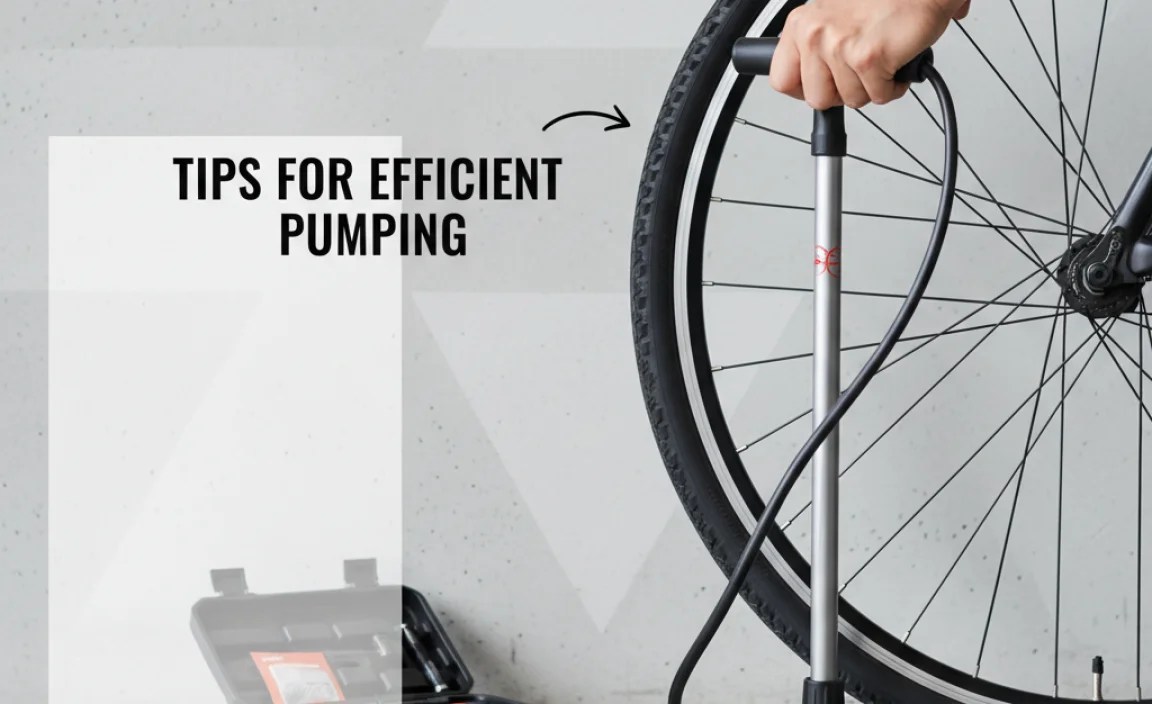
Want to pump like a pro? Here are some tips to make the process easier and more efficient:
- Use Your Body Weight: Instead of relying solely on arm strength, use your body weight to push down on the pump handle.
- Maintain a Smooth Motion: Avoid jerky, uneven pumping. A smooth, consistent motion is more efficient and less tiring.
- Check the Seal: Ensure the pump head is securely attached to the valve to prevent air leaks.
- Lubricate the Pump: Periodically lubricate the pump internals with a silicone-based lubricant to keep it working smoothly.
- Store Your Pump Properly: Store your pump in a clean, dry place to prevent damage and corrosion.
Troubleshooting Common Issues
Sometimes, things don’t go as planned. Here are some common issues and how to fix them:
Air Leaks
Problem: Air is leaking around the pump head.
Solution:
- Ensure the pump head is securely attached to the valve.
- Check the pump head for damage or wear. Replace if necessary.
- Make sure the lever/lock is in the correct position.
Difficulty Pumping
Problem: The pump is hard to push down.
Solution:
- Make sure the pump is properly lubricated.
- Check for any obstructions in the pump barrel.
- Ensure the tire isn’t already at its maximum pressure.
Pump Head Won’t Attach
Problem: The pump head won’t fit on the valve.
Solution:
- Ensure you’re using the correct pump head for your valve type (Presta or Schrader).
- Check for any damage or debris on the valve or pump head.
Choosing the Right Hand Air Pump

With so many options available, selecting the right hand air pump can be overwhelming. Here’s what to consider:
Factors to Consider
- Size and Weight: Consider how portable you need the pump to be. Mini pumps are great for on-the-go repairs, while larger pumps offer more efficient inflation.
- Valve Compatibility: Ensure the pump is compatible with both Presta and Schrader valves, or choose one that matches your bike’s valve type.
- Pressure Gauge: A built-in pressure gauge can help you achieve accurate inflation.
- Build Quality: Look for a pump made from durable materials like aluminum or high-quality plastic.
- Ergonomics: Choose a pump with a comfortable handle and a stable base for easy pumping.
Recommended Hand Air Pumps
Here are a few highly-rated hand air pumps:
| Pump Model | Type | Valve Compatibility | Features |
|---|---|---|---|
| Lezyne Micro Floor Drive HP | Mini Pump | Presta/Schrader | Foot peg, integrated gauge |
| Topeak Road Morph G | Mini Pump | Presta/Schrader | Fold-out foot pad, gauge |
| Blackburn Core Mini-Pump | Mini Pump | Presta/Schrader | Compact, lightweight |
Hand Air Pump Maintenance
Taking care of your hand air pump will extend its lifespan and ensure it’s always ready when you need it.
Regular Cleaning
Keep your pump clean by wiping it down with a damp cloth regularly. Pay attention to the pump head and valve connection points.
Lubrication
Periodically lubricate the pump internals with a silicone-based lubricant. This will keep the pump working smoothly and prevent wear.
Check for Wear and Tear
Inspect your pump regularly for any signs of damage or wear. Replace any worn or damaged parts, such as the pump head or seals.
When to Use a Hand Air Pump vs. Other Options
Hand air pumps are great, but they’re not always the best choice. Here’s a comparison:
| Pump Type | Pros | Cons | Best Use Cases |
|---|---|---|---|
| Hand Air Pump | Portable, lightweight, no power needed | Can be tiring for high-pressure tires, slower | Roadside repairs, topping off tires |
| Floor Pump | Efficient, easy to use, often has a gauge | Not portable | Home use, pre-ride inflation |
| CO2 Inflator | Fast, convenient | Requires CO2 cartridges, can be wasteful | Racing, quick repairs |
Advanced Techniques for Hand Air Pumps
Ready to take your pumping skills to the next level? Here are some advanced techniques.
Using a Foot Peg
Some mini pumps come with a fold-out foot peg. This allows you to stabilize the pump with your foot, making it easier to pump with both hands.
Optimizing Your Stance
Experiment with different stances to find the most comfortable and efficient pumping position. Try placing one foot on the pump base and leaning into the pump with your body weight.
Pre-Ride Checks
Before each ride, give your tires a quick squeeze to check the pressure. Top them off with your hand pump as needed to ensure optimal performance.
Safety Tips
Safety should always be a priority when using a hand air pump.
- Wear Gloves: Protect your hands from abrasion and dirt by wearing gloves.
- Use Eye Protection: Wear safety glasses or goggles to protect your eyes from debris.
- Be Aware of Your Surroundings: Choose a safe location to pump your tires, away from traffic and other hazards.
- Don’t Overinflate: Never inflate your tires beyond the recommended pressure. This can cause them to explode.
FAQ: Hand Air Pump Questions Answered
What is the difference between Presta and Schrader valves?
Presta valves are narrow and typically found on road bikes. Schrader valves are wider, like those on car tires, and common on mountain and hybrid bikes.
How do I know what tire pressure to use?
The recommended tire pressure is usually printed on the tire sidewall. It’s listed in PSI (pounds per square inch) or BAR.
Why is my pump leaking air?
Air leaks usually occur because the pump head isn’t properly attached to the valve. Make sure it’s secure and the lever (if there is one) is locked.
Can I use a hand pump for car tires?
While possible, it’s not recommended. Car tires require much higher pressure, and a hand pump would be very inefficient. Use a car tire inflator instead.
How often should I lubricate my hand pump?
Lubricate your hand pump every few months, or whenever you notice it becoming difficult to pump. Use a silicone-based lubricant.
What if my Presta valve is stuck?
Gently try to loosen the valve nut with pliers. Be careful not to damage it. You can also try tapping the valve to dislodge any debris.
Why is it so hard to pump my tires to a high pressure?
High-pressure tires require more force to inflate. Use your body weight to help push down on the pump handle, and make sure your pump is well-lubricated.
Conclusion
Mastering the hand air pump is a fundamental skill for any cyclist. By following these steps and tips, you’ll be able to keep your tires properly inflated, ensuring a smooth, safe, and enjoyable ride. Remember to choose the right pump for your needs, maintain it regularly, and practice good technique. So, grab your pump, hit the road, and enjoy the ride, knowing you’re well-prepared for any inflation situation that comes your way!


