
How to Use Hand Pump for Presta Valve Without Adapter: Easy!

Quick Summary: Using a hand pump for a Presta valve without an adapter is possible! Most modern hand pumps have a dual-head design. Simply unscrew the Presta valve, select the correct pump head opening (the smaller one), firmly press it onto the valve, and start pumping. Ensure a tight seal to avoid air leakage, and you’ll be back on the road in no time!
Ever been stuck with a flat tire and a hand pump that seems incompatible with your bike’s Presta valve? It’s a common frustration for many cyclists. Presta valves, with their slender design, are often found on road, mountain, and high-performance bikes. But don’t worry! You don’t always need a special adapter. Most modern hand pumps are designed to work with both Presta and Schrader valves. This guide will walk you through how to inflate your tires quickly and easily, without needing an adapter. Let’s get you rolling again!
Understanding Presta Valves and Hand Pumps

Before diving into the steps, let’s clarify what we’re dealing with. Presta valves are commonly found on higher-end bicycles due to their ability to handle higher pressures and their sleek design. Unlike the wider Schrader valves (the kind you see on car tires), Presta valves have a smaller diameter and a locking nut that needs to be unscrewed before inflation.
Hand pumps come in various designs, but most modern ones feature a dual-head that can accommodate both Presta and Schrader valves. Knowing how to identify and use the correct head is crucial for efficient inflation.
Identifying a Presta Valve
- Slim Design: Presta valves are noticeably thinner than Schrader valves.
- Locking Nut: They have a small nut at the tip that you need to unscrew to allow airflow.
- Location: Typically found on road bikes, mountain bikes, and other high-performance bicycles.
Types of Hand Pumps
Hand pumps can be broadly categorized into:
- Mini Pumps: Compact and portable, ideal for on-the-go repairs.
- Frame-Mounted Pumps: Attached to the bike frame for easy access.
- Floor Pumps (Track Pumps): Larger and more efficient for home use, but not portable.
For this guide, we’ll focus on using mini and frame-mounted pumps, as these are most commonly used for roadside repairs.
Step-by-Step Guide: Using a Hand Pump on a Presta Valve (Without an Adapter)

Here’s a detailed guide on how to inflate your Presta valve tire using a standard hand pump without an adapter:
Step 1: Prepare the Presta Valve
First, locate the Presta valve on your tire. Before you can inflate the tire, you need to prepare the valve:
- Unscrew the Locking Nut: Rotate the small nut at the tip of the valve counter-clockwise until it’s loose. Don’t remove it completely; just loosen it enough to allow airflow.
- Depress the Valve: Gently push the valve tip inward to ensure it’s not stuck. You should hear a brief hiss of air escaping. This step is crucial, especially if the valve hasn’t been used in a while.
Step 2: Select the Correct Pump Head
Most hand pumps have a dual-head design, with two openings: one for Schrader valves and one for Presta valves. The Presta valve opening is the smaller of the two.
- Identify the Correct Opening: Look for the smaller hole on the pump head. It’s usually marked or visibly smaller.
- Open the Pump Head Lever: If your pump has a lever, make sure it’s in the open position. This allows you to attach the pump head to the valve.
Step 3: Attach the Pump Head to the Valve
Now it’s time to connect the pump to the Presta valve. This step requires a bit of finesse to ensure a good seal.
- Position the Pump Head: Align the Presta valve opening of the pump head with the Presta valve on your tire.
- Press Firmly: Push the pump head straight onto the valve. Ensure it goes on far enough to create a tight seal. You should feel it securely in place.
- Engage the Lever (If Applicable): If your pump has a lever, flip it to the closed position. This locks the pump head onto the valve and prevents air from escaping during inflation.
Step 4: Inflate the Tire
With the pump head securely attached, you can now begin inflating the tire.
- Stabilize the Wheel: Hold the wheel steady with one hand to prevent the pump from slipping off the valve.
- Pump Steadily: Use a smooth, consistent motion to pump air into the tire. Avoid jerky movements that could dislodge the pump head.
- Monitor the Pressure: If your pump has a gauge, keep an eye on the pressure. If not, use your hand to feel the tire’s firmness. Inflate to the recommended pressure (usually printed on the tire sidewall).
Step 5: Detach the Pump Head
Once the tire is properly inflated, carefully detach the pump head.
- Disengage the Lever (If Applicable): If your pump has a lever, flip it back to the open position.
- Pull Straight Off: Gently pull the pump head straight off the valve. Avoid bending or twisting, which could damage the valve.
Step 6: Secure the Presta Valve
Finally, secure the Presta valve to prevent air leakage and protect it from dirt and damage.
- Tighten the Locking Nut: Rotate the nut clockwise until it is snug. Don’t overtighten, as this could damage the valve.
- Check for Leaks: Listen for any hissing sounds that indicate air leakage. If you hear a leak, re-tighten the nut or reattach the pump head and add a bit more air.
Congratulations! You’ve successfully inflated your Presta valve tire using a hand pump without an adapter. Now you can get back to enjoying your ride.
Troubleshooting Common Issues
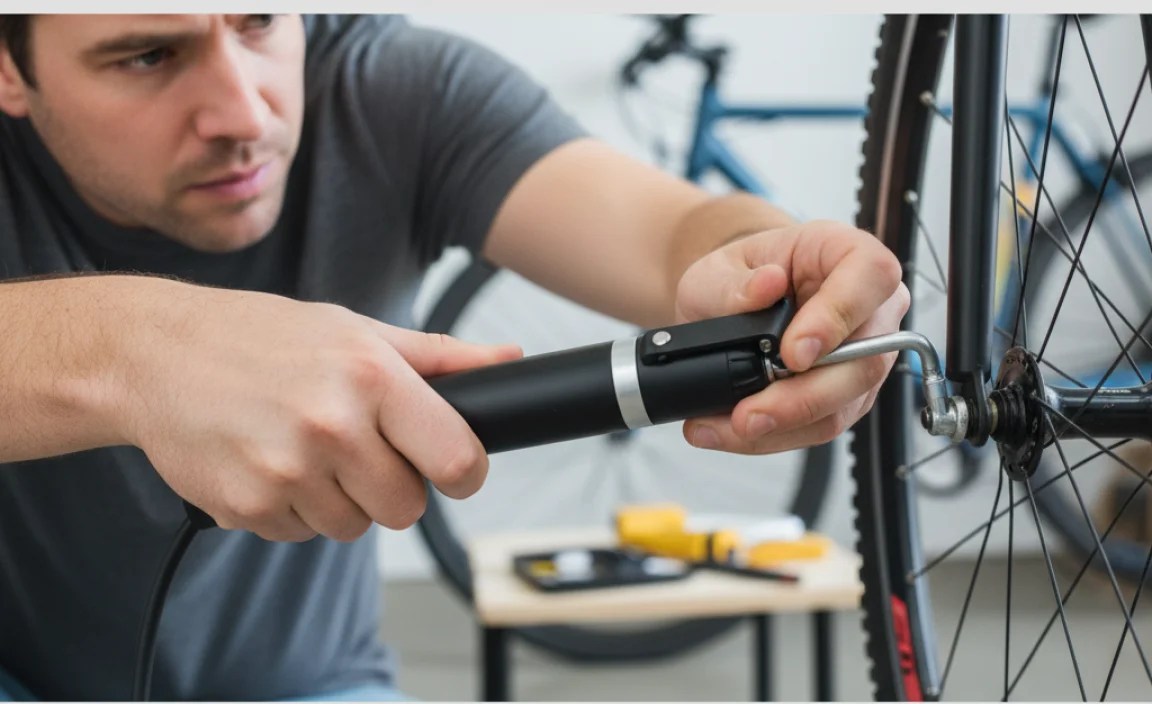
Sometimes, things don’t go as smoothly as planned. Here are some common issues you might encounter and how to resolve them:
Problem: Air Leaking While Pumping
Cause: This usually happens when the pump head isn’t properly sealed to the valve.
Solution:
- Ensure the pump head is firmly pressed onto the valve.
- Check that the lever (if applicable) is fully engaged.
- Make sure the Presta valve isn’t damaged or bent.
- Try a different pumping angle to achieve a better seal.
Problem: Pump Head Won’t Attach
Cause: The pump head might be misaligned, or the Presta valve could be stuck.
Solution:
- Double-check that you’re using the correct opening on the pump head (the smaller one for Presta valves).
- Ensure the Presta valve is open by depressing the valve tip.
- Clean the valve and pump head to remove any dirt or debris.
Problem: Difficulty Pumping
Cause: The pump might be low quality, or the tire pressure might already be high.
Solution:
- Use a high-quality pump with a smooth pumping action.
- Check the recommended tire pressure on the tire sidewall and avoid overinflating.
- Take breaks while pumping to avoid fatigue.
Choosing the Right Hand Pump

Investing in a good quality hand pump can make a significant difference in your cycling experience. Here are some factors to consider when choosing a hand pump:
Pump Type
| Pump Type | Pros | Cons | Ideal For |
|---|---|---|---|
| Mini Pump | Compact, lightweight, portable | Requires more effort, less efficient | Roadside repairs, short rides |
| Frame-Mounted Pump | Convenient, always accessible | Can be bulky, may affect aerodynamics | Daily commuters, frequent riders |
| Floor Pump (Track Pump) | Efficient, easy to use, accurate pressure gauge | Not portable, requires storage space | Home use, pre-ride inflation |
Features to Look For
- Dual-Head Design: Ensures compatibility with both Presta and Schrader valves.
- Pressure Gauge: Allows you to accurately inflate your tires to the recommended pressure.
- Lever Lock: Provides a secure seal between the pump head and the valve.
- Durable Construction: Look for pumps made from high-quality materials like aluminum or steel.
- Compact Size: Easy to carry in a saddlebag or backpack.
Recommended Hand Pumps
Here are a few highly-rated hand pumps that are popular among cyclists:
- Lezyne Micro Floor Drive HP: A mini pump with a footpad for added stability.
- Topeak Road Morph G Mini Pump: Converts to a mini floor pump for easier inflation.
- Crankbrothers Sterling LG Pump: High-volume pump for quick inflation.
Consider reading reviews and comparing features to find the best hand pump for your needs and budget. Authoritative cycling websites like BikeRadar and Cycling Weekly offer comprehensive pump reviews.
Maintaining Your Hand Pump
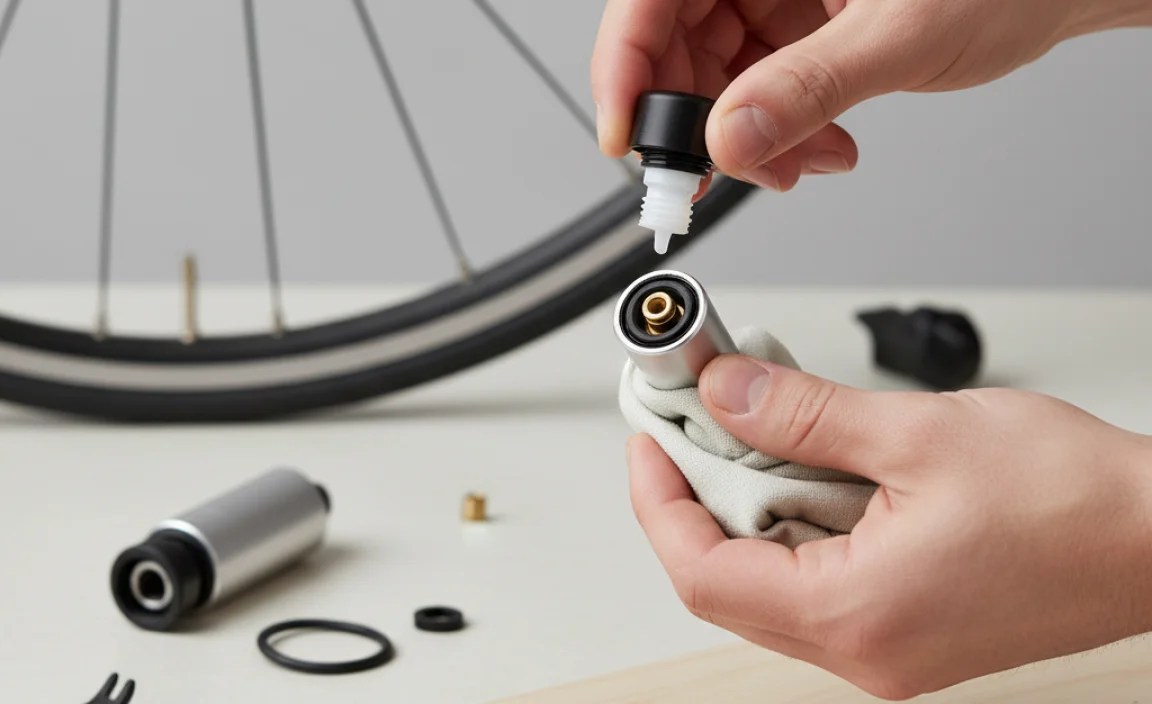
To ensure your hand pump lasts for years, proper maintenance is essential. Here are some tips:
- Clean Regularly: Wipe down the pump with a damp cloth to remove dirt and debris.
- Lubricate Moving Parts: Apply a small amount of lubricant to the pump’s moving parts to keep them working smoothly.
- Inspect the Pump Head: Check the pump head for cracks or damage and replace it if necessary.
- Store Properly: Store the pump in a dry place to prevent rust and corrosion.
Why Presta Valves are Preferred by Cyclists
Presta valves offer several advantages over Schrader valves, making them a favorite among cyclists, especially those riding road and high-performance bikes.
Higher Pressure Capability
Presta valves are designed to handle higher pressures, often exceeding 120 PSI, which is essential for road bikes requiring firm, fast-rolling tires. The design allows for a more secure seal at these high pressures compared to Schrader valves.
Lighter Weight
The narrower design of Presta valves contributes to a slight weight reduction in the wheelset. While the difference is minimal, it can be noticeable for competitive cyclists who prioritize every gram of weight savings.
Aesthetics
The slim profile of Presta valves often integrates more seamlessly with the sleek designs of modern road and mountain bikes. This aesthetic appeal is another reason why manufacturers opt for Presta valves on higher-end models.
Additional Tips for Efficient Inflation
Here are some extra tips to help you inflate your tires more efficiently and effectively:
- Check Tire Pressure Regularly: Maintain the recommended tire pressure to improve rolling efficiency and prevent flats.
- Use a Floor Pump at Home: A floor pump makes inflating tires much easier and faster than a hand pump.
- Carry a Spare Tube: Always carry a spare tube and tire levers in case of a flat tire.
- Practice Makes Perfect: Practice inflating your tires at home so you’re prepared for roadside repairs.
FAQ: Using a Hand Pump for Presta Valve
Here are some frequently asked questions about using a hand pump with a Presta valve:
- Q: Do I always need an adapter for Presta valves?
- A: No, most modern hand pumps have a dual-head design that works with both Presta and Schrader valves, eliminating the need for an adapter.
- Q: How do I know if my pump is compatible with Presta valves?
- A: Check the pump head for two openings. The smaller one is for Presta valves, and the larger one is for Schrader valves.
- Q: Why is air leaking when I try to pump my Presta valve?
- A: This usually happens if the pump head isn’t properly sealed to the valve. Ensure it’s firmly pressed on and the lever (if applicable) is engaged.
- Q: Can I use a Schrader valve pump on a Presta valve?
- A: Not directly. You would need an adapter to convert the Presta valve to a Schrader valve, but it’s much easier to use a pump with a dual-head.
- Q: How often should I inflate my tires?
- A: Check and inflate your tires before each ride, or at least once a week, to maintain optimal pressure and performance.
- Q: What is the correct tire pressure for my bike?
- A: The recommended tire pressure is usually printed on the sidewall of your tire. Use this as a guide, but adjust based on your weight and riding conditions.
- Q: Is it hard to use a hand pump for a Presta valve?
- A: Not at all! With a little practice and the right technique, it’s quite easy. Just follow the steps outlined in this guide.
Conclusion
Inflating a Presta valve tire with a hand pump doesn’t have to be a daunting task. By understanding the valve type, using the correct pump head, and following the steps outlined in this guide, you can easily maintain your tire pressure and enjoy a smooth, safe ride. Remember to choose a good quality pump, keep it well-maintained, and practice your technique. With these tips, you’ll be well-prepared for any roadside repairs and can confidently tackle any cycling adventure. So, keep your tires properly inflated and keep on riding!


