
How Do Reverse Cycle Heat Pumps Work? A Beginner’s Guide

Reverse cycle heat pumps work by moving heat, not creating it. They use a refrigerant to absorb heat from one place and release it in another. In winter, they extract heat from the outside air (even when it’s cold!) and pump it inside. In summer, they reverse the process, removing heat from inside and releasing it outside, acting like an air conditioner.
Are you tired of high heating and cooling bills? Do you want a more efficient and environmentally friendly way to control your home’s temperature? Many homeowners find traditional heating and cooling systems expensive and inefficient. Understanding how reverse cycle heat pumps work can unlock a world of energy savings and comfort. This guide breaks down the process step-by-step, so you can see how these amazing devices keep you comfortable all year round. Let’s get started!
What is a Reverse Cycle Heat Pump?
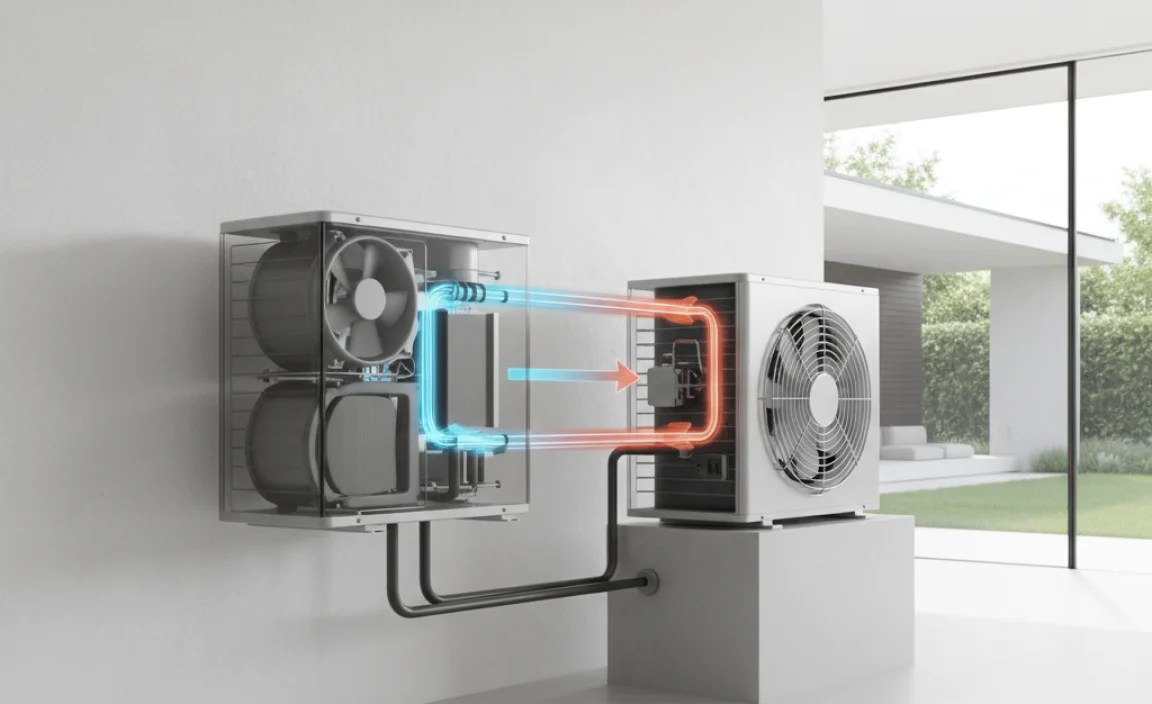
A reverse cycle heat pump is a heating and cooling system that can both heat and cool a space. Unlike traditional furnaces that burn fuel to generate heat, heat pumps simply move heat from one place to another. This makes them much more energy-efficient.
Key Components of a Heat Pump
To understand how a reverse cycle heat pump works, it’s helpful to know the main components:
- Refrigerant: A special fluid that absorbs and releases heat.
- Compressor: A motor that pressurizes the refrigerant, increasing its temperature.
- Condenser: A coil where the refrigerant releases heat.
- Evaporator: A coil where the refrigerant absorbs heat.
- Expansion Valve: A valve that reduces the pressure of the refrigerant, cooling it down.
- Reversing Valve: A valve that changes the direction of refrigerant flow, allowing the unit to switch between heating and cooling modes.
The Heating Cycle: How Heat Pumps Warm Your Home

During the heating cycle, the heat pump extracts heat from the outside air and transfers it inside your home. Here’s a detailed breakdown of the process:
- Refrigerant Absorbs Heat: The cycle begins with the refrigerant in the outdoor unit’s evaporator coil. Even in cold weather, the refrigerant is colder than the outside air. This allows it to absorb heat from the air, causing the refrigerant to evaporate into a gas.
- Compression: The gaseous refrigerant then flows to the compressor. The compressor increases the pressure and temperature of the refrigerant. This hot, high-pressure gas is now ready to release its heat.
- Condensation: The hot, high-pressure refrigerant flows into the indoor unit’s condenser coil. Here, it releases its heat into the air, warming your home. As it releases heat, the refrigerant condenses back into a liquid.
- Expansion: The liquid refrigerant then flows through the expansion valve. This valve reduces the pressure of the refrigerant, causing it to cool down significantly.
- Repeat: The cold, low-pressure refrigerant returns to the outdoor unit’s evaporator coil, and the cycle repeats.
Even when the outside temperature is below freezing, a heat pump can still extract heat from the air. This is because the refrigerant is designed to have a very low boiling point.
The Cooling Cycle: How Heat Pumps Cool Your Home

In the cooling cycle, the heat pump reverses the process, removing heat from inside your home and transferring it outside. Here’s how it works:
- Refrigerant Absorbs Heat: The cycle starts with the refrigerant in the indoor unit’s evaporator coil. The refrigerant absorbs heat from the air inside your home, cooling the air. As it absorbs heat, the refrigerant evaporates into a gas.
- Compression: The gaseous refrigerant flows to the compressor. The compressor increases the pressure and temperature of the refrigerant.
- Condensation: The hot, high-pressure refrigerant flows into the outdoor unit’s condenser coil. Here, it releases its heat into the outside air. As it releases heat, the refrigerant condenses back into a liquid.
- Expansion: The liquid refrigerant then flows through the expansion valve. This valve reduces the pressure of the refrigerant, causing it to cool down significantly.
- Repeat: The cold, low-pressure refrigerant returns to the indoor unit’s evaporator coil, and the cycle repeats.
The reversing valve is key to switching between heating and cooling modes. It changes the direction of refrigerant flow, allowing the heat pump to either extract heat from the outside or from the inside.
The Role of the Reversing Valve

The reversing valve is a critical component that allows a heat pump to function in both heating and cooling modes. This valve changes the direction of refrigerant flow, effectively swapping the roles of the indoor and outdoor coils.
In heating mode, the reversing valve directs the hot refrigerant to the indoor coil (condenser), where it releases heat into the home. In cooling mode, the reversing valve directs the hot refrigerant to the outdoor coil (condenser), where it releases heat to the outside air.
Types of Reverse Cycle Heat Pumps

There are several types of reverse cycle heat pumps, each designed for different applications and climates:
- Air-Source Heat Pumps: These are the most common type of heat pump. They extract heat from the outside air (or release heat into it).
- Geothermal Heat Pumps: Also known as ground-source heat pumps, these systems use the earth’s constant temperature to heat and cool your home. They are more efficient than air-source heat pumps but have a higher installation cost.
- Mini-Split Heat Pumps: These ductless systems are ideal for heating and cooling individual rooms or small areas. They consist of an outdoor unit and one or more indoor units.
Air-Source Heat Pumps
Air-source heat pumps are the most widely used type of heat pump due to their relatively low installation cost and versatility. They work by transferring heat between your home and the outside air. While effective, their efficiency can decrease in extremely cold temperatures.
Geothermal Heat Pumps
Geothermal heat pumps, also known as ground-source heat pumps, utilize the stable temperature of the earth to provide heating and cooling. These systems are significantly more energy-efficient than air-source heat pumps because the ground temperature remains relatively constant year-round. However, the initial installation cost is higher due to the need for underground piping.
Mini-Split Heat Pumps
Mini-split heat pumps are ductless systems designed for heating and cooling individual rooms or zones. They consist of an outdoor unit connected to one or more indoor units. Mini-splits are easy to install and offer precise temperature control for each zone, making them ideal for additions, renovations, or homes without ductwork.
Advantages of Reverse Cycle Heat Pumps
Reverse cycle heat pumps offer several benefits over traditional heating and cooling systems:
- Energy Efficiency: Heat pumps are much more energy-efficient than traditional furnaces and air conditioners. They move heat rather than generate it, which requires less energy.
- Cost Savings: Due to their energy efficiency, heat pumps can save you money on your energy bills.
- Year-Round Comfort: Heat pumps can both heat and cool your home, providing year-round comfort.
- Environmentally Friendly: Heat pumps use electricity rather than burning fossil fuels, making them a more environmentally friendly option.
- Quiet Operation: Heat pumps are generally quieter than traditional air conditioners.
Disadvantages of Reverse Cycle Heat Pumps
While heat pumps offer many advantages, there are also some potential drawbacks:
- Upfront Cost: Heat pumps can have a higher upfront cost than traditional furnaces and air conditioners.
- Performance in Extreme Cold: Air-source heat pumps can lose efficiency in extremely cold temperatures. Geothermal heat pumps are less affected by cold weather.
- Maintenance: Like any HVAC system, heat pumps require regular maintenance to ensure optimal performance.
Heat Pump Efficiency: Understanding SEER and HSPF
When evaluating heat pumps, it’s important to understand the efficiency ratings. The two primary ratings are:
- SEER (Seasonal Energy Efficiency Ratio): This measures the cooling efficiency of the heat pump. The higher the SEER rating, the more efficient the unit.
- HSPF (Heating Seasonal Performance Factor): This measures the heating efficiency of the heat pump. The higher the HSPF rating, the more efficient the unit.
Look for heat pumps with high SEER and HSPF ratings to maximize energy savings.
Comparing Heat Pumps to Traditional HVAC Systems
To fully appreciate the benefits of reverse cycle heat pumps, let’s compare them to traditional HVAC systems:
| Feature | Reverse Cycle Heat Pump | Traditional Furnace & Air Conditioner |
|---|---|---|
| Energy Efficiency | Higher (moves heat) | Lower (generates heat) |
| Operating Cost | Lower | Higher |
| Heating & Cooling | Both in one unit | Separate units required |
| Environmental Impact | Lower (uses electricity) | Higher (burns fossil fuels) |
| Upfront Cost | Can be higher | Can be lower |
As you can see, heat pumps offer significant advantages in terms of energy efficiency and environmental impact. While the upfront cost may be higher, the long-term savings can be substantial.
Factors to Consider When Choosing a Heat Pump
Selecting the right heat pump for your home involves considering several factors:
- Climate: In extremely cold climates, a geothermal heat pump or a heat pump with a backup heating system may be necessary.
- Home Size: Choose a heat pump with the appropriate capacity for your home’s square footage.
- Insulation: Proper insulation can significantly improve the efficiency of your heat pump.
- Budget: Consider both the upfront cost and the long-term operating costs when making your decision.
- Professional Installation: Heat pumps should be installed by a qualified HVAC technician to ensure optimal performance and safety.
Maintaining Your Reverse Cycle Heat Pump
Regular maintenance is essential to keep your heat pump running efficiently and reliably. Here are some tips:
- Clean or Replace Air Filters: Dirty air filters can reduce airflow and decrease efficiency. Check your filters monthly and clean or replace them as needed.
- Clean Outdoor Unit: Keep the outdoor unit free of debris, such as leaves, branches, and snow.
- Schedule Professional Maintenance: Have your heat pump inspected and serviced by a qualified HVAC technician at least once a year.
Proper maintenance can extend the life of your heat pump and prevent costly repairs.
Troubleshooting Common Heat Pump Issues
Even with regular maintenance, heat pumps can sometimes experience problems. Here are some common issues and how to troubleshoot them:
| Issue | Possible Cause | Troubleshooting Steps |
|---|---|---|
| Heat pump not heating or cooling | Power outage, tripped circuit breaker, thermostat settings | Check power supply, reset circuit breaker, verify thermostat settings |
| Reduced heating or cooling performance | Dirty air filters, blocked outdoor unit, refrigerant leak | Clean or replace air filters, clear debris from outdoor unit, call a technician for refrigerant leak |
| Unusual noises | Loose components, fan issues, compressor problems | Inspect for loose parts, check fan operation, call a technician for compressor issues |
| Ice buildup on outdoor unit | Normal defrost cycle, low refrigerant, airflow obstruction | Monitor defrost cycle, check for airflow blockages, call a technician if icing persists |
If you encounter a problem that you can’t resolve yourself, it’s best to call a qualified HVAC technician.
The Future of Heat Pump Technology
Heat pump technology is constantly evolving, with ongoing research and development focused on improving efficiency, performance, and environmental impact. Some emerging trends include:
- Variable-Speed Compressors: These compressors can adjust their speed to match the heating or cooling demand, resulting in improved efficiency and comfort.
- Smart Thermostats: Smart thermostats can learn your heating and cooling preferences and automatically adjust the temperature to maximize energy savings.
- Eco-Friendly Refrigerants: New refrigerants with lower global warming potential are being developed to reduce the environmental impact of heat pumps.
Reverse Cycle Heat Pumps and the Environment
Reverse cycle heat pumps are a key technology in the transition to a more sustainable energy future. By using electricity to move heat rather than burning fossil fuels, heat pumps can significantly reduce greenhouse gas emissions. As the electricity grid becomes cleaner with the increasing use of renewable energy sources, the environmental benefits of heat pumps will continue to grow.
According to the U.S. Department of Energy, heat pumps can reduce your carbon footprint significantly compared to traditional heating systems. By choosing a heat pump, you can help reduce air pollution and combat climate change.
FAQ About Reverse Cycle Heat Pumps
What is the main difference between a heat pump and an air conditioner?
A heat pump can both heat and cool a space, while an air conditioner only cools. Heat pumps move heat, whereas furnaces generate it.
Are heat pumps effective in cold climates?
Yes, but air-source heat pumps may lose efficiency in extreme cold. Geothermal heat pumps are more effective in cold climates.
How long do heat pumps typically last?
With proper maintenance, a heat pump can last 15-20 years.
Are heat pumps noisy?
Heat pumps are generally quieter than traditional air conditioners.
Can I install a heat pump myself?
It’s best to have a heat pump installed by a qualified HVAC technician to ensure optimal performance and safety. This also helps to maintain the warranty.
How often should I change the air filters in my heat pump?
Check your filters monthly and clean or replace them as needed, typically every 1-3 months.
What is the ideal temperature setting for my heat pump in winter?
A comfortable and energy-efficient setting is typically between 68-72°F (20-22°C).
Conclusion
Reverse cycle heat pumps are an efficient, cost-effective, and environmentally friendly way to heat and cool your home. By understanding how they work and considering the factors discussed in this guide, you can make an informed decision about whether a heat pump is right for you. From understanding the basic principles of heat transfer to comparing different types of heat pumps and maintaining your system, this guide has equipped you with the knowledge to make the most of this innovative technology. Embrace the future of home comfort and energy efficiency with reverse cycle heat pumps!
“`


