
Do Heat Pumps Have a Defrost Cycle? Understanding How They Work

Quick Summary: Yes, heat pumps do have a defrost cycle. When temperatures drop, frost can build up on the outdoor unit. The defrost cycle melts this frost to keep the heat pump working efficiently. This usually involves temporarily switching to cooling mode to warm the coils.
Is your heat pump acting a little strange in the winter? Don’t worry, it’s probably just going through its defrost cycle. Many homeowners get concerned when they see ice forming on their outdoor unit, but it’s a normal part of how heat pumps operate. Understanding the defrost cycle can help you maintain your system and avoid unnecessary service calls. We’ll walk you through what it is, how it works, and what to expect, so you can keep your home warm all winter long.
What is a Heat Pump Defrost Cycle?

A heat pump works by transferring heat from one place to another. In the winter, it extracts heat from the outside air and brings it inside. When the outdoor temperature drops below freezing (32°F or 0°C), moisture in the air can freeze on the outdoor coil, forming frost or ice. This buildup reduces the heat pump’s efficiency by insulating the coil and restricting airflow. The defrost cycle is designed to melt this ice and keep the system running smoothly.
Think of it like this: imagine wearing a thick winter coat. It keeps you warm, but if the coat gets soaked with water and freezes, it becomes stiff and doesn’t insulate as well. The defrost cycle is like removing that ice-covered coat so the heat pump can continue to warm your home effectively.
How Does the Defrost Cycle Work?
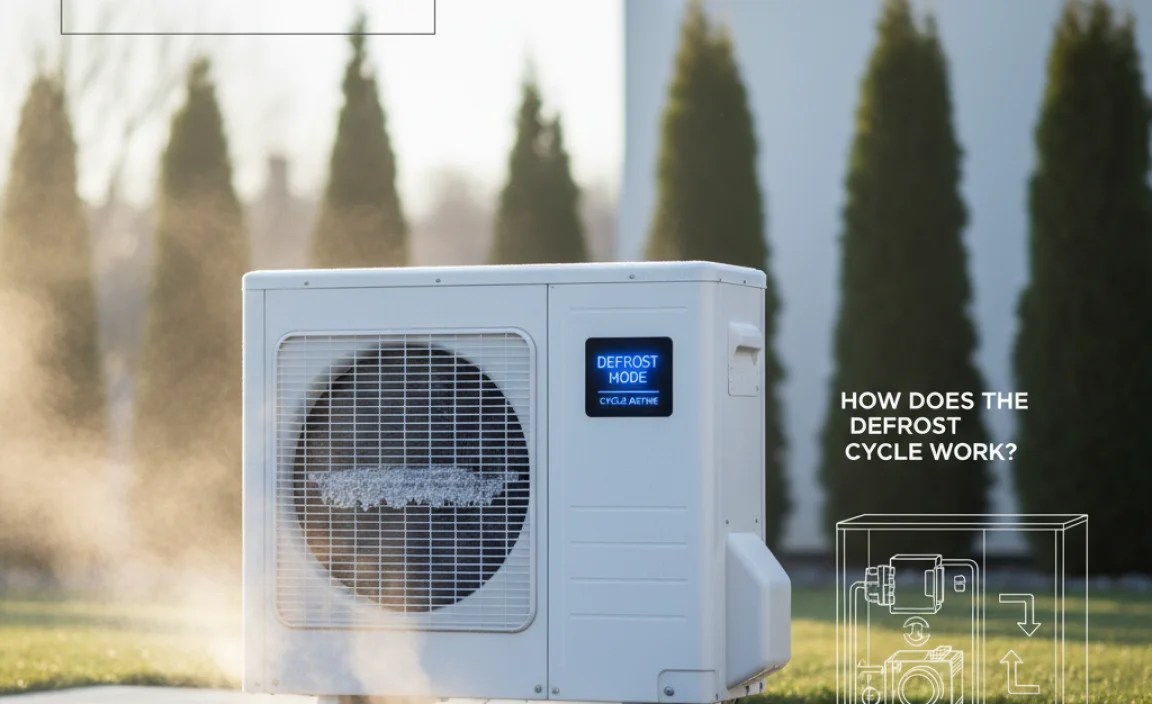
The defrost cycle is triggered automatically by sensors in the heat pump that detect ice buildup. Here’s a breakdown of the process:
- Ice Detection: Sensors monitor the temperature of the outdoor coil. When the temperature drops below a certain point and stays there for a set time, the defrost cycle is initiated.
- Reversing Valve Activation: The reversing valve switches the flow of refrigerant. This makes the heat pump temporarily run in cooling mode.
- Hot Gas Circulation: Hot refrigerant gas is directed to the outdoor coil, warming it and melting the ice.
- Fan Shutdown: The outdoor fan is usually turned off during the defrost cycle to maximize the heat directed at the coil.
- Auxiliary Heat Activation (Optional): To prevent the indoor temperature from dropping too much, auxiliary heat (electric resistance heat) may be activated.
- Cycle Termination: Once the ice is melted and the coil temperature rises, the defrost cycle ends, and the heat pump returns to normal heating mode.
The whole process typically takes between 5 to 15 minutes. You might notice the outdoor unit making hissing or gurgling sounds, and you might feel a brief blast of cool air from your vents as the system switches modes.
Signs Your Heat Pump is Defrosting

Knowing what to look for can help you understand if your heat pump is working correctly. Here are some common signs that your heat pump is in defrost mode:
- Visible Ice Buildup: The most obvious sign is ice or frost on the outdoor unit.
- Steam or Fog: As the ice melts, you might see steam or fog rising from the unit.
- Hissing or Gurgling Noises: These sounds come from the refrigerant reversing and circulating through the coil.
- Outdoor Fan Stops: The fan usually shuts off to concentrate heat on the coil.
- Brief Cool Air: You might feel a short burst of cool air from your indoor vents.
- Auxiliary Heat Activation: Your electric bill might be slightly higher during periods when the defrost cycle is frequent, due to the use of auxiliary heat.
Why is the Defrost Cycle Important?

The defrost cycle is crucial for maintaining the efficiency and lifespan of your heat pump. Here’s why:
- Maintains Efficiency: Ice buildup reduces the heat pump’s ability to transfer heat, making it work harder and use more energy.
- Prevents Damage: Excessive ice can damage the coil and other components.
- Ensures Comfort: By keeping the heat pump running efficiently, the defrost cycle helps maintain a consistent and comfortable temperature in your home.
What to Do If Your Heat Pump Isn’t Defrosting

If you notice that your heat pump is constantly covered in ice or isn’t defrosting properly, there might be a problem. Here are some steps you can take:
- Check for Obstructions: Make sure there are no leaves, snow, or debris blocking the outdoor unit.
- Inspect the Coil: Look for any visible damage to the coil. Bent fins can restrict airflow and affect performance.
- Check the Fan: Ensure the outdoor fan is running properly when it’s not in defrost mode.
- Clean the Area: Clear away any snow or ice accumulation around the base of the unit.
- Contact a Professional: If you suspect a mechanical or electrical issue, call a qualified HVAC technician.
Common Issues That Affect the Defrost Cycle
Several factors can interfere with the defrost cycle. Here are some common issues:
- Faulty Sensors: If the sensors aren’t working correctly, the defrost cycle might not activate when it should.
- Reversing Valve Problems: A malfunctioning reversing valve can prevent the heat pump from switching to cooling mode.
- Refrigerant Leaks: Low refrigerant levels can reduce the system’s ability to transfer heat and trigger the defrost cycle.
- Frozen Condensate Line: A frozen condensate line can cause ice to build up inside the unit.
- Electrical Issues: Problems with the control board or other electrical components can disrupt the defrost cycle.
Tips for Maintaining Your Heat Pump in Winter
Proper maintenance can help ensure your heat pump runs efficiently and reliably during the winter months. Here are some tips:
- Regular Inspections: Schedule annual maintenance checks with a qualified HVAC technician.
- Clean the Outdoor Unit: Remove any debris, leaves, or snow from around the unit.
- Change Air Filters: Replace your air filters regularly to maintain good airflow.
- Keep Vents Clear: Make sure your indoor vents are not blocked by furniture or curtains.
- Monitor Performance: Pay attention to how your heat pump is running and address any issues promptly.
Heat Pump Defrost Cycle: Troubleshooting
Here’s a quick troubleshooting table to help you diagnose common issues with your heat pump’s defrost cycle:
| Problem | Possible Cause | Solution |
|---|---|---|
| Heat pump constantly covered in ice | Faulty defrost sensor, refrigerant leak | Contact a professional HVAC technician |
| Defrost cycle not activating | Faulty sensor, electrical issue | Contact a professional HVAC technician |
| Defrost cycle too frequent | Dirty coil, airflow obstruction | Clean the outdoor unit, clear obstructions |
| Loud noises during defrost cycle | Loose components, refrigerant issue | Contact a professional HVAC technician |
| Cool air blowing for too long | Auxiliary heat not working, reversing valve issue | Check auxiliary heat settings, contact a professional HVAC technician |
Heat Pump vs. Traditional Furnace: Key Differences
Understanding the differences between a heat pump and a traditional furnace can help you appreciate how the defrost cycle fits into the overall heating process.
Here’s a comparison table:
| Feature | Heat Pump | Traditional Furnace |
|---|---|---|
| Heating Method | Transfers heat from outside air | Burns fuel (natural gas, propane, oil) |
| Cooling Capability | Yes, can also provide air conditioning | Requires a separate air conditioning unit |
| Energy Efficiency | Generally more energy-efficient | Efficiency varies depending on the model |
| Defrost Cycle | Required in cold climates | Not required |
| Fuel Source | Electricity | Natural gas, propane, oil |
| Environmental Impact | Lower carbon footprint (depending on electricity source) | Higher carbon footprint due to fossil fuel combustion |
As you can see, heat pumps offer several advantages over traditional furnaces, including energy efficiency and the ability to both heat and cool your home. However, the defrost cycle is a unique aspect of heat pump operation that requires understanding and maintenance.
Optimizing Heat Pump Efficiency in Cold Weather
To maximize the efficiency of your heat pump in cold weather, consider these strategies:
- Set Thermostat Strategically: Avoid large temperature swings. Set a consistent temperature and use a programmable thermostat. Source: Energy.gov
- Use Auxiliary Heat Sparingly: Auxiliary heat is less efficient than the heat pump itself. Use it only when necessary.
- Seal Air Leaks: Seal any air leaks around windows, doors, and other openings to prevent heat loss.
- Improve Insulation: Proper insulation in your walls and attic can significantly reduce heat loss.
- Consider a Smart Thermostat: Smart thermostats can learn your heating and cooling patterns and adjust automatically to save energy.
FAQ About Heat Pump Defrost Cycles
1. How often should my heat pump go into defrost mode?
The frequency of the defrost cycle depends on the outdoor temperature and humidity. In very cold and humid conditions, it might occur every 30 to 90 minutes. In milder conditions, it could be less frequent.
2. Is it normal for my heat pump to make noise during the defrost cycle?
Yes, it’s normal for your heat pump to make hissing or gurgling noises during the defrost cycle. These sounds are caused by the refrigerant reversing and circulating through the coil.
3. Why does my heat pump blow cool air during the defrost cycle?
When the heat pump switches to cooling mode to melt the ice, it can briefly blow cool air from the indoor vents. This is usually temporary, and auxiliary heat should kick in to prevent the indoor temperature from dropping too much.
4. Can I manually trigger the defrost cycle on my heat pump?
Some heat pumps have a manual defrost mode that you can activate. However, it’s generally best to let the system run automatically. If you’re concerned about ice buildup, contact a professional HVAC technician.
5. Should I be concerned if I see steam coming from my heat pump during the defrost cycle?
No, steam or fog is a normal byproduct of the defrost cycle. It’s simply the melting ice turning into water vapor.
6. How can I tell if my heat pump’s defrost cycle is not working correctly?
If your heat pump is constantly covered in ice, not defrosting at all, or running the defrost cycle too frequently, there might be a problem. Contact a qualified HVAC technician for assistance.
7. Does the defrost cycle use a lot of energy?
The defrost cycle itself doesn’t use a significant amount of energy. However, if auxiliary heat is activated during the cycle, it can increase your energy consumption. Minimizing the use of auxiliary heat can help save energy.
Conclusion
Understanding the defrost cycle is essential for maintaining your heat pump and ensuring it runs efficiently throughout the winter. While it might seem concerning to see ice on your outdoor unit, it’s a normal part of the process. By knowing what to look for and taking steps to maintain your system, you can keep your home warm and comfortable all season long. If you ever have any concerns, don’t hesitate to contact a qualified HVAC technician for assistance. They can diagnose any issues and ensure your heat pump is running at its best.
“`


