What Does “Cycle” Mean on the Spectra Breast Pump? A Simple Guide

Quick Summary: The “cycle” setting on your Spectra breast pump determines how many times the pump suctions and releases per minute. Higher cycles mimic a baby’s initial rapid sucking, while lower cycles are like the longer, deeper draws as milk flow increases. Adjusting the cycle lets you customize pumping to your body’s response and comfort.
Are you a new mom trying to decode all the settings on your Spectra breast pump? Don’t worry, you’re not alone! Understanding what each button does can feel overwhelming, especially when you’re already juggling so much. One setting that often causes confusion is the “cycle” function. What exactly does it do, and how should you adjust it for the best results? This guide will break it down in simple terms, so you can pump with confidence and get the most out of your Spectra.
We’ll walk you through what the “cycle” setting means, how it affects your milk expression, and how to find the right setting for your body. By the end of this article, you’ll be a Spectra pro, ready to optimize your pumping sessions. Let’s get started!
Understanding the “Cycle” Setting on Your Spectra

The “cycle” setting on your Spectra breast pump refers to the number of suction cycles per minute. Think of it as the speed at which the pump is working. Each cycle involves two phases: a suction phase, where the pump pulls to extract milk, and a release phase, where the suction is released.
The cycle speed is usually measured in cycles per minute (CPM). A higher CPM means the pump is completing more suction-and-release cycles in a minute, while a lower CPM means it’s working at a slower pace.
Here’s a table that summarizes the key aspects of the “cycle” setting:
| Setting | Meaning | Effect |
|---|---|---|
| High Cycle (e.g., 70 CPM) | More suction cycles per minute | Mimics baby’s initial rapid sucking; can stimulate let-down |
| Low Cycle (e.g., 38 CPM) | Fewer suction cycles per minute | Mimics baby’s deeper, longer draws; efficient milk extraction |
How the Cycle Setting Affects Milk Expression
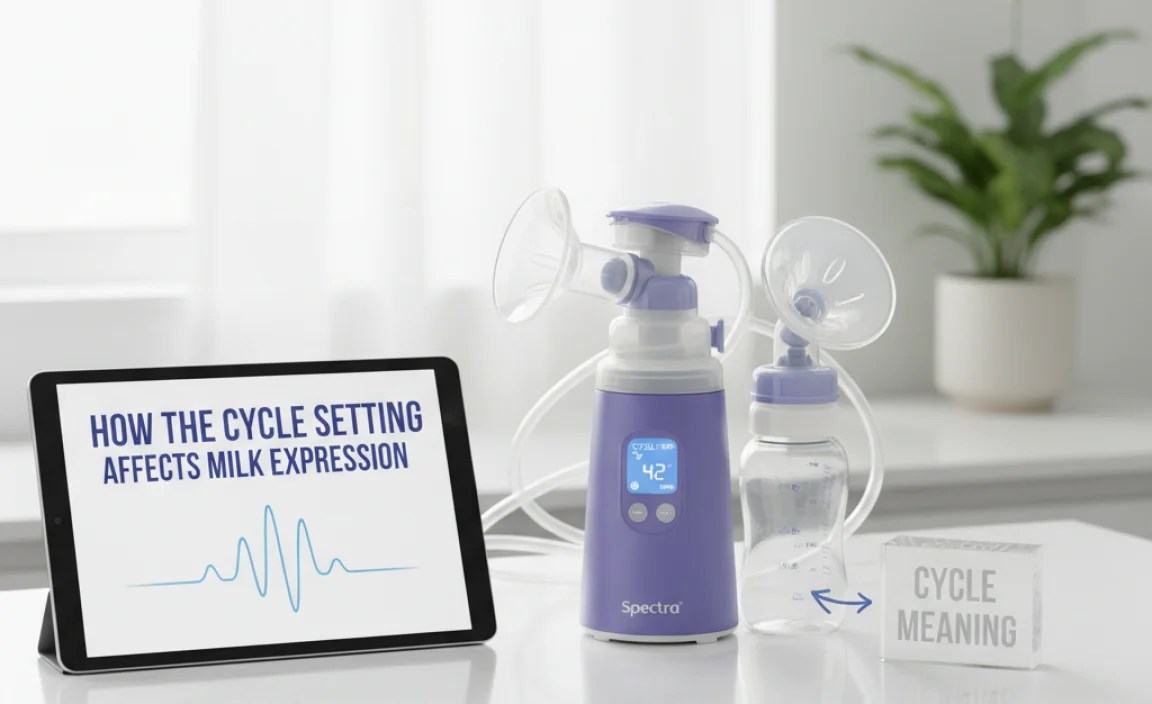
The cycle setting plays a crucial role in how effectively you express milk. Different cycle speeds are designed to mimic the different ways a baby nurses, which can influence your milk flow and overall pumping experience.
- Stimulation Phase: When a baby first latches on, they often use short, rapid sucks to stimulate your milk to let down. A higher cycle speed mimics this, encouraging your body to release milk.
- Expression Phase: Once the milk has let down, a baby will switch to slower, deeper sucks to efficiently draw out the milk. A lower cycle speed mimics this, helping you to empty your breasts more completely.
By adjusting the cycle setting, you can tailor your pumping session to match your body’s natural rhythms and optimize milk expression. Think of it like adjusting the gears on your bicycle for different terrains! You wouldn’t pedal at the same speed uphill as you would downhill, right?
Finding the Right Cycle Setting for You

Every woman’s body responds differently to breast pumping, so finding the right cycle setting is a matter of experimentation. Here’s a step-by-step guide to help you discover what works best for you:
- Start with Stimulation Mode: Begin your pumping session in stimulation mode, which typically has a higher cycle speed. This will help trigger your milk let-down. Pump in this mode for a few minutes until you see milk starting to flow.
- Switch to Expression Mode: Once your milk has let down, switch to expression mode. This mode usually allows you to adjust both the cycle speed and the suction level.
- Experiment with Cycle Speeds: Start with a cycle speed in the middle range (e.g., 54 CPM) and observe how your body responds. If the milk is flowing well, maintain that speed. If not, try adjusting it up or down.
- Adjust Suction Level: While adjusting the cycle speed, also pay attention to the suction level. Find a suction level that is comfortable for you, as too much suction can cause pain and discomfort.
- Listen to Your Body: Pay attention to how your breasts feel during pumping. If you feel any pain or discomfort, immediately reduce the suction level or adjust the cycle speed.
- Keep a Record: Keep a record of the cycle speeds and suction levels that work best for you. This will help you quickly find the right settings for future pumping sessions.
Remember, there’s no one-size-fits-all answer when it comes to cycle settings. What works for one woman may not work for another. The key is to be patient, experiment, and listen to your body.
Common Mistakes to Avoid

To ensure a comfortable and effective pumping experience, avoid these common mistakes:
- Starting with Too High Suction: Starting with a high suction level can cause pain and may not necessarily result in more milk. Always start with a lower suction level and gradually increase it as needed.
- Ignoring Discomfort: If you experience any pain or discomfort during pumping, don’t ignore it. Adjust the settings or stop pumping altogether. Pumping should not be painful.
- Not Experimenting: Don’t be afraid to experiment with different cycle speeds and suction levels to find what works best for you. What works one day may not work the next, so be flexible and willing to adjust.
- Relying on One Setting: Your body’s needs may change over time, so don’t rely on just one setting. Be prepared to adjust the cycle speed and suction level as your milk supply and pumping needs evolve.
Tips for Optimizing Your Pumping Sessions
Here are some additional tips to help you optimize your pumping sessions and get the most out of your Spectra breast pump:
- Ensure Proper Flange Size: Using the correct flange size is crucial for comfortable and effective pumping. If the flange is too small or too large, it can cause pain and reduce milk output. Many resources are available online to help you measure and determine the correct flange size.
- Massage Your Breasts: Gently massage your breasts before and during pumping to help stimulate milk flow. This can also help prevent clogged ducts.
- Stay Hydrated: Drink plenty of water throughout the day to stay hydrated, as this can help increase your milk supply.
- Relax and Reduce Stress: Stress can inhibit milk let-down, so try to relax and create a calm environment before and during pumping. Listen to soothing music, read a book, or practice deep breathing exercises.
- Pump Regularly: Pump regularly to maintain your milk supply, especially if you are exclusively pumping. Aim to pump at least 8 times a day, or as often as your baby would nurse.
Troubleshooting Common Issues
Even with the right settings, you might encounter some challenges while pumping. Here are a few common issues and how to address them:
| Issue | Possible Cause | Solution |
|---|---|---|
| Low Milk Output | Incorrect cycle/suction settings, stress, dehydration, improper flange size | Adjust settings, relax, drink more water, check flange size |
| Pain or Discomfort | Too high suction, incorrect flange size, clogged duct | Reduce suction, check flange size, massage breast, apply warm compress |
| Slow Let-Down | Stress, anxiety, cold environment | Relax, create a calm environment, use warm compress, massage breast |
If you continue to experience issues with your Spectra breast pump, consult with a lactation consultant or healthcare provider for personalized advice and support. La Leche League International is also a helpful resource.
Comparing Spectra Models: Cycle Setting Features
Spectra offers several breast pump models, each with slightly different features related to the cycle setting. Here’s a comparison of some popular models:
| Model | Cycle Range (CPM) | Other Features |
|---|---|---|
| Spectra S1/S2 | 38-54 | Adjustable suction, massage mode, night light |
| Spectra 9 Plus | 38-54 | Portable, rechargeable battery, adjustable suction |
| Spectra Synergy Gold | 30-76 | Customizable programs, individual breast settings, digital display |
Consider your individual needs and preferences when choosing a Spectra model. If you value portability, the 9 Plus might be a good choice. If you want more advanced customization options, the Synergy Gold could be a better fit.
External Resources for Breastfeeding and Pumping Support
Here are some reliable external resources that offer valuable information and support for breastfeeding and pumping:
- La Leche League International: A global organization that provides breastfeeding support and education. La Leche League International
- KellyMom: A website with evidence-based information on breastfeeding and parenting. KellyMom
- Centers for Disease Control and Prevention (CDC): Information on breastfeeding benefits and guidelines. CDC Breastfeeding
- World Health Organization (WHO): Recommendations on breastfeeding duration and practices. WHO Breastfeeding
FAQ: Understanding Spectra Breast Pump Cycles
Here are some frequently asked questions about the “cycle” setting on Spectra breast pumps:
- What is the difference between cycle and suction on a breast pump?
- Cycle refers to the number of suction and release motions per minute, while suction refers to the strength of the vacuum created by the pump. Cycle controls the speed, and suction controls the power.
- What cycle speed is best for milk let-down?
- A higher cycle speed, typically found in stimulation mode, is best for triggering milk let-down. This mimics a baby’s initial rapid sucking.
- How do I know if my cycle speed is too high?
- If you experience pain or discomfort, or if your milk flow decreases, the cycle speed may be too high. Reduce the cycle speed and adjust the suction level accordingly.
- Can I change the cycle speed during a pumping session?
- Yes, you can and should adjust the cycle speed during a pumping session to mimic a baby’s natural nursing patterns. Start with a higher speed for let-down and then switch to a lower speed for efficient milk extraction.
- Does a higher cycle speed always mean more milk?
- Not necessarily. While a higher cycle speed can help trigger let-down, a lower cycle speed may be more effective for extracting milk once the milk has let down. It’s important to find the right balance for your body.
- What if I don’t feel anything when pumping?
- Make sure you’re using the correct flange size and that the suction level is high enough to create a comfortable seal. Also, try relaxing and massaging your breasts to stimulate milk flow.
- Where can I get help if I’m still confused about the settings?
- Consult with a lactation consultant or healthcare provider for personalized advice and support. They can help you troubleshoot any issues and find the right settings for your body.
Conclusion
Understanding the “cycle” setting on your Spectra breast pump is key to a more comfortable and efficient pumping experience. By experimenting with different cycle speeds and paying attention to your body’s response, you can find the settings that work best for you and optimize your milk expression. Remember to start with the stimulation mode, adjust the suction level, and listen to your body throughout the process. With a little practice and patience, you’ll become a Spectra pro in no time!
Breastfeeding and pumping can be challenging, but you’re not alone. There are many resources available to support you on your journey. Don’t hesitate to reach out to lactation consultants, healthcare providers, or support groups for help and encouragement. You’ve got this!
“`