
How to Run Defrost Cycle on Heat Pump: A Simple Guide

Quick Summary: Most heat pumps automatically defrost themselves. If yours isn’t, check for ice buildup on the outdoor unit. You can usually manually start a defrost cycle by turning off the heat pump at the thermostat, waiting a few minutes, then turning it back on in heat mode. Some models have a “test” or “emergency heat” setting that triggers defrost. Always consult your owner’s manual for specific instructions for your heat pump model.
Is your heat pump struggling to keep your home warm in the winter? One common issue is ice buildup on the outdoor unit. Heat pumps are designed to handle this, but sometimes they need a little help. Don’t worry, it’s usually a simple fix! This guide will walk you through how to run a defrost cycle on your heat pump, ensuring it operates efficiently and keeps you cozy all winter long. We’ll cover the basics, troubleshooting tips, and when to call a professional. Let’s get started!
Understanding Heat Pump Defrost Cycles

Before diving into how to manually run a defrost cycle, it’s important to understand how the process works automatically.
Why Defrosting is Necessary
Heat pumps work by transferring heat from one place to another. In the winter, they extract heat from the outside air and pump it inside your home. When the outdoor temperature drops below freezing, moisture in the air can freeze on the outdoor coil. This ice buildup reduces the heat pump’s ability to absorb heat, making it less efficient. If left unaddressed, it can even damage the unit.
Automatic Defrost Cycle
Most modern heat pumps are equipped with an automatic defrost cycle. This cycle reverses the flow of refrigerant, causing the outdoor coil to heat up and melt the ice. The heat pump will temporarily switch to cooling mode during the defrost cycle, which may cause a brief drop in the temperature of the air coming from your vents.
Here are some typical characteristics of an automatic defrost cycle:
- Duration: Typically lasts between 5 to 15 minutes.
- Frequency: Occurs every 30 to 90 minutes, depending on the amount of ice buildup.
- Visual cues: You might see steam rising from the outdoor unit or hear a hissing sound.
Signs Your Heat Pump Isn’t Defrosting Properly
If you notice any of the following signs, your heat pump might not be defrosting correctly:
- Excessive ice buildup on the outdoor unit.
- The heat pump runs constantly but doesn’t heat your home effectively.
- The air coming from your vents is cold during the heating cycle for longer than the typical defrost time.
- Increased energy bills without a corresponding increase in warmth.
How to Manually Run a Defrost Cycle

If your heat pump isn’t defrosting automatically or you suspect it needs a little help, you can try running a manual defrost cycle. Here’s how:
Step 1: Check the Outdoor Unit
Before you do anything else, visually inspect the outdoor unit. Look for excessive ice buildup. A thin layer of frost is normal, but thick ice indicates a problem.
Step 2: Turn Off the Heat Pump
Go to your thermostat and switch the system to the “Off” position. This will stop the heat pump from running and allow the ice to start melting.
Step 3: Wait a Few Minutes
Wait for about 30 minutes to an hour. This gives the ice a chance to thaw naturally. In some cases, this alone might be enough to solve the problem.
Step 4: Turn the Heat Pump Back On
Switch the thermostat back to “Heat” mode and set your desired temperature. The heat pump should now start running in heating mode. Monitor the outdoor unit to see if the ice is melting.
Step 5: Use Emergency Heat (If Available)
Some heat pumps have an “Emergency Heat” or “Auxiliary Heat” setting. This setting bypasses the heat pump and uses electric resistance heat to warm your home. Activating this mode can sometimes trigger a defrost cycle.
- Switch the thermostat to “Emergency Heat.”
- Let the system run for about 30 minutes.
- Switch back to “Heat” mode.
Step 6: Consult Your Owner’s Manual
Your heat pump’s owner’s manual is your best resource for specific instructions. It will provide detailed information about your model and any unique features it may have. Look for a section on defrosting or troubleshooting ice buildup.
Step 7: When to Call a Professional
If you’ve tried these steps and your heat pump still isn’t defrosting properly, it’s time to call a qualified HVAC technician. There could be a more serious underlying issue, such as a refrigerant leak, a faulty defrost sensor, or a malfunctioning reversing valve.
Troubleshooting Common Defrost Issues
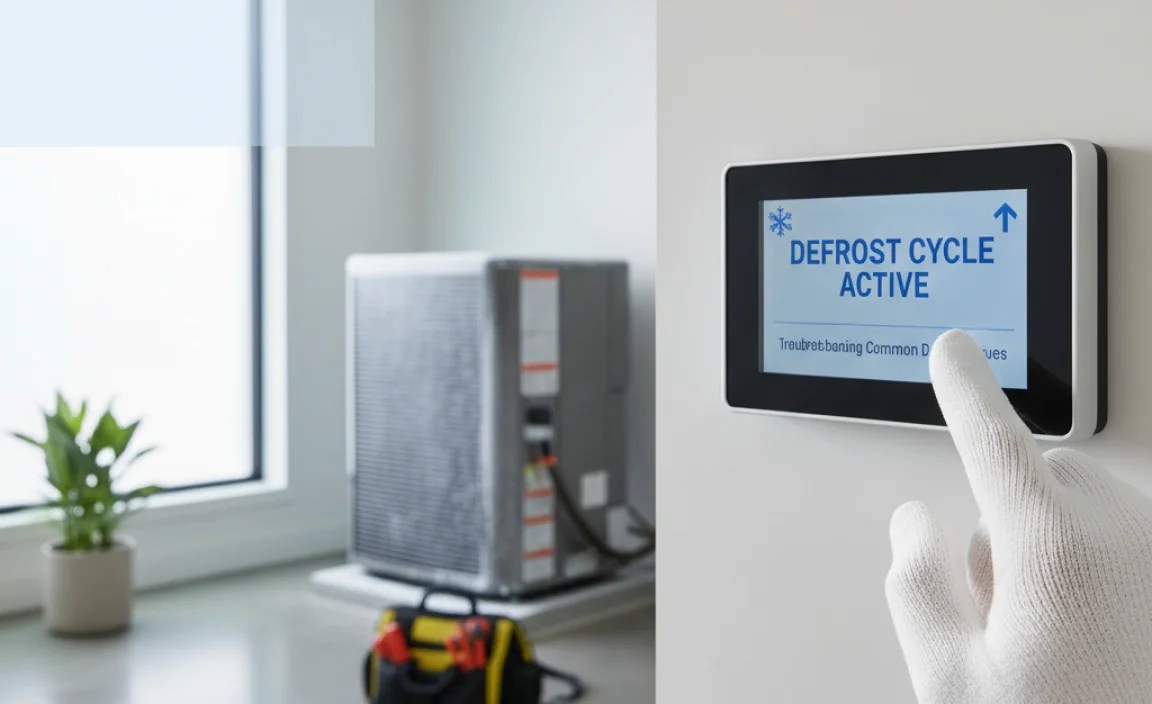
Here are some common problems that can prevent a heat pump from defrosting properly and how to address them:
- Dirty Outdoor Coil: A dirty coil reduces airflow and can contribute to ice buildup. Clean the coil with a garden hose (on a gentle setting) or a soft brush. Turn off the power to the unit before cleaning.
- Blocked Airflow: Make sure there are no obstructions blocking the airflow around the outdoor unit, such as leaves, snow, or shrubs.
- Faulty Defrost Sensor: The defrost sensor monitors the temperature of the outdoor coil and signals the system to initiate a defrost cycle. If the sensor is faulty, it may not trigger the defrost cycle when needed. This requires professional diagnosis and replacement.
- Refrigerant Leak: Low refrigerant levels can cause the heat pump to ice up more quickly. A refrigerant leak requires professional repair.
- Malfunctioning Reversing Valve: The reversing valve controls the direction of refrigerant flow. If it’s not working properly, the heat pump may not be able to switch to defrost mode. This also requires professional diagnosis and repair.
Preventive Maintenance for Optimal Defrosting

Regular maintenance can help prevent defrosting problems and keep your heat pump running efficiently. Here are some tips:
- Schedule annual maintenance: Have a qualified HVAC technician inspect and service your heat pump annually. This includes cleaning the coils, checking refrigerant levels, and inspecting all components.
- Keep the outdoor unit clean: Regularly remove leaves, snow, and other debris from around the outdoor unit.
- Change your air filter regularly: A dirty air filter restricts airflow, which can affect the heat pump’s performance. Change the filter every 1-3 months, depending on usage and air quality.
- Monitor the unit during winter: Periodically check the outdoor unit for ice buildup, especially during periods of freezing temperatures.
DIY vs. Professional Help
Some heat pump maintenance tasks, such as cleaning the outdoor unit and changing the air filter, can be easily done yourself. However, more complex repairs, such as fixing refrigerant leaks or replacing faulty components, should always be handled by a qualified HVAC technician. Attempting to repair these issues yourself can be dangerous and may void your warranty.
Here’s a quick guide:
| Task | DIY | Professional |
|---|---|---|
| Cleaning outdoor unit | Yes | Yes (as part of routine maintenance) |
| Changing air filter | Yes | Yes (as part of routine maintenance) |
| Checking for ice buildup | Yes | Yes (as part of routine maintenance) |
| Refrigerant leak repair | No | Yes |
| Defrost sensor replacement | No | Yes |
| Reversing valve repair | No | Yes |
Tools and Materials You Might Need
For basic heat pump maintenance and troubleshooting, you might need the following tools and materials:
- Screwdrivers: For removing access panels.
- Wrench set: For tightening or loosening connections.
- Garden hose: For cleaning the outdoor coil.
- Soft brush: For removing debris from the coil.
- Air filter: Replacement air filter for your unit.
- Owner’s manual: For specific instructions and troubleshooting tips.
- Multimeter: For testing electrical components (advanced users only).
Heat Pump Defrost Cycle: FAQs
Here are some frequently asked questions about heat pump defrost cycles:
Q: How often should my heat pump defrost?
A: Most heat pumps defrost every 30 to 90 minutes when the outdoor temperature is below freezing and there’s moisture in the air. The frequency depends on the humidity and temperature.
Q: Is it normal for my heat pump to make noise during the defrost cycle?
A: Yes, it’s normal. You might hear hissing, gurgling, or popping sounds as the ice melts. You may also see steam rising from the unit.
Q: Why is cold air coming from my vents during the defrost cycle?
A: During the defrost cycle, the heat pump temporarily switches to cooling mode to heat the outdoor coil. This can cause a brief period of cold air coming from your vents. Most heat pumps have auxiliary or emergency heat that will activate to temper the cold air.
Q: Can I use a garden hose to melt the ice on my heat pump?
A: Yes, you can use a garden hose with a gentle spray to help melt the ice. Be careful not to spray water directly into the electrical components. It is best to turn the unit off before doing this.
Q: What happens if I don’t defrost my heat pump?
A: If you don’t defrost your heat pump, the ice buildup will continue to worsen, reducing its efficiency and potentially causing damage to the unit. It can also lead to higher energy bills and a less comfortable home.
Q: How do I know if my heat pump is in defrost mode?
A: Common signs include steam rising from the outdoor unit, a hissing sound, a brief period of cold air coming from your vents, and the outdoor fan stopping.
Q: Is it okay to cover my heat pump in the winter?
A: No, do not cover your heat pump. Covering it can restrict airflow and trap moisture, which can lead to ice buildup and damage. The unit is designed to withstand the elements.
Conclusion
Running a defrost cycle on your heat pump is a simple task that can significantly improve its efficiency and performance during the winter months. By understanding how the defrost cycle works, recognizing the signs of a problem, and following the steps outlined in this guide, you can keep your heat pump running smoothly and ensure a comfortable home. Remember to consult your owner’s manual for specific instructions and don’t hesitate to call a qualified HVAC technician if you encounter any serious issues. Regular maintenance and prompt attention to any problems will help extend the life of your heat pump and keep your energy bills in check. Stay warm!
“`


