
Understanding the Difference: Cycle, ABS Solenoid, and Pump

Quick Summary: A cycle in an ABS (Anti-lock Braking System) refers to a single instance of the system activating to prevent wheel lock-up during braking. An ABS solenoid is an electrically controlled valve that regulates brake fluid pressure to each wheel. The ABS pump provides the hydraulic pressure needed for the solenoids to function and maintain braking control. They work together to modulate braking force and prevent skidding.
Ever wondered what’s going on behind the scenes when your car’s ABS kicks in? It can feel a little mysterious, but understanding the key components – the cycle, the solenoids, and the pump – makes it much clearer. Many drivers find the inner workings of their car’s braking system confusing, but it doesn’t have to be! We’ll break down each part in plain language, so you’ll know exactly how they work together to keep you safe on the road. Get ready to demystify your ABS!
What is an ABS Cycle?

An ABS cycle is the sequence of events that happens when your car’s Anti-lock Braking System (ABS) activates. Let’s dive into what that really means.
The Basics of an ABS Cycle
Imagine you’re driving and suddenly need to slam on the brakes. Without ABS, your wheels could lock up, causing you to skid and lose control. That’s where ABS comes in.
During an ABS cycle, the system does the following:
- Detects Wheel Lock-Up: Sensors at each wheel monitor their speed. If one or more wheels start to slow down much faster than the others, it signals a potential lock-up.
- Reduces Brake Pressure: The ABS module tells the solenoids to reduce the brake pressure to the affected wheel.
- Allows Wheel to Rotate: By releasing pressure, the wheel can start rotating again, preventing a skid.
- Reapplies Brake Pressure: Once the wheel regains traction, the ABS increases the brake pressure again to help you stop.
- Repeats Rapidly: This process happens very quickly – multiple times per second – modulating the brake pressure to keep the wheels from locking up while still providing maximum stopping power.
Why ABS Cycles Matter
The ABS cycle is crucial because it allows you to maintain steering control during hard braking. Without it, locked wheels would prevent you from steering around obstacles. The pulsing feeling you might feel in the brake pedal during hard braking is the ABS rapidly cycling.
Think of it this way: ABS gives you the best of both worlds – maximum braking force without losing the ability to steer. This is especially important in emergency situations or on slippery surfaces.
Real-World Example
Let’s say you’re driving on a wet road and a car suddenly pulls out in front of you. You hit the brakes hard. The ABS detects that your front wheels are about to lock up. It quickly reduces and reapplies brake pressure to those wheels, allowing you to steer around the car while still slowing down as quickly as possible. Without ABS, you might have skidded straight ahead, unable to avoid a collision.
What is an ABS Solenoid?

ABS solenoids are tiny but mighty components that control the flow of brake fluid within the ABS system. Here’s a closer look.
The Role of ABS Solenoids
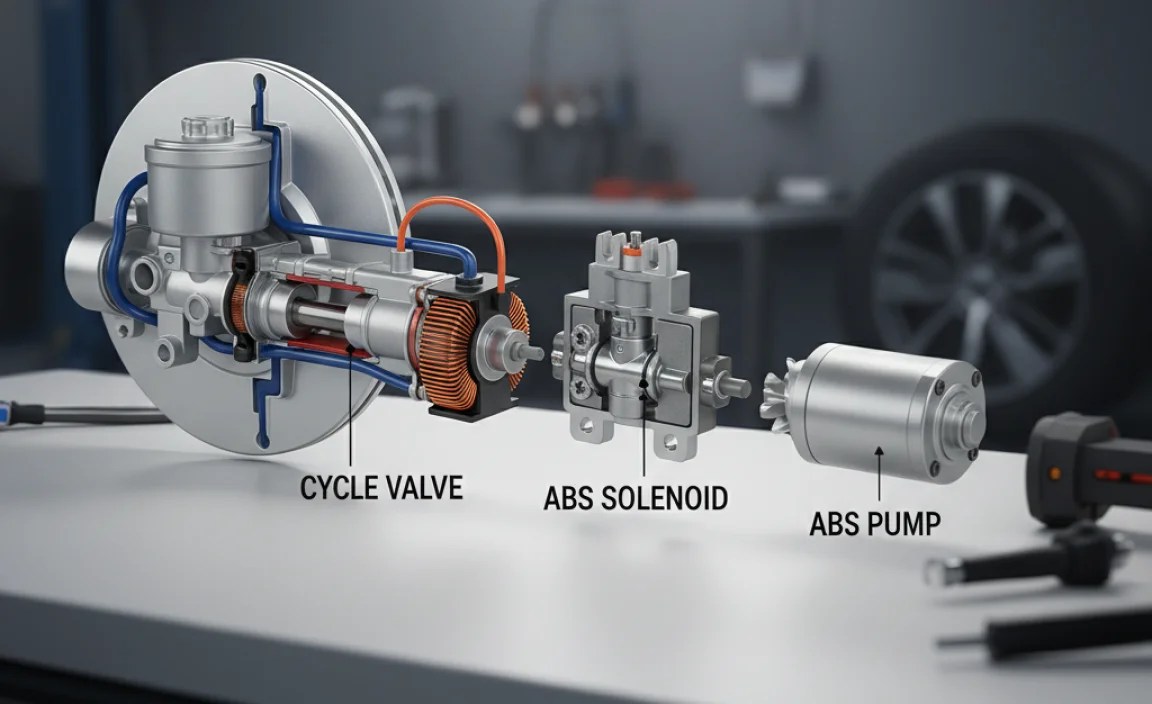
An ABS solenoid is essentially an electrically controlled valve. Its job is to regulate the amount of brake fluid pressure that goes to each individual wheel. This regulation is critical for preventing wheel lock-up.
Here’s how it works:
- Receives Signals: The ABS module (the “brain” of the system) sends electrical signals to the solenoids based on information from the wheel speed sensors.
- Opens and Closes: When a wheel is about to lock up, the ABS module signals the solenoid to close, reducing brake fluid pressure to that wheel. When the wheel regains traction, the solenoid opens to reapply pressure.
- Precise Control: These solenoids can open and close very quickly, allowing for precise control of brake pressure.
Types of ABS Solenoids
There are typically two types of solenoids in an ABS system:
- Inlet Solenoids: These control the amount of pressure coming into the brake caliper.
- Outlet Solenoids: These control the amount of pressure being released from the brake caliper.
Together, they fine-tune the brake pressure to each wheel.
Why Solenoids are Important
Without functioning solenoids, the ABS system can’t accurately control brake pressure. This could lead to:
- Reduced Braking Performance: The wheels might lock up more easily.
- Loss of Control: You might experience skidding and difficulty steering.
- ABS Failure: The ABS warning light on your dashboard might illuminate, indicating a problem with the system.
Faulty solenoids can compromise the effectiveness of your ABS, making it essential to address any issues promptly.
Troubleshooting Solenoid Issues
If you suspect a problem with your ABS solenoids, here are a few things to consider:
- Check the ABS Warning Light: This is often the first sign of an issue.
- Scan for Error Codes: A mechanic can use a scan tool to read any error codes stored in the ABS module. These codes can pinpoint the specific solenoid that’s causing trouble.
- Test the Solenoids: A professional can use specialized equipment to test the solenoids and determine if they’re functioning correctly.
What is an ABS Pump?

The ABS pump is the powerhouse of the ABS system, providing the necessary hydraulic pressure for the solenoids to do their job. Let’s explore this vital component.
The Function of the ABS Pump
The ABS pump, also known as a hydraulic pump, is responsible for supplying high-pressure brake fluid to the ABS solenoids. Without this pressure, the solenoids wouldn’t be able to effectively regulate braking force.
Here’s what the pump does:
- Generates Pressure: The pump creates hydraulic pressure, which is stored in an accumulator.
- Supplies Fluid: When the ABS system activates, the pump supplies pressurized brake fluid to the solenoids.
- Maintains Pressure: The pump continues to run as needed to maintain the correct pressure during an ABS event.
Components of an ABS Pump
An ABS pump typically consists of:
- Electric Motor: Powers the pump.
- Pump Mechanism: Creates the hydraulic pressure.
- Accumulator: Stores pressurized brake fluid.
- Valves: Control the flow of fluid.
Why the Pump is Essential
A properly functioning ABS pump is critical for the overall effectiveness of the ABS system. If the pump fails, the ABS might not be able to activate when needed, leading to:
- Reduced Braking Performance: The wheels might lock up more easily.
- Loss of Control: You might experience skidding and difficulty steering.
- ABS Failure: The ABS warning light on your dashboard might illuminate, indicating a problem with the system.
Troubleshooting Pump Issues
If you suspect a problem with your ABS pump, here are a few things to consider:
- Listen for Unusual Noises: A failing pump might make strange noises, such as a grinding or whining sound.
- Check the ABS Warning Light: This is often the first sign of an issue.
- Scan for Error Codes: A mechanic can use a scan tool to read any error codes stored in the ABS module. These codes can pinpoint issues with the pump.
- Test the Pump: A professional can use specialized equipment to test the pump and determine if it’s functioning correctly.
Cycle vs. ABS Solenoid vs. Pump: Key Differences
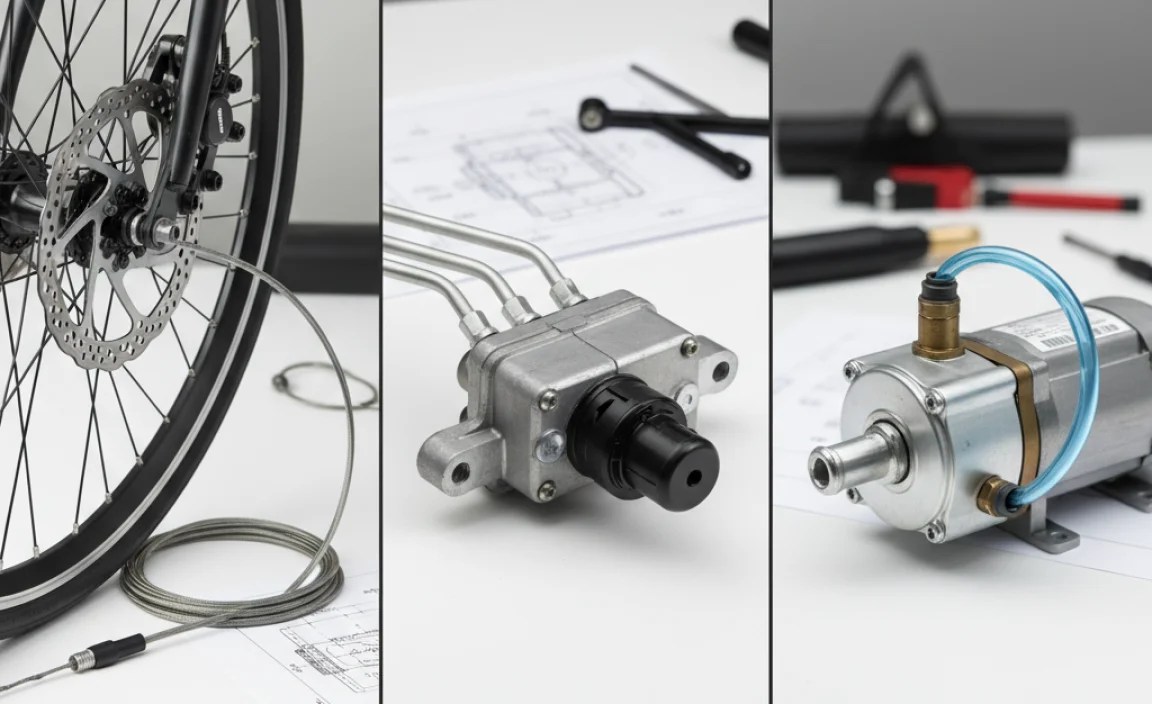
Now that we’ve covered each component individually, let’s clarify the key differences between the ABS cycle, solenoids, and pump. Think of them as a team working together to achieve a common goal: preventing wheel lock-up and maintaining control during braking.
The Big Picture
Here’s a simple analogy: The ABS cycle is like a game plan, the solenoids are like players executing the plan, and the pump is like the coach providing the energy and resources needed to succeed.
Key Distinctions
To make it even clearer, here’s a table summarizing the main differences:
| Component | Function | Role in ABS |
|---|---|---|
| ABS Cycle | Sequence of events during ABS activation | Defines how the system modulates brake pressure |
| ABS Solenoid | Electrically controlled valve | Regulates brake fluid pressure to each wheel |
| ABS Pump | Hydraulic pump | Provides the pressure needed for the solenoids to function |
How They Work Together
Here’s how these components interact during an ABS event:
- The Need Arises: You slam on the brakes in an emergency.
- Detection: Wheel speed sensors detect that one or more wheels are about to lock up.
- Activation: The ABS module initiates an ABS cycle.
- Regulation: The ABS pump provides high-pressure brake fluid to the solenoids.
- Modulation: The solenoids open and close rapidly, regulating the brake pressure to each wheel.
- Prevention: The wheels are prevented from locking up, allowing you to maintain steering control.
This entire process happens in a fraction of a second, demonstrating the incredible complexity and precision of the ABS system.
Maintaining Your ABS System
Keeping your ABS system in good working order is crucial for your safety on the road. Here are some tips to help you maintain it.
Regular Inspections
Have your ABS system inspected regularly by a qualified mechanic. They can check for any signs of damage or wear and tear.
Brake Fluid
Ensure your brake fluid is at the correct level and is clean. Contaminated or low brake fluid can affect the performance of the ABS system.
According to the National Highway Traffic Safety Administration (NHTSA), routine brake system maintenance, including fluid checks, is essential for optimal safety.
Address Issues Promptly
If you notice any issues with your ABS, such as the warning light illuminating, have it checked out by a mechanic as soon as possible. Ignoring problems can lead to more serious and costly repairs down the road.
Avoid Aggressive Driving
While ABS is designed to help you in emergency situations, it’s not a substitute for safe driving habits. Avoid aggressive driving maneuvers that can put unnecessary strain on the braking system.
Common ABS Problems and Solutions
Even with regular maintenance, ABS systems can sometimes experience problems. Here are some common issues and their potential solutions.
ABS Warning Light
Problem: The ABS warning light on your dashboard is illuminated.
Possible Causes:
- Faulty wheel speed sensor
- Problem with the ABS module
- Low brake fluid
- Issue with the ABS pump or solenoids
Solutions:
- Have a mechanic scan for error codes to pinpoint the problem.
- Check and top up brake fluid if necessary.
- Replace faulty wheel speed sensors.
- Repair or replace the ABS module, pump, or solenoids as needed.
Pulsing Brake Pedal
Problem: You feel a pulsing sensation in the brake pedal even when you’re not braking hard.
Possible Causes:
- Faulty wheel speed sensor
- Contamination on the sensor ring
Solutions:
- Have a mechanic scan for error codes to identify the faulty sensor.
- Clean the sensor ring to remove any debris.
- Replace the faulty wheel speed sensor.
ABS Not Activating
Problem: The ABS doesn’t seem to be activating during hard braking.
Possible Causes:
- Faulty ABS module
- Problem with the ABS pump
- Air in the brake lines
Solutions:
- Have a mechanic scan for error codes to diagnose the issue.
- Check the ABS pump and replace if necessary.
- Bleed the brake lines to remove any air.
ABS System: Dos and Don’ts
To ensure the longevity and effectiveness of your ABS system, here’s a quick guide on what to do and what to avoid.
Dos
- Do check your brake fluid level regularly.
- Do have your ABS system inspected by a qualified mechanic.
- Do address any issues promptly.
- Do use high-quality brake fluid that meets the manufacturer’s specifications.
- Do practice safe driving habits.
Don’ts
- Don’t ignore the ABS warning light.
- Don’t attempt to repair the ABS system yourself unless you have the necessary expertise and equipment.
- Don’t use aggressive driving maneuvers that can strain the braking system.
- Don’t neglect regular brake maintenance.
- Don’t drive with worn-out tires, as this can affect the ABS performance.
FAQ About ABS Systems
Let’s tackle some frequently asked questions about ABS systems to further clarify any confusion.
Q1: What does the ABS warning light mean?
A: The ABS warning light indicates a problem with the Anti-lock Braking System. It could be a minor issue or a more serious problem, so it’s best to have it checked by a mechanic.
Q2: Can I drive with the ABS warning light on?
A: While you can technically drive with the ABS warning light on, it’s not recommended. The ABS system might not function properly, which could compromise your safety.
Q3: How often should I have my ABS system inspected?
A: It’s a good idea to have your ABS system inspected at least once a year, or whenever you have your brakes serviced. Regular inspections can help catch potential problems early.
Q4: Is ABS the same as traction control?
A: No, ABS and traction control are different systems, although they both work to improve vehicle stability. ABS prevents wheel lock-up during braking, while traction control prevents wheel spin during acceleration.
Q5: Can I repair my ABS system myself?
A: ABS systems are complex and require specialized knowledge and equipment to repair. It’s best to leave repairs to qualified mechanics.
Q6: Does ABS make my car stop faster?
A: Not necessarily. ABS is designed to prevent wheel lock-up and maintain steering control, which can help you avoid accidents. In some situations, it might reduce stopping distance, but its primary function is to improve safety.
Q7: What are the benefits of having ABS?
A: The main benefits of ABS include:
- Preventing wheel lock-up during braking
- Maintaining steering control in emergency situations
- Reducing the risk of skidding
- Improving overall safety on the road
Conclusion
Understanding the difference between the ABS cycle, solenoids, and pump is essential for appreciating how this critical safety system works. The cycle is the sequence of events, the solenoids regulate brake pressure, and the pump provides the necessary hydraulic power. By maintaining your ABS system and addressing any issues promptly, you can ensure it’s ready to protect you when you need it most. Drive safe!
“`


