
How to Attach Universal Hose to Any Pump: Easy Guide

Quick Summary: Attaching a universal hose to any pump is usually straightforward. First, identify the correct adapter for your pump and hose. Next, securely connect the adapter to the pump’s nozzle. Finally, attach the universal hose to the adapter, ensuring a tight, leak-free seal. Using Teflon tape on threaded connections can help prevent leaks. With the right fit and a secure connection, you’ll be pumping in no time!
Ever struggled to connect a new hose to your bike pump? It’s a common frustration. You buy a “universal” hose, but it doesn’t quite fit. Don’t worry; you’re not alone! Many cyclists face this issue. The good news is, with a few simple steps and the right adapters, you can easily attach a universal hose to almost any pump. This guide will walk you through the process, step-by-step. We’ll cover everything from identifying the correct adapter to ensuring a leak-free connection. Let’s get started and make your pumping life easier!
Understanding Universal Hoses and Pump Connections

Before diving into the how-to, let’s clarify what makes a hose “universal” and the types of pump connections you might encounter. This knowledge will make the process smoother and prevent potential headaches.
What Makes a Hose “Universal”?
A universal hose is designed to be compatible with a wide range of pumps and valve types. This is usually achieved through:
- Multiple Adapters: Universal hoses often come with various adapters to fit different valve types (Presta, Schrader, Dunlop) and pump nozzles.
- Dual Heads: Some hoses have a dual head design, with one side for Presta valves and the other for Schrader valves.
- Flexible Connections: The hose material and connection points are designed to accommodate slight variations in pump and valve designs.
Common Types of Pump Connections
Understanding the different types of pump connections is crucial for selecting the right adapter and ensuring a secure fit.
- Threaded Connections: These connections involve screwing the hose onto the pump nozzle. They provide a secure and leak-resistant seal.
- Push-On Connections: These connections involve pushing the hose onto the pump nozzle. They are quick and easy to use but may not be as secure as threaded connections.
- Lever-Lock Connections: These connections use a lever to clamp the hose onto the valve. They provide a secure and easy-to-use connection.
Tools and Materials You’ll Need

Before you start, gather all the necessary tools and materials. This will save you time and frustration later on.
- Universal Hose: Choose a high-quality universal hose that is compatible with your pump and valve types.
- Adapters: Ensure you have the correct adapters for your pump and hose. These may come with the hose or can be purchased separately.
- Wrench or Pliers: You may need a wrench or pliers to tighten threaded connections.
- Teflon Tape: Teflon tape (also known as plumber’s tape) can help create a leak-proof seal on threaded connections. You can find it at any hardware store, like Ace Hardware.
- Scissors or Utility Knife: To trim Teflon tape if needed.
- Cleaning Cloth: To clean the pump nozzle and hose connections.
Step-by-Step Guide: Attaching a Universal Hose to Any Pump

Now, let’s get to the main event. Follow these steps to attach your universal hose to your pump.
Step 1: Identify Your Pump’s Connection Type
Examine your pump’s nozzle. Is it threaded, push-on, or lever-lock? This will determine the type of adapter you need.
Step 2: Select the Correct Adapter
Match the adapter to your pump’s connection type and the universal hose’s fitting. Most universal hoses come with a set of adapters. If not, you can purchase them separately at most bike shops or online retailers.
Here’s a quick guide:
- Threaded Pump Nozzle: Use an adapter with matching threads.
- Push-On Pump Nozzle: Use a push-on adapter with a clamping mechanism.
- Lever-Lock Pump Nozzle: Use an adapter that fits securely into the lever-lock mechanism.
Step 3: Prepare the Pump Nozzle
Clean the pump nozzle with a clean cloth to remove any dirt or debris. This will ensure a better connection.
Step 4: Apply Teflon Tape (for Threaded Connections)
If you’re using a threaded adapter, apply Teflon tape to the threads of the pump nozzle. Wrap the tape around the threads in the direction they tighten, usually clockwise, two or three times. This will help create a leak-proof seal. Ensure the tape is smooth and covers the threads evenly. Here’s how:
- Hold the Teflon tape roll.
- Place the end of the tape on the threads.
- Wrap the tape around the threads, overlapping each layer slightly.
- Tear or cut the tape and smooth it down.
Step 5: Attach the Adapter to the Pump Nozzle
Connect the adapter to the pump nozzle. For threaded connections, screw the adapter onto the nozzle until it is snug. Use a wrench or pliers to tighten it further, but be careful not to overtighten, as this could damage the threads. For push-on and lever-lock connections, follow the manufacturer’s instructions for attaching the adapter.
Step 6: Attach the Universal Hose to the Adapter
Connect the universal hose to the adapter. Ensure the connection is secure and tight. For threaded connections, use a wrench or pliers to tighten the hose fitting. For push-on and lever-lock connections, ensure the hose is fully seated in the adapter.
Step 7: Test the Connection
Test the connection by inflating a tire. Check for leaks at the adapter and hose connections. If you detect any leaks, tighten the connections further or reapply Teflon tape.
Troubleshooting Common Issues
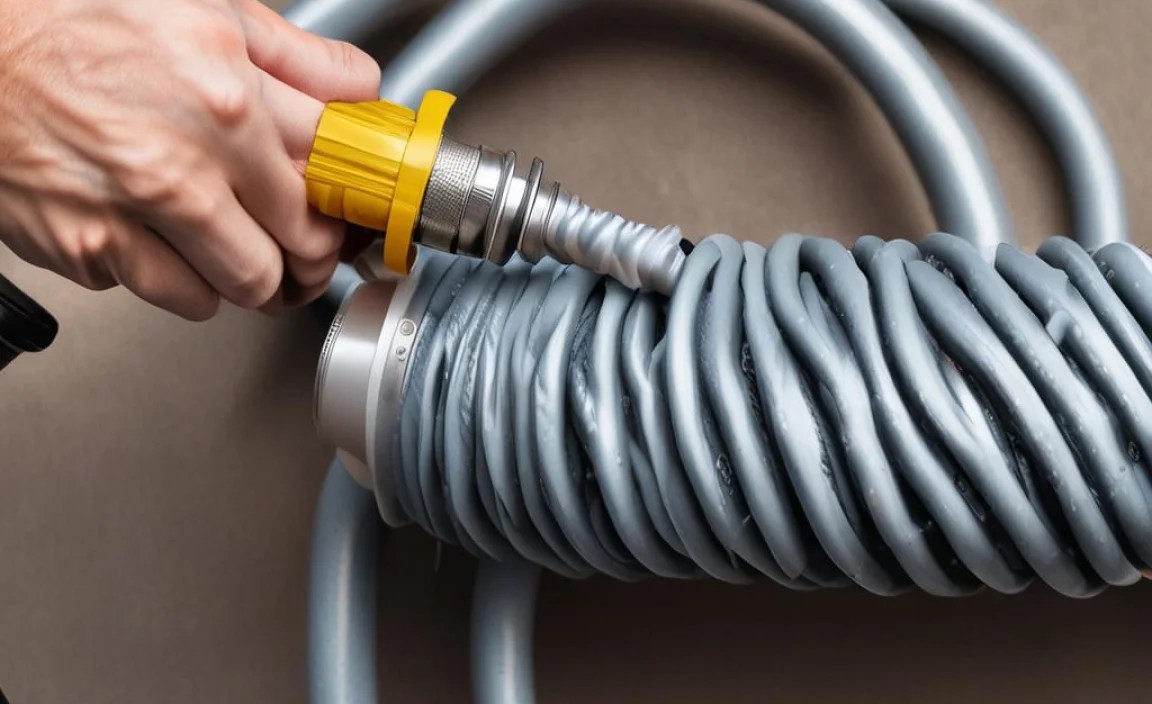
Even with the best instructions, you might encounter a few snags. Here are some common issues and how to fix them.
Issue 1: Leaks at the Connection
Cause: Loose connection or insufficient Teflon tape.
Solution: Tighten the connection further. If that doesn’t work, remove the adapter, reapply Teflon tape, and retighten.
Issue 2: Adapter Doesn’t Fit
Cause: Incorrect adapter size or type.
Solution: Double-check the adapter size and type. Ensure it matches your pump nozzle and hose fitting. If necessary, purchase a different adapter.
Issue 3: Hose Pops Off During Inflation
Cause: Insufficient clamping force or worn-out adapter.
Solution: Ensure the adapter is properly clamped onto the pump nozzle and hose. If the adapter is worn out, replace it.
Choosing the Right Universal Hose

Not all universal hoses are created equal. Here’s what to look for when choosing a universal hose.
- Material: Look for hoses made from durable materials such as reinforced rubber or braided nylon.
- Length: Choose a hose length that is convenient for your needs. A longer hose may be easier to use, but it can also be more cumbersome to store.
- Adapters: Ensure the hose comes with a variety of adapters to fit different valve types and pump nozzles.
- Reviews: Read online reviews to get an idea of the hose’s performance and durability.
Here is a comparison table of potential universal hose options:
| Hose Model | Material | Length | Adapters Included | Price Range |
|---|---|---|---|---|
| Brand X Universal Hose | Reinforced Rubber | 3 feet | Presta, Schrader | $15-20 |
| Brand Y Premium Hose | Braided Nylon | 4 feet | Presta, Schrader, Dunlop | $25-35 |
| Brand Z Pro Hose | High-Pressure Polymer | 3.5 feet | Presta, Schrader, Ball Needle | $30-40 |
Maintaining Your Pump and Hose
Proper maintenance will extend the life of your pump and hose and ensure they perform optimally.
- Clean Regularly: Clean the pump nozzle and hose connections regularly to remove dirt and debris.
- Inspect for Wear: Inspect the hose and adapters for wear and tear. Replace any worn or damaged parts.
- Store Properly: Store the pump and hose in a clean, dry place. Avoid exposing them to extreme temperatures or direct sunlight.
Valve Types: Presta, Schrader, and Dunlop
Understanding the different valve types is essential for using your universal hose correctly.
Presta Valves
Presta valves are commonly found on high-performance road bikes and some mountain bikes. They are narrower than Schrader valves and require a special adapter or pump head. To inflate a tire with a Presta valve, you must first unscrew the valve nut.
Here’s what you need to know:
- Pros:
- Lighter than Schrader valves.
- Maintain higher pressure.
- Cons:
- More fragile.
- Require an adapter for some pumps.
Schrader Valves
Schrader valves are commonly found on car tires, mountain bikes, and some hybrid bikes. They are wider than Presta valves and have a spring-loaded pin in the center. To inflate a tire with a Schrader valve, simply press the pump head onto the valve.
Here’s what you need to know:
- Pros:
- More durable.
- Compatible with most gas station air compressors.
- Cons:
- Heavier than Presta valves.
- May not maintain as high pressure.
Dunlop Valves
Dunlop valves are commonly found on older bikes and some European bikes. They are similar to Presta valves but do not have a threaded valve nut. To inflate a tire with a Dunlop valve, you must use a special adapter or pump head.
Here’s what you need to know:
- Pros:
- Simple design.
- Easy to repair.
- Cons:
- Less common.
- May be difficult to find adapters.
Advanced Tips for a Secure Connection
Want to take your pump game to the next level? Here are some advanced tips for ensuring a secure and leak-free connection.
- Use a Valve Core Tool: A valve core tool can be used to tighten or replace the valve core, which can help prevent leaks.
- Apply Grease to the Valve Stem: Applying a small amount of grease to the valve stem can help the pump head slide on and off more easily.
- Check the Pump Head Seal: The pump head seal can wear out over time, leading to leaks. Replace the seal if necessary.
FAQ: Universal Hose Attachment
Here are some frequently asked questions about attaching universal hoses to pumps:
- Q: What if my universal hose doesn’t come with the right adapter?
- A: You can purchase adapters separately at most bike shops or online retailers. Just make sure to choose an adapter that is compatible with your pump nozzle and hose fitting.
- Q: Can I use Teflon tape on all types of connections?
- A: Teflon tape is primarily for threaded connections. It is not necessary or effective on push-on or lever-lock connections.
- Q: How often should I replace my universal hose?
- A: Replace your universal hose when it shows signs of wear and tear, such as cracks, leaks, or difficulty connecting to the pump. A good quality hose should last for several years with proper care.
- Q: What is the best way to clean my pump nozzle?
- A: Use a clean, dry cloth to wipe the pump nozzle. For stubborn dirt or debris, you can use a mild detergent and water, but be sure to dry the nozzle thoroughly before using it.
- Q: Can I use a universal hose with a floor pump and a mini pump?
- A: Yes, most universal hoses are compatible with both floor pumps and mini pumps. Just make sure to choose a hose length that is appropriate for the type of pump you are using.
- Q: Why is my tire losing air even after I’ve inflated it?
- A: There could be several reasons for this, such as a puncture in the tire, a faulty valve core, or a leak at the pump connection. Check the tire for punctures, tighten or replace the valve core, and ensure the pump connection is secure.
- Q: Is it okay to use car tire inflators on my bike tires?
- A: While technically possible with a Schrader valve, car inflators often deliver too much pressure too quickly. This increases the risk of tire or tube damage. It’s always better to use a bike-specific pump for greater control.
Conclusion
Attaching a universal hose to any pump doesn’t have to be a daunting task. By understanding the different types of pump connections, selecting the right adapter, and following the steps outlined in this guide, you can easily connect your universal hose and inflate your tires with confidence. Remember to maintain your pump and hose regularly to ensure they perform optimally and last for years to come. With a little bit of knowledge and the right tools, you’ll be back on the road in no time. Happy cycling!


